How Many Lumens Per Room? Easy Room-by-Room Chart
Not sure how many lumens per room you need? Use these quick starting ranges: living rooms usually need 1,500–3,000 lumens, bedrooms 1,000–2,000 lumens, kitchens 3,000–4,500 lumens, bathrooms 2,000–4,000 lumens, and home offices 3,000–6,000 lumens.
The exact number depends on room size, ceiling height, wall color, layout, and whether the space is used for relaxing, cooking, reading, grooming, or working. This guide gives you a practical lumens per room chart first, then shows how to adjust the brightness for real homes without over-lighting cozy spaces or leaving task areas too dim.
Quick Answer: Lumens Per Room Chart
For a typical small-to-medium room, use these lumens per room ranges as a starting point. Choose the lower end for relaxing spaces, the higher end for task-heavy rooms, dark walls, high ceilings, or areas where you need clearer visibility.
- Living room: 1,500–3,000 lumens — TV, relaxing, conversation, reading corners
- Bedroom: 1,000–2,000 lumens — soft ambient light, getting dressed, bedside tasks
- Kitchen: 3,000–4,500 lumens — cooking, prep work, cleaning, family use
- Bathroom: 2,000–4,000 lumens — grooming, mirror lighting, daily routines
- Hallway: 1,000–1,500 lumens — safe movement and smooth room transitions
- Home office: 3,000–6,000 lumens — screen work, paperwork, reading, long focus sessions
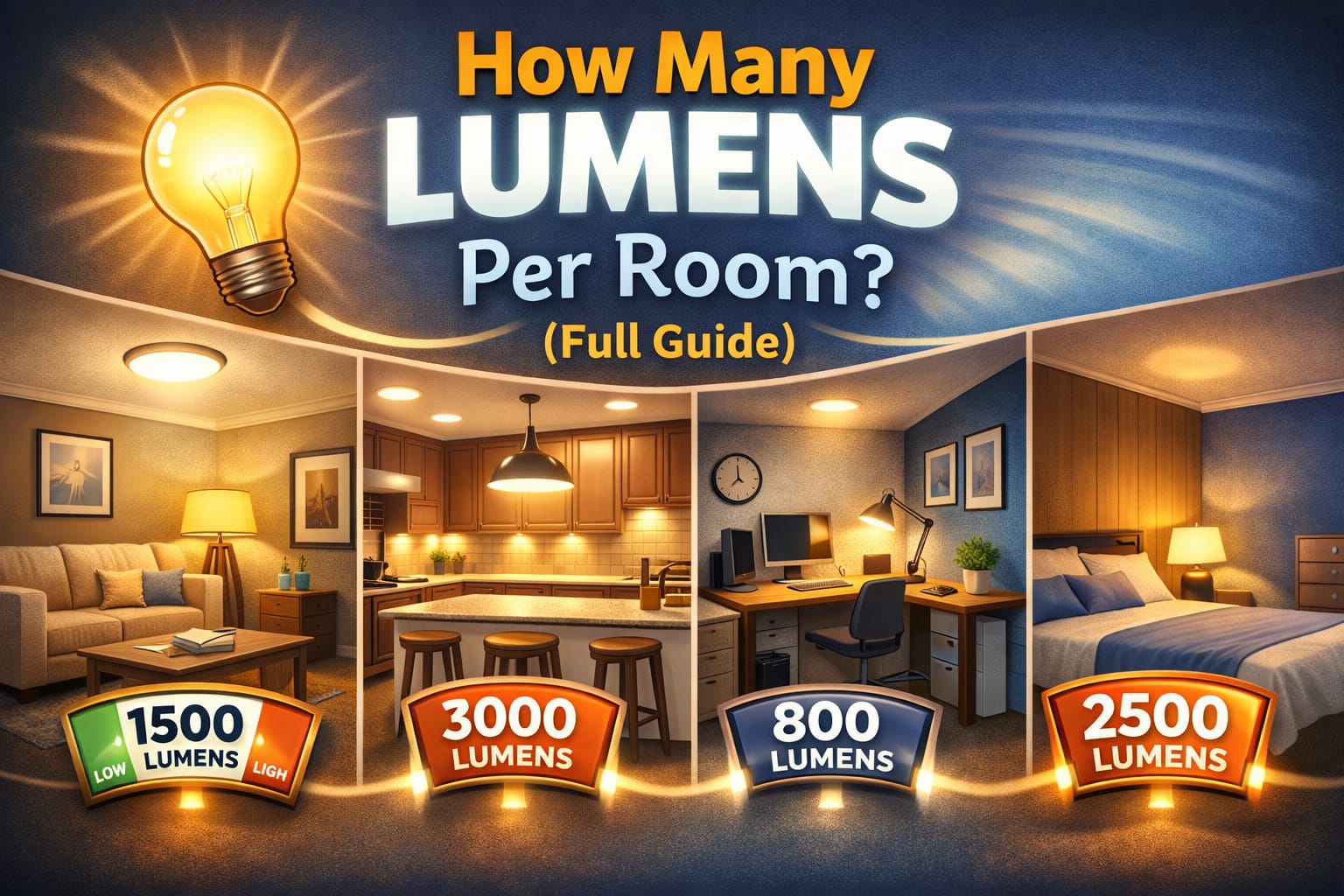
Table of Contents:
How to Calculate Lumens for Any Room
The easiest way to estimate how many lumens you need is to start with the room’s purpose, then adjust for size and surfaces. A cozy bedroom does not need the same brightness as a kitchen counter, even if both rooms have similar square footage. That is why a useful answer to how many lumens do I need should include both a room-by-room range and a way to adapt it to your home.
As a simple rule, relaxing rooms usually sit near the lower end of the range, while task-heavy rooms need more usable light. If you prefer thinking in surface area, use the idea of lumens per square foot by room: lower brightness for bedrooms and lounges, medium brightness for living rooms and dining spaces, and stronger brightness for kitchens, bathrooms, and offices.
Simple formula
Start with the room type, choose a target range, then move up or down based on ceiling height, wall color, fixture placement, and how much task lighting the room needs.
People often want one universal number, but home lighting rarely works that way. A small bedroom can feel too bright with the wrong bulb, while a large living room can still feel gloomy if all the light comes from one ceiling fixture. A smarter approach is to combine room function with light spread. Ambient lighting gives the base layer, task lighting supports specific activities, and accent lighting adds mood without carrying the whole room. If you want a stronger foundation before choosing fixtures, this guide to basic lighting design principles explains how those layers work together.
Aim for the right total brightness first, then improve comfort with placement and dimming. Chasing one ultra-bright bulb rarely fixes an uneven room.
Room-by-Room Lumens Guide
The best lumen range changes because each room has a different job. Living rooms need comfort and flexibility, bedrooms need softer control, kitchens need clear task light, bathrooms need balanced mirror visibility, and offices need enough brightness to support concentration without glare.
How Many Lumens for a Living Room?
Most living rooms work well around 1,500–3,000 lumens, though larger open spaces may need more. If the room is mainly for conversation, TV, and relaxing, stay near the lower or middle end. If people read there, do hobbies there, or the room has dark furniture and walls, push closer to the upper end.
Comfort matters as much as brightness in a living room because glare becomes noticeable quickly. A floor lamp, side lamp, or wall light can make the space feel more usable than adding one overly bright overhead bulb. If your living room has tall ceilings, these tips for lighting rooms with high ceilings can help you avoid the common problem of a bright ceiling and a dim seating area.
How Many Lumens for a Bedroom?
Bedrooms usually feel best around 1,000–2,000 lumens for the main layer, with extra light added through bedside lamps, closet lighting, or reading lights when needed. If your bedroom feels flat or dull, do not automatically assume you need a much brighter ceiling bulb. The real issue may be poor placement, overly cool color temperature, or a single center fixture that leaves corners dark.
This is also the room where dimming pays off the most. A brighter setting is useful for cleaning or getting dressed, but evening light should usually be lower and softer. If you are planning a sleep-friendly setup, these ideas for better bedroom lighting design pair well with the lumen ranges above and help prevent the room from feeling overlit before bed.
How Many Lumens for a Kitchen?
A kitchen often needs 3,000–4,500 lumens overall, especially if it works as a prep zone, family hub, and dining crossover space. When deciding how many lumens per room for a kitchen, focus on work surfaces first. Overhead light should cover the room, but counters, sinks, and stovetops need clearer visibility. If the only fixture is centered, your body can cast shadows exactly where you need light most.
This is one place where a better bulb can solve a real problem quickly. A dimmable LED bulb for kitchens and multi-use rooms is a practical option when you want bright prep light without making late-night kitchen use feel harsh. The added control can help balance brightness across different times of day, especially in homes that rely on one main ceiling fitting and limited under-cabinet support.
How Many Lumens for a Bathroom or Hallway?
Bathrooms usually fall in the 2,000–4,000 lumens range, depending on size and how much grooming happens there. If you shave, apply makeup, or style hair in that room, the mirror area deserves extra attention because face-level shadows can make even a bright bathroom feel poorly lit.
Hallways often need less, usually around 1,000–1,500 lumens, but the light should be even. A dim hallway beside a bright bathroom can feel cave-like, while a bright corridor next to a cozy bedroom can feel jarring at night. If your home has connected zones with sight lines between rooms, this guide to lighting open floor plans effectively can help you keep brightness levels feeling intentional instead of random.
How Many Lumens for a Home Office or Dining Room?
Home offices commonly need 3,000–6,000 lumens depending on screen work, paperwork, room size, and how many hours you spend there. Someone searching for how many lumens do I need for each room often buys one bright bulb, then wonders why the desk still feels tiring. The real issue is usually shadow direction, glare from screens, or not enough light at the actual work surface.
Dining rooms are different. They often need less total light if the table is well lit and the surrounding space stays comfortable. For rooms that double as a dining area, a homework zone, or a home office, choose layered lighting and adjustable output instead of one fixed-brightness bulb. If your main concern is getting noticeably stronger illumination, this review of high-lumen LED bulb options is a useful next step.
How to Adjust Brightness for Real Homes
Room dimensions matter, but so do wall color, floor finish, ceiling height, furniture, fixture type, and where people actually spend time. Dark walls absorb more light. Matte finishes soften reflections. Large rugs, wood tones, and deep-colored sofas can all make the same bulb feel weaker. That means the right number of lumens per room in a bright white apartment may not work in a darker, moodier interior.
As a loose guide, brighter finishes let you stay near the lower end of a range, while darker finishes often push you toward the upper end. If your goal is to improve brightness without changing fixtures right away, one practical option is an adjustable high-output LED bulb for darker rooms that lets you increase output only when needed. That can help make a dim room feel more usable at night without making the space harsh all day.
Never judge a room only by the brightest point in it. A bright mirror, shiny counter, or exposed bulb can hide the fact that the rest of the space is underlit.
It also helps to choose quality LEDs instead of chasing watt numbers alone. According to the U.S. Department of Energy LED lighting efficiency guidance, LED products deliver much more light per watt than older technologies, which is why lumens are the number that deserves your attention. That shift makes it easier to fine-tune brightness room by room instead of guessing from old bulb habits.
Comfort is not only about raw output. A room can technically hit the right lumen target and still feel uncomfortable if all the light comes from one overhead fixture. A reading chair needs light beside it, a kitchen counter needs light on the work surface, and a desk needs light that does not create screen glare. The emotional side matters too, and this article on how lighting affects mood and comfort is useful when you want brightness without a cold or clinical feel.
Flicker performance, dimming quality, and color temperature also matter during long sessions. Cheap bulbs can look bright enough on paper and still feel tiring after hours of screen work or reading. If you need a straightforward office or study upgrade, an adjustable LED bulb for long work sessions can help create more comfortable light where stable brightness matters more than sheer punch. The ENERGY STAR guide to LED lighting basics is also helpful when comparing modern LED quality factors beyond wattage.
Before you buy, run this quick room check:
- ✓ Identify the main purpose of the room during the evening
- ✓ Check wall color, rugs, furniture, and finishes that may absorb light
- ✓ Decide whether task lighting is needed in addition to overhead light
- ✓ Choose dimming if the room serves more than one purpose
- ✓ Compare bulb quality, not just raw lumen numbers
What Should You Choose?
The best choice depends on whether the room is mainly for relaxing, working, cooking, grooming, or fast practical tasks. Start with the lower end for cozy spaces and the upper end for work-heavy spaces, then use dimming, lamps, or layered fixtures to fine-tune the result.
- If you mostly watch TV or relax → stay around the middle of the living room range and avoid glare-heavy overhead light.
- If you read in bed or use wardrobes often → add bedside or closet lighting instead of only increasing overhead output.
- If you cook daily on dark counters → prioritize brighter task lighting in the kitchen, especially over prep areas.
- If you work from home for hours → combine strong general light with dedicated desk lighting to reduce shadows and screen glare.
- If one room serves several jobs → choose dimmable LEDs and layered fixtures instead of relying on one fixed-brightness source.
If you want to explore broader lighting strategy before changing more fixtures, the LED Knowledge Center brings together practical guides that make planning the rest of your home much easier. It is especially helpful once you realize that how many lumens per room is only one part of a well-balanced setup.
FAQ
How Many Lumens Do I Need for Each Room in the House?
Most homes can start with 1,500–3,000 lumens for living rooms, 1,000–2,000 for bedrooms, 3,000–4,500 for kitchens, 2,000–4,000 for bathrooms, 1,000–1,500 for hallways, and 3,000–6,000 for home offices. Adjust upward for dark finishes, high ceilings, detailed tasks, or larger rooms.
Is It Better to Use One Bright Bulb or Several Smaller Lights?
Several well-placed lights usually feel better than one very bright bulb. One strong overhead source can create glare and shadows, while layered lighting spreads brightness more naturally across the room.
Should Bedrooms Have Fewer Lumens Than Living Rooms?
Usually, yes. Bedrooms are normally more relaxed and need softer baseline lighting. Living rooms often need more flexibility because they support conversation, TV, reading, guests, and sometimes work or hobbies.
Do Dark Walls Mean I Need More Lumens?
Yes, dark walls, dark floors, heavy rugs, and deep-colored furniture can make a room feel dimmer because they absorb more light. In those rooms, start closer to the upper end of the recommended lumen range.
Key Takeaways
The real answer to how many lumens per room is not a single magic number. It is a range shaped by room purpose, fixture placement, ceiling height, surface colors, and whether the space is meant for relaxation or task-heavy use. Living rooms and bedrooms usually need softer baseline lighting, while kitchens, bathrooms, and offices often need substantially more usable brightness.
The easiest way to make better decisions is to treat lumens as your starting point, then build around layered lighting, dimming, and fixture placement. If you are still asking how many lumens do I need for a difficult room, focus on where shadows appear and where people actually spend time instead of only increasing the total output.
Once you understand how many lumens per room works in your own home, buying bulbs and planning fixtures becomes much simpler. You stop guessing, avoid over-lighting cozy spaces, and create rooms that feel brighter only where brightness genuinely improves comfort and usability.
Sharing This Guide
If you found this guide helpful, save it or share it with someone who’s still using old bulbs.
Interested in learning more? Browse all related articles in our category section.