Brightest LED Bulbs for High-Lumen Home Lighting
The brightest LED bulbs are not always the ones with the biggest number on the box. For most homes, the best high-lumen LED bulbs are the ones that match the room size, fixture shape, beam spread, color temperature, and how the space is actually used.
This guide explains how to choose high-lumen LED bulbs that make rooms feel clearer without creating harsh glare. You will learn when 1,600 lumens is enough, when 2,000-lumen LED bulbs make more sense, and why bulb shape, dimming, and fixture compatibility matter as much as raw brightness.
Table of Contents:
- Quick Answer
- Why High-Lumen LED Bulbs Matter in Real Rooms
- How Lumen Ratings Shape Expectations
- How Many Lumens Do You Really Need?
- Best Bright LED Bulb Types by Room
- Bulb Shape and Beam Spread
- Common Bulb Formats for Home Use
- Color Temperature and Perceived Intensity
- Large Rooms and Task Zones
- Common Mistakes and Weak Results
- When Dimming Matters More Than Raw Power
- How to Keep Bright Light Comfortable
- Efficiency, Heat, and Lifespan
- FAQ
- Final Thoughts Before You Buy
- Sharing This Guide
Quick Answer
For most homes, start around 1,600 lumens if you want a noticeably brighter bulb for a bedroom, hallway, kitchen, or everyday fixture. Choose 2,000-lumen LED bulbs or stronger options for garages, basements, workshops, laundry rooms, dark corners, high ceilings, or large rooms where a single bulb has to do more work.
- Choose higher lumens when the room feels dim even with the light on.
- Use 4000K–5000K for task areas where clarity matters.
- Use warmer light when comfort matters more than maximum crispness.
- Always check fixture limits, enclosed ratings, and dimmer compatibility before buying.
Why High-Lumen LED Bulbs Matter in Real Rooms
You notice weak lighting the most when you are already annoyed, such as when you are chopping food in the shadows, trying to read labels in a pantry, or working at a dimly lit desk even with the lamp turned on. This is where high-lumen LED bulbs become more than just a number on a spec sheet.
The right output level can make a room feel cleaner, safer, and easier to use from the moment you flip the switch. Stronger bulbs are especially useful when the ceiling is high, the walls are dark, the shade blocks light, or one fixture has to illuminate a wide area.
Many buyers still compare new bulbs by wattage, but that habit does not work well with LEDs. What matters is visible output, room size, fixture design, and how the beam spreads once the bulb is installed. If you need more context before comparing products, this explanation of how LED bulbs work in everyday fixtures explains why modern bulbs can look so different, even when the base type is the same.
When a space feels gloomy, the problem is often not the fixture itself. It is usually the amount of usable light reaching the surfaces where you see, cook, read, clean, or work.
How Lumen Ratings Shape Expectations
Lumens measure total light output, which is why they are the most important starting point when comparing bright LED bulbs. Traditional 60-watt replacements usually sit around 800 lumens, while stronger LED options can reach 1,500, 2,000, 3,000 lumens, or more.
Once you move above basic replacement brightness, the difference becomes easier to see in real rooms. A higher-lumen bulb can make a kitchen counter easier to use, a garage bay safer to walk through, or a basement workbench clearer without adding another fixture.
This is why many shoppers looking for the brightest LED light bulbs want predictability. They do not want vague packaging claims. They want to know if one bulb can brighten a dark kitchen corner, illuminate a laundry area, or improve a workspace without creating harsh glare.
How Many Lumens Do You Really Need?
The right amount depends on the room and the task. A bedroom lamp may feel comfortable with 800 to 1,100 lumens, but kitchens, laundry rooms, garages, utility spaces, and common areas often require more. Most people looking for brighter LED bulbs need enough output to overcome height, shadows, darker finishes, and light-blocking fixtures.
As a rough guide, 1,600 lumens is usually a strong general upgrade, while 2,000-lumen LED bulbs and higher are better for utility spaces or areas where one bulb is doing heavy lifting. To understand why these numbers matter more than old watt labels, compare them with this clear lumens versus watts guide for home lighting before you buy.
For large rooms where one fixture must cover a lot of floor area, a practical option is an oversized, high-output bulb. This can reduce eye strain because your eyes no longer have to work as hard in dim, high-contrast spaces with a lot of shadows.
Best Bright LED Bulb Types by Room
The best high-lumen LED bulb is not the same for every room. A bulb that works well in a garage may feel too harsh in a bedroom, while a cozy living room bulb may be too weak for cooking, cleaning, or detailed work. Matching the bulb to the room prevents both underlighting and glare.
What Should You Choose?
For kitchens and laundry rooms: choose a bright bulb with good spread and a neutral 3500K–4000K tone so counters, cabinets, and appliances look clearer.
For garages and basements: use 2,000 lumens or higher when the fixture is mounted high or the room has dark corners.
For bedrooms and living rooms: avoid chasing maximum brightness unless the fixture is dimmable or the room is genuinely underlit.
For workspaces: prioritize steady output, neutral-white color, and glare control over the highest lumen number.
This room-first approach also helps you avoid buying the wrong bulb for the wrong space. A bright garage bulb should solve visibility problems in a utility area. A dimmable high-output bulb should help when you need both brightness and evening comfort. A recessed bulb should match the fixture shape instead of simply promising more lumens.
Bulb Shape and Beam Spread
Output alone does not tell the whole story. Two bulbs with the same lumen rating can appear very different because one spreads light broadly while the other sends more light in a narrower direction. This is why the brightest LED bulbs on paper do not always provide the most useful lighting in practice.
A wide spread can make a room feel evenly lit, while a tighter beam can leave edges underexposed. Fixture design matters too. Frosted shades, deep cans, domes, and fabric lamp covers absorb or redirect part of the light output. When people say their new bulb looks underpowered, the problem is often a mismatch between the bulb and fixture rather than an insufficient lumen number.
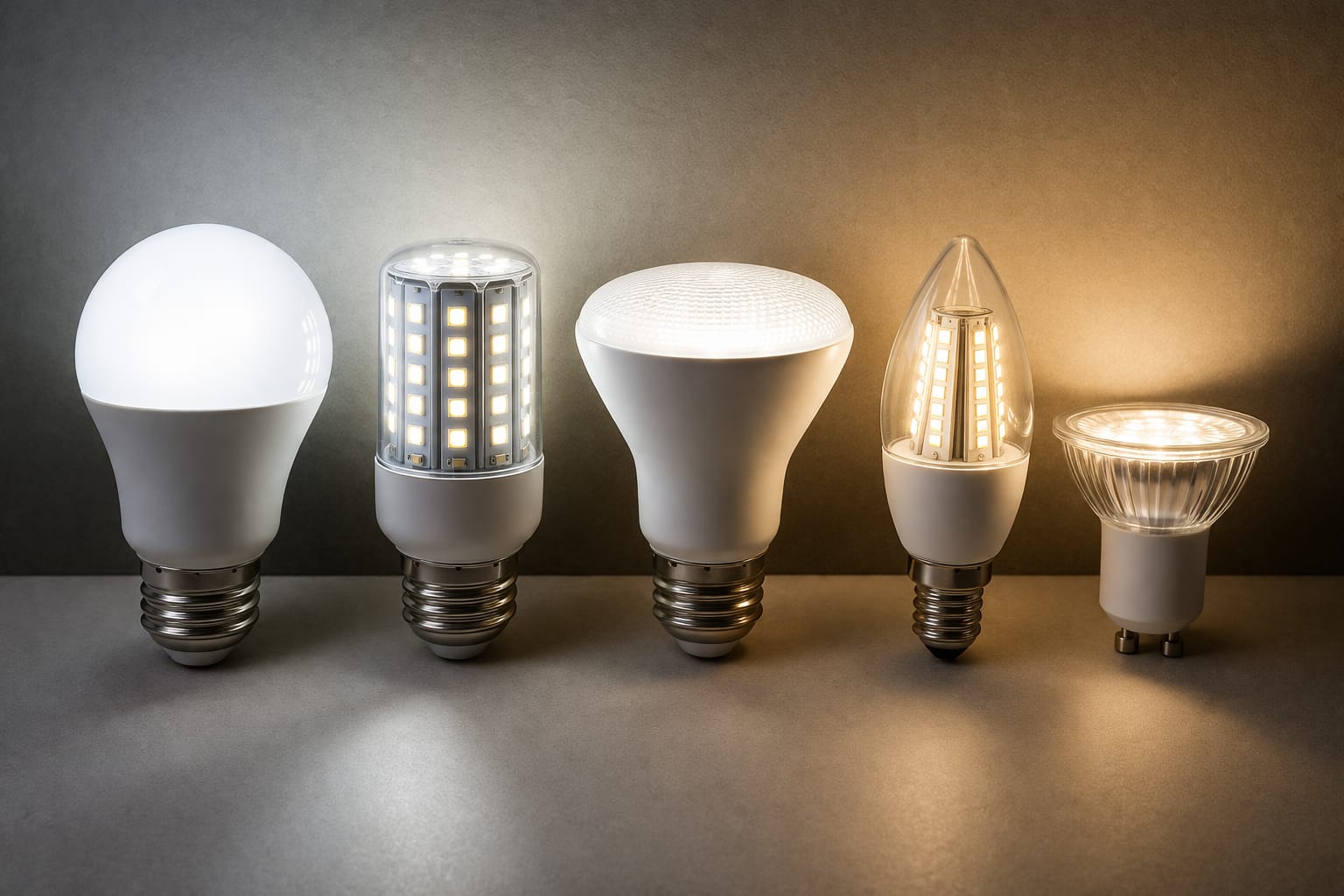
Common Bulb Formats for Home Use
Standard A19 bulbs are flexible and familiar, but they are not always the best choice for every fixture. Recessed cans often perform better with BR30 or PAR-style bulbs because they direct more light where it is needed. If you are comparing fixtures with smaller openings, recommendations for bulbs that suit recessed lighting layouts can prevent you from buying the wrong shape.
The same logic applies to fixtures that move air. A powerful bulb can still feel disappointing if the fan shade traps light or requires a compact form factor. This roundup of quality bulbs for ceiling fans shows that format is just as important as raw output for strong everyday results.
Color Temperature and Perceived Intensity
Brightness is not only about lumens. A cooler bulb in the 4000K to 5000K range often appears sharper and more energetic than a warm 2700K bulb, even if both have the same output. This does not mean cool light is always better. Perception changes with color tone, wall colors, task type, and time of day.
In offices, kitchens, workshops, and utility rooms, slightly cooler light makes surfaces look clearer and text easier to read. In bedrooms and living rooms, warmer tones may feel more relaxing, though less forceful. Without considering color temperature, choosing a bright LED bulb can leave you with something that looks powerful on paper but still feels wrong in the room.
If your main goal is productive clarity rather than a cozy mood, this guide to better bulbs for home office lighting explains why cooler, balanced light often performs better during long work sessions.
Large Rooms and Task Zones
The brightest LED bulbs are most useful when a single light source has to cover a large area or support a specific task. Garages, open-plan kitchens, utility rooms, basements, storage spaces, workshops, and laundry areas benefit quickly from stronger output because shadows make everyday tasks slower and more frustrating.
They also work well in rooms with high ceilings, dark flooring, matte paint, and fixtures mounted far above the work surface. In those situations, standard bulbs may not fail because they are defective. They fail because the room requires more than a basic 800-lumen replacement can deliver.
Bigger spaces often require layered lighting, but sometimes you still want one bulb to do most of the work. This is when 2,000-lumen LED bulbs or stronger options earn their place. These bulbs are especially effective above workbenches, in garage ceiling sockets, near utility sinks, and in fixtures that illuminate broad circulation paths.
If you need extremely strong output for a demanding area, an ultra-bright bulb can be a practical option for expansive spaces. A product in that category makes the most sense when your priority is stabilizing brightness across a large area instead of relying on a weak bulb that only lights the center of the room well.
Common Mistakes and Weak Results
One common mistake is assuming that any bulb labeled “daylight” or “cool white” will automatically appear brighter. Another mistake is buying the bulb with the highest lumen output without checking fixture compatibility, enclosed ratings, or whether the room actually needs broad light rather than concentrated light.
Do not treat a higher lumen number as permission to ignore fixture limits, dimmer compatibility, or restrictions for enclosed spaces. These details affect performance, safety, and long-term reliability.
People often blame the bulb when the real problem is voltage fluctuation, a failing dimmer, a dusty shade, or a fixture that traps output. Sometimes, the bulb is not the problem. The weak link is the system around it.
If the room has become dimmer over time, the issue may also be gradual output loss rather than the wrong lumen rating. This guide to LED light degradation and brightness loss explains why LEDs can still turn on while producing less useful light than they did when new.
When Dimming Matters More Than Raw Power
A very bright bulb is not always the best choice for all-day use. Kitchens may need strong illumination for food preparation, but softer light is usually preferable for late evenings. Home offices may benefit from crisp task lighting in the morning and a calmer setting later on.
This is why many buyers prefer brighter bulbs they can control instead of settling for permanently weak output. Compatibility matters here. Some strong bulbs dim smoothly, while others buzz, flicker, dim unevenly, or malfunction with older switches.
If you plan to use brighter bulbs in a living space, check out this selection of dimmable bulbs built for smoother low-end control before committing to a high-output setup.
How to Keep Bright Light Comfortable
The smartest approach is often to buy enough light and then tame it when needed. This gives you flexibility for cleaning, detailed work, and gloomy winter afternoons without forcing the room to stay bright at night.
Many people who thought they needed a softer bulb actually needed a stronger bulb with better control. This is often the best way to enjoy brighter lighting without creating a glare problem every evening.
One simple solution is a plug-in dimmer for everyday lamps. When used with compatible bulbs, it can help you avoid flicker while giving you instant control over the intensity, which is especially useful when the brightest LED bulbs would otherwise be too harsh for casual evening use.
Efficiency, Heat, and Lifespan
Higher output does not automatically mean poor efficiency. Many modern, powerful LEDs still deliver strong performance per watt, especially compared to older incandescent or halogen bulbs. The broader point is that you should judge a bulb based on the amount of useful light it produces relative to the energy it uses.
Do not assume that powerful always means wasteful. The brightest LED bulbs can still be efficient if the product is well designed and installed in a fixture that allows proper heat management. For more detail, this lumens per watt guide explains how light output and efficiency work together.
A bulb that initially feels slightly overpowered often performs better in practical use than one that feels barely sufficient from day one.
This matters because light output usually declines gradually. Buying slightly brighter bulbs than you currently need can help keep the room useful for longer instead of feeling disappointing after months of real-world use.
FAQ
What Is A Good Lumen Range For A Bright LED Bulb?
For a noticeable home upgrade, 1,600 lumens is a strong starting point. For garages, basements, large rooms, high ceilings, or utility spaces, 2,000 lumens or more often makes better sense.
Are 2,000-Lumen LED Bulbs Too Bright?
They can be too bright for small bedrooms, bedside lamps, or cozy living spaces. They are usually more useful in garages, kitchens, work areas, laundry rooms, basements, and fixtures where one bulb has to cover a larger area.
Is Daylight Always Brighter Than Soft White?
Not always. Daylight bulbs often feel sharper because the color temperature is cooler, but two bulbs with the same lumen rating can produce the same total output. Daylight may look brighter to your eyes, but lumens still matter most for actual light output.
Can High-Lumen LED Bulbs Be Used In Enclosed Fixtures?
Only if the bulb is rated for enclosed fixtures. High-output bulbs can generate more heat, and enclosed spaces trap that heat. Always check the product label before using a bright LED bulb in a sealed globe, covered ceiling fixture, or enclosed outdoor light.
Final Thoughts Before You Buy
Before buying, slow down and check the details that affect satisfaction. The best LED bulbs for brightness are not simply the ones with the biggest numbers on the box. They are the ones that match the fixture, the room, and how you use the room throughout the day.
- ✓ Confirm that the bulb base and shape fit the fixture, not just the socket type.
- ✓ Choose a lumen range based on room size, ceiling height, and task demands.
- ✓ Check the color temperature to ensure the light is appropriate for work, comfort, or both.
- ✓ Verify dimmer or enclosed-fixture compatibility when relevant.
- ✓ Think about beam spread and shade design to ensure the light reaches the surfaces that matter.
The key to choosing the brightest LED bulbs is matching the output to the intended use. For some rooms, that means upgrading to a bulb with better light spread. For others, it means choosing high-lumen LED bulbs because the fixture is high up, the room is large, or the tasks are visually demanding.
If you want more control over broader smart home setups, sensors, and connected lighting, explore the LED Knowledge Center for ideas to help you build a lighting system around comfort, coverage, and daily use.
Key Takeaways
The strongest bulb is not always the best choice. Rooms that feel underlit usually improve when you stop thinking in watts and start focusing on lumens, beam spread, fixture type, color temperature, and compatibility.
For practical buying decisions, start with the room size and task needs. Then decide whether a standard bright bulb, a 2,000-lumen LED bulb, or a higher-output option makes the most sense. If the room serves different purposes during the day, prioritize dimming compatibility so you can keep brightness without glare.
The best high-lumen LED bulbs prove their value when they make everyday spaces easier to use. A good bulb should make the room clearer, safer, and more comfortable, not just look impressive on the package.
Sharing This Guide
If you found this guide helpful, save it or share it with someone trying to brighten a dim room.
Interested in learning more? Browse all related articles in our category section.