Best Light Bulbs for Bathroom Mirrors: High-CRI LED Picks
For most bathroom mirrors, the best choice is a high-CRI LED bulb in the 3000K to 4000K range. This gives you light that feels clean enough for shaving, skincare, and makeup without making the bathroom look cold or clinical.
If your vanity uses visible bulbs, frosted globe bulbs usually look smoother and more balanced. If the bulb sits inside a shaded fixture, a dimmable A19 LED bulb is often the easier fit. The goal is not just to make the bathroom brighter, but to make faces, mirrors, tile, and daily routines look right.
Quick Answer
Most bathroom mirrors look best with high-CRI LED bulbs between 3000K and 4000K. For visible vanity fixtures, choose frosted globe bulbs for smoother light. For shaded fixtures, a standard dimmable A19 bulb is usually simpler. Always check the base, bulb shape, dimming support, and whether the bulb is suitable for damp or enclosed bathroom fixtures.
- Best everyday range: 3000K to 4000K with high CRI
- Best for visible vanity bulbs: frosted globe-style bulbs
- Best for shaded fixtures: dimmable A19 LED bulbs
- Best for ceiling cans: damp-rated or enclosed-fixture-safe LED options

Table of Contents:
- Quick Answer
- How to Choose the Best Bathroom Mirror Bulbs
- 3000K vs 4000K for Bathroom Mirrors
- How Many Lumens Should Bathroom Vanity Bulbs Have?
- A19 vs G25 Globe Bulbs for Bathroom Vanities
- Ceiling Cans, Damp Areas, and Enclosed Fixtures
- Dimming, Flicker, and Daily Comfort
- Bathroom Bulb Buying Checklist
- Final Recommendation for Everyday Bathrooms
- What Should You Choose?
- FAQ
- Key Takeaways
- Sharing This Guide
How to Choose the Best Bathroom Mirror Bulbs
A bad bathroom bulb usually reveals itself quickly. The mirror light feels sharp, the shadows while shaving get worse, and makeup or skincare can look different the moment you step into daylight. The best light bulbs for bathroom mirror fixtures should give balanced brightness, realistic skin tones, and enough coverage to make the vanity useful without creating harsh glare.
When people compare bathroom bulbs, they often focus too much on wattage replacement. That misses the bigger picture. For bathroom vanity LED bulbs, the most important details are the base, bulb shape, color temperature, CRI, dimming support, and whether the fixture is open, shaded, recessed, damp, or enclosed. If you need a quick refresher on the technology itself, this guide on how LED bulbs work explains the basics clearly.
In most homes, the best LED bulbs for bathroom use are not the coldest or brightest ones on the shelf. They are the bulbs that match the fixture layout, mirror position, and daily routine. A powder room, a double-sink vanity, and a windowless family bathroom may all need different output levels even if they use the same color temperature.
Start with the fixture, not the packaging. Once the base, shape, diffuser, and fixture rating are correct, it becomes much easier to choose the right brightness and color temperature.
3000K vs 4000K for Bathroom Mirrors
Color temperature often matters more than raw brightness in bathroom mirror lighting. A powerful bulb can still look wrong if the tone is too yellow, too blue, or too different from nearby ceiling lights. The best bulb for a bathroom mirror usually sits between comfort and clarity, especially when facial detail matters.
A soft white bulb between 2700K and 3000K creates a warmer, calmer look and can work well in guest bathrooms or powder rooms. A neutral white bulb between 3500K and 4000K usually feels cleaner and makes grooming easier. For most bathroom mirrors, 3000K to 4000K is the safest range because it keeps the room fresh without making skin look washed out.
If your bathroom receives good natural light, 3000K can feel more natural than expected. In a windowless bathroom, 3500K or 4000K can help surfaces look more defined. The right choice depends on wall color, countertop finish, mirror placement, and how close the bulb is to your face. For a broader explanation of warm, neutral, and cool light, this guide to color temperature can help you compare the ranges before buying.
For shaving, tweezing, applying makeup, and skincare, high CRI is just as important as Kelvin. A high-CRI LED bulb helps skin tones, towels, tile, and wall paint look more realistic. This is why the best LED light bulbs for bathroom vanity fixtures are often different from the warmer bulbs people prefer in bedrooms or hallways.
How Many Lumens Should Bathroom Vanity Bulbs Have?
If the bathroom feels bright but still uncomfortable, the problem may be glare rather than low output. This lighting glare reduction guide explains how to make reflective spaces feel clearer and easier on the eyes.
As a practical starting point, many single-bulb vanity fixtures work well around 800 lumens per bulb. Multi-light vanity bars can often use lower output per bulb because the light is spread across several sockets. In small bathrooms with pale walls, light bounces easily, so a modest bulb can feel brighter once installed than it does on paper.
Placement matters as much as output. Lights above the mirror can create shadows under the eyes, nose, and chin if the beam is too direct. Side sconces mounted near face height often create smoother mirror light because they illuminate both sides of the face. If you are comparing output claims, this lumens vs watts guide explains why wattage replacement alone is not enough when choosing bathroom bulbs.
If the bulbs seem right but the mirror still creates shadows, the issue may be placement rather than brightness. This guide to bathroom vanity light height explains how fixture position affects face lighting around the mirror.
A19 vs G25 Globe Bulbs for Bathroom Vanities
Even the best bathroom LED bulbs can disappoint if the shape is wrong. Some vanity fixtures look better with globe bulbs because the bulbs are visible and become part of the design. Other fixtures need standard A19 bulbs because the shade hides most of the lamp and the fixture simply needs a reliable, even light source.
A19 bulbs are usually the simplest choice for shaded vanity fixtures, enclosed shades, and basic wall lights. They are easy to fit, widely available, and practical when the bulb itself is not meant to be seen. If your vanity light feels too harsh but the fixture still works well, switching to a dimmable A19 LED bulb for bathroom mirror fixtures can soften reflections without replacing the entire light.
G25-style globe bulbs are often better for open vanity bars and decorative bathroom mirrors because they spread light broadly and keep the fixture visually balanced. Frosted globe bulbs are usually more flattering than clear ones at eye level because they reduce sharp points of glare and soften shadows around the face. This is especially useful when the bulb is exposed on both sides of the mirror.
Most U.S. bathroom fixtures use an E26 base, but the base is only part of the decision. Check the bulb diameter, overall length, diffuser finish, and whether the bulb leaves enough room inside the shade. A bulb can technically fit the socket and still look awkward, sit too close to the glass, or throw light in the wrong direction.
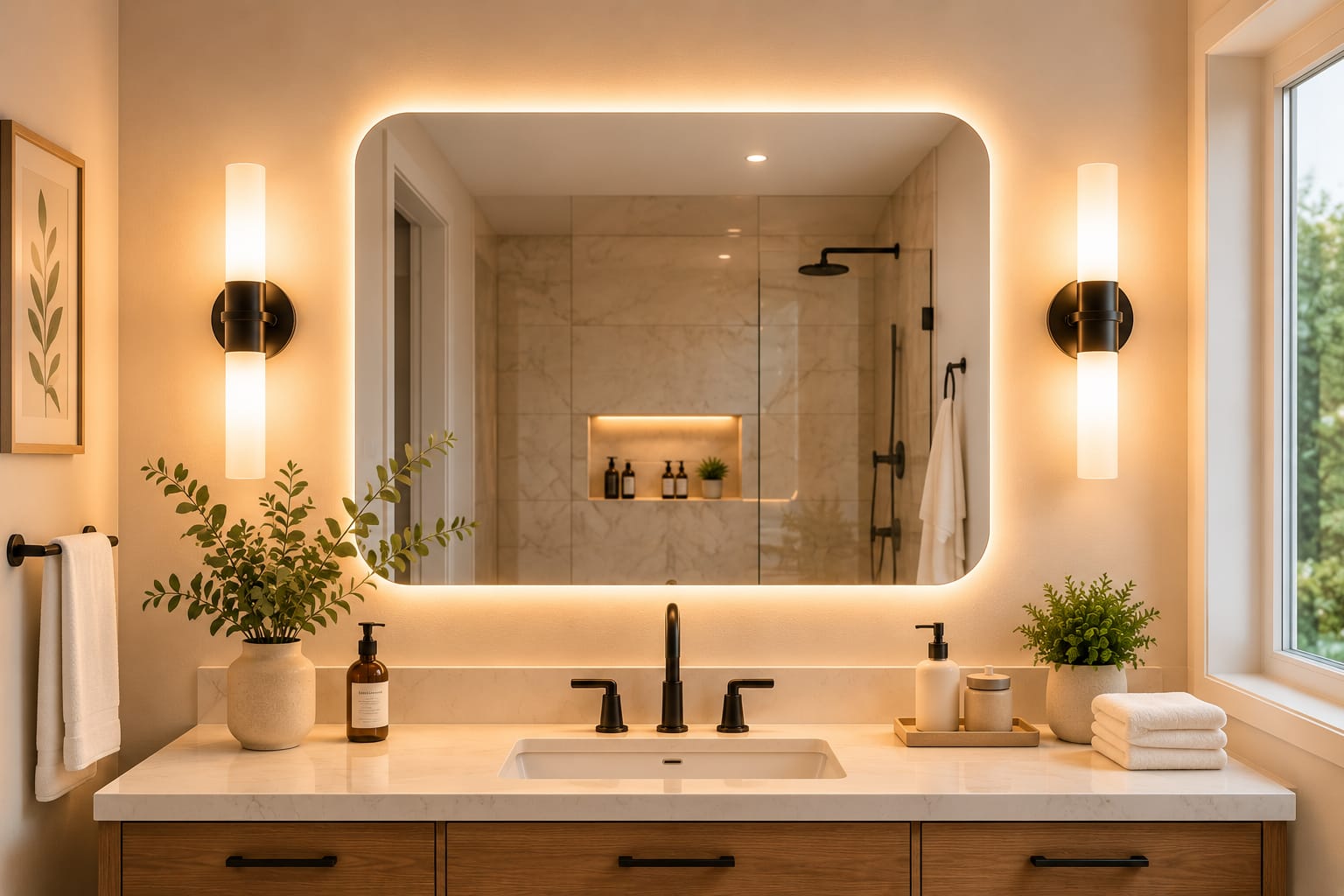
Ceiling Cans, Damp Areas, and Enclosed Fixtures
Bathroom ceiling lights have different requirements from vanity bulbs. Recessed ceiling cans, flush mounts, and enclosed fixtures may trap heat, while bathroom moisture adds another layer of stress. Before using any bulb near showers, tubs, or enclosed housings, check that it is clearly marked for the fixture type and bathroom conditions.
If your bathroom has recessed overhead housings, recessed LED bulbs for bathroom ceiling cans can help you avoid buying the wrong format. This matters most when the room feels unevenly lit from above or when the vanity light is doing too much of the work on its own.
For busy family bathrooms, ceiling lights may stay on for long periods before work or school. In that situation, bulb rating, heat handling, and stable output matter more than simply choosing the brightest option. The safest choice is a bulb that matches the fixture label and is appropriate for damp areas or enclosed use when required.
Do not assume every LED bulb is suitable for enclosed or damp bathroom fixtures. A bulb may fit physically but still be the wrong choice because of heat, humidity, or long-term lifespan.
Dimming, Flicker, and Daily Comfort
Even when the color temperature is right, a bathroom can still feel uncomfortable if the bulb flickers, buzzes, or behaves poorly on a dimmer. The best bathroom mirror bulbs should remain stable at full brightness and at lower evening settings. This is especially important in bathrooms used early in the morning or late at night.
Some people notice flicker immediately, while others feel subtle visual fatigue over time. If the mirror is where you shave, apply makeup, or do skincare, unstable light can make the routine more tiring than it needs to be. Look for dimmable bulbs that are compatible with your dimmer switch, and avoid mixing different bulb types on the same dimmed fixture when possible.
If flicker or unstable dimming is your main issue, comparing the best dimmable LED bulbs with no flicker can help you choose a smoother option for morning and evening bathroom use.
For label claims such as lumens, estimated energy use, lifespan, and light appearance, the U.S. Department of Energy LED lighting guidance is a useful official reference. It is especially helpful if you are comparing several bulbs that look similar online but differ in brightness, color quality, or fixture compatibility.
If the overhead lighting is still uneven after the vanity bulbs are corrected, a recessed LED option for bathroom ceiling fixtures can help support the mirror area without changing the room’s design.
Bathroom Bulb Buying Checklist
Before buying, check the practical details in order. This prevents the most common problems: bulbs that look too harsh, do not fit the fixture, flicker on a dimmer, or are not appropriate for bathroom conditions.
- Base: confirm whether your fixture uses E26 or another base type.
- Shape: choose A19 for many shaded fixtures or globe bulbs for visible vanity bars.
- Color temperature: start with 3000K to 4000K for bathroom mirrors.
- CRI: choose high CRI when skin tone accuracy matters.
- Lumens: use enough brightness for grooming, but avoid harsh direct glare.
- Dimming: check that the bulb and dimmer are compatible.
- Fixture rating: check damp-area, enclosed-fixture, and recessed-housing suitability.
If you want to compare bulb types, lighting terms, and real-world use cases before committing to a full refresh, the NeoLEDHub lighting knowledge hub is a useful place to explore next.
Final Recommendation for Everyday Bathrooms
For everyday bathrooms, the safest starting point is a dependable high-CRI LED bulb in the 3000K to 4000K range, matched to the fixture shape and bathroom rating. Choose frosted globe bulbs for visible vanity fixtures, A19 bulbs for many shaded fixtures, and properly rated recessed options for ceiling cans or enclosed housings.
The best bathroom bulbs make the mirror look natural, the ceiling feel supportive, and the room easy to use at any time of day. Choose based on the task and fixture first, then refine brightness and color temperature. That is far more reliable than buying the brightest bulb on the shelf.
What Should You Choose?
The best choice depends on how the bathroom is used. Start with the fixture, then match the bulb shape, brightness, color temperature, and rating to the task. This approach is more reliable than buying one bright bulb for every socket.
- Daily grooming mirror: choose 3000K to 4000K, high CRI, and enough brightness to see detail without glare.
- Open vanity bar: choose frosted globe bulbs so the exposed bulbs look balanced and cast smoother light.
- Shaded vanity fixture: choose A19 bulbs that fit comfortably inside the shade and support dimming if needed.
- Small powder room: choose moderate output because nearby walls often bounce light back into the mirror area.
- Large primary bathroom: combine vanity lighting with supportive ceiling lighting so one fixture does not have to do everything.
- Bathroom near shower or tub: check damp-area, enclosed-fixture, and ceiling-housing compatibility before buying.
The biggest mistake is mixing a warm vanity bulb with a much cooler ceiling bulb and then wondering why your face looks different depending on where you stand. Better results usually come from keeping the color temperature consistent while adjusting shape and output for each fixture.
FAQ
What Is the Best Light Bulb for a Bathroom Mirror?
For most bathroom mirrors, choose a high-CRI LED bulb between 3000K and 4000K. This range gives enough clarity for grooming while keeping the room more natural and less clinical than very cool white bulbs.
Are Globe Bulbs Better for Bathroom Vanities?
Globe bulbs are often better for open vanity bars where the bulb is visible. Frosted G25-style bulbs usually look smoother than clear bulbs because they reduce sharp glare and spread light more evenly around the mirror.
Is 3000K or 4000K Better for Bathroom Lighting?
3000K feels warmer and more relaxed, while 4000K feels cleaner and more task-focused. For bathroom mirrors, both can work well. Choose 3000K if you want a softer look, and choose 3500K to 4000K if the room is windowless or used heavily for grooming.
Can I Use Any LED Bulb in a Bathroom Fixture?
No. The bulb should match the fixture type and bathroom conditions. Check whether the fixture is open, enclosed, recessed, or near damp areas. For energy efficiency and label basics, the ENERGY STAR guide to LED lighting is another helpful reference before buying.
Key Takeaways
The best light bulbs for bathroom mirrors usually combine high CRI, a 3000K to 4000K color temperature, and a shape that suits the fixture. That combination gives clear, flattering light without making the bathroom feel cold or overly bright.
Use frosted globe bulbs for exposed vanity bars, A19 bulbs for many shaded fixtures, and properly rated LED options for ceiling cans, damp areas, or enclosed housings. Fit and fixture compatibility matter as much as brightness.
Before buying, check the base, shape, lumens, CRI, dimming support, and bathroom rating. A bulb that matches the fixture and the routine will usually feel better than one chosen only by wattage replacement.
Sharing This Guide
Share this guide if you found it helpful. Save it or share it with someone who is comparing bathroom mirror bulbs, vanity lighting, or damp-safe LED options right now.
Interested in learning more? Browse more related articles in our category section.