Best Lighting for Dark Rooms with Dark Walls: Bulbs & Layout
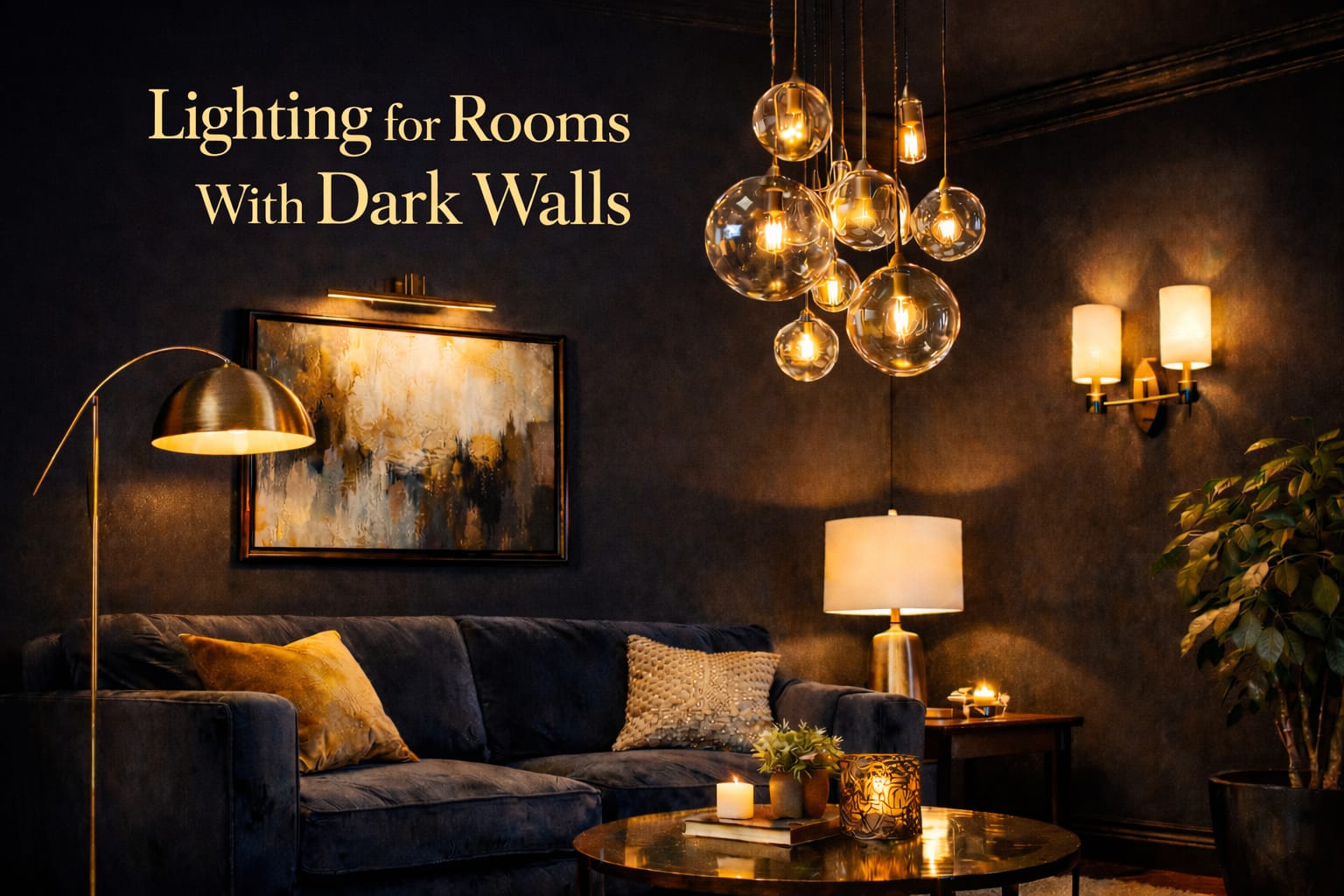
The best lighting for dark rooms does not come from one harsh ceiling bulb. It is a balanced mix of warm, higher-lumen ambient light, task lighting where you read or work, and indirect accent lighting that spreads brightness across the room.
This guide is for rooms with charcoal, navy, forest green, black, or other dark walls that feel dim, heavy, or uneven at night. You will learn how to choose better bulbs, place fixtures more effectively, reduce gloomy corners, and keep the depth of dark walls without making the room feel harsh or underlit.
Quick Answer
For dark rooms with dark walls, use warm white LED bulbs, increase total lumens, add floor or table lamps near dark corners, and include indirect light that bounces off walls or ceilings. Avoid relying on one bright ceiling fixture, because it often creates glare in the center while the edges stay dim.
Table of Contents:
- Why Dark Rooms Need a Different Lighting Plan
- How Much Light Do Dark Rooms Need?
- Best Lighting Setup for Dark Rooms
- Where to Place Lights in a Dark Room
- Best Bulbs for Dark Rooms
- Reflective and Natural Light Tricks
- Dark Room Lighting Ideas by Room
- Common Mistakes to Avoid
- Final Takeaway
- FAQ
- Sharing This Guide
Why Dark Rooms Need a Different Lighting Plan
Dark paint changes how a room handles light. White and pale finishes bounce more illumination back into the space, while deeper tones absorb much more of it. That is why the same fixture setup can feel fine in a light beige room but noticeably dimmer once the walls turn charcoal, navy, forest green, or black.
This is the practical effect of dark paint light absorption. The room is not necessarily too small or badly designed. It is simply holding onto more light instead of reflecting it. The darker and flatter the paint finish, the more obvious that effect becomes, especially after sunset.
That is why lighting rooms with dark walls should start with realistic expectations. You usually need more useful light, better spacing, and more control over where light lands. If you want a broader foundation before adjusting fixtures, the beginner guide to lighting design is the best internal starting point.
How Much Light Do Dark Rooms Need?
Most dark-walled rooms need more total lumens than the same room with light-colored walls. You do not need to turn the space into a showroom, but you usually need to step up brightness so the room feels intentional instead of murky. Living rooms, bedrooms, and dining rooms can stay softer, while home offices, kitchens, hallways, and work areas often need a bigger boost.
A good rule is to increase useful light gradually, then judge the result at night when the room depends fully on artificial lighting. Dark rooms often look acceptable in daylight but feel underlit after sunset. If the space still feels heavy, do not automatically jump to the coldest or brightest bulb possible. First ask whether the problem is low lumens, poor placement, or a weak lighting mix.
For rooms that clearly need stronger output, the guide to high-lumen LED bulbs is a strong next step. The goal is not just more brightness on paper, but more usable light in the places where the room currently feels dull.
One of the biggest mistakes is using a very cool or glaring bulb to “fix” a dim space. That may make the room feel brighter at first, but it often makes it less comfortable. A better answer is usually more total lumens spread across several sources, not one cold bulb pointed straight down.
Do not try to fix a dark room by using one very bright, cool bulb in the center of the ceiling. It can create glare, harsh contrast, and darker-looking corners. A softer layered setup usually feels brighter and more comfortable than one overpowering light source.
According to U.S. Department of Energy LED lighting guidance, good residential results come from matching the bulb and fixture to the application rather than chasing brightness alone. In a dark room, that usually means choosing the right output, beam spread, fixture type, and placement instead of relying on brightness alone.
Best Lighting Setup for Dark Rooms
The best lighting setup for dark rooms is a layered plan: ambient lighting for general visibility, task lighting for reading or work, and accent lighting for depth. This layered illumination approach works especially well with dark walls because it prevents the room from depending on one source that leaves corners and edges flat.
Ambient light gives you the base layer. It can come from ceiling fixtures, recessed lights, wall lights, or indirect uplighting. Task lighting strengthens the useful parts of the room, such as sofas, desks, vanities, counters, or reading chairs. Accent lighting adds glow to shelves, artwork, alcoves, plants, textured walls, or architectural details so the room feels designed rather than underpowered.
This matters because single-source lighting often creates patchy results in dark spaces. The center may look bright enough, but the perimeter stays dull and the walls swallow spill light. If you want to understand the three-layer system more deeply, the guide to ambient vs task vs accent lighting supports this part naturally.
For rooms where the corners still feel flat, an adjustable floor lamp for dark corners can be a natural second layer because it adds softer ambient light near seating areas, walls, and edges without making the ceiling light do all the work.
If your room still feels dim after adding one brighter bulb, the problem is usually not power alone. It is often the lack of a second or third lighting layer.
Best setup by situation:
Small dark living room: warm ceiling light, one floor lamp near the seating area, and one table lamp or wall light near the darkest corner.
Dark bedroom: soft warm bulbs, bedside task lighting, and low accent lighting instead of strong central glare.
Dark home office: stronger task light at the desk, balanced ambient light behind or beside the monitor, and glare control around screens.
Dark hallway or stairs: evenly spaced wall or ceiling lights, enough overlap between fixtures, and no harsh hotspots.
Dark kitchen: overhead lighting for general brightness plus under-cabinet or task lighting where food prep actually happens.
Where to Place Lights in a Dark Room
Placement matters just as much as bulb output. In dark spaces, fixtures that are badly positioned leave the room feeling uneven because the walls absorb so much spill light. A centered ceiling fixture can leave the perimeter dull, while fixtures placed too close together can create bright islands with gloomy gaps between them.
In most rooms, the best move is to spread light farther across the room instead of concentrating everything in the middle. Perimeter recessed lights, floor lamps near seating, wall washers, sconces, and table lamps placed around the room usually work better than one dominant source. This gives the walls, ceiling, and furnishings a better balance of illumination.
A dimmable overhead fixture can still play a strong role, but it should rarely be the entire plan. If your current ceiling light is the main weak point, a dimmable overhead light for the base layer can make a visible difference without forcing the room into harsh glare. Keep it as the foundation, then use lamps or accent lights to reach the edges of the room.
One bright central fixture often looks like the easy solution, but in dark rooms it can make the contrast feel worse. The center becomes bright enough while the walls, corners, and seating edges stay visually dead. To avoid uncomfortable hotspots while increasing brightness, the glare reduction guide is one of the most relevant supporting reads for this page.
Best Bulbs for Dark Rooms
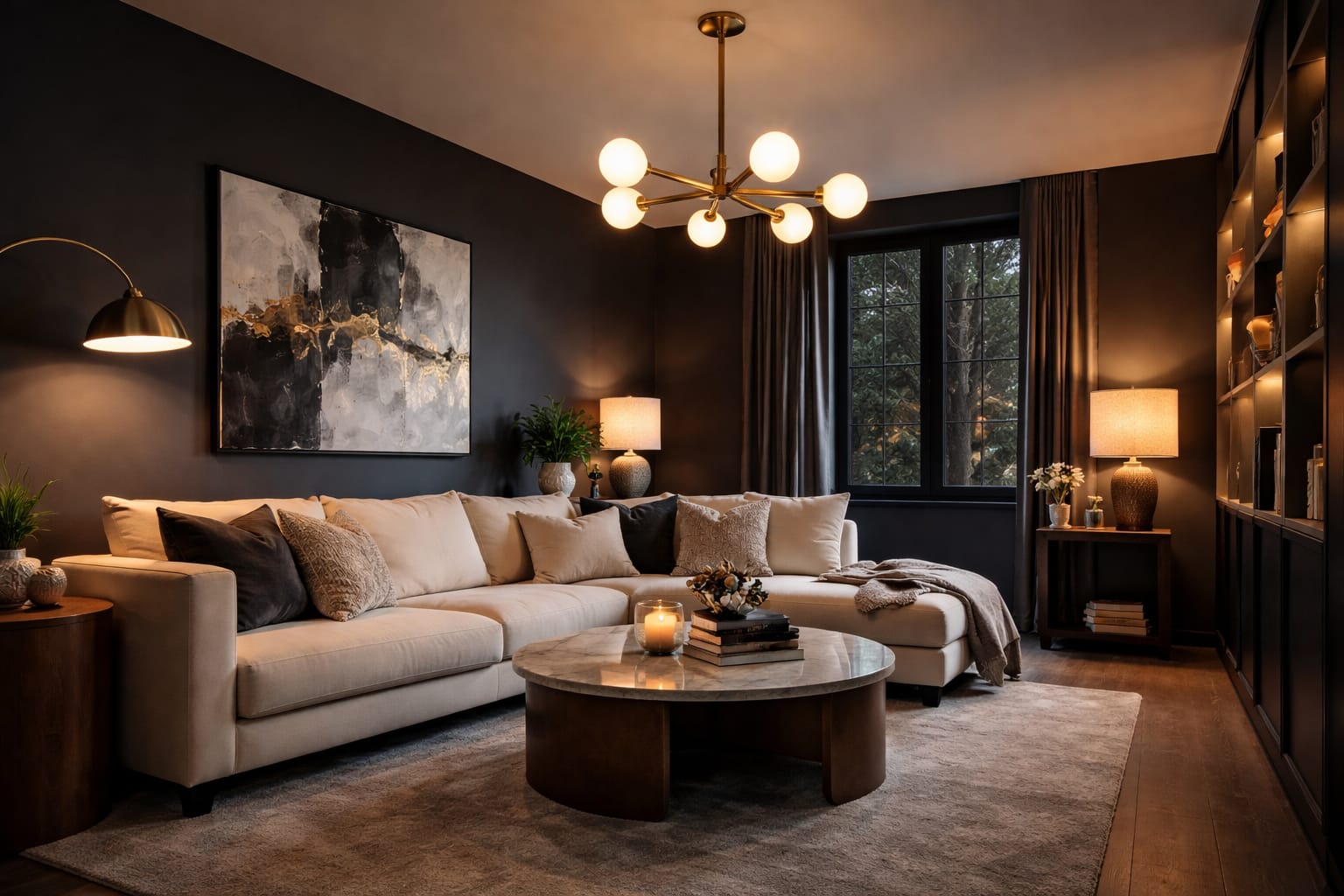
The best bulbs for dark rooms are usually warm, bright enough for the room size, dimmable when possible, and high enough quality to make colors look natural. In most living spaces, a warm color temperature choice around 2700K to 3000K keeps dark walls inviting and rich instead of clinical.
Cooler bulbs can work in offices, kitchens, garages, or utility areas, but in dark rooms they can sometimes make the contrast feel too stark. If the walls are already deep and dramatic, very cool light can make the space feel sharper rather than more comfortable.
High-CRI bulbs are also worth choosing because they help wood tones, fabrics, paint colors, artwork, and skin tones look more natural. That matters in dark interiors where you already have less reflected light working in your favor. Better bulb quality can make a room feel more expensive and more comfortable even before you add more fixtures.
For product-focused next steps, the guides to best soft white LED bulbs and best high-lumen LED bulbs fit this article naturally because they help you choose the right balance between comfort and brightness.
Simple bulb rule:
Living rooms and bedrooms: usually 2700K to 3000K for a warm, comfortable feel.
Home offices and kitchens: often 3000K to 4000K when you need more clarity for tasks.
Dark walls with warm wood or soft fabrics: warm white usually looks richer and less harsh.
Rooms that still feel dim: increase lumens or add another layer before jumping to a colder bulb.
Reflective and Natural Light Tricks
Not every improvement has to come from adding more fixtures. Mirrors, glass, satin finishes, metallic accents, lighter ceilings, pale rugs, and lighter furniture can all help a dark room feel brighter. These elements do not replace good lighting, but they make existing light work harder.
A mirror placed opposite or near a useful light source can extend brightness farther into the room. Lighter ceilings are especially effective because they bounce light downward instead of swallowing it. Even changing a flat dark ceiling to a lighter or slightly more reflective finish can make the whole room feel more open.
Natural light also matters more in dark rooms because it offsets some of the loss caused by dark paint light absorption. During the day, keep window treatments light and as open as privacy allows. Heavy blackout curtains or dark shades can make a dark room feel much heavier than necessary.
It also helps to think about where the daylight lands. If the room has one strong window and the opposite side still feels dim, that is where mirrors, lamps, and secondary light layers matter most. If the room lacks good daylight altogether, the guide to lighting for windowless rooms is a natural supporting resource.
Dark Room Lighting Ideas by Room
The best lighting ideas for dark rooms depend on how the space is used. A dark living room needs comfort and atmosphere, while a dark office needs visibility and contrast. A dark hallway needs even coverage, and a dark kitchen needs practical task light where work actually happens.
In dark-walled living rooms, floor lamps, table lamps, and dimmable overhead lighting usually work better than relying only on recessed lights. In bedrooms, softer warm bulbs and bedside task lighting tend to feel better than strong central brightness. In offices, you usually need more direct task lighting because dark walls can reduce perceived contrast around desks and screens.
Hallways, stairs, and narrower spaces need especially careful planning because dark walls can make them feel visually tighter. There, spacing, wall washing, and glare control matter as much as total lumen output. In kitchens, under-cabinet lighting is often the biggest upgrade because it adds practical brightness exactly where dark finishes tend to swallow it.
This topic links naturally with the wider lighting layout cluster. The strongest related reads are lighting for narrow hallways, lighting design for staircases, and lighting layout planning step by step.
Common Mistakes to Avoid
The biggest mistake is assuming dark walls only need one stronger bulb. Usually they need a smarter mix of sources instead. A single fixture can make the center brighter while the walls and corners stay flat, which makes the room feel smaller and less comfortable.
Another common mistake is choosing bulbs that are too cool, too glaring, or too directional. This can make the room technically brighter but less pleasant to use. Dark rooms usually look better when brightness is spread across the space, softened where needed, and controlled with dimming or multiple layers.
People also often forget the ceiling. A dark or very matte ceiling can pull down the whole room visually and reduce the value of the lighting plan. If your room feels uncomfortable after “brightening” it, the issue may be balance rather than power. That is usually a sign to revisit layering, placement, and glare before buying even stronger bulbs.
Final Takeaway
The best approach to lighting rooms with dark walls is not to overpower the space. It is to respect what the dark color is doing, then support it with better brightness planning, smarter fixture placement, and stronger layering. When that balance is right, dark rooms feel rich, atmospheric, and comfortable instead of dull or oppressive.
In practical terms, that usually means more total lumens than you would use in a pale room, a stronger layered lighting setup, warm or carefully chosen bulbs, better light placement around the perimeter, and a few reflective surfaces that help the room work harder.
FAQ
What Is the Best Lighting for Dark Rooms?
The best lighting for dark rooms is a layered setup with warm ambient light, task lighting for useful areas, and accent or indirect lighting near dark corners. This works better than using one very bright ceiling fixture because it spreads brightness more evenly.
Are Warm or Daylight Bulbs Better for Dark Walls?
Warm white bulbs around 2700K to 3000K are usually better for living rooms and bedrooms with dark walls because they feel softer and richer. Daylight bulbs can be useful in offices, kitchens, or task-heavy spaces, but they may feel too stark in cozy rooms.
How Do You Make a Dark Room Brighter Without Painting the Walls White?
Add more light layers, place lamps near dark corners, use mirrors or lighter ceilings to reflect light, choose higher-lumen bulbs where needed, and avoid heavy dark window treatments. These changes brighten the room without removing the mood of the dark walls.
Is One Ceiling Light Enough for a Dark Room?
Usually no. One ceiling light can help as a base layer, but dark rooms often need lamps, task lights, wall lights, or accent lighting to reach the edges of the space. Without those extra layers, the room may still feel gloomy even if the center is bright.
Sharing This Guide
If you found this guide helpful, save it or share it with someone dealing with the same problem.
Interested in learning more? Browse all related articles in our category section.