Lighting Design for Staircases: Safe, Stylish Step Lighting
Good lighting design for staircases does two jobs at once: it makes every step easier to see, and it turns a plain stair run into a more defined architectural feature. The best stair lighting improves tread visibility, reduces glare, and helps transitions between floors feel safer and more intentional during both daytime and nighttime use.
Whether you are planning recessed step lights, handrail lighting, or subtle LED strip lights under the treads, the goal is the same: clear, comfortable illumination that helps people move confidently without harsh brightness or distracting shadows.
Quick Answer
The safest staircase lighting makes every tread easy to read, avoids direct glare, and stays bright enough to guide movement without overwhelming the space.
- Use low-glare fixtures that clearly define each step.
- Keep brightness consistent from the top landing to the bottom landing.
- Place tread lighting or LED strips where shadows stay minimal.
- Add motion sensors or dimming for safer nighttime use.

Table of Contents
- Quick Answer
- Lighting Design for Staircases Basics
- Code and Safety Essentials
- Best Stair Lighting Fixtures
- Where to Place Stair Lights
- Handrail Lighting and LED Strip Lights
- Color Temperature and Brightness
- Motion Sensors and Controls
- Common Stair Lighting Mistakes
- Style Ideas That Still Feel Safe
- Installation Planning
- What Should You Choose?
- Key Takeaways
- Sharing this guide
If you want a broader foundation first, our beginner guide to lighting design explains the core principles behind layout, brightness, and fixture choice before you apply them to stairs.
Lighting Design for Staircases Basics
The first rule of lighting design for staircases is simple: every step should be easy to read at a glance. People need to see where one tread ends and the next begins, especially when moving quickly, carrying something, or using the stairs at night. If step edges disappear into shadow, even a stylish staircase becomes harder and less safe to use.
Good staircase lighting also needs to stay visually comfortable. Bright bulbs aimed directly into your eyes can be just as problematic as dim steps. That is why the best designs rely on controlled, low-glare illumination rather than raw brightness alone.
A well-lit staircase usually combines more than one layer. You may have general overhead light, dedicated tread lighting, and subtle accent light that helps the staircase feel integrated into the rest of the home. That layered approach is especially useful if the stair run connects to hallways, living spaces, or double-height entries where lighting needs change throughout the day.
Code and Safety Essentials
Many building codes and safety standards require stairways to be illuminated clearly enough for safe use, but exact rules vary by country, region, and building type. Residential stairs may have simpler requirements than commercial or multi-family properties, so it is always smart to verify local code before final installation.
In practice, safe stairs usually need:
- even light across the tread surfaces
- clear visibility at the top and bottom landings
- switching or controls that are easy to access
- no harsh glare that makes it harder to judge the next step
If older adults, children, or frequent guests use the staircase, it is worth aiming higher than the bare minimum. Safer stair lighting is often about consistency and comfort more than raw lumen output.
If you are choosing LED products for a staircase upgrade, the U.S. Department of Energy LED lighting guidance and the ENERGY STAR LED lighting overview are helpful references for efficiency and product quality.
Best Stair Lighting Fixtures
The best stair lighting fixtures depend on the staircase shape, wall construction, and the look you want. Recessed step lights are one of the best all-around choices because they light the treads directly without cluttering the wall or projecting into the walkway.
Other strong options include small wall sconces, linear recessed lights, under-tread channels, and discreet overhead downlights. Each one solves a different problem:
- Recessed step lights: great for clean, architectural safety lighting.
- Wall sconces: useful on landings or wider staircases where decorative style matters.
- Tread lighting: excellent for clearly defining each step.
- LED strip lights: ideal for modern stairs, floating treads, or handrail integration.
- Overhead downlights: helpful as general support, but usually not enough on their own.
If you want an easy retrofit solution, a motion-activated LED stair lighting system for safe navigation can be a practical starting point, especially for homes where wiring access is limited.
Where to Place Stair Lights
Placement matters just as much as fixture type. Even good lights will underperform if they are positioned badly. The main goal is to make the tread surface and step edge easy to see without blasting light into the user’s eyes.
For wall-mounted step lights, a common sweet spot is low on the wall, roughly around riser height. That lets the beam wash across the treads rather than shine at eye level. On enclosed staircases, alternating fixtures from side to side often work well and keeps the design from feeling too repetitive.
Overhead fixtures should support the staircase, not flatten it. If they are too sparse, you get dark bands and shadows. If they are too intense, you create glare and over-light the run. This is one area where a proper lighting layout plan can prevent a lot of trial and error.
Simple Placement Rules That Work Well
- Light the steps, not the user’s face.
- Keep the top and bottom landings clearly illuminated.
- Avoid strong shadows at the tread edge.
- Test the view while standing both above and below the stairs.
- Reduce glare if glossy surfaces reflect the beam badly.
If you are dealing with uncomfortable brightness, our lighting glare reduction guide goes deeper into fixture shielding and softer placement strategies.
Handrail Lighting and LED Strip Lights
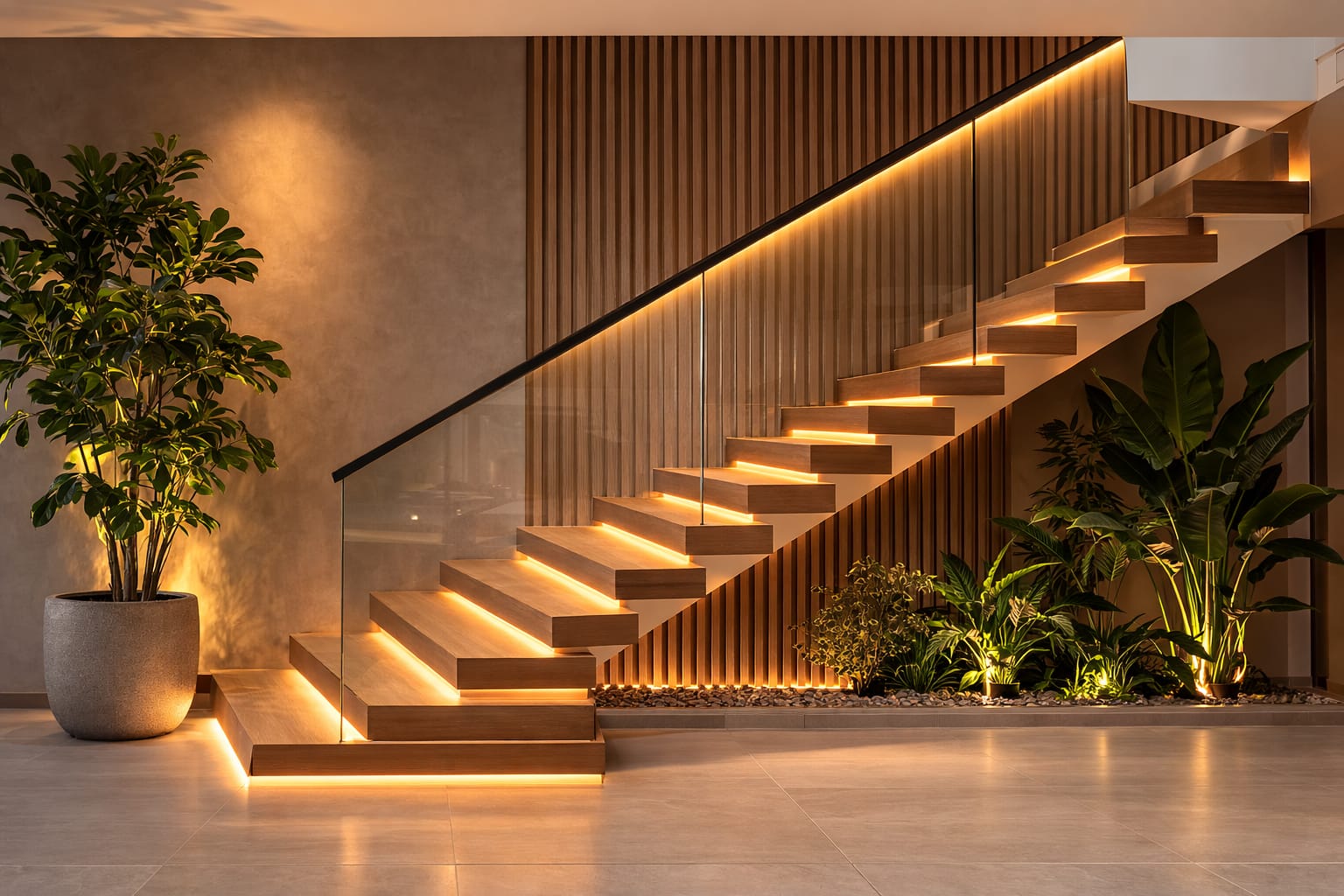
One of the most effective modern approaches to staircase lighting is using LED strip lights in concealed channels. Installed under the tread nose, inside a handrail, or along a side stringer, they create a clean line of light that feels contemporary and practical at the same time.
Under-tread strips are especially effective because they define each step edge directly. That improves readability and also creates a premium floating-step effect in modern interiors. Handrail lighting works differently: it throws light down across the run and can be very effective where side-wall recessing is not possible.
The key with LED strip lights is finishing them properly. A bare LED strip can create dotted hotspots and visual clutter. Using aluminum channels and diffusers gives you smoother, more polished tread lighting that looks intentional rather than improvised.
Avoid exposed LED strips on busy stairways unless they are properly protected. Unfinished installation details can create glare, collect dust, and make future maintenance harder.
Color Temperature and Brightness
For most homes, warm-to-neutral white works best. Around 2700K to 3500K usually feels comfortable, clear, and visually connected to surrounding spaces. Very cool lighting can make stairs feel harsh, while very warm lighting can reduce visual crispness if the staircase already has dark finishes.
Brightness should be strong enough for safe footing but not so strong that the stairs become the brightest object in sight. That usually means moderate, even output rather than dramatic spotlighting. If the staircase is next to bedrooms, dimming becomes especially valuable so nighttime use feels calm rather than disruptive.
Consistency matters too. If the lower landing is dim, the middle run is bright, and the top landing is dark again, the result feels awkward and can make the stairs harder to use. One of the easiest ways to improve results is to match the staircase lighting to the neighboring hall or open-plan zone rather than treating it as an isolated strip of light.
Motion Sensors and Controls
Motion sensors make staircase lighting much more useful, especially at night. Instead of searching for a switch, the lights come on as you approach. That is a real safety upgrade, and it also reduces wasted energy because the lights do not need to stay on constantly.
The best motion-triggered systems illuminate slightly before the user reaches the first step and stay on long enough for a slow climb or descent. If the timeout is too short, the lights can shut off mid-run, which is exactly what you want to avoid.
Dimming is also worth including whenever possible. Daytime, evening, and overnight stair use all benefit from different light levels. A staircase that needs crisp visibility at 7 p.m. may only need gentle guidance at 2 a.m.
If you are comparing control options for a broader smart setup, our article on local vs cloud smart lighting explains which type of automation makes more sense over time.
Common Stair Lighting Mistakes
The most common mistake is relying on one overhead fixture and assuming that it is enough. It may brighten the stairwell overall, but it often does a poor job of defining the actual tread edges. That can leave shadows exactly where clarity matters most.
Another frequent mistake is overdoing the dramatic effect. Very bright linear lighting can look impressive in photos, but if it is too intense or directly visible, it becomes tiring in real life. Good staircase lighting should feel polished and helpful, not theatrical every time someone uses the stairs.
Other mistakes include:
- ignoring the landings
- using uneven spacing
- creating glare on glossy treads or glass balustrades
- skipping dimming or motion control
- choosing fixtures that are difficult to maintain later
A lot of these issues overlap with broader lighting placement mistakes that show up elsewhere in the home too.
Style Ideas That Still Feel Safe
Safety and style do not need to compete. In fact, the best staircase lighting usually does both. Warm recessed step lights suit minimalist spaces. Slim black wall fixtures work well in modern or industrial interiors. Hidden LED strip lights under open treads can make a staircase feel lighter and more premium without sacrificing usability.
If you want a softer luxury look, indirect lighting can work beautifully. Light washing a nearby wall or balustrade can reduce contrast and make the whole stair volume feel more comfortable. For cleaner contemporary homes, integrated channels and flush trims usually look better than decorative sconces.
The best visual result usually comes from keeping the fixture language simple and letting the staircase itself stay in focus. That is why low-profile stair lighting often outperforms more decorative options in real homes.
Installation Planning
New builds and full renovations are the easiest time to get staircase lighting right because you can hide wiring, plan switch locations properly, and coordinate fixtures with joinery and wall finishes from the start. Retrofits can still work very well, but they require more care when choosing low-voltage or surface-friendly solutions.
Think ahead about maintenance too. If a driver, strip, or fixture ever needs attention, can you access it without damaging finished walls or stair parts? This matters more than people expect, especially with integrated tread lighting and concealed channels.
For many homeowners, the smartest route is to decide on the concept early, then let an electrician or lighting professional handle wiring and code-related details. That usually delivers a better result than improvising placement once finishes are already in.
What Should You Choose?
If you want the safest and most balanced result, combine low-glare step lighting with softer ambient support and simple controls.
- If safety comes first, use dedicated tread lighting.
- If you want a cleaner modern look, use concealed LED strip lights.
- If you want easier nighttime use, add motion sensors and dimming.
- If you are remodeling from scratch, plan wiring and channels early.
- If you want both style and comfort, avoid glare and keep brightness even.
Key Takeaways
The best lighting design for staircases makes tread edges easy to read, keeps glare low, and helps people move safely at any time of day.
Dedicated step lights, tread lighting, and well-finished LED strips usually outperform a single overhead fixture because they define each level more clearly and feel more comfortable in daily use.
If you want a staircase that looks refined and feels safer every day, focus on placement, consistency, and low-glare control before chasing dramatic brightness.
For more ideas on staircase-adjacent spaces, layout planning, and LED fixture strategy, browse the LED Knowledge Center.
Sharing this guide
If you found this guide helpful, you can save it for later or share it with a friend. It is especially useful for beginners, homeowners, and DIY users.
Share using the links below
Interested in learning more? Browse all related articles in our category section.