LED Lighting Efficiency: Lumens per Watt & Energy Savings
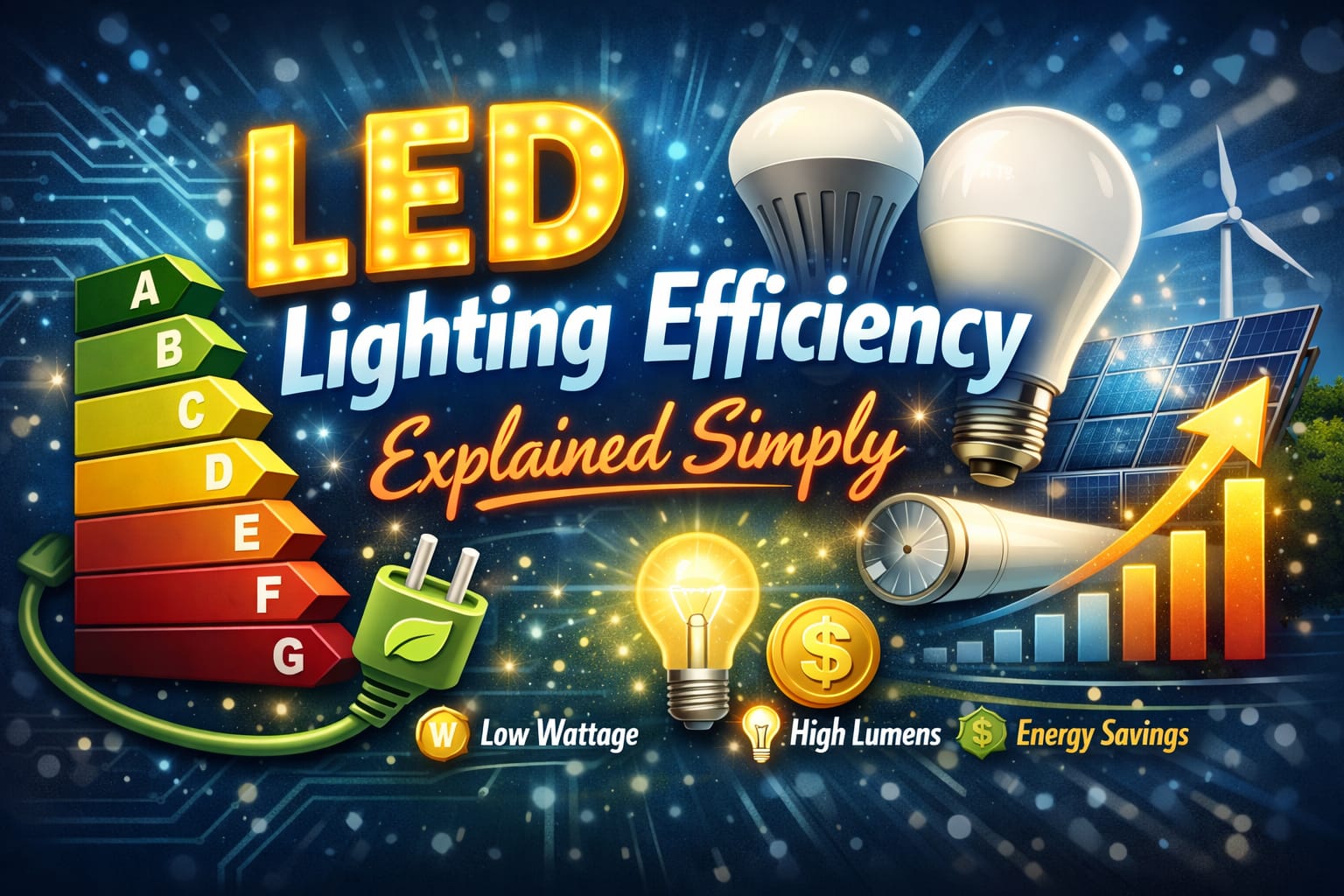
LED lighting efficiency tells you how much brightness you get for each watt of electricity. The fastest way to compare bulbs is lumens per watt: a higher lm/W number usually means more light with less energy, as long as the bulb also has good color quality, heat management, and reliable ratings.
For most buyers, the goal is simple: choose the right brightness in lumens first, then compare wattage, efficiency ratings, fixture compatibility, dimming support, lifespan, and overall bulb quality. This guide explains what LED efficiency really means, how much energy-efficient LED bulbs can save, and which specs actually matter before you buy.
Quick Answer
LED lighting efficiency is best compared with lumens per watt. A bulb with more lumens per watt gives you more brightness for less electricity. For everyday home use, choose the brightness you need in lumens first, then compare wattage, ENERGY STAR or efficiency ratings, heat performance, dimming compatibility, CRI, warranty, and whether the bulb is suitable for your fixture.
Table of Contents:
- What LED Lighting Efficiency Means
- Lumens per Watt: The Main LED Efficiency Metric
- How LEDs Compare with Incandescent, Halogen and CFL Bulbs
- What Affects Real-World LED Efficiency
- Which LED Efficiency Ratings Should You Trust?
- How Much Can Efficient LED Bulbs Save?
- How to Choose an Efficient LED Bulb
- FAQ
- Key Takeaways
- Sharing This Guide
What LED Lighting Efficiency Means
LED lighting efficiency describes how effectively a light source turns electricity into visible light instead of wasted heat. In practical terms, a more efficient LED bulb gives you the brightness you need while using fewer watts.
This is why shopping for LED bulbs is different from shopping for old incandescent bulbs. With incandescent lighting, people often used watts as a shortcut for brightness because most bulbs performed in a similar way. With LEDs, watts only tell you how much electricity the bulb uses. They do not tell you how much light you will get.
The more useful approach is to compare brightness, wattage, efficiency, and product quality together. A bulb can have a high efficiency number on paper, but if it has poor heat management, weak driver electronics, bad dimming behavior, or low-quality light, it may not be the best choice for real-world use.
Simple Rule: Do not start with watts. Start with the lumens you need for the room, then compare how many watts different LED bulbs use to produce that brightness.
LEDs are efficient because they produce light through electroluminescence rather than by heating a filament until it glows. Incandescent bulbs waste much of their energy as heat, while LEDs convert a much larger share of input power into useful visible light. That is the main reason LEDs can deliver similar brightness with much lower energy consumption.
Lumens per Watt: The Main LED Efficiency Metric
Lumens measure visible brightness. Watts measure electricity use. Lumens per watt shows how much brightness a bulb produces for each watt it consumes. That makes it the clearest everyday measurement of LED bulb efficiency.
For example, an 800-lumen LED bulb that uses 10 watts delivers 80 lumens per watt. An incandescent bulb producing the same 800 lumens may use around 60 watts, which is only about 13 lumens per watt. The brightness can look similar, but the energy use is very different.
As a general shopping guide, As a general shopping guide, a 450-lumen LED replaces about a 40-watt incandescent bulb, an 800-lumen LED replaces about a 60-watt incandescent bulb, a 1,100-lumen LED replaces about a 75-watt incandescent bulb, and a 1,600-lumen LED replaces about a 100-watt incandescent bulb. You can also compare these values with the lighting facts guidance from the U.S. Department of Energy when you want a more detailed explanation of lumens and bulb labels.
If two LED bulbs produce the same lumens, the one that uses fewer watts is usually more efficient. Just make sure the bulb also has the right color temperature, CRI, dimming support, and fixture rating for your use case.
Budget LEDs are often around 70 to 90 lumens per watt, while stronger products may reach 100 to 150 lm/W or more. The exact number depends on the bulb type, driver design, temperature, optics, and build quality. For standard lamps and ceiling fixtures, efficient A19 LED bulbs are usually the simplest replacement option when you want normal household brightness with lower energy use.
You may also see technical terms such as wall-plug efficacy, LED chip efficacy, system efficiency, LM-79, or LM-80. These can matter in professional lighting specifications, but most residential buyers should focus on the complete product: lumens, watts, ratings, light quality, heat handling, dimming behavior, and lifespan.

How LEDs Compare with Incandescent, Halogen and CFL Bulbs
In most homes, LEDs are far more efficient than older lighting technologies. Incandescent bulbs typically deliver only about 10 to 17 lumens per watt because they create light by producing heat. Halogen bulbs are slightly better, but still waste a large amount of energy as heat.
CFL bulbs improved energy efficiency compared with incandescent bulbs, but they usually do not match the best modern LEDs for instant-on performance, durability, dimming flexibility, or mercury-free design. A typical LED can deliver much more light per watt while also lasting longer in many applications.
Incandescent: warm light, very low efficiency, high heat output, short lifespan.
Halogen: slightly better than incandescent, but still inefficient compared with LEDs.
CFL: more efficient than incandescent, but slower startup and less convenient for many homes.
LED: high lumens per watt, lower heat, long lifespan, and strong options for dimming, color temperature, and smart controls.
Efficiency also matters over the full lifecycle. LEDs may require more complex components than incandescent bulbs, but they usually make up for that quickly because they use much less electricity during operation and need to be replaced less often. Across a whole home, the difference becomes clearer when you compare LED vs incandescent electricity cost over months or years, not just by looking at the price of one bulb.
In commercial spaces, the difference can be even larger. Offices, retail stores, warehouses, and shared buildings often run lights for long hours. Even a small improvement in LED lumens per watt can matter when multiplied across many fixtures.
What Affects Real-World LED Efficiency
Lab numbers are useful, but real-world LED efficiency depends on where and how the bulb or fixture is used. Heat, fixture design, voltage quality, driver quality, dimming compatibility, and installation conditions can all affect how efficiently a product performs over time.
Heat is one of the biggest factors. LEDs run cooler than incandescent bulbs, but the LED chip and driver still generate heat. Good LED heat sink and cooling design helps move that heat away from sensitive components. If heat cannot escape, brightness can drop, lifespan can shorten, and efficiency can decline faster than expected.
Never use a bulb in a fully enclosed fixture unless it is rated for enclosed use. Heat buildup can reduce efficiency and shorten lifespan much faster than many buyers expect.
For covered ceiling lights, glass shades, recessed cans, or enclosed fixtures, choose bulbs specifically rated for that use. For example, A19 LED bulbs rated for enclosed fixtures are a better fit than standard LEDs when heat buildup could affect efficiency and lifespan.
Driver quality also matters. The driver converts incoming power into a form the LED can use. A better driver wastes less energy, provides more stable light output, and usually supports longer product life. A weak driver can cause flicker, buzzing, poor dimming range, overheating, or early failure.
Dimming can reduce energy use, but only when the bulb, driver, and dimmer are compatible. Quality dimmable LEDs usually reduce power use predictably as brightness decreases. Poorer products may flicker, buzz, dim unevenly, or behave unpredictably with older switches.
Efficiency also changes over time. LEDs do not usually fail suddenly like incandescent bulbs. Instead, they gradually lose brightness through lumen depreciation. Ratings such as L70 describe the point at which a product is expected to reach 70% of its original light output. Since power consumption may remain similar while brightness slowly falls, real efficiency can decline as the bulb ages.
For the best long-term results, match the bulb to the fixture, avoid overheating, check dimming compatibility before buying, and do not choose purely by the highest lumens per watt number if the product has a weak warranty, unclear certification, or poor build quality.
Which LED Efficiency Ratings Should You Trust?
Efficiency claims are only useful when they are based on credible testing. Good LED products should make it easy to compare lumen output, wattage, estimated energy use, lifespan, color temperature, and whether the product meets recognized certification requirements. If the label is confusing, learning how to read LED bulb packaging can help you separate useful specs from marketing claims.
ENERGY STAR certified light bulbs are one of the easiest signals for everyday buyers because certified products must meet efficiency and performance requirements. Certification is not the only thing that matters, but it helps filter out products that rely too heavily on marketing claims.
For technical lighting projects, standards such as LM-79 and LM-80 are also useful. LM-79 relates to electrical and photometric testing of complete LED products, while LM-80 is often used when discussing lumen maintenance of LED light sources over time. Most homeowners do not need to study these standards in detail, but their presence can indicate that the product is being measured more seriously.
When comparing LED efficiency ratings, check:
Lumens: the brightness you actually get.
Watts: how much electricity the bulb uses.
Lumens per watt: the main efficiency comparison.
Certification: ENERGY STAR, safety marks, or credible testing references.
Fixture rating: especially for enclosed fixtures, recessed cans, or outdoor housings.
Dimming compatibility: important if you use dimmer switches.
CRI and color temperature: important for comfort and light quality.
Warranty: often a useful clue about component quality.
A very cheap LED with vague ratings can still work, but it is not always the best value. If the label is unclear, the warranty is short, the fixture compatibility is missing, or the product makes unrealistic claims, the apparent efficiency may not translate into reliable long-term savings.
How Much Can Efficient LED Bulbs Save?
The value of LED lighting efficiency becomes clearer when you compare operating costs. If an 800-lumen LED bulb uses 10 watts and an older incandescent bulb uses 60 watts for similar brightness, the LED uses far less electricity every hour it is on. To estimate real usage more accurately, compare wattage with daily runtime and check how much electricity LED bulbs use in common home situations.
The exact savings depend on your electricity price and how long the bulb runs each day. A bulb used for only a few minutes in a closet will not save much money. A bulb used every evening in a kitchen, living room, hallway, office, porch, or commercial space can save much more over time.
It is also worth considering total cost of ownership instead of purchase price alone. A slightly more expensive LED can still be the better deal if it uses less electricity, lasts longer, handles heat better, dims properly, and avoids early replacement.
One practical example is efficient A19 LED bulbs for everyday home use, which can make sense when you want standard brightness, lower wattage, and better long-term value than very cheap LEDs for common lamps and fixtures.
Best Use Case: The biggest savings usually come from replacing older bulbs that run for many hours each day. Start with the lights you use most often before replacing every bulb in the home.
In commercial spaces, efficient LED lighting can also reduce cooling load because less energy is wasted as heat. That means the savings may extend beyond the lighting bill, especially in air-conditioned offices, stores, and facilities.
How to Choose an Efficient LED Bulb
The best LED bulb is not simply the one with the highest efficiency number. It is the bulb that gives you the right brightness, uses reasonable wattage, fits the fixture, produces comfortable light, and remains reliable over time.
What Should You Choose?
- For standard lamps: choose an A19 LED with the right lumens, low wattage, comfortable color temperature, and good lifespan.
- For kitchens and bathrooms: prioritize enough lumens, good CRI, and reliable color quality.
- For enclosed fixtures: only use bulbs specifically rated for enclosed use.
- For dimmers: choose a dimmable LED and confirm compatibility with your dimmer switch.
- For outdoor fixtures: check wet/damp location ratings and temperature tolerance.
- For commercial spaces: compare system efficiency, driver quality, maintenance needs, and operating hours, not only bulb price.
For most homes, a practical buying process looks like this: decide how bright the room should be, choose the right lumen range, compare watts, check color temperature and CRI, confirm fixture and dimming compatibility, and then compare warranty and brand reliability.
Do not overpay only for a headline efficiency number if the bulb creates poor light, flickers, overheats, or has unclear ratings. A balanced LED bulb with good real-world performance is usually more useful than a technically efficient product that performs badly in your actual fixture.
Want to go beyond efficiency ratings and explore bulb types, smart systems, color temperature, and real-world performance? The LED Knowledge Center is the complete reference for anyone serious about modern lighting.
FAQ
What Is a Good Lumens-per-Watt Rating for LED Bulbs?
For many household LED bulbs, around 70 to 90 lm/W is common, while stronger options may reach 100 to 150 lm/W or more. The best choice depends on the bulb type, brightness, light quality, fixture compatibility, and reliability.
Are Higher Lumens per Watt Always Better?
Not always. Higher lumens per watt usually means better efficiency, but you should also check CRI, color temperature, dimming support, heat management, fixture rating, and warranty. A very efficient bulb with poor light quality may not be the best product for your room.
Do LED Bulbs Really Save Energy?
Yes. LED bulbs normally use far fewer watts than incandescent bulbs for similar brightness. The savings are greatest in rooms or fixtures where the lights run for several hours each day.
Should I Choose LEDs by Watts or Lumens?
Choose by lumens first because lumens tell you brightness. Then compare watts to understand energy use. This makes it easier to find a bulb that gives you the light level you want without wasting electricity.
Key Takeaways
LED lighting efficiency is mainly about getting more brightness from less electricity. Lumens per watt is the clearest everyday metric because it compares light output with power use.
When comparing LED bulbs, choose the brightness you need in lumens first, then compare wattage, ratings, fixture compatibility, heat performance, dimming support, CRI, warranty, and build quality.
The most efficient-looking bulb is not always the best choice. A reliable LED with good light quality, proper ratings, and strong real-world performance will usually deliver better long-term value than a cheap product with weak specifications.
Sharing This Guide
If you found this guide helpful, you can save it for later or share it with a friend. It is especially useful for beginners, homeowners, and DIY enthusiasts comparing LED bulb efficiency, lumens per watt, and energy savings.
Share using the links below:
Interested in learning more? Browse all related articles in our category section.