Best LED Lights for Home Offices: Essential Guide

Choosing the best LED lights for home offices dramatically impacts productivity, comfort, and visual health during extended work sessions. This comprehensive guide explores task lighting requirements, color temperature selection, glare management strategies, and layered illumination approaches that create optimal working environments supporting focus, reducing fatigue, and enhancing performance throughout demanding professional activities conducted from home workspaces.

Best LED lights for Modern home offices workspace with LED desk lighting setup for productivity and eye comfort
Properly positioned task and ambient fixtures create balanced illumination preventing shadows while minimizing screen glare

Task Lighting Fundamentals

Understanding task lighting principles proves essential when selecting the best LED lights for home offices because focused illumination directly affects work quality and visual comfort. Task lighting provides concentrated illumination on specific work surfaces where detailed activities occur, supplementing ambient lighting that illuminates entire rooms uniformly. Office desk lighting requires 300-500 lux at work surface level ensuring adequate brightness for reading, writing, and detailed computer work without causing eye strain or fatigue.

Position task lights to illuminate work areas without creating shadows or glare on screens and surfaces. For right-handed workers, place desk lamps on the left side preventing hand shadows on documents, while left-handed workers benefit from right-side placement. This cross-body positioning ensures hands don’t block light reaching work surfaces during writing or manipulation tasks requiring clear visibility of fine details throughout extended work sessions.

Adjustable fixtures provide flexibility adapting to different tasks throughout workdays requiring varied illumination angles and intensities. Document review demands focused downward lighting, while computer work benefits from softer ambient illumination reducing screen contrast. Multi-position arms and swivel heads allow repositioning lights quickly without requiring fixture replacement as activities change throughout daily professional routines conducted within home environments.

Illuminance Levels

Recommended illuminance varies by task complexity and worker age affecting visual acuity requirements. General office work requires 300-500 lux, while detailed tasks like technical drawing demand 750-1000 lux. Workers over 50 benefit from 50-100% higher illuminance compensating for age-related vision changes affecting contrast sensitivity and light adaptation speed requiring brighter conditions for comfortable performance compared to younger workers.

Measure existing illuminance using smartphone light meter apps providing reasonable accuracy for residential applications. Test measurements at actual work surface heights with normal room lighting active, identifying areas requiring supplemental office desk lighting to reach recommended levels. These measurements guide fixture selection ensuring adequate light output for specific workspace configurations and individual visual needs. Understanding proper placement prevents issues similar to corridor lighting problems from inadequate coverage planning.

Desk Lamps

Desk lamps represent the cornerstone when selecting the best LED lights for home offices because they provide adjustable task illumination exactly where needed. LED desk lamps offer advantages over traditional incandescent or fluorescent models including instant full brightness, cooler operation, longer lifespans, and superior energy efficiency. Modern LED desk lamps integrate advanced features like color temperature adjustment, dimming controls, and USB charging ports enhancing functionality beyond basic illumination in contemporary workspace environments.

If you want a dependable option, a solid example is LED Desk Lamp for Office Home, which is known for stable long-term performance.

Articulating arm lamps provide maximum positioning flexibility allowing precise light direction adjustments throughout workdays. Multi-joint arms enable positioning light sources at various heights and angles accommodating different tasks and workspace configurations. Weighted bases or clamp mounts ensure stable positioning preventing accidental movement disrupting carefully adjusted illumination setups optimized for specific activities requiring consistent lighting conditions throughout extended work periods.

Lamp Features

Touch-sensitive controls provide intuitive operation without fumbling for switches during focused work. Stepless dimming offers precise brightness adjustment across entire ranges rather than fixed level increments. Memory functions restore previous settings automatically upon powering on, eliminating repetitive adjustments when resuming work after breaks. These convenience features enhance productivity lighting setup by reducing distractions associated with fixture operation throughout busy workdays requiring sustained concentration.

Timer functions automatically turn lamps off after preset durations preventing unnecessary energy consumption when workers forget to manually deactivate lighting after completing tasks. Occupancy sensors detect presence activating illumination automatically when users approach desks, then deactivating lights after detecting absence for specified periods. These automated controls optimize energy efficiency while ensuring immediate light availability supporting seamless workflow transitions without manual intervention during dynamic work sessions.

Overhead Lighting

General ambient illumination from ceiling fixtures provides base lighting when installing the best LED lights for home offices, ensuring overall workspace visibility beyond focused task areas. Overhead lighting should provide 50-100 lux ambient illumination creating comfortable background lighting without overwhelming task lighting or causing excessive contrast between work surfaces and surrounding areas. This moderate ambient level supports visual comfort during screen work while maintaining spatial awareness throughout entire office environments.

Recessed downlights distribute illumination evenly throughout offices when properly spaced according to ceiling height and room dimensions. For 8-foot ceilings, space 4-inch recessed fixtures approximately 4-5 feet apart providing uniform coverage without dark spots or excessive brightness variations. Larger rooms benefit from grid patterns ensuring complete coverage, while smaller offices may require only 2-4 fixtures achieving adequate ambient illumination supporting general visibility needs.

Flush-mount or semi-flush ceiling fixtures offer alternatives to recessed lighting when ceiling cavity depth limitations prevent downlight installation. These surface-mounted fixtures provide similar light distribution patterns while requiring less installation complexity in existing spaces without accessible ceiling cavities. Choose fixtures with diffused lenses preventing harsh glare from visible LED arrays creating comfortable ambient illumination suitable for extended occupancy periods throughout workdays.

Indirect Lighting

Cove lighting and torchiere fixtures direct illumination toward ceilings creating soft reflected ambient lighting eliminating harsh shadows and glare. This indirect approach works particularly well in home offices where eye strain reduction takes priority over maximum brightness. The diffuse quality of ceiling-reflected light provides comfortable working conditions for screen-intensive tasks requiring sustained attention without causing visual fatigue from direct glare. Similar considerations apply when designing bathroom lighting schemes requiring glare-free illumination for grooming tasks.

LED strip lights installed in crown molding or shelving create elegant indirect ambient lighting enhancing office aesthetics while providing functional illumination. These concealed fixtures highlight architectural features while contributing to overall lighting schemes without consuming desk space or creating visual clutter. Dimmable strips allow adjustment matching natural daylight variations throughout days creating dynamic lighting environments responding to changing ambient conditions and user preferences during varied activities.

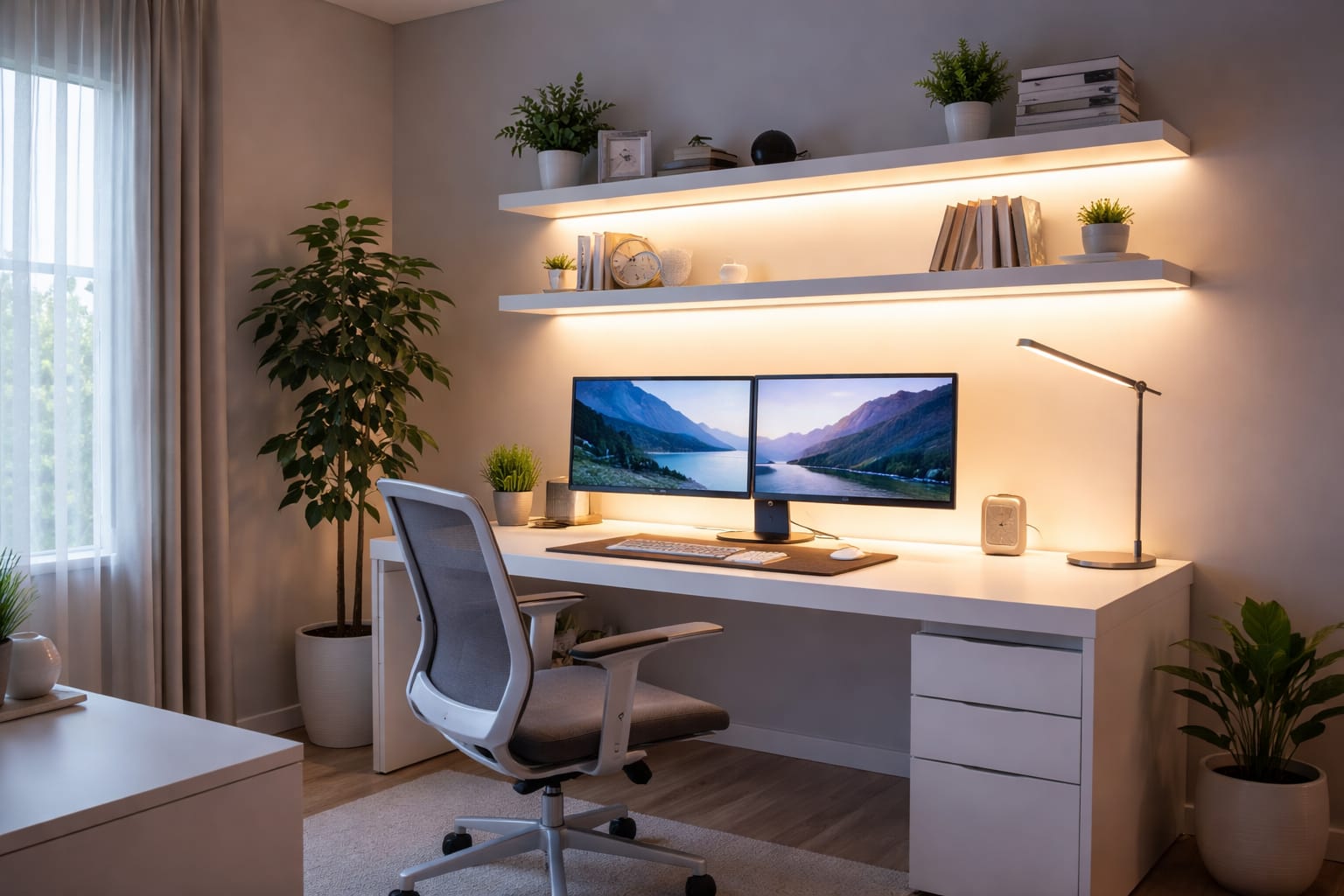
Best LED lights for Modern home offices workspace with LED desk lighting and ambient shelf illumination for productivity and eye comfort
Layered lighting strategies combine focused task illumination with softer ambient sources creating comfortable working environments

Ambient Lighting

Supplemental ambient sources complement overhead and task lighting when creating the best LED lights for home offices through layered illumination approaches. Floor lamps positioned in corners provide soft fill lighting reducing contrast between bright work areas and darker room zones. This balanced distribution prevents excessive adaptation demands on visual systems constantly adjusting between dramatically different brightness levels causing discomfort during extended work sessions requiring sustained visual attention.

Another practical alternative is Smart LED Light Bars, which performs reliably in everyday use.

Wall sconces flanking bookshelves or artwork add visual interest while contributing ambient illumination enhancing overall office aesthetics. These decorative fixtures serve dual purposes providing functional lighting while acting as design elements creating personalized workspace atmospheres reflecting individual preferences. Choose fixtures with upward and downward light distribution patterns maximizing illumination efficiency while highlighting vertical surfaces making rooms appear more spacious and visually engaging throughout daily occupancy.

Accent Lighting

Accent lighting highlights specific features like artwork, credentials, or architectural elements adding depth and personality to professional home office environments. Track lighting or adjustable spotlights provide focused illumination drawing attention to displayed items without contributing significant functional task or ambient lighting. These decorative elements humanize workspaces preventing sterile institutional appearances while maintaining professional presentation suitable for video conferencing backgrounds.

LED strip lights installed behind monitors or under shelves create subtle glow effects reducing perceived darkness in shadowed areas. This bias lighting technique reduces eye strain reduction by minimizing contrast between bright screens and dark backgrounds surrounding them. The soft illumination eases adaptation demands on visual systems improving comfort during extended computer use sessions requiring sustained focus on digital content displayed across multiple hours daily.

Color Temperature

Color temperature selection significantly impacts alertness and comfort when choosing the best LED lights for home offices. Cool white light between 5000-6500K promotes alertness and concentration making it suitable for focused analytical work requiring sustained attention. The blue-rich spectrum mimics midday sunlight stimulating photoreceptors influencing circadian rhythms and cognitive performance during demanding tasks requiring maximum mental acuity throughout intensive work periods.

Neutral white around 4000K provides balanced illumination suitable for general office desk lighting supporting varied activities without appearing harsh or overly warm. This middle ground works well for mixed-task environments where workers alternate between computer work, reading, and creative activities requiring different visual conditions throughout days. The moderate color temperature prevents circadian disruption while maintaining adequate brightness supporting productive work across diverse professional responsibilities.

Warm white below 3000K creates relaxing atmospheres more suitable for evening work or creative tasks not requiring intense concentration. However, very warm lighting may induce drowsiness during afternoon hours when alertness naturally declines. Reserve warm color temperatures for ambient lighting or end-of-day activities when winding down from intensive work supporting smooth transitions from professional to personal time in home environments blending work and living spaces.

Tunable White

Tunable white fixtures allow color temperature adjustment matching time of day and task requirements optimizing productivity lighting setup through dynamic illumination responding to changing needs. Morning activation at cooler temperatures promotes alertness supporting demanding analytical tasks early in workdays. Gradual warming throughout afternoons matches natural daylight patterns reducing circadian disruption. Evening operation at warmer temperatures supports relaxation preparing for restful sleep after completing work activities.

Automated tunable systems adjust color temperature based on schedules or ambient light sensing mimicking natural daylight variations throughout days. This circadian lighting approach supports optimal alertness patterns while promoting better sleep quality by avoiding blue-rich light exposure during evening hours. According to U.S. Department of Energy LED lighting efficiency guidance, proper lighting design including color temperature selection significantly impacts both productivity and energy consumption in office environments.

Glare Management

Controlling glare proves critical when installing the best LED lights for home offices because excessive brightness or reflections cause significant eye strain reduction challenges. Direct glare occurs when bright light sources appear in fields of vision causing discomfort and squinting. Reflected glare bounces off screens and glossy surfaces creating secondary sources interfering with visibility. Both types reduce productivity and cause headaches during extended work sessions requiring careful attention to fixture placement and surface finishes throughout workspaces.

Position light sources outside direct sight lines when seated at normal working positions. Desk lamps should illuminate work surfaces from angles preventing direct viewing of bright LED arrays. Overhead fixtures benefit from recessed positioning or diffused lenses preventing exposed bright points visible from desk heights. Shield bare bulbs and LED arrays using shades, diffusers, or louvers controlling light distribution while preventing uncomfortable direct viewing of intense sources.

Matte finishes on desks and walls reduce reflected glare compared to glossy surfaces acting as mirrors redirecting light toward eyes. Position monitors perpendicular to windows preventing daylight reflections on screens. Adjust monitor brightness balancing screen luminance with surrounding lighting preventing excessive contrast causing adaptation fatigue. Anti-glare screen filters provide additional protection in challenging lighting situations where architectural modifications prove impractical for existing office configurations.

Diffusion Techniques

Frosted lenses and diffusion panels spread light across larger areas reducing point-source brightness while maintaining adequate illumination levels. This spreading effect creates softer lighting quality appearing less harsh than concentrated beams from clear lenses. Opal or prismatic diffusers provide excellent glare control for overhead fixtures ensuring comfortable viewing angles from typical seated positions throughout office spaces requiring prolonged occupancy. Integration with smart home systems enables coordinated control across multiple fixture types.

Parabolic louvers and egg-crate grids shield light sources from oblique viewing angles while allowing downward illumination reaching work surfaces. These optical accessories prove particularly effective for overhead fixtures in office desk lighting applications where workers sit directly beneath fixtures potentially causing direct glare without proper shielding. The geometric designs redirect light efficiently while blocking direct sight lines to bright LED arrays maintaining visual comfort during extended work periods.

Monitor Backlighting

Bias lighting behind monitors represents specialized applications when selecting the best LED lights for home offices focused on screen-intensive work. LED strips mounted on monitor backs cast soft illumination on walls behind screens reducing contrast between bright displays and dark backgrounds. This contrast reduction eases eye strain reduction during extended computer use by minimizing adaptation demands on visual systems constantly adjusting between dramatically different brightness levels throughout workdays.

Proper bias lighting uses neutral white around 6500K matching typical monitor color temperatures ensuring consistent color perception across entire visual fields. Brightness should provide 10-15% of monitor luminance creating subtle glow visible in peripheral vision without drawing attention away from screen content. USB-powered LED strips offer convenient installation drawing power directly from monitors eliminating separate power supplies and cable management challenges in desktop environments.

Avoid colored bias lighting in professional applications requiring accurate color judgment for design work or photo editing. RGB strips prove tempting for aesthetic reasons but compromise visual accuracy by casting colored light affecting color perception. Reserve colored ambient lighting for entertainment applications or casual evening computer use where color accuracy matters less than creating relaxing atmospheres after completing demanding professional work requiring precise color discrimination capabilities.

Installation Tips

Center LED strips vertically on monitor backs ensuring even illumination distribution above and below screen centers. For multiple monitors, run continuous strips across all displays creating unified backlighting effects. Avoid gaps between monitors allowing light to escape forward causing distracting bright spots in peripheral vision. Mount strips far enough behind monitors that light reflects off walls rather than escaping around screen edges into viewing areas.

Adjustable brightness controls allow fine-tuning bias lighting intensity matching specific room lighting conditions and personal preferences. Integrated controls prove more convenient than separate dimmer switches requiring reaching behind monitors for adjustments. Some advanced systems synchronize bias lighting with monitor content creating immersive viewing experiences though this feature benefits entertainment more than professional productivity lighting setup applications requiring consistent neutral illumination supporting accurate visual perception.

Dimming Controls

Dimming capability enhances the best LED lights for home offices by enabling illumination adjustments matching tasks and time-based requirements throughout variable workdays. Morning tasks may demand full brightness supporting alertness during peak cognitive performance periods. Afternoon adjustments compensate for changing natural light levels maintaining consistent work surface illumination. Evening dimming creates relaxing atmospheres during less intensive activities supporting smooth transitions from work to personal time.

LED-compatible dimmers ensure smooth operation across entire brightness ranges without flickering or buzzing affecting concentration. Traditional incandescent dimmers cause LEDs to perform poorly because electronic drivers require specialized control signals. Quality LED dimmers cost more initially but deliver reliable performance throughout fixture lifespans eliminating annoying operational artifacts compromising professional work environments requiring distraction-free conditions supporting sustained productivity during demanding projects.

Preset scene controls store preferred brightness combinations for different activities activated with single button presses. Focus mode might set task lighting to 100% with ambient lighting at 50%, while relaxation mode dims both fixture types to 30%. These programmed scenes eliminate repeated manual adjustments throughout days improving workflow efficiency by instantly establishing optimal lighting conditions for current activities without interrupting concentration during task transitions. Reference ENERGY STAR guide to LED lighting basics for additional efficiency information.

Automatic Adjustment

Daylight sensors automatically adjust artificial lighting compensating for changing natural illumination maintaining consistent work surface brightness throughout days. This automated compensation reduces energy consumption during bright periods while ensuring adequate illumination during overcast conditions or evening hours. Photocell controls eliminate manual adjustments while optimizing energy efficiency through responsive operation matching actual lighting needs in real time conditions.

Occupancy sensors turn lights off during absences preventing energy waste when workers leave offices temporarily. Vacancy sensors require manual activation but automatically deactivate after detecting absence, providing energy savings while ensuring intentional lighting activation preventing unwanted illumination during brief office visits. These automated controls reduce annual energy consumption 20-30% in typical office desk lighting applications through elimination of unnecessary operation during unoccupied periods throughout workweeks.

Natural Light Integration

Maximizing natural daylight provides health benefits when designing the best LED lights for home offices while reducing artificial lighting requirements during daytime hours. Position desks perpendicular to windows optimizing natural illumination without causing screen glare from direct sunlight. Side-lighting arrangements provide excellent working conditions with daylight illuminating work surfaces from oblique angles creating three-dimensional modeling effects enhancing visibility without causing uncomfortable brightness or reflections interfering with screen visibility.

Window treatments control excessive daylight preventing glare and overheating during peak sun periods. Adjustable blinds or shades allow fine-tuning natural light admission matching specific tasks and times. Translucent treatments diffuse harsh direct sunlight creating softer illumination quality suitable for sustained computer work. Blackout options provide complete light control for video production or screen presentations requiring darkness despite exterior daylight conditions throughout varied professional activities.

Supplement natural daylight rather than replacing it completely with artificial sources. Use desk lamps during morning and evening hours when window light proves insufficient but avoid unnecessary artificial lighting during bright midday periods wasting energy. This hybrid approach provides consistent working conditions throughout days while maximizing energy efficiency and health benefits associated with natural daylight exposure supporting circadian rhythm regulation and vitamin D synthesis through sun exposure during work hours.

Seasonal Considerations

Daylight availability varies dramatically across seasons affecting home office lighting requirements throughout years. Winter months provide limited natural light necessitating increased artificial lighting use compared to summer conditions with extended daylight hours. Adjust fixture positioning and control strategies seasonally optimizing energy efficiency while maintaining consistent work surface illumination regardless of exterior lighting conditions affecting interior environments throughout annual cycles.

Solar angles change seasonally affecting how daylight enters offices through windows. Summer high-angle sun penetrates less deeply than winter low-angle sun reaching farther into rooms. Understanding these patterns helps optimize furniture placement and window treatment strategies maintaining comfortable working conditions throughout years. Periodic adjustments to artificial productivity lighting setup compensate for seasonal variations ensuring consistent visual conditions supporting professional performance regardless of time of year affecting natural illumination availability.

Energy Efficiency

LED technology delivers the best LED lights for home offices from energy perspectives consuming 75-80% less electricity than incandescent equivalents while lasting 25-50 times longer. A home office using five 60-watt incandescent bulbs for eight hours daily consumes approximately 876 kWh annually. Replacing them with 9-watt LED equivalents reduces consumption to just 131 kWh annually, saving 745 kWh and substantial costs over fixture lifespans extending decades through proper installation and maintenance practices.

ENERGY STAR certified office lighting fixtures meet strict efficiency criteria ensuring quality products delivering promised energy savings. These certified products undergo independent testing verifying lumen output, color quality, and longevity claims before earning certification. Choosing ENERGY STAR products eliminates uncertainty about performance when selecting from numerous market options with varying specifications and quality levels across different price points and manufacturers offering diverse product lines.

Calculate return on investment comparing premium LED fixture costs against energy savings determining payback periods. Quality fixtures typically pay for themselves within 2-3 years through reduced electricity consumption then continue delivering value throughout 15-25 year lifespans. Factor long-term operational costs into purchasing decisions rather than focusing solely on initial acquisition prices when evaluating options supporting both financial and environmental sustainability goals throughout professional home office operations. Additional resources available at comprehensive knowledge centers provide detailed technical guidance.

Power Management

Smart power strips eliminate phantom loads from devices consuming standby power when not actively used. These intelligent strips detect primary device status automatically cutting power to accessories when computers enter sleep modes. This automated power management reduces wasted energy from peripherals remaining powered unnecessarily during extended breaks or overnight periods when offices sit unoccupied between work sessions separated by multiple hours.

Schedule lighting operation matching actual work hours rather than maintaining illumination during extended absences. Programmable timers or smart controls activate lighting before arrival then deactivate after departure eliminating unnecessary operation. Weekend and vacation settings further reduce consumption during extended absences. These scheduled operations optimize energy efficiency while ensuring appropriate illumination availability supporting professional productivity during actual working periods without wasting electricity during unoccupied times throughout weeks and months.

Smart Features

Smart lighting integration elevates the best LED lights for home offices through advanced control features including voice commands, smartphone apps, and automated schedules. Voice control provides hands-free operation particularly valuable during video calls or when hands occupy keyboards preventing easy switch access. Smart speakers integrate with compatible fixtures enabling natural language commands adjusting brightness, color temperature, or activating preset scenes without interrupting workflow during intensive work periods.

For a more permanent upgrade, many users switch to Smart RGB Led Strip Lights, which offers consistent results over time.

Smartphone apps provide remote control adjusting office lighting from anywhere enabling preheating offices before arrival or verifying lights were deactivated after departures. Geofencing triggers automated responses based on smartphone location turning lights on as workers approach homes and off after departures. These location-based automations enhance convenience while optimizing energy efficiency through responsive operation matching actual occupancy patterns rather than fixed schedules potentially wasting electricity during schedule deviations throughout dynamic work routines.

Circadian Programming

Advanced systems automatically adjust color temperature throughout days matching natural sunlight patterns supporting healthy circadian rhythms. Morning activation at cool temperatures promotes alertness during peak productivity periods. Gradual warming through afternoons matches natural daylight supporting sustained performance. Evening operation at warm temperatures aids relaxation preparing for restful sleep after completing work activities. This automated tuning optimizes both productivity and sleep quality through biologically appropriate lighting supporting overall health and wellbeing.

Integration with calendar applications adjusts lighting based on scheduled activities. Video conference events might trigger balanced front lighting ensuring professional appearance on camera. Deep work blocks activate focus-optimized cool bright lighting supporting concentration. Break reminders dim lights encouraging rest periods reducing fatigue during extended work sessions. These context-aware adjustments optimize eye strain reduction and productivity throughout varied professional activities requiring different lighting conditions supporting diverse task requirements throughout complex modern workdays conducted from home environments.

Sharing this guide

If you found this guide helpful, you can save it for later or share it with a friend. It’s especially useful for beginners, homeowners, and DIY users.

Share using the links below

Interested in learning more? Browse all related articles in our category section.

2 thoughts on “Best LED Lights for Home Offices: Essential Guide”

  1. Pingback: Ambient vs Task vs Accent Lighting: Master Guide - NeoLEDHub

  2. Pingback: LED Lighting for Small Rooms: Perfect Guide Today

Leave a Comment

Your email address will not be published. Required fields are marked *

Scroll to Top