Best LED Lights for Bedrooms: Warm, Dimmable Picks by Use
The best LED lights for a bedroom are usually warm white, dimmable, and easy to control. For most rooms, start with 2700K to 3000K lighting, add a focused bedside lamp or sconce for reading, and use LED strips or smart bulbs only where they improve comfort, routines, or ambiance.
This guide compares the best bedroom LED lighting options by real use case: sleep, reading, smart control, accent lighting, and simple bedside upgrades, so you can choose a setup that feels cozy without making the room harsh, too bright, or difficult to control.
Quick Answer
For most bedrooms, the best LED lighting setup is not one single light. Choose a warm, dimmable main light, a focused bedside lamp or wall sconce for reading, and optional LED strips or smart bulbs for ambiance, schedules, and nighttime control.
- Best overall choice: warm white, dimmable bedroom lighting between 2700K and 3000K.
- Best for reading: a focused bedside lamp or adjustable wall sconce.
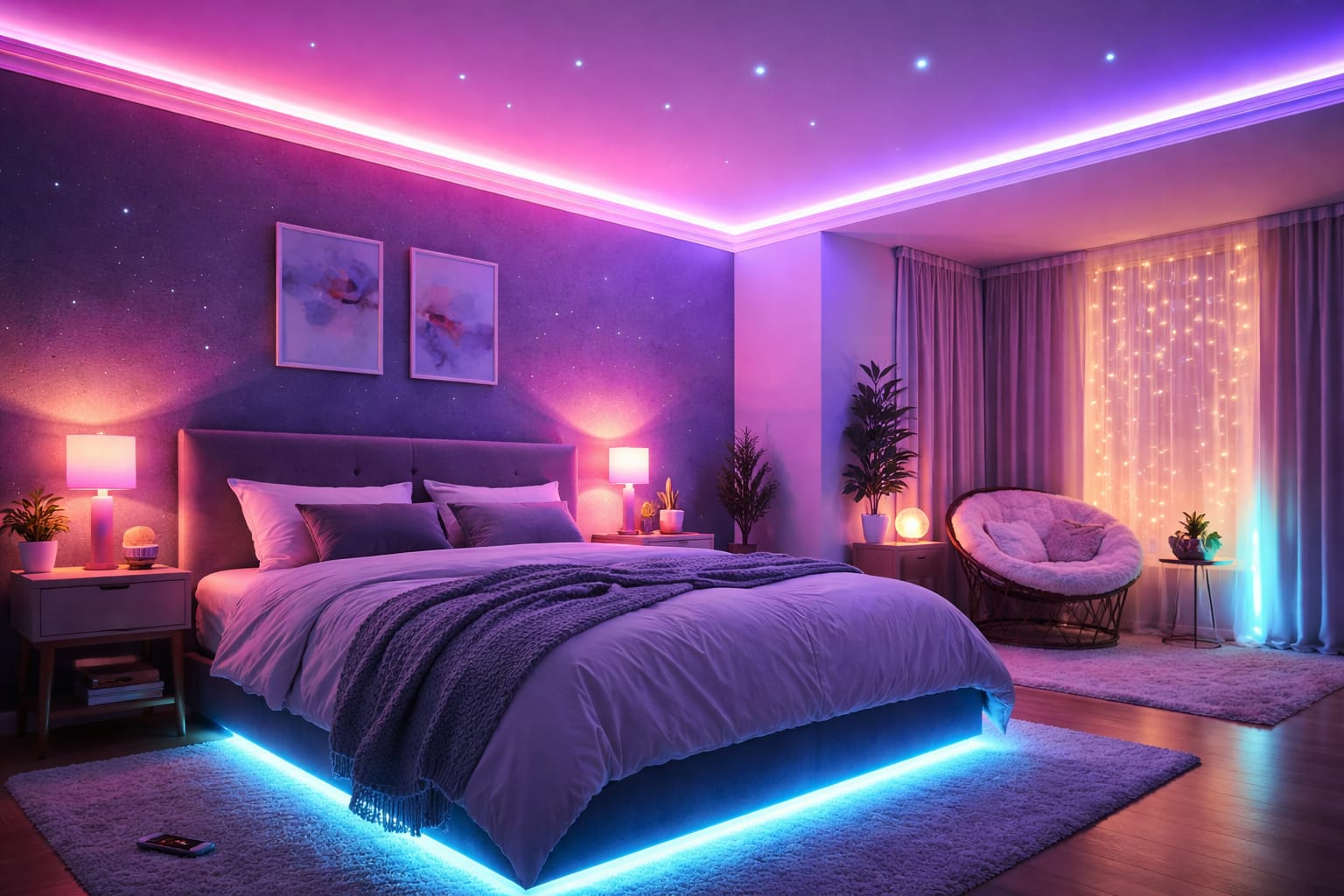
- Best for ambiance: LED strip lights behind a headboard, under the bed, or along shelves.
- Best for flexibility: smart LED bulbs with dimming, schedules, scenes, or tunable white light.
- What to avoid: relying on one bright cool-white ceiling light for everything.

If you are mainly replacing bulbs in existing lamps or fixtures, our guide to reading LED packaging labels is a useful next step for comparing warm white bulbs, dimmable options, and smart bedroom lighting upgrades.
Table of Contents:
Best Bedroom LED Lighting Setup: Warm, Dimmable and Layered
Bedroom LED lighting needs to feel softer and more flexible than kitchen, office, or garage lighting. You still need enough light to get dressed, read, clean, or move around safely, but the room should not feel cold, exposed, or overlit at night. That is why the best bedroom lights usually prioritize comfort, dimming, and placement over maximum brightness.
A strong bedroom setup normally uses three layers. The main light gives the room its base brightness. A bedside lamp, wall sconce, or reading light gives you focused task lighting. Accent lighting, such as LED strips or indirect light, adds softness and atmosphere without becoming the main source of light.
This layered approach matters because bedrooms are used in different ways during the day and night. Morning lighting should help you wake up and get ready. Evening lighting should feel calmer. Reading light should be focused enough to be useful without filling the whole room with glare. One ceiling fixture rarely does all of that well on its own.
If you are not sure where to begin, choose warm white dimmable bedroom lights first. Then add a separate reading light and only use LED strips or smart bulbs where they solve a specific comfort, control, or ambiance problem.
Best LED Lights for Bedroom by Use Case
The best LED lights for bedroom use depend on what you need the room to do. A bedroom used mostly for sleep needs softer lighting than a bedroom that also works as a reading corner, dressing area, gaming setup, or home office. Instead of looking for one universal product, match the light source to the job.
Dimmable LEDs: usually the best option for efficiency, control, and long-term savings, as long as the bulb and dimmer are compatible.
Incandescent bulbs: dim smoothly and do reduce power, but they are inefficient compared with LEDs. Dimming can extend bulb life, but it does not make them a strong long-term efficiency choice.
Halogen bulbs: can dim well, but low-voltage systems may need compatible transformers, which can add complexity and cost.
CFL bulbs: are usually the weakest match. Standard CFLs should not be dimmed, and even dimmable CFLs often have limited range, weaker response, and less satisfying control than LEDs.
For most people, the strongest combination is a warm, dimmable main light, a separate bedside reading light, and one optional accent layer. If your room already has decent fixtures, replacing the bulbs with better warm white or smart LED bulbs may be enough. If the room feels flat or harsh, add layers instead of simply increasing lumens.
Best Color Temperature and Brightness for Bedroom LED Lights
For most bedrooms, warm white light is the safest default. A color temperature between 2700K and 3000K usually feels soft, cozy, and comfortable in the evening. It gives the room warmth without making everything look too orange or too dim.
Neutral white light around 3500K can work in bedrooms that double as dressing areas, study spaces, or work-from-home rooms. Cooler daylight tones can feel useful in the morning, but they often look too stark when you are trying to unwind. If you want one setup for both day and night, tunable white lighting or smart LED bulbs can be a better compromise than choosing a fixed cool bulb.
Brightness should also be adjustable. A bedroom does not usually need extreme output, but it does need enough light for reading, dressing, and cleaning. As a general rule, many bedrooms feel comfortable with about 1,000 to 2,000 lumens of ambient lighting, depending on room size, wall color, fixture placement, and how many extra lamps or accent lights you use.
Dimming often matters more than chasing the highest lumen number. A light that can move from bright daytime use to low evening brightness will usually feel better than a powerful bulb that is always too intense at night; a light bulb comparison guide can help you compare brightness, color temperature, and bulb type before buying.
If your main goal is a cozy, sleep-friendly bedroom, choose 2700K to 3000K lighting and make sure at least your main light or bedside light is dimmable.
Smart Bulbs, Fixture Types and Placement
Smart LED bulbs for bedroom routines are worth it in a bedroom when you will actually use their controls. They make the most sense if you want to dim the lights from bed, set evening scenes, automate a gradual fade at night, brighten the room gently in the morning, or adjust color temperature without changing bulbs.
They are especially useful for couples or shared bedrooms because each side of the room can be controlled more easily. A smart bulb in each bedside lamp can give one person low reading light while the other side stays dimmer. If you only want one warm lamp with a simple switch, however, smart features may be unnecessary.
Fixture choice is just as important as bulb choice. Ceiling lights are useful for general illumination, but they should ideally be dimmable. Bedside lamps are better for personal control and softer evening light. Wall sconces are a smart option if you want to free up nightstand space. LED strips are best for an indirect glow behind furniture, not for reading or whole-room brightness.
Placement should keep glare out of your eyes. Reading lights should be close enough to the bed to be useful without shining across the room. LED strips should be hidden from direct view so they create a glow rather than a visible bright line. Overhead lights should support the room instead of dominating it.
If your bedroom lighting problem is mainly caused by harsh bulbs rather than poor placement, compare warmer and dimmable options in our LED lighting buying guide before replacing fixtures.
Common Bedroom Lighting Mistakes to Avoid
The most common mistake is using cool daylight bulbs as the main bedroom light. They may look crisp, but they can make the room feel more clinical than restful. In most bedrooms, warm white bedroom lights create a more comfortable evening atmosphere.
Another mistake is relying on one bright ceiling fixture for everything. Overhead lighting alone can feel too harsh for winding down, while bedside lamps alone may not give enough light for everyday tasks. A layered setup solves this by letting each light source do a specific job.
Many people also underestimate dimming. A bedroom light that can only be turned on or off is less flexible than one that can move between bright, medium, and low output. Dimmable bedroom lights are especially useful if the room is used for reading, relaxing, getting dressed, or waking up slowly.
LED strips can also be misused. They look great as accent lighting, but they are usually not enough as the only light source in a bedroom. If they are too bright, visible, or cool-toned, they can make the room feel more like a gaming setup than a restful space.
If a bedroom light causes flicker, buzzing, eye strain, or a strange residual glow after being switched off, do not treat it as a normal comfort issue. Check bulb compatibility, dimmer compatibility, and the fixture before adding more lights.
Which Bedroom LED Lights Should You Choose?
For most bedrooms, choose the light based on the problem you are trying to solve, not just the product name. A warm, dimmable bulb may fix a harsh room. A bedside lamp may fix poor reading light. LED strips may fix a room that feels flat. Smart bulbs may fix control and routine problems.
- Small bedroom: use one warm, dimmable main light plus one bedside lamp. Avoid overpowering the room with very bright strips.
- Reading in bed: choose a focused bedside lamp or wall sconce before adding accent lighting.
- Relaxing at night: stay in the 2700K to 3000K range and use dimming whenever possible.
- Smart bedroom setup: use smart LED bulbs if you want schedules, scenes, voice control, or tunable white light.
- Ambiance or headboard glow: use Govee LED strip lights for bedroom ambiance as a secondary layer, hidden from direct view.
- Bedroom with desk or monitor: combine warmer evening lighting with a controllable task light so the whole room does not need to stay bright.
- Budget upgrade: replace harsh bulbs first, then add a better bedside lamp before investing in a full LED upgrade.
FAQ
What color LED light is best for a bedroom?
Warm white light between 2700K and 3000K is usually best for bedroom comfort, especially in the evening. Neutral white can work for dressing or study areas, but cool daylight is often too harsh for winding down.
Are LED strip lights good for bedrooms?
Yes, LED strip lights are good for bedrooms when they are used as accent lighting. They work well behind a headboard, under a bed, behind furniture, or along shelves, but they should not be the only light source in the room.
Are smart LED bulbs worth it for a bedroom?
Smart LED bulbs are worth it if you want dimming from bed, schedules, voice control, scenes, or adjustable color temperature. If you only need one simple warm light, a regular dimmable bulb and lamp may be enough.
How bright should bedroom LED lights be?
Many bedrooms work well with about 1,000 to 2,000 lumens of ambient lighting, but the best number depends on room size, wall color, fixture placement, and whether you also use bedside lamps or accent lighting. Adjustable brightness is more important than maximum output.
Key Takeaways
The best LED lights for bedroom use are usually warm, dimmable, and layered. Most rooms feel better with a mix of ambient lighting, bedside lighting, and optional accent lighting instead of one strong overhead fixture.
For comfort and relaxation, choose warm white bedroom lights between 2700K and 3000K. For reading, use a focused bedside lamp or wall sconce. For ambiance, use LED strip lights as a secondary glow. For routines and flexibility, smart LED bulbs can be a strong upgrade.
When choosing bedroom lighting, focus on comfort, dimming, control, and how you actually use the room. You will usually get a better result from better layers than from simply buying the brightest LED light available.
Sharing This Guide
If you found this guide helpful, save it for later or share it with a friend. It is especially useful for beginners, homeowners, renters, and DIYers who want a softer and more comfortable bedroom lighting setup.
Share using the links below
Interested in learning more? Browse all related articles in our category section.