LED Strip Won’t Stick: Proven Solutions That Work

Few installation frustrations match the annoyance of watching your carefully positioned LED strip won’t stick to walls despite your best efforts. This comprehensive guide identifies every factor causing adhesive failure and provides actionable solutions that ensure your lighting stays exactly where you place it, eliminating repeated repositioning and wasted time.

LED strip won't stick falling off wall due to adhesive failure
Peeling strips indicate problems with either surface conditions or inadequate adhesive strength for the application

Surface Contamination Issues

When your LED strip won’t stick properly, invisible surface contaminants often shoulder the blame. Dust particles, oil residues from handling, cooking grease, and cleaning product buildup all create barriers between adhesive and wall surfaces. Even freshly painted walls contain oils and release agents that prevent proper bonding until they fully cure, typically requiring 30 days or more depending on paint type and environmental conditions.

Kitchen installations face particular challenges because airborne cooking oils settle on every surface, creating microscopic contamination layers that defeat adhesive bonds. Similarly, bathrooms accumulate soap residue, hair product aerosols, and humidity-related deposits that compromise adhesion. These environments require more aggressive wall surface preparation than typical indoor locations to achieve reliable long-term bonding.

Touch testing reveals contamination issues quickly. Run your clean fingers across the installation surface and feel for any slickness, grittiness, or residue transfer. A properly prepared surface should feel completely clean and slightly tacky to the touch after appropriate cleaning. Any other sensation indicates additional preparation work remains necessary before attempting installation.

Identifying Contaminant Types

Different contaminants require specific removal approaches when mounting strip lights successfully. Water-based contaminants like dust and dirt respond well to simple cleaning with damp cloths, while oil-based residues need degreasing agents to break down and remove completely. Silicone-based products used in many furniture polishes and spray cleaners create particularly stubborn barriers requiring specialized solvents for effective removal.

Visual inspection under bright lighting or with a flashlight held at a low angle reveals surface imperfections invisible under normal lighting conditions. Look for sheen variations, spots, or streaks indicating uneven cleaning or remaining contaminants. These visual clues guide additional cleaning efforts to specific problem areas rather than treating the entire surface unnecessarily. Avoiding common installation errors from the start prevents adhesive problems before they develop.

Inadequate Cleaning and Preparation

Proper wall surface preparation determines whether your LED strip won’t stick or bonds permanently to your chosen location. Begin with dry dusting using a microfiber cloth to remove loose particles without spreading them around or embedding them into porous surfaces. Follow with degreasing using isopropyl alcohol at 70% concentration or higher, which evaporates cleanly without leaving residues that interfere with adhesive bonding.

Apply cleaning solution generously and wipe with clean, lint-free cloths using overlapping strokes to ensure complete coverage. Many installers make the mistake of using dirty cloths that redeposit contaminants onto freshly cleaned surfaces, undoing their preparation work. Use fresh cloth sections frequently, discarding visibly soiled portions to maintain cleaning effectiveness throughout the process.

If you want a dependable option, a solid example is Double Sided Tape Heavy Duty, Adhesive Mounting Tape Waterproof, 16.4 FT x 0.94 IN, Strong Foam Tape for Walls, Automotive, Home Office Decor, Made of 3M VHB Tape (Pack of 1), which is known for stable long-term performance.

Drying Time Importance

Rushing installation before surfaces fully dry guarantees adhesive backing failure regardless of cleaning quality. Alcohol-based cleaners evaporate relatively quickly, typically within 2-3 minutes under normal conditions, but water-based cleaners require 15-30 minutes for complete drying. Temperature and humidity significantly affect evaporation rates, with cool or humid conditions demanding extended drying periods before installation attempts.

Verify complete drying by touching the surface with clean, dry fingers. Any cool sensation or moisture transfer indicates incomplete evaporation requiring additional waiting time. Installing strips onto damp surfaces traps moisture beneath the adhesive, preventing proper bonding and creating conditions where your LED strip won’t stick reliably even after the surface eventually dries completely.

Temperature and Humidity Effects

Environmental conditions during installation profoundly affect adhesive performance, with cold temperatures representing the most common cause where your LED strip won’t stick despite perfect surface preparation. Most pressure-sensitive adhesives require minimum application temperatures around 50-60°F (10-15°C) to achieve proper flow and bonding. Below these thresholds, adhesives become stiff and fail to wet surfaces adequately, resulting in weak initial bonds that fail quickly under minimal stress.

Heating both the wall and LED strip before installation improves adhesive performance dramatically in cool environments. Use a hairdryer on low heat to warm surfaces to approximately 70-80°F (21-27°C), which activates adhesive flow characteristics and promotes complete surface wetting. Avoid excessive heat above 100°F (38°C) that might damage LED components or cause adhesive to become too fluid, losing its designed performance characteristics.

Humidity affects adhesive curing and introduces moisture that interferes with bonding. High humidity above 70% relative humidity slows adhesive curing and can introduce condensation that creates barriers between adhesive and wall surfaces. Running dehumidifiers or air conditioning before installation in humid climates improves conditions for successful mounting by removing excess atmospheric moisture.

Seasonal Installation Challenges

Winter installations in unheated spaces create particularly difficult conditions where adhesive backing failure occurs almost inevitably without proper precautions. Garage, basement, and outdoor covered installations during cold months require preheating the installation area to acceptable temperatures for at least several hours before beginning work. Portable space heaters provide localized warming that makes winter installations feasible when whole-space heating proves impractical.

Summer heat creates opposite challenges where excessive temperatures soften adhesives beyond optimal working consistency. Very hot attic spaces or walls receiving direct sunlight may reach temperatures where adhesives flow excessively, preventing proper initial tack. Schedule installations during cooler morning hours or allow hot surfaces to cool before attempting installation in these extreme temperature conditions that guarantee your LED strip won’t stick reliably.

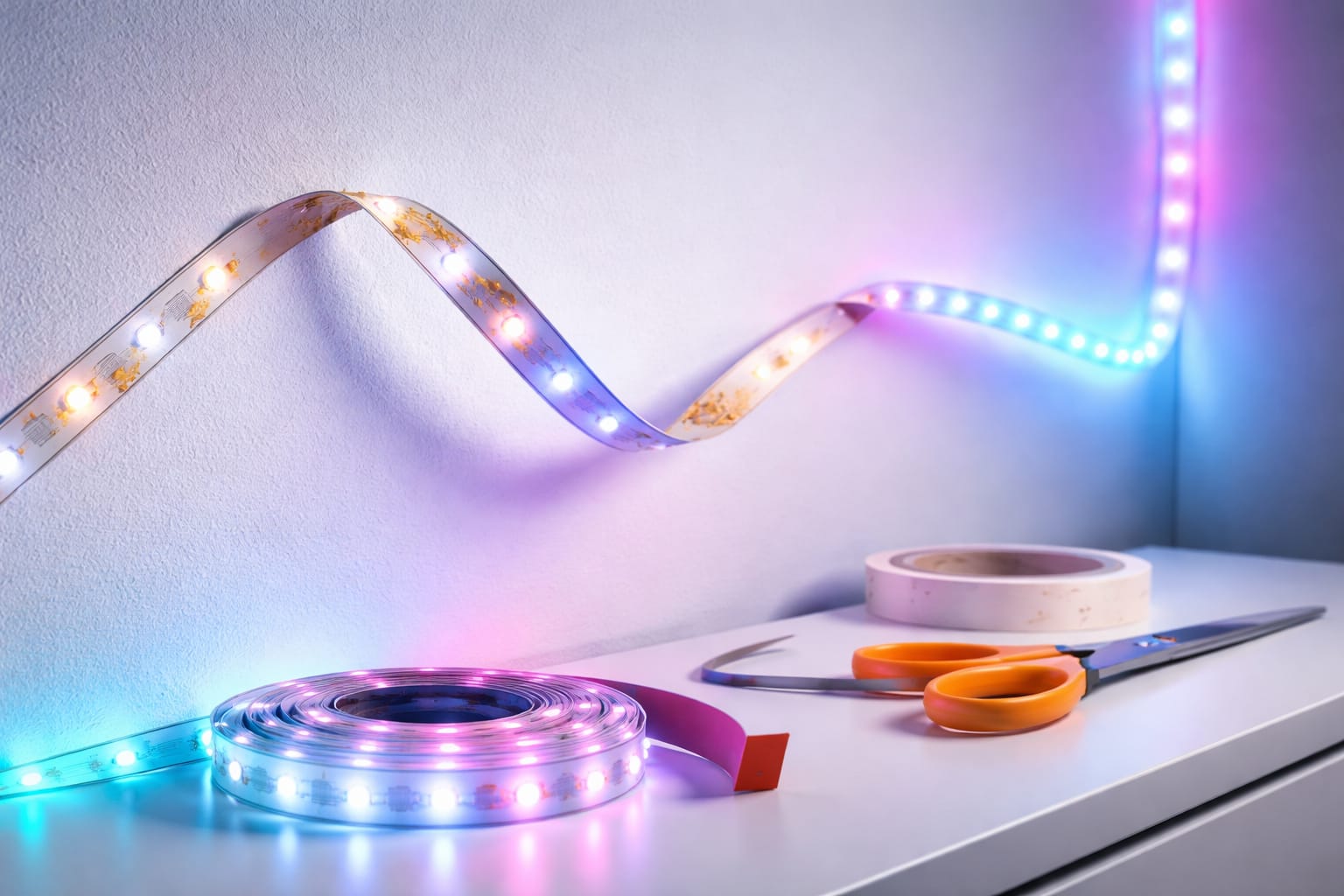
Adhesive LED strip won't stick peeling off wall during installation issue
Progressive peeling from corners indicates insufficient initial pressure or contaminated surfaces preventing proper adhesive contact

Poor Quality Adhesive

Budget LED strips often incorporate inferior adhesive that fails regardless of perfect installation technique and ideal environmental conditions. Manufacturers reduce costs by using thin adhesive layers, low-grade formulations, or inadequate backing materials that lack the bonding strength required for reliable long-term mounting strip lights. These economy products may stick initially during testing but fail within days or weeks as adhesive creeps or loses tack under normal conditions.

Premium LED strips utilize acrylic foam tapes or high-performance adhesive formulations like 3M VHB (Very High Bond) that provide dramatically superior holding power. These quality adhesives maintain bonding strength across wide temperature ranges, resist moisture and UV exposure, and tolerate minor surface imperfections without compromising performance. The cost difference between budget and premium strips often reflects adhesive quality more than LED performance specifications.

Testing adhesive quality before committing to full installation prevents discovering adhesive backing failure after completing difficult mounting work. Install a short test section in an inconspicuous location and evaluate performance over several days. Quality adhesive should resist removal attempts without releasing or leaving residue, while inferior products peel away easily or leave sticky residue indicating poor cohesive strength within the adhesive layer itself.

Adhesive Degradation and Aging

LED strips sitting in storage for extended periods develop adhesive problems as backing materials age and lose effectiveness. Pressure-sensitive adhesives experience chemical changes over time, particularly when exposed to temperature fluctuations during storage and shipping. Strips purchased from old inventory or stored improperly may arrive with degraded adhesive that guarantees your LED strip won’t stick despite being technically new and unused.

Check manufacturing dates when purchasing LED strips and avoid products over six months old when possible. Store unused strips in cool, dry locations away from temperature extremes and direct sunlight to preserve adhesive quality until installation. If storage-aged strips exhibit poor adhesion, replacing the backing with quality double-sided tape provides a cost-effective solution that salvages otherwise functional products without requiring complete replacement. Similar troubleshooting applies when lights fail to operate after seemingly correct installation procedures.

Textured and Porous Surfaces

Wall texture creates significant challenges when your LED strip won’t stick because adhesives require continuous surface contact to develop holding strength. Textured surfaces like orange peel, knockdown, or popcorn finishes provide minimal contact area where adhesive actually touches the wall, with most of the backing suspended over valleys in the texture pattern. This reduced contact area dramatically decreases effective bonding strength regardless of adhesive quality.

Porous surfaces including unpainted drywall, concrete blocks, brick, and some wood types absorb adhesive into their structure rather than allowing it to remain on the surface for bonding. This absorption starves the bond line of adhesive, creating weak connections that fail under minimal stress. Additionally, porous materials often shed dust particles that continuously contaminate the adhesive interface, progressively weakening bonds over time.

Another practical alternative is Command Indoor Mini Light Clips, 45 Clear Clips and 54 Command Strips, Damage Free Hanging Christmas Decorations, Wall Clips for Hanging Lights and Cable Management, Holds up to 0.3 lb, which holds securely without damaging surfaces.

Surface Modification Techniques

Creating smooth mounting surfaces on textured walls involves applying primer or paint to fill texture valleys and create continuous contact areas. A coat of high-quality primer followed by smooth latex paint provides an excellent mounting surface that supports reliable adhesive bonds. This approach works particularly well for mounting strip lights along ceiling edges or other visible locations where a painted surface blends naturally with surrounding finishes.

Alternatively, install smooth mounting strips or channels that attach to textured surfaces using mechanical fasteners, then mount LED strips to these smooth intermediate surfaces. This two-stage mounting approach overcomes texture challenges while providing additional benefits including improved appearance, better heat dissipation, and simplified future removal or replacement without wall damage.

Weight and Flexibility Factors

Heavy or rigid LED strips exceed the holding capacity of standard adhesive backing, causing your LED strip won’t stick problems even with perfect surface preparation and ideal conditions. High-density strips with thick copper backing, multiple rows of LEDs, or integrated heat sinks weigh significantly more than basic single-row strips. This additional weight demands stronger adhesive or supplemental mechanical support to prevent gravity-induced failure over time.

Strip flexibility affects adhesive performance because rigid strips concentrate stress at mounting points rather than distributing it evenly. Flexible strips conform to minor surface irregularities and maintain contact across their entire length, while rigid strips may bridge across low spots, reducing effective bonding area. This mechanical mismatch between strip and surface creates point loads that exceed adhesive strength locally, initiating progressive peeling that eventually causes complete failure.

Calculate total strip weight and compare it to adhesive specifications to verify compatibility before installation. Quality adhesive manufacturers provide holding strength specifications in pounds per square inch or similar units. Multiply adhesive strength by actual contact area to determine if the adhesive can support your specific strip configuration with adequate safety margin for long-term reliability.

Supplemental Support Methods

Heavy installations benefit from periodic mechanical support points that augment adhesive backing failure resistance. Small clear clips spaced every 12-18 inches along the strip provide insurance against adhesive failure while remaining nearly invisible in most installations. These clips attach to walls using screws or strong adhesive pads, creating mechanical retention that prevents catastrophic failure if adhesive bonds weaken over time.

For vertical installations where gravity works against adhesive bonds, support clips become even more critical for preventing your LED strip won’t stick failures. Horizontal ceiling installations benefit less from supplemental support but still improve long-term reliability when mounting strip lights in high-traffic areas subject to vibration or accidental contact that might disturb adhesive bonds.

Installation Technique Errors

Improper application technique causes many situations where your LED strip won’t stick despite using quality products and preparing surfaces correctly. The most common error involves insufficient pressure during initial installation. Adhesives require firm, sustained pressure to wet surface microscopic irregularities and develop full bonding strength. Simply pressing strips lightly into place without adequate force prevents proper adhesive flow and intimate surface contact necessary for strong bonds.

Apply firm pressure along the entire strip length immediately after positioning, using a roller or your hand to press sections thoroughly. Focus particular attention on edges and ends where peeling typically initiates if bonding proves inadequate. Maintain pressure for at least 10-15 seconds per section to allow adhesive time to flow and wet the surface completely.

Removing and repositioning strips destroys adhesive effectiveness because contamination from the first mounting attempt compromises subsequent bonding. Adhesive picks up dust, texture particles, and surface contaminants during initial contact that prevent proper bonding when reapplied. Plan installations carefully using temporary markers or guides to ensure accurate positioning on the first attempt, eliminating repositioning that causes premature adhesive failure and mounting problems.

Backing Removal Timing

Removing protective backing from long strip sections before beginning installation creates handling difficulties that introduce contamination and reduce wall surface preparation effectiveness. Handle exposed adhesive minimally to avoid transferring skin oils and debris that compromise bonding. Remove backing gradually as you install rather than exposing the entire strip length simultaneously.

For lengthy runs, work in manageable sections of 2-3 feet, removing backing and pressing each section firmly before proceeding to the next. This incremental approach maintains better control during installation and ensures adequate pressure application to each section without rushing through the process. It also prevents exposed adhesive from collecting dust during installation of other sections. Understanding proper techniques helps avoid scenarios similar to systems with smart home integration requiring precise installation procedures.

Alternative Mounting Methods

When standard adhesive backing proves inadequate, alternative mounting methods provide reliable solutions that eliminate concerns about your LED strip won’t stick problems entirely. Mechanical fastening using small clips, brackets, or staples creates positive retention that doesn’t depend on adhesive chemistry or surface conditions. These methods work especially well for permanent installations where minor visible hardware doesn’t detract from overall aesthetics.

Velcro-style hook and loop fasteners offer removable mounting that facilitates future maintenance or seasonal decorating while providing stronger retention than many adhesives. Apply the hook side to the wall using screws or quality adhesive, then attach the loop side to your LED strip. This system allows quick removal and reinstallation without adhesive backing failure concerns, though it adds noticeable thickness that may affect appearance in some applications.

Magnetic mounting systems work brilliantly when mounting strip lights to metal surfaces like appliances, tool chests, or metal shelving. Flexible magnetic tape adheres to the strip backing, allowing instant attachment and removal from ferrous surfaces without any tools or permanent modifications. This approach proves particularly valuable for temporary installations or situations requiring frequent repositioning to accommodate changing needs.

Hybrid Mounting Approaches

Combining adhesive with mechanical fastening creates redundant mounting that provides maximum security against failure. Use quality adhesive as the primary mounting method, then add periodic mechanical fasteners as backup retention. This hybrid approach allows adhesive to provide clean appearance and continuous support while mechanical elements prevent catastrophic failure if adhesive bonds eventually weaken.

Space mechanical supports at intervals based on strip weight and installation orientation. Heavy or vertical installations benefit from supports every 12 inches, while lightweight horizontal runs may only require supports every 24-36 inches. This balanced approach optimizes installation reliability without excessive complexity or visible hardware that might detract from the installation’s appearance.

Permanent Installation Options

Aluminum channels or extrusions represent the professional solution when your LED strip won’t stick reliably using adhesive methods. These channels mount to surfaces using screws, providing rigid mounting tracks that hold strips securely while adding benefits including improved heat dissipation, physical protection, and professional finished appearance with integrated diffuser lenses that eliminate individual LED hot spots.

For a more permanent upgrade, many users switch to 10-Pack 3.3FT 1Meter V Shape LED Strip Aluminum Channel Diffuser System, Extruded Alu Track Milky Cover with Corner Connector and Mounting Kit,Easy Cut and Installed Curved Lens Profile, which performs reliably in everyday use.

Channels install using conventional screws and anchors appropriate for your wall type, creating permanent mounting that tolerates strip removal and replacement without affecting wall attachment. The channel protects the LED strip from accidental damage while providing superior heat dissipation that extends LED lifespan compared to strips mounted directly against insulating wall surfaces. According to energy efficiency research, proper thermal management significantly impacts LED longevity and performance.

Channel Selection and Installation

Choose channel profiles based on strip width, desired appearance, and mounting location. Surface-mount channels attach directly to walls and ceilings, while recessed channels require cutting grooves into mounting surfaces for flush installation. Corner channels accommodate 90-degree transitions, and flexible channels follow curved paths that rigid extrusions cannot navigate.

Installation begins with careful layout and leveling to ensure straight, professional appearance. Mark screw locations using the channel as a template, then pre-drill holes and install appropriate anchors for your wall type. Secure channels using screws spaced every 12-18 inches, checking alignment frequently during installation. Insert LED strips into channels and install diffuser covers to complete the professional installation that eliminates adhesive concerns permanently. Additional guidance for complex setups appears throughout the detailed knowledge center resources available online.

Troubleshooting and Reattachment

When existing installations fail and your LED strip won’t stick after falling from walls, successful reattachment requires addressing the original failure cause before attempting remounting. Simply pressing failed strips back into place without corrective action guarantees repeated failure, often more quickly than the initial installation lasted. Diagnose why adhesive failed by examining both the strip backing and wall surface for clues about the problem’s root cause.

Adhesive remaining primarily on the strip indicates wall contamination or incompatibility prevented bonding, while adhesive stuck to the wall suggests cohesive failure within the adhesive layer or strip backing problems. This forensic examination guides corrective measures that address actual problems rather than assuming generic solutions will resolve unknown issues.

Remove all old adhesive completely before attempting reattachment using fresh adhesive products. Residual adhesive contaminates new adhesive, preventing proper bonding regardless of other preparation work. Use appropriate solvents like mineral spirits or adhesive removers to dissolve old adhesive completely, then clean thoroughly with isopropyl alcohol to remove solvent residues before applying new mounting materials.

Replacement Adhesive Options

High-performance double-sided tapes specifically designed for mounting applications provide superior alternatives to original equipment adhesive backing. Products like 3M VHB tape, Gorilla mounting tape, or specialty LED mounting tapes offer dramatically improved holding strength compared to budget strip backing. Cut tape to match strip width and apply it along the entire length, removing original adhesive completely first.

Follow manufacturer specifications for proper wall surface preparation, temperature requirements, and pressure application to achieve rated performance from replacement adhesive products. Most premium tapes require 24-48 hours to develop full bond strength, so support strips temporarily during this curing period using painter’s tape or temporary clips. This patience investment ensures replacement mounting achieves its full potential rather than failing prematurely like the original installation.

Preventive Best Practices

Preventing situations where your LED strip won’t stick begins with proper product selection matched to application requirements. Research strip specifications including weight, flexibility, and included adhesive quality before purchasing. Read reviews specifically mentioning adhesive performance rather than focusing solely on light output or color quality, as adhesive effectiveness determines whether your attractive lighting actually stays installed long-term.

Plan installations during optimal environmental conditions with moderate temperatures between 60-80°F (15-27°C) and relative humidity below 60%. Avoid scheduling installations during weather extremes or in unconditioned spaces during seasonal temperature extremes. The minor inconvenience of waiting for better conditions pays dividends through reliable mounting that doesn’t require frustrating repairs or complete reinstallation.

Document your installation including surface preparation steps, products used, and environmental conditions. This record proves valuable if problems develop later, helping identify what worked well and what needs modification. It also provides reference information if you expand the installation or help others with similar projects, sharing knowledge gained through your experience with practical troubleshooting methods.

Long-Term Maintenance

Inspect installations periodically for early signs of adhesive backing failure including edge lifting, gaps between strip and surface, or visible sagging in horizontal runs. Address minor problems immediately before they progress to complete failure requiring emergency repairs. Gentle pressing along suspicious areas often restores bonds in early failure stages before adhesive completely releases.

Clean around installations carefully using appropriate products that won’t attack adhesive or strip materials. Harsh solvents, aggressive cleaners, or abrasive tools can damage adhesive bonds or strip coatings, initiating failures that otherwise wouldn’t occur. Use mild soap and water for routine cleaning, avoiding direct spray or excessive moisture that might penetrate behind strips and compromise adhesive interfaces over time.

Sharing this guide

If you found this guide helpful, you can save it for later or share it with a friend. It’s especially useful for beginners, homeowners, and DIY users.

Share using the links below

Interested in learning more? Browse all related articles in our category section.

1 thought on “LED Strip Won’t Stick: Proven Solutions That Work”

  1. Pingback: Beginner Guide to Lighting Design: Perfect Basics

Leave a Comment

Your email address will not be published. Required fields are marked *

Scroll to Top