LED Headlight Lumens: How Many Do Car Headlights Need?
Most drivers do not need the brightest LED headlights they can buy. For normal low beams, around 2,500 to 3,500 lumens per bulb is usually a practical range; high beams can sit closer to 4,500 to 6,000 lumens per bulb when there is no oncoming traffic.
The real goal is not maximum brightness, but usable road visibility. This guide explains how LED headlight lumens, beam pattern, color temperature, housing fitment, legality and proper headlight adjustment work together so you can improve night driving without creating glare for other drivers.
Quick Answer: Best LED Headlight Lumens
For most cars, a safe and practical LED headlight range is 2,500 to 3,500 lumens per bulb for low beams and 4,500 to 6,000 lumens per bulb for high beams. A clean cutoff, correct bulb fitment and proper aim matter more than chasing the highest advertised lumen number.
- Low beams: 2,500 to 3,500 lumens per bulb is usually enough for daily night driving, city roads, traffic and mixed conditions.
- High beams: 4,500 to 6,000 lumens per bulb works better for dark highways, rural roads and situations with no oncoming traffic.
- Very high-output LEDs: outputs above 6,000 lumens per bulb should be used with caution, because poor optics can create glare, scatter and reduced contrast.
- Focus on usable road visibility, not just the highest advertised lumen number.
- Low beams need a sharp cutoff to avoid glare.
- High beams can be brighter, but excessive output often adds scatter instead of useful distance.
- A color temperature of around 4,300K to 6,000K usually offers the best balance for real driving conditions.
- Even a good bulb will perform poorly if it is a poor match for the housing or if the headlights are aimed incorrectly.
If you are replacing halogen bulbs, look for a direct-fit LED headlight bulb set with a focused beam output rather than choosing a product only because it claims the highest lumen rating. The right beam shape usually improves real visibility more than raw brightness alone.
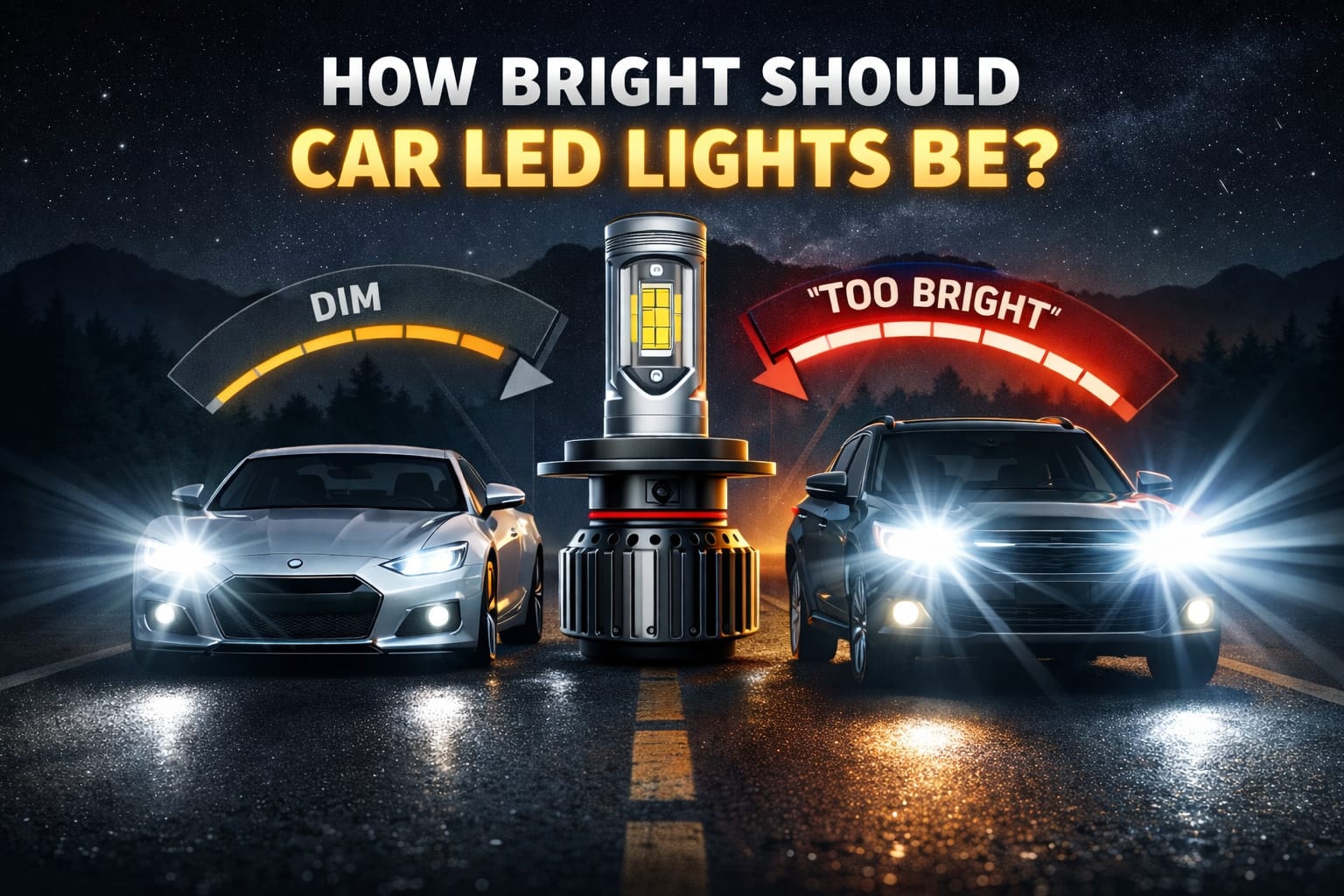
Table of Contents:
- Quick Answer: Best LED Headlight Lumens
- Lumens vs Watts: What Actually Matters?
- Recommended LED Headlight Lumens by Beam Type
- Are Brighter LED Headlights Legal?
- Beam Pattern, Color Temperature and Headlight Aim
- Installation, Fitment and CANBUS Issues
- Quality vs Brightness: What to Buy
- Common Mistakes and Maintenance Tips
- FAQ
- Key Takeaways
- Sharing This Guide
Lumens vs Watts: What Actually Matters?
To compare LED headlight lumens properly, it helps to understand that automotive lighting is judged differently from household bulbs. Watts tell you how much power a bulb uses, while lumens describe the total amount of light emitted. For headlights, the more important question is how much of that light reaches the road in a controlled pattern.
A high lumen number does not automatically mean better night driving. Manufacturers often advertise very high ratings, sometimes above 10,000 lumens per bulb, but real performance depends on reflector design, projector lens quality, LED chip placement and beam focus. A well-designed 3,000-lumen bulb can outperform a poorly controlled 6,000-lumen bulb because more of its light lands where the driver needs it.
That is why headlight optics matter so much. Our guide to LED optical systems explains how lenses, reflectors and beam control affect where the light actually goes.
If you are new to automotive LED upgrades, start with the Car LED Lights Beginner Guide. For a broader explanation of brightness terms, the Lumens vs. Watts Guide explains why power consumption and visible light output are not the same thing.
Automotive engineers also use candela to measure light intensity in a specific direction. That matters because headlights are not supposed to shine everywhere equally. They need to place light on the lane, along the road edges and at a useful distance ahead while keeping glare away from oncoming traffic. This is why choosing the right LED headlight lumens is only one part of a safe upgrade.
Recommended LED Headlight Lumens by Beam Type
For most low-beam applications, the best range is usually around 2,500 to 3,500 lumens per bulb. This is bright enough to improve road illumination while still giving the housing a realistic chance of maintaining a clean cutoff. Once low-beam output climbs above about 4,000 lumens per bulb, the risk of glare and scatter increases, especially in housings that were not designed for that output level.
High beams can use more output because they are intended for situations with no oncoming traffic. A sensible range is usually 4,500 to 6,000 lumens per bulb. This can extend visible distance on dark roads, but going far beyond that point often creates extra reflections from signs, fog, rain, snow and road surfaces rather than adding useful distance.
For a practical comparison with older lighting, the LED vs. halogen headlights guide explains what the visibility gain usually feels like in real driving. If you are already planning the upgrade, the guide on replacing car bulbs with LEDs covers the wider fitment and compatibility checks that brightness numbers alone do not show.
When shopping for brighter headlights, check beam pattern photos, vehicle-specific fitment notes and cooling design before focusing on the biggest lumen claim. A controlled beam almost always beats a higher-output bulb with poor optics.
Best Setup by Driving Situation
Daily night driving: use moderate low-beam output with a clean cutoff. This improves visibility without dazzling oncoming drivers.
Rural roads: use stronger high beams with controlled distance lighting. This adds reach when there is no oncoming traffic.
Cloudy lenses: restore lens clarity before chasing brighter bulbs. Oxidized lenses can waste light and create glare.
Older vehicles: check housing type, bulb base, dust cover space and electrical compatibility. Fitment problems can cause flicker, warnings, moisture or poor beam alignment.
Are Brighter LED Headlights Legal?
Headlight legality is not based only on a simple lumen number. Regulations focus on beam placement, intensity at specific points, glare control, certification and whether the light source is suitable for the housing. A bulb can look impressive on paper but still be illegal or unsafe if it scatters light into other drivers’ eyes.
In the United States, headlamp performance is regulated under Federal Motor Vehicle Safety Standard 108. European countries follow ECE regulations with a similar safety goal: enough forward visibility for the driver without excessive glare for other road users. If you want the dedicated legal breakdown, see the guide on LED headlight conversion legality.
According to the National Highway Traffic Safety Administration (NHTSA), aftermarket lighting should maintain the performance requirements of the original equipment. Many low-quality retrofit kits fail because they create uncontrolled scatter, even when their advertised LED headlight lumens sound reasonable.
Do not judge legality by brightness claims alone. Certification, fitment, housing compatibility and beam control matter more than a high lumen rating on the box.
Beam Pattern, Color Temperature and Headlight Aim
Beam pattern matters more than raw brightness when judging headlight performance. A good beam places light directly ahead, along the lane edges and at a useful distance down the road. A poor beam wastes LED headlight lumens in the wrong places and creates glare without meaningfully improving visibility.
Projector housings often handle LED upgrades better because the lens and cutoff shield create a more controlled pattern. Reflector housings can also work well, but they are usually more sensitive to LED chip placement and bulb geometry. This is why two bulbs with similar lumen ratings can perform very differently in the same vehicle.
Color temperature also changes how bright a headlight appears. Bulbs in the 5,000K to 6,000K range produce a crisp white light that many drivers find clearer than warmer light. However, going too cool can reduce performance in rain, fog or snow. For most drivers, around 4,300K to 6,000K gives the best balance of contrast, road sign visibility and comfort.
After installing LED headlights, check the aim. Park about 25 feet from a flat wall on level ground, mark the center of each beam and adjust the vertical aim so the top of the brightest low-beam area sits slightly below the centerline mark. The horizontal aim should favor the road shoulder rather than pointing into oncoming traffic.
If other drivers regularly flash you while your low beams are on, the issue is often beam aim, bulb compatibility or lens scatter rather than too little brightness. Re-aiming the headlights can improve forward visibility and reduce glare at the same time.
Installation, Fitment and CANBUS Issues
Installing LED headlight bulbs requires more than matching the base type. Some LED designs use large heat sinks or external driver modules that may not fit inside the housing properly. If the bulb does not seat correctly or the dust cover cannot seal, you may get moisture problems, poor beam alignment or shorter bulb life.
Electrical compatibility is another common issue, especially in vehicles with CANBUS monitoring. Since LEDs use less power than halogens, some cars interpret them as failed bulbs. This can trigger dashboard warnings, flickering, pulsing or lights that shut off unexpectedly.
Many quality LED kits include built-in electronics to reduce those issues. If flicker or dashboard warnings continue after installation, a plug-in CANBUS decoder for LED headlight flicker or dashboard warnings can often stabilize the signal between the bulb and the vehicle wiring.
Quality vs Brightness: What to Buy
Pursuing the brightest car LED headlights often leads buyers to products that look impressive in listings but perform poorly on the road. Better bulbs usually invest more in optics, thermal design, stable drivers, weather sealing and realistic testing. Cheap alternatives may seem bright at first, then fade, flicker or fail because their chips and electronics are not built for long-term automotive use.
A better buying filter is simple: choose enough lumens for the beam type, then prioritize a clean cutoff, vehicle-specific fitment, reliable cooling and clear compatibility notes. Higher-quality bulbs often provide more realistic LED headlight lumen ratings and support them with beam pattern photos or test data.
If you want to compare real upgrade options after checking the right lumen range, our guide to the best LED headlight bulbs explains what to look for in beam control, fitment, cooling and everyday driving performance.
In the long run, quality is usually less expensive than chasing the biggest spec sheet. A bulb set that maintains stable output for years offers better value than one that needs repeated replacement or causes glare, heat stress or electrical issues. When safety is part of the purchase, long-term consistency matters more than maximum brightness.
Common Mistakes and Maintenance Tips
One of the biggest mistakes is buying the brightest bulb without considering housing compatibility. A headlight designed for a lower-output halogen bulb may not focus a much brighter LED bulb properly. The result can be worse road visibility, more glare and more heat stress, even though the advertised brightness looks better.
Another common mistake is skipping headlight adjustment after installation. Even a well-designed LED replacement bulb can produce a slightly different pattern from the halogen bulb it replaces. If you do not check the alignment, you may get glare complaints and less useful forward lighting than expected.
Lens condition matters too. Oxidized, yellowed or scratched lenses scatter light, turning even a properly aimed setup into a glare source. If your lenses appear cloudy, a headlight lens restoration kit for cloudy headlights can restore clarity and add a protective seal to slow future oxidation.
Maintain safe LED headlight brightness by checking aim every few months, especially after rough roads, suspension work or front-end repair. Clean the lenses regularly with products intended for automotive plastics or mild soap and water. Avoid ammonia-based household glass cleaners, because they can damage coatings on modern polycarbonate lenses.
Pay attention to output changes, flickering or color shift. Quality LED bulbs usually remain stable for a long time, but driver failures and heat-related wear can still happen. For more information on how LEDs age and lose performance over time, visit the LED Knowledge Center.
FAQ
How Many Lumens Are Good for LED Headlights?
For most vehicles, around 2,500 to 3,500 lumens per bulb is a good low-beam range. High beams can usually be brighter, around 4,500 to 6,000 lumens per bulb, because they are used when there is no oncoming traffic.
Is 6,000 Lumens Too Bright for LED Headlights?
It depends on the beam type and housing. Around 6,000 lumens per bulb can make sense for high beams, but it may be too much for low beams if the housing cannot control the light. Beam pattern and aim are more important than the number alone.
What Color Temperature Is Best for LED Headlights?
Most drivers get the best balance from about 4,300K to 6,000K. This range looks clean and bright without shifting too far toward blue, which can reduce contrast in bad weather.
Do LED Headlights Need to Be Adjusted After Installation?
Yes. Even if the bulb fits correctly, the beam pattern can change after an LED upgrade. Checking the aim after installation helps improve road visibility and reduces the chance of glare for other drivers.
Are LED Headlight Lumens the Only Thing That Matters?
No. Lumens matter, but beam control, housing compatibility, legal markings, color temperature, lens clarity and proper aim all affect real driving performance. A moderate-output bulb with a clean beam is usually safer than an ultra-bright bulb with poor focus.
Key Takeaways
The best LED headlight lumens are not the highest numbers on the box. For most drivers, a practical setup uses about 2,500 to 3,500 lumens per bulb for low beams and about 4,500 to 6,000 lumens per bulb for high beams.
A safe upgrade depends on beam pattern, correct fitment, proper headlight adjustment, legal compatibility, lens condition and color temperature. If any of those are wrong, more brightness can actually make night driving worse.
Choose a balanced setup that puts light where you need it, keeps glare under control and works with your vehicle’s housing. That approach is more useful than chasing maximum brightness alone.
Sharing This Guide
If you found this guide helpful, save it for later or send it to someone researching LED headlight lumens, safer upgrades or DIY installation.
Use the links below to share it:
Interested in learning more? Browse all related articles in our car LED accessories category section.