CANBUS LED Bulbs: Stop Error Messages, Flicker & Hyperflash
If your car shows a bulb-out warning, flickers, hyperflashes, or turns LED bulbs off after replacing halogen bulbs, the problem is usually compatibility — not necessarily a bad bulb. Many vehicles monitor bulb load, and LEDs draw much less current than halogens, which can trigger dashboard errors even when the light works.
This guide explains when CANBUS LED bulbs are enough, when a CANBUS decoder makes more sense, and when a load resistor is the right fix for turn-signal hyperflash. The goal is simple: help you choose the cleanest solution for LED bulb error messages without buying parts you do not need.
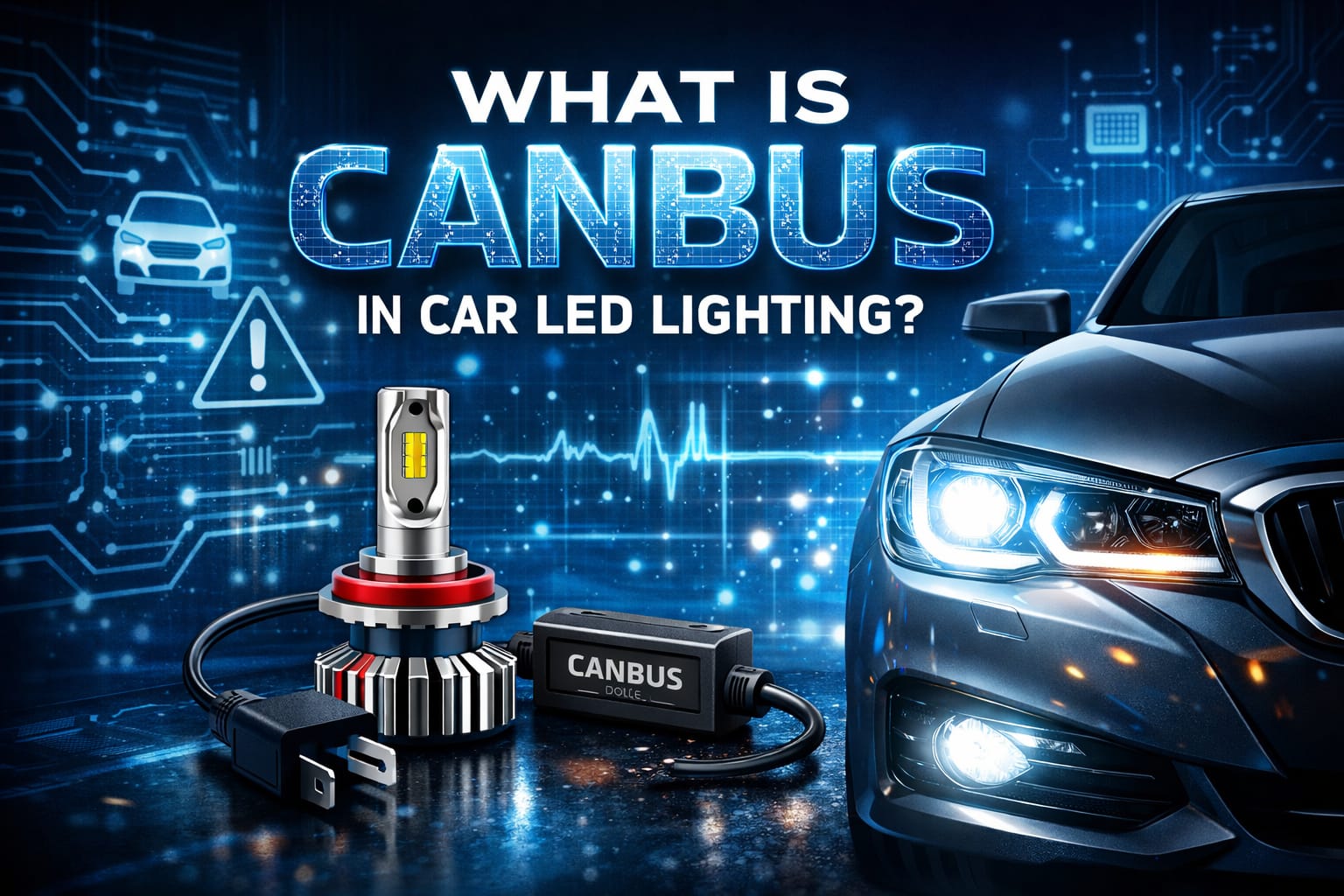
Quick answer: If your LED bulbs cause dashboard warnings, flicker, hyperflash, or switch off after installation, your car may be rejecting the lower electrical load. Start with CANBUS-compatible LED bulbs. If warnings remain, a decoder is usually the cleaner next step. For turn-signal hyperflash, a load resistor is often the stronger fix, but it must be mounted safely because it can get hot.
Table of Contents:
- What CANBUS LED Bulbs Actually Do
- Why LED Bulb Error Messages, Flicker and Hyperflash Happen
- Do You Need CANBUS LED Bulbs?
- CANBUS Bulbs vs Decoders vs Load Resistors
- How to Choose the Right Fix
- Installation and Testing Checklist
- How to Troubleshoot Persistent LED Bulb Errors
- Are CANBUS LED Bulbs Worth It?
- FAQ
What CANBUS LED Bulbs Actually Do
When you see “CANBUS” on an LED bulb listing, it usually does not mean the bulb is directly communicating with the vehicle network like a control module. In most product listings, it means the bulb is designed to work better with a vehicle CANBUS system or bulb monitoring circuit that checks whether exterior lights are working correctly.
The problem is electrical behavior. Factory halogen bulbs draw more power and create a load the car expects to see. LED bulb electricity usage is much lower, so LED bulbs respond faster and may have different driver electronics. Those advantages can confuse a car that is checking for the original halogen load.
A CANBUS LED bulb tries to reduce that mismatch. Some bulbs add extra circuitry, while others use a more compatible driver or still need an external decoder or resistor depending on the vehicle and bulb position. If you are still deciding whether an LED conversion makes sense at all, start with our beginner’s guide to car LED lights before focusing on CANBUS compatibility.
CANBUS LED bulbs are not automatically brighter or higher quality. Their main job is compatibility: fewer warnings, less flicker, and a better chance that the car accepts the LED upgrade.
Why LED Bulb Error Messages, Flicker and Hyperflash Happen
The main reason for LED bulb error messages is simple: the car thinks the new bulb is not behaving like the old one. If the LED draws much less power than the original halogen bulb, the vehicle may interpret the circuit as open, weak, failed, or outside the expected range.
That is why some drivers install a new LED bulb, switch the ignition on, and immediately see a bulb-out warning even though the light turns on. In other cases, the light flickers, pulses, turns off after startup, or behaves normally only until the car starts testing the circuit. If flicker is the main symptom, this general guide to LED lights flickering can help you separate common wiring, driver, and compatibility causes.
Turn signals are especially sensitive because many vehicles use flash speed as a warning sign. If the car sees too little load on the indicator circuit, it may trigger LED hyperflash, where the turn signal blinks much faster than normal. Headlights, brake lights, tail lights, reverse lights, and license plate lights can also trigger warnings depending on the vehicle.
If you want to compare the electrical and practical differences behind this upgrade, our LED vs. halogen headlights guide gives useful background before you choose bulbs, decoders, or resistors.
Do You Need CANBUS LED Bulbs?
Not every car needs CANBUS LED bulbs. Some older vehicles accept standard LEDs without warnings, especially in interior positions or less closely monitored circuits. The more aggressively your car monitors lighting circuits, the more likely you are to need CANBUS-compatible bulbs, a decoder, or a resistor.
You are more likely to need CANBUS support if your car has dashboard bulb-out warnings, newer body control modules, sensitive exterior lighting circuits, or a history of rejecting low-load LED replacements. Newer European vehicles are often sensitive, but many modern models from Ford, GM, Stellantis, Toyota, Honda, Nissan, and other manufacturers can also monitor lighting circuits closely.
The most common signs are clear: a dashboard warning after installation, rapid turn-signal flashing, flicker, pulsing, lights that turn off after a few seconds, or a bulb that works in one socket but causes errors in another. If you are planning a larger conversion, our guide on replacing car bulbs with LEDs explains which positions are usually simple and which ones require more care.
Best fit: CANBUS LED bulbs make the most sense when your car is modern, already shows bulb warnings, or you are upgrading exterior lights that the vehicle checks closely. For simple interior lights on older cars, standard LEDs may work without extra parts.
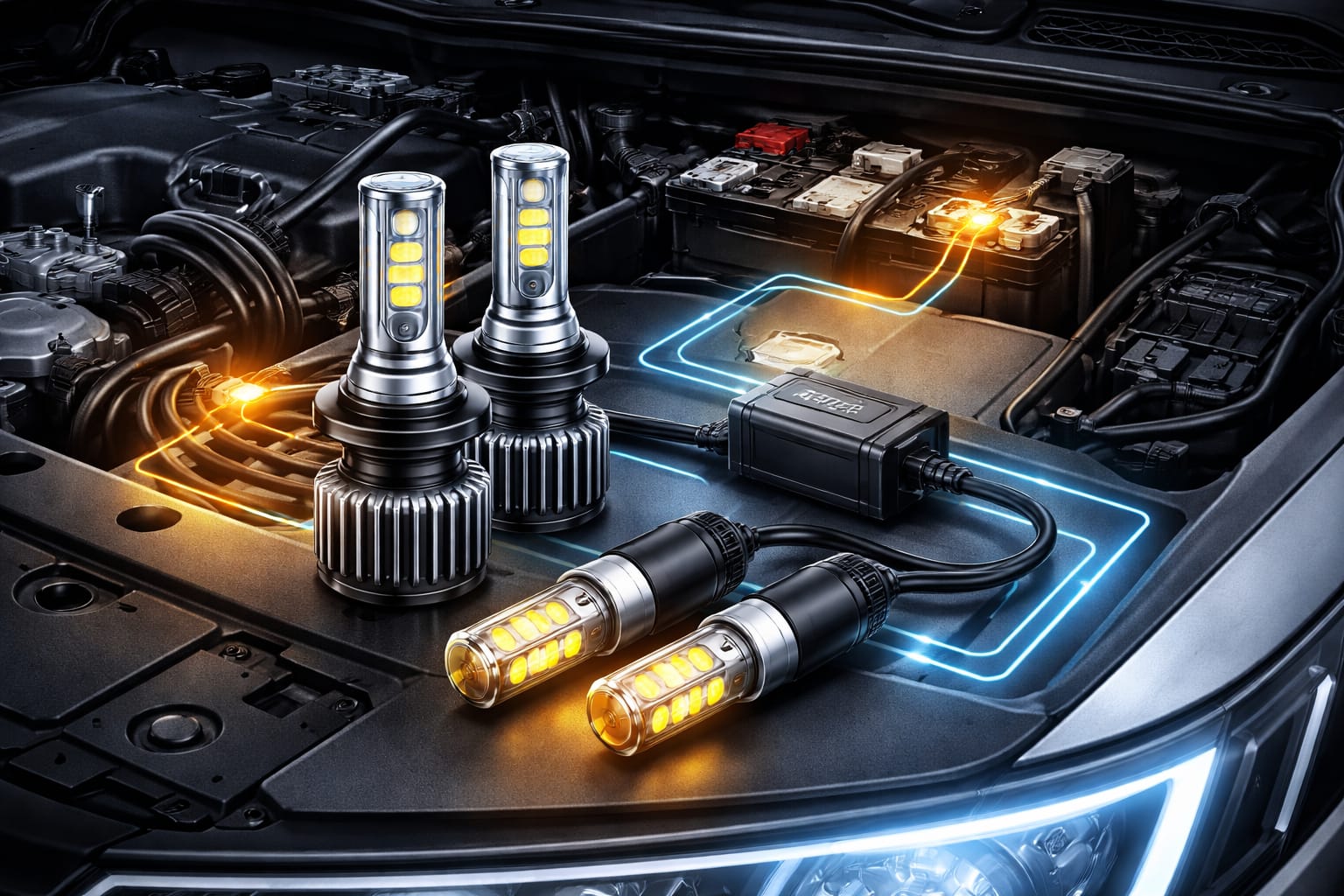
CANBUS Bulbs vs Decoders vs Load Resistors: Which Fix Do You Need?
This is where many buyers get confused. Product listings may use terms like “CANBUS,” “error free,” “anti-flicker,” “decoder included,” or “no error,” but those terms do not always mean the same thing. The right fix depends on what the car is doing after the LED upgrade.
CANBUS error-free LED bulbs are usually the cleanest first step. The extra compatibility support is built into the bulb or driver, so installation is simple and tidy. For many vehicles, this is enough to avoid bulb-out warnings and mild flicker without adding external parts.
Decoder modules sit between the LED bulb and the factory connector. They are useful when the bulb works but the car still shows errors, flickers, pulses, or briefly turns the light off after startup. If the LED itself is good but the vehicle still rejects it, a plug-in CANBUS decoder module for LED flicker and bulb warnings is often the cleanest next step before using resistors.
Load resistors add electrical load so the car sees something closer to the original halogen bulb. They are especially common for turn signals because they can stop hyperflash effectively. However, they are less elegant than a good bulb or decoder because they generate heat and must be mounted carefully.
If you use load resistors, never leave them loose inside a tight plastic housing. They can get hot enough to damage nearby materials if mounted carelessly.
If your main issue is turn-signal hyperflash, an LED load resistor kit for turn-signal hyperflash can solve the problem effectively, but it should be viewed as a practical workaround rather than the first choice for every lighting position.
Best decision path: Choose the lowest-risk fix first: clean cloudy lenses, aim the existing lights correctly, use OE-spec replacements when needed, and only consider an LED bulb or full assembly after confirming the housing type and inspection risk.
How to Choose the Right Fix
The best fix is not always the brightest bulb or the most powerful add-on. For CANBUS LED bulbs, compatibility matters as much as output. A very bright LED that triggers constant warnings, flickers, or produces poor beam control is not a successful upgrade.
Choose based on the symptom. If you have not bought bulbs yet, start with a CANBUS-compatible LED bulb from a seller that provides clear fitment information. If you already installed good LEDs and the car still complains, a decoder is usually more logical than replacing the bulb immediately. If the specific issue is rapid turn-signal flashing, load correction is usually the direction to investigate.
Before buying anything, check the bulb size, base type, housing space, driver size, polarity, heat sink clearance, and return policy. Also look for reviews from owners with the same vehicle platform. Generic “universal fit” claims are not enough when the vehicle electronics are sensitive.
One accurate fitment review from someone with the same car is usually more useful than a long list of generic product claims. Compatibility is vehicle-specific.
It is also smart to consider safety and legality, especially for headlights and exterior lighting. Our guide on the safety and legality of LED lights for cars explains why brightness alone should never be the only criterion when buying automotive LEDs.
Installation and Testing Checklist
Even a good CANBUS-compatible product can fail if installation is poor. Before blaming the bulb, check the connector orientation, the available space inside the housing, the condition of the factory socket, and whether the bulb locks firmly into place. Corrosion, weak contacts, loose tabs, or poor polarity can look like CANBUS problems.
After installation, test more than whether the light turns on once. Cycle the ignition several times, test the lights with the engine off and running, watch the dashboard for delayed warnings, and use every relevant lighting mode. For turn signals, check both sides and hazard lights. For headlights, confirm low beam, high beam, beam pattern, and any automatic lighting behavior.
If you installed resistors, check that they are mounted to a safe surface and away from plastic, wiring insulation, or anything heat-sensitive. If you installed decoders, make sure the modules are secure and not rattling inside the housing.
How to Troubleshoot Persistent LED Bulb Errors
If you still receive warnings after installing a CANBUS product, do not automatically assume the bulb is defective. The problem may be the wrong solution for that circuit, a poor socket connection, unstable voltage, polarity, limited housing space, or a vehicle that is more sensitive than average.
Start with the basics: reseat the bulb, inspect the socket, confirm the size and application, check polarity if relevant, and verify that the product is actually marketed as CANBUS-compatible. Sometimes the same bulb behaves differently in another circuit position, which can help you identify whether the issue is the bulb, socket, or vehicle monitoring logic.
If the issue is flicker, pulsing, or a light that switches off shortly after startup, the circuit may need smoothing rather than more load. In that case, a decoder or anti-flicker module usually makes more sense than a basic resistor. If the issue is hyperflash, especially on turn signals, load correction is more likely to be the right direction.
If the warning keeps returning and you cannot tell whether the car sees low load, open circuit behavior, or another electrical fault, a handheld OBD2 scanner for lighting fault codes can help before you replace more parts. For newer or premium vehicles, a professional diagnosis may save money if the body control module is rejecting the upgrade for a more specific reason.
Troubleshooting shortcut: Flicker or lights switching off usually points toward a decoder. Hyperflash usually points toward load correction. A dashboard bulb-out warning can require either, depending on the vehicle and circuit.
Are CANBUS LED Bulbs Worth It?
For many drivers, yes — if the product is properly matched to the vehicle. A good CANBUS LED upgrade can improve response time, reduce maintenance, give the car a cleaner modern look, and provide better light quality in the right application. But the phrase “properly matched” matters more than the marketing label.
The cheapest bulb on an online marketplace is not automatically a good upgrade just because it says “error free.” If your car is sensitive, it is usually worth paying more attention to compatibility, fitment feedback, return policy, and whether the product is designed for your specific bulb position.
The best way to think about value is simple: you are not just buying brightness. You are buying compatibility, clean installation, fewer warnings, less flicker, and less trial and error. That is what makes a CANBUS-ready product worth the extra cost for the right vehicle.
Key Takeaways
CANBUS LED bulb problems occur because many vehicles expect the electrical load of the original halogen bulb. When an LED draws much less current, the car may interpret that as a fault.
The cleanest starting point is usually a reputable CANBUS-compatible LED bulb that matches your exact bulb size and vehicle application.
If warnings, flicker, or pulsing remain, a decoder module is often the next best step. For turn-signal hyperflash, a load resistor is often more effective but must be mounted safely.
The right solution depends on the symptom: dashboard warning, flicker, lights switching off, or hyperflash. Match the fix to the problem instead of buying random add-ons.
FAQ
Do CANBUS LED Bulbs Always Stop Dashboard Warnings?
No. CANBUS LED bulbs reduce the chance of warnings, but some vehicles are still sensitive enough to need a decoder or load resistor. The result depends on the car, bulb position, and how the vehicle monitors that circuit.
Do I Need a Decoder or a Resistor?
If the problem is flicker, pulsing, or the light switching off, a decoder is usually the cleaner fix. If the problem is turn-signal hyperflash, a resistor is often more effective because the vehicle is reacting to low load.
Are Load Resistors Safe?
They can be safe when installed correctly, but they get hot. They should be mounted securely away from plastic parts, wiring insulation, and anything heat-sensitive. They are useful, but they are not the cleanest solution for every LED upgrade.
Can I Use CANBUS LED Bulbs in Any Car?
You can often install them in many cars, but “CANBUS” does not guarantee perfect fitment. Always check bulb size, socket type, available space, polarity, heat sink clearance, and owner feedback for your vehicle before buying.
Sharing This Guide
If this guide helped you understand why your LED upgrade is causing warnings, flicker, or hyperflash, save it for later or share it with someone planning a car lighting conversion.
Interested in learning more? Browse all related articles in our category section.