LED Optical Systems: Essential Reflector vs Lens
LED optical systems are the components that control how light travels from semiconductor chips to target surfaces. These systems include reflectors, lenses, and diffusers that shape beam patterns, control intensity distribution, and determine fixture efficiency.
Two primary approaches dominate modern lighting design. Reflective systems bounce photons off shaped metallic surfaces. Refractive optics bend light rays through transparent materials with specific geometries.
Selecting appropriate led optical systems affects fixture performance dramatically. Your choice determines beam characteristics, energy efficiency, and visual comfort in completed installations.
Table of Contents
Fundamental Concepts
Light emerges from LED chips in all directions naturally. Without optical control, this omnidirectional emission creates wasteful illumination patterns unsuitable for most applications. Effective led optical systems redirect photons toward intended targets.
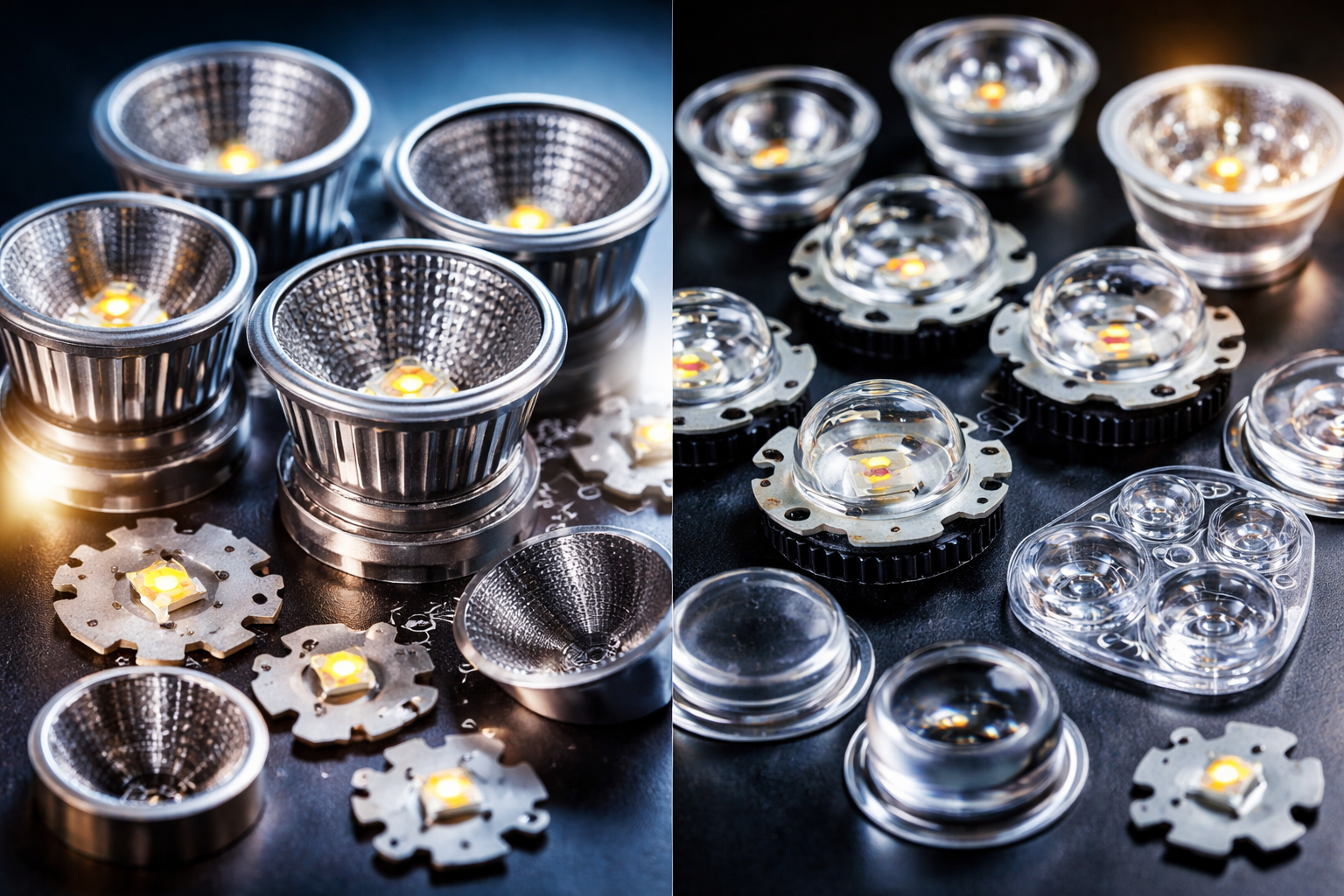
Reflectors work through specular reflection off precisely shaped metallic surfaces. Incoming light rays bounce at angles equal to their arrival angles. Proper reflector design collects scattered emission and focuses it into controlled beams.
Lenses utilize refraction as light passes between materials with different optical densities. The boundary interface bends rays according to well-established physical laws. Curved lens surfaces create predictable beam angle control through calculated geometry.
Both approaches offer distinct advantages for light distribution management. Reflective systems excel at collecting wide-angle emissions. Refractive optics provide precise control over narrow beam formations. Understanding package type differences helps optimize optical selections.
Reflector Mechanics
Reflector design follows parabolic, elliptical, or hyperbolic curves depending on desired beam characteristics. Parabolic profiles convert point sources into parallel beam patterns. Elliptical shapes focus light from one focal point to another.
Surface finish quality determines reflector performance significantly. Mirror-like finishes achieve 90-98% reflectivity in visible wavelengths. Diffuse or textured surfaces reduce efficiency but create softer light distribution with reduced glare.
Material choices for led optical systems include aluminum, silver-coated plastics, and specialized optical films. Aluminum offers excellent thermal conductivity combined with good reflectivity. Vapor-deposited coatings enhance performance on polymer substrates.
Faceted reflector designs segment smooth curves into discrete angled surfaces. This approach simplifies manufacturing while maintaining acceptable beam angle control. Each facet redirects a portion of total output toward the target area.
Reflector Geometries
Deep parabolic reflectors create narrow spotlights from small LED sources. The depth-to-diameter ratio determines final beam spread. Shallower profiles produce wider flood patterns suitable for area lighting applications.
Compound curves combine multiple geometric sections optimizing different output zones. Central regions might use parabolic profiles while outer areas employ elliptical shapes. These hybrid led optical systems balance competing performance requirements effectively.
Lens Principles
Total internal reflection (TIR) lenses represent advanced refractive optics for LEDs. These designs combine refraction at entry surfaces with internal reflection at sidewalls. The dual mechanism captures extreme viewing angles that simple lenses miss.
Fresnel lenses reduce material thickness while maintaining optical power. Concentric stepped surfaces approximate smooth curves with minimal mass. This weight reduction benefits large-area led optical systems requiring extensive coverage.
Collimating lenses convert divergent LED output into parallel beam patterns. These specialized optics position the chip at the lens focal point. If you want a dependable option, a solid example is convex optical led lens for light focusing, which is known for stable long-term performance.
Asymmetric lens designs create non-circular beam patterns suited for specific applications. Roadway lighting uses elongated distributions matching lane geometry. Wall washers employ asymmetric light distribution preventing ceiling hotspots.
Beam Shaping Capabilities
Beam angle control defines how concentrated or dispersed light appears from a fixture. Narrow beams below 20 degrees create spotlighting effects. Medium spreads between 20-40 degrees suit accent applications. Wide distributions above 60 degrees provide general illumination.
Led optical systems achieve different beam angles through varying geometric parameters. Reflector depth relative to aperture diameter controls the spread. Lens curvature and refractive index determine focal characteristics in refractive designs.
Field angle specifications describe where intensity drops to 10% of peak output. This broader measurement captures peripheral illumination beyond the primary beam. Understanding both angles helps predict actual coverage patterns.
Beam quality metrics include center beam candlepower and beam uniformity. Sharp cutoff patterns minimize light spill in architectural applications. Gradual falloff creates blended lighting effects without harsh boundaries. According to the U.S. Department of Energy LED lighting efficiency guidance, proper beam angle control improves energy efficiency.
Customization Options
Interchangeable optics allow field adjustment of beam characteristics. Snap-in reflectors or lenses modify installed fixtures without replacement. This flexibility accommodates changing space usage or design preferences economically.
Zoom mechanisms enable variable beam angle control within single led optical systems. Mechanical adjustment moves optical elements relative to LED sources. Premium theatrical and architectural fixtures incorporate this advanced capability.
Efficiency Comparison
Optical efficiency measures what percentage of generated lumens reach the target area. High-quality reflectors achieve 85-95% efficiency in narrow beam applications. Some light distribution losses occur through absorption and scattering.
Lens systems show similar efficiency ranges with variations based on design complexity. Simple convex lenses reach 90-95% transmission. Multi-element TIR optics may drop to 80-90% due to additional interface losses.
Led optical systems lose some light regardless of technology. Surface imperfections, material absorption, and geometric limitations all reduce delivered lumens. Premium components minimize these losses through superior materials and precise manufacturing.
System efficiency includes both optical and electrical factors. Driver losses, thermal effects, and aging all impact long-term performance. Optical component selection represents just one element in comprehensive energy calculations. Resources on LED efficiency optimization address complete system considerations.
| Characteristic | Reflectors | Lenses |
| Optical Efficiency | 85-95% | 80-95% |
| Narrow Beam Control | Excellent | Excellent |
| Wide Beam Control | Good | Excellent |
| Manufacturing Cost | Low-Medium | Medium-High |
| Size Requirements | Larger | Compact |
Material Selection
Polycarbonate dominates lens manufacturing for led optical systems due to excellent optical clarity and impact resistance. This thermoplastic withstands harsh environments while maintaining transparency. UV-stabilized grades prevent yellowing from prolonged exposure.
Acrylic offers superior optical transmission compared to polycarbonate. The material achieves 92% light transmission versus 88% for polycarbonate. However, acrylic shows lower impact resistance and heat tolerance limiting some applications.
Silicone lenses handle extreme temperatures better than standard thermoplastics. These materials maintain flexibility and clarity from -40°C to 200°C. High-power LED applications benefit from silicone’s thermal stability.
Glass provides ultimate optical performance in demanding led optical systems. Its superior transmission and thermal resistance come at higher cost and weight. Architectural and museum lighting justify glass optics for critical color rendering.
Manufacturing Methods
Injection molding produces most plastic lenses for led optical systems economically. Molten polymer fills precision molds creating complex geometries. Surface finish quality directly impacts final optical performance.
Vacuum metalizing deposits reflective coatings on reflector design substrates. Aluminum vapor condenses onto cooled surfaces forming mirror-like films. This process enables lightweight plastic reflectors with excellent reflectivity.
Hydroforming shapes metal reflectors through hydraulic pressure against dies. The technique produces smooth parabolic curves in aluminum sheet. Spun or stamped alternatives offer lower cost with acceptable performance.
Precision machining creates prototype and low-volume optics. Computer-controlled diamond turning achieves exceptional surface quality. This method suits custom led optical systems and specialty applications. Understanding industry terminology helps navigate specifications.
Quality Control
Photometric testing verifies beam angle control and intensity distribution. Goniophotometers measure light output at numerous angles. This comprehensive data ensures led optical systems meet design specifications.
Surface inspection identifies defects affecting optical performance. Scratches, contamination, and molding flaws scatter light unpredictably. Automated vision systems catch problems before assembly into finished fixtures.
Application Matching
Retail and museum lighting demands precise beam angle control for merchandise highlighting. Narrow-beam lenses or deep reflectors create focused spots. Excellent color rendering requires high-transmission optics minimizing spectral distortion.
Outdoor area lighting favors robust reflector design for weather resistance. Wide beam patterns from shallow reflectors provide uniform ground coverage. Sealed housings protect optical surfaces from environmental degradation.
Office and commercial spaces use wide-distribution led optical systems for general illumination. Diffuse lenses reduce glare while maintaining adequate light levels. Asymmetric optics optimize vertical surface lighting in open offices.
Industrial facilities require light distribution optimized for ceiling heights and task requirements. High-bay reflectors collect wide LED emissions and redirect them downward. The ENERGY STAR guide to LED lighting basics explains application-specific selection criteria.
Maintenance Factors
Dust accumulation degrades led optical systems performance gradually. Particle buildup on reflective surfaces reduces reflectivity. Lens contamination scatters light creating visual discomfort and reduced efficiency.
Cleaning protocols differ between reflector and lens designs. Soft cloths and mild detergents clean most plastic lenses safely. Metallic reflectors require gentler handling avoiding abrasive materials that damage coatings.
Environmental protection ratings indicate resistance to contamination ingress. IP65-rated fixtures seal optics from dust and water spray. Lower ratings permit maintenance access but require more frequent cleaning in dirty environments.
Replacement availability affects long-term system sustainability. Standardized led optical systems enable economical component swaps. Custom optics may become unavailable forcing complete fixture replacement when degradation occurs.
Cost Analysis
Simple reflectors represent the most economical led optical systems approach. Stamped aluminum or molded plastic versions cost pennies to dollars. Performance meets requirements for many general lighting applications.
Precision lenses command higher prices reflecting complex tooling and material costs. TIR optics range from dollars to tens of dollars depending on size and sophistication. Enhanced beam angle control justifies premiums in demanding applications.
Total system costs include fixture integration and assembly labor. Lens-based led optical systems often enable more compact designs reducing housing expenses. Reflector approaches may require larger fixtures offsetting lower component costs.
Performance-adjusted value considers delivered lumens and light distribution quality. A higher-efficiency optical system reduces LED count for equivalent output. Energy savings over fixture lifespan can dwarf initial purchase price differences. Resources at the LED knowledge center provide detailed economic analysis tools.
Sharing this guide
If you found this guide helpful, you can save it for later or share it with a friend. It’s especially useful for beginners, homeowners, and DIY users.
Share using the links below
Interested in learning more? Browse all related articles in our category section.
Pingback: PWM vs Analog Dimming: Critical Expert Analysis - NeoLEDHub