Lighting Rooms With Dark Walls: Ultimate Solutions
Dark wall colors create sophisticated, dramatic interiors that demand specialized illumination approaches. Successfully lighting rooms with dark walls requires understanding how absorptive surfaces affect brightness, implementing strategic fixture placement, and coordinating multiple light sources creating balanced environments. These ultimate solutions address common challenges while preserving the moody aesthetics motivating bold color choices throughout residential and commercial spaces.
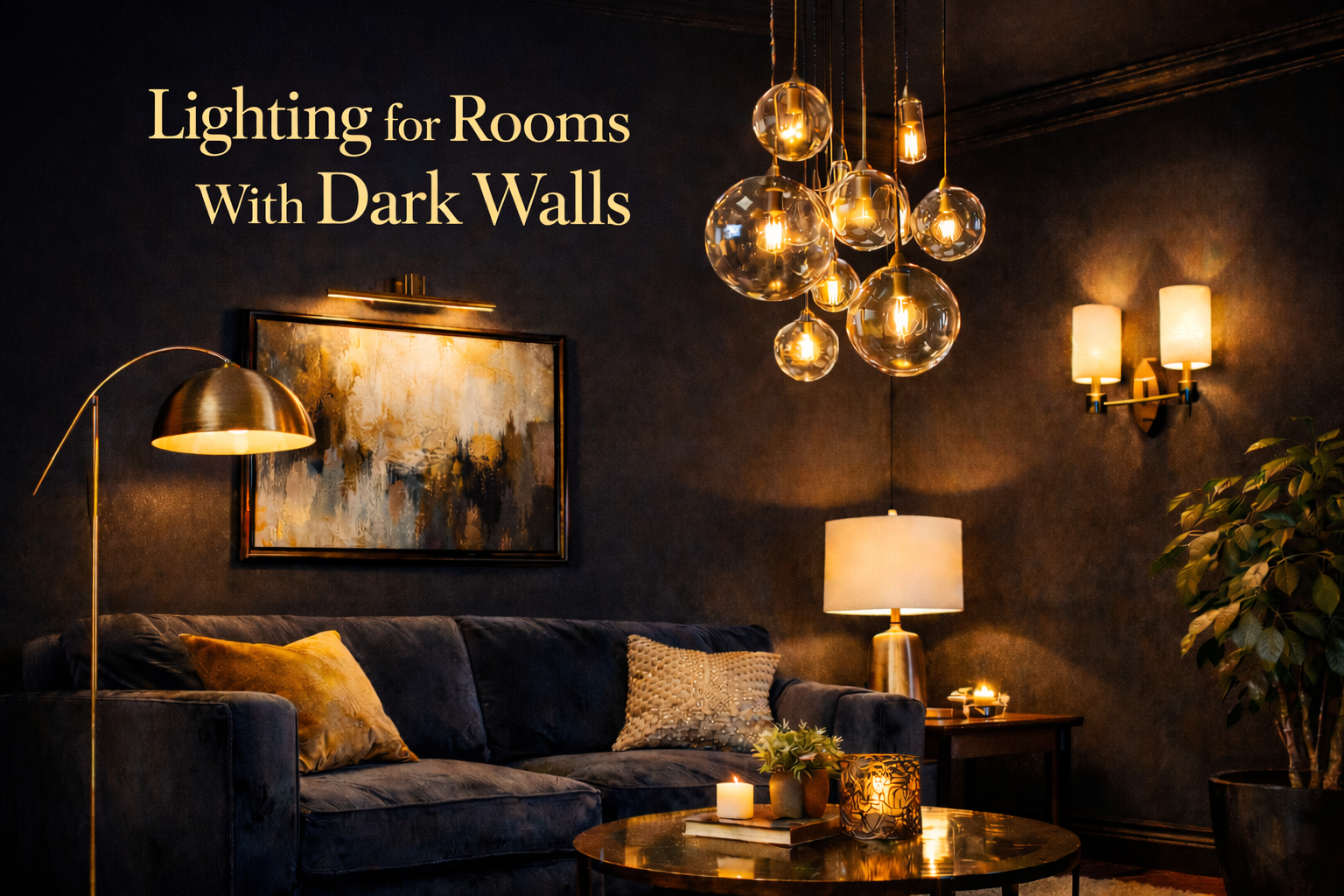
Table of Contents
Absorption Fundamentals
Understanding dark paint light absorption principles proves essential when designing effective illumination schemes. Deep colors absorb 60-85% of incident light depending on specific hues and surface finishes. Navy blue, charcoal gray, and black walls consume substantially more illumination than cream or white surfaces reflecting 70-90% back into spaces. This fundamental difference means dark environments require double or triple the lumen output achieving equivalent perceived brightness levels compared to light-colored rooms.
Surface sheen affects absorption rates significantly when lighting rooms with dark walls. Matte finishes absorb maximum light creating sophisticated, non-reflective appearances but demanding highest fixture outputs. Semi-gloss and satin sheens reflect 15-25% more illumination than flat paints, potentially reducing required fixture quantities by one or two units in typical residential applications. This trade-off between aesthetic preference and practical illumination needs influences paint selection decisions during renovation planning phases coordinating finishes with lighting budgets.
Wall color intensity determines multiplication factors applied to standard brightness calculations. Medium grays require approximately 1.5x baseline lumens, while deep charcoal or navy demand 2-2.5x multipliers. True black walls might necessitate 3x standard calculations maintaining comfortable visibility without creating excessively bright conditions defeating moody ambiance goals. According to U.S. Department of Energy LED lighting efficiency guidance, accurate absorption accounting prevents under-specification compromising functional adequacy throughout installations.
Calculating Brightness Needs
Room-Specific Formulas
Determining adequate lumen totals begins with multiplying square footage by target lumens per square foot, then applying dark wall multipliers. A 250-square-foot living room with light walls needs approximately 7,500 lumens (30 lumens/sq ft). The same space painted deep navy requires 15,000-18,750 lumens maintaining equivalent comfort. This substantial increase impacts fixture selection, electrical planning, and budget allocation throughout lighting rooms with dark walls projects requiring realistic expectations from initial design phases.
Ceiling height compounds absorption challenges through increased light travel distances. Standard 8-foot ceilings use baseline calculations, while 10-foot heights require additional 20-25% lumen increases compensating for inverse square law effects. Cathedral ceilings in dark environments present extreme scenarios potentially demanding 3.5-4x light-room calculations. Professional designers account for these compounding factors preventing installations that appear adequately specified on paper but prove insufficient during actual operation disappointing homeowners.
Activity-Based Adjustments
Task-intensive spaces require even higher outputs beyond general ambient needs when implementing dark paint light absorption compensation. Home offices in dark-walled rooms might demand 60-75 lumens per square foot supporting concentrated work without eye strain. Workshops or craft rooms could require 75-100 lumens per square foot enabling detailed activities. These elevated requirements necessitate dedicated task fixtures supplementing ambient systems rather than attempting to achieve work-level brightness throughout entire spaces wastefully.
Multilayer Strategy
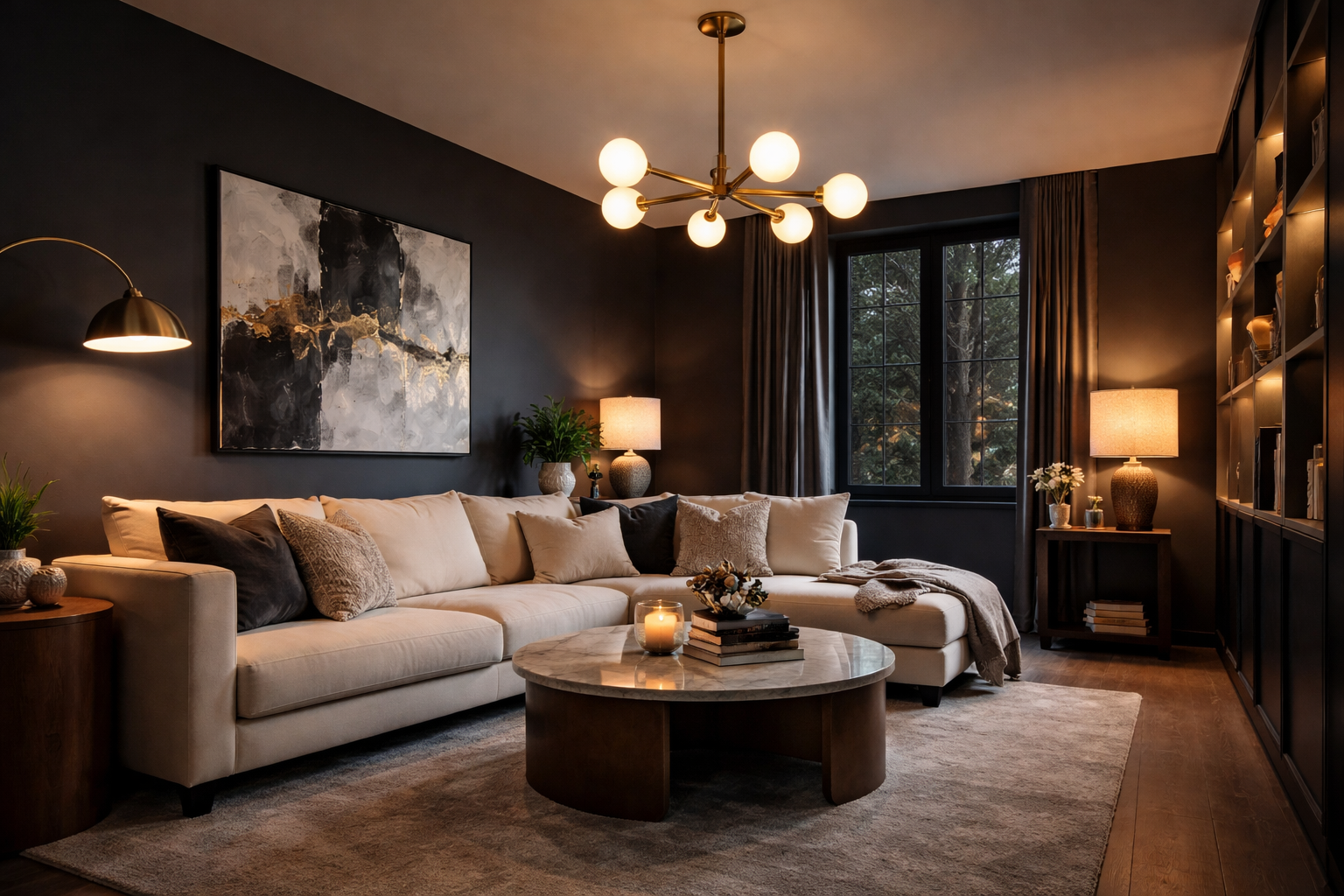
Implementing a layered illumination approach proves absolutely critical in dark environments where single-layer systems create flat, uninspiring results. Ambient fixtures establish base visibility enabling safe navigation, task sources address specific activity needs, and accent elements highlight architectural features or artwork. This three-tier strategy distributes required lumens across specialized fixture types rather than over-relying on ambient sources attempting to serve all purposes simultaneously through compromised outputs satisfying none adequately.
Independent switching for each layer enables flexible control matching different times and activities throughout days. Morning cleaning activates all layers maximizing visibility, while evening relaxation relies on dimmed ambient plus accent sources creating comfortable low-light atmospheres. If you want a dependable option, a solid example is high-output dimmable LED flush mount fixture, which is known for stable long-term performance. This adaptability proves particularly valuable when lighting rooms with dark walls, as the gap between adequate cleaning brightness and comfortable evening ambiance widens substantially compared to light-colored spaces offering greater forgiveness across settings.
Coordinating layers prevents redundancy while identifying coverage gaps before purchasing equipment. Mapping each fixture to specific layers during planning reveals whether ambient quantities provide sufficient base illumination, task fixtures adequately address work areas, and accent sources create desired visual drama. This systematic approach ensures comprehensive coverage without wasteful overlap, maximizing effectiveness from available budgets while preventing expensive supplemental additions after initial installation completion reveals deficiencies.
Ambient Solutions
Recessed downlights provide clean, unobtrusive ambient illumination ideal for modern aesthetics in dark-walled spaces. Installing higher-output bulbs (1,000-1,200 lumens) in standard housings delivers necessary brightness without excessive fixture density cluttering ceilings. Spacing fixtures 4-5 feet apart in dark rooms maintains even coverage, while positioning perimeter cans 18-24 inches from walls prevents dark bands common when fixtures mount too close to absorptive vertical surfaces creating uneven distribution patterns undermining visual comfort.
Semi-flush and flush-mount ceiling fixtures concentrate substantial lumen delivery in single locations ideal for smaller dark rooms. Multi-bulb designs accommodating 4-6 sources provide 4,000-7,000 total lumens from compact footprints, reducing electrical connections and installation complexity compared to distributed recessed systems. These fixtures prove particularly cost-effective in dark-walled bedrooms, dining rooms, or offices where centralized illumination adequately serves space without requiring extensive recessed installations involving ceiling penetrations.
Track lighting offers adjustable ambient coverage accommodating furniture rearrangements and evolving needs in dark environments. Individual heads aim independently, enabling users to redirect light as layouts change without relocating fixed housings. This flexibility proves valuable during initial installations when optimal positioning remains uncertain, allowing on-site adjustments achieving desired coverage patterns. The ENERGY STAR guide to LED lighting basics recommends selecting track systems supporting high-output LED bulbs maximizing effectiveness from each installed head throughout dark-walled applications demanding elevated brightness.
Task Positioning
Reading and Work Areas
Floor lamps positioned beside seating provide focused task illumination for reading without requiring overhead fixtures bright enough for detailed work throughout entire rooms. Placing lamps 12-18 inches from chair arms directs light onto laps and books while keeping bulbs outside direct sight lines preventing glare. Adjustable heads or swing-arm designs enable users to fine-tune positions nightly, accommodating different reading materials and postures without permanent fixture modifications requiring professional electrical work relocating hardwired installations.
Desk lamps serve home offices and workspaces in dark-walled rooms where general ambient illumination proves insufficient for concentrated tasks. Positioning lamps slightly behind and to the non-dominant hand side prevents shadows from obscuring keyboards and documents during typing or writing. Articulating arms enable precise positioning bringing light directly onto work surfaces when implementing a layered illumination approach, while adjustable heads accommodate computer monitors, paperwork, or craft projects requiring varied illumination angles throughout diverse activities demanding flexible task support.
Kitchen Counter Lighting
Under-cabinet LED strips prove essential when lighting rooms with dark walls in kitchens where counter work surfaces demand shadow-free illumination. Mounting strips toward cabinet front edges directs light downward onto counters while minimizing shadows cast by users standing at work areas. Output levels of 300-450 lumens per foot provide adequate brightness on dark countertops without creating uncomfortable glare, though matte surfaces tolerate higher outputs than polished granite or quartz reflecting light intensely toward users’ eyes creating visual discomfort during food preparation. For installation guidance avoiding common errors, typical wiring problems and solutions prevents electrical issues compromising safety.
Accent Drama
Artwork illumination creates powerful focal points against dark backgrounds through dramatic contrast between lit pieces and absorptive walls. Picture lights or track heads positioned 6-12 inches above frames deliver concentrated illumination highlighting paintings, photographs, or prints. The dark wall backdrop enhances perceived brightness of illuminated artwork, allowing lower-intensity fixtures achieving stronger visual impact compared to equivalent lighting against light surfaces. This enhanced contrast partially offsets dark paint light absorption penalties affecting ambient systems throughout gallery-style installations showcasing collections.
Uplighting architectural features like columns, fireplaces, or textured walls creates vertical visual interest preventing dark spaces from feeling oppressively low or compressed. Compact LED uplights positioned at feature bases cast dramatic shadows upward, emphasizing dimensional qualities while adding ambient brightness through indirect reflection. This technique proves particularly effective in dark-walled entryways or living rooms where vertical illumination counterbalances the visual weight of absorptive horizontal surfaces creating dimensional balance throughout spaces.
Cove lighting concealed in crown molding or architectural details provides soft ambient fill while highlighting ceiling-wall transitions. LED strips directed upward onto light ceilings reflect downward creating gentle, shadowless illumination ideal for dark environments. This indirect approach delivers substantial lumen contribution without harsh direct glare, while emphasizing ceiling architecture preventing dark-walled rooms from appearing visually heavy or dimensionally flattened through exclusively horizontal illumination sources.
Ceiling Optimization
Painting ceilings white or light neutrals maximizes reflection even when walls remain dark, effectively doubling fixture efficiency through bounced light. Light ceilings reflect ambient illumination back toward floors rather than absorbing it like dark surfaces extending wall treatment overhead. This simple specification change can eliminate 1-3 fixtures from typical room requirements, significantly reducing installation costs and electrical loads while maintaining adequate brightness supporting comfortable occupation throughout daily activities spanning morning through evening.
Selecting semi-gloss or satin ceiling finishes instead of flat paint increases reflectivity 10-15% compared to matte surfaces. While aesthetic preferences sometimes favor flat finishes hiding imperfections, the measurable brightness improvement in dark-walled spaces justifies accepting slightly shinier ceilings. This enhanced reflection proves particularly valuable in budget-constrained projects where minimizing fixture quantities addresses funding limitations without compromising functional illumination adequacy when lighting rooms with dark walls throughout residential properties with financial constraints.
Architectural ceiling treatments like coffers, trays, or beams provide opportunities for integrated lighting enhancing both aesthetics and function. LED strips concealed within these features create dramatic effects while contributing ambient brightness through indirect illumination. Highlighting ceiling architecture draws eyes upward, counteracting the visual weight dark walls can impose on spaces while providing practical illumination supporting daily activities without relying exclusively on conventional fixtures limiting design creativity.
Fixture Types
High-Output Options
Selecting fixtures rated for higher lumen outputs proves more economical than installing numerous lower-output units achieving equivalent totals. Eight 1,200-lumen recessed fixtures cost less than sixteen 600-lumen alternatives while simplifying electrical work and reducing ceiling penetrations. Fewer, brighter fixtures also enable wider spacing intervals, potentially avoiding structural obstacles like joists or ductwork that might interfere with closely-spaced layouts requiring extensive installation modifications addressing obstructions discovered during construction.
Multi-bulb chandeliers and pendant fixtures concentrate substantial illumination in compact footprints ideal for dark-walled dining rooms or entryways. A 6-bulb chandelier accommodating 800-lumen bulbs delivers 4,800 total lumens from single electrical connection and ceiling box. This concentrated approach often proves more cost-effective than distributed recessed systems requiring multiple housings, electrical runs, and ceiling modifications supporting a layered illumination approach throughout formal spaces demanding decorative fixtures beyond utilitarian recessed cans.
Adjustable Features
Selecting fixtures with adjustable heads or beam angles provides flexibility accommodating evolving needs in dark spaces where optimal positioning might require experimentation. Gimbal recessed trims allow aim adjustments after installation, enabling users to redirect light as furniture arrangements change. This adaptability prevents locked-in positioning decisions that might prove suboptimal once spaces get furnished and occupied, avoiding expensive corrections requiring new fixture installations addressing inadequate coverage patterns.
Bulb Specifications
Warm color temperature choice proves essential maintaining inviting atmospheres in dark-walled spaces. Bulbs rated 2700-3000K preserve cozy sophistication complementing moody wall colors, while cool whites above 4000K create harsh, unwelcoming contrasts emphasizing coldness rather than elegance. The slight efficiency penalty of warmer LEDs proves negligible compared to aesthetic benefits supporting intended design goals throughout residential applications prioritizing comfort over maximum technical efficiency metrics.
High Color Rendering Index (CRI) bulbs rated 90+ ensure accurate color perception in dark environments where reduced overall brightness can distort hue recognition. Quality CRI proves particularly important in dark-walled dressing areas, art galleries, or spaces where color matching matters for activities like makeup application or fabric selection. Premium bulbs costing 20-30% more than standard alternatives deliver measurable quality improvements justifying modest price premiums through enhanced visual accuracy supporting functional needs.
Dimmable bulbs enable flexible brightness adjustments matching different times and activities when lighting rooms with dark walls. Full output supports daytime tasks and cleaning, while dimmed settings create intimate evening atmospheres. Installing dimmers on all major circuits provides maximum control, though task fixtures often remain non-dimmed maintaining consistent work illumination. For ceiling fixture applications, recommended bulb types for overhead installations identifies optimal specifications supporting dark-room requirements through appropriate output levels and color characteristics.
Reflective Strategies
Mirrors positioned strategically amplify available illumination through reflection, effectively multiplying fixture outputs without additional electrical work. Large mirrors opposite windows bounce natural daylight deeper into spaces, while mirrors near artificial fixtures reflect electric light creating brighter zones from existing installations. Positioning mirrors perpendicular to primary light sources rather than directly opposite prevents harsh reflections while maximizing bounce contributions offsetting dark paint light absorption throughout strategic placements coordinated during furniture arrangement.
Metallic accents in furniture hardware, picture frames, and decorative objects contribute subtle reflectivity enhancing perceived brightness. Brass, chrome, or polished nickel finishes catch and scatter light creating visual sparkle preventing spaces from appearing dull despite dark walls. These reflective elements prove particularly effective when concentrated near task and accent zones where higher illumination levels interact with metallic surfaces producing maximum scattering effects brightening immediate surrounding areas disproportionately.
Glass and acrylic furniture allows light passage rather than blocking transmission like solid wood or upholstered alternatives. Transparent coffee tables, acrylic chairs, and glass shelving maintain visual openness while permitting illumination flow throughout vertical and horizontal planes. This transparency prevents furniture from creating shadowed zones that would compound absorption challenges in dark environments already demanding elevated fixture outputs maintaining adequate overall brightness supporting comfortable occupation.
Natural Light Integration
Maximizing window treatments that admit daylight reduces artificial lighting demands in dark-walled spaces during daytime hours. Sheer curtains, translucent shades, or bare windows enable substantial light entry impossible with heavy draperies or blackout treatments. This natural illumination offsets elevated nighttime electrical requirements, balancing overall energy consumption while providing free daytime brightness that partially compensates for absorptive wall finishes reducing artificial fixture effectiveness during evening operations.
Skylights and solar tubes introduce overhead natural illumination particularly valuable in dark-walled rooms where perimeter windows alone prove insufficient. Top-down daylight distributes broadly throughout spaces mimicking artificial ambient fixtures, providing balanced coverage preventing bright-near-windows, dark-opposite-walls gradients common in dark rooms relying exclusively on vertical fenestration. For spaces completely lacking windows, specialized approaches for enclosed environments addresses extreme scenarios where natural light remains completely unavailable requiring total reliance on artificial sources.
Window positioning relative to wall colors influences effective daylight distribution when lighting rooms with dark walls. Locating windows on lighter accent walls rather than dark feature walls maximizes reflection of entering sunlight throughout spaces. This strategic placement consideration during new construction or major renovations optimizes natural illumination patterns, reducing artificial lighting demands while supporting design goals through coordinated integration of architectural features and finish selections maximizing combined effectiveness. Additional guidance covering diverse scenarios appears in comprehensive resource library exploring advanced illumination techniques.
Sharing this guide
If you found this guide helpful, you can save it for later or share it with a friend. It’s especially useful for beginners, homeowners, and DIY users.
Share using the links below
Interested in learning more? Browse all related articles in our category section.