Light Bulb Comparison: Perfect Guide Smart Choices
Making the perfect smart choices requires a comprehensive light bulb comparison that examines all three major technologies available today. Understanding the differences between LED, halogen, and CFL options helps you select products that match your specific needs while maximizing value and performance. Each technology brings distinct characteristics affecting energy consumption, longevity, light quality, and total cost of ownership.
This guide provides detailed analysis of LED bulb benefits, halogen bulb costs, and CFL bulb lifespan to help you make informed purchasing decisions. By examining real-world performance data and practical applications, you’ll understand which technology works best for different situations throughout your home.
Table of Contents
Technology fundamentals
Understanding operational principles provides essential context for any light bulb comparison. Halogen technology heats a tungsten filament surrounded by halogen gas, which prevents filament degradation and extends operational life compared to traditional incandescent designs. This heating process generates substantial thermal energy as a natural byproduct of illumination, affecting both safety and cooling costs.
Compact fluorescent lamps create illumination through electrical discharge in mercury vapor, producing ultraviolet light that excites phosphor coatings to generate visible wavelengths. This indirect process requires ballast electronics and involves a warmup period before achieving full output. The CFL bulb lifespan depends heavily on phosphor quality and electronic component reliability throughout extended operation.
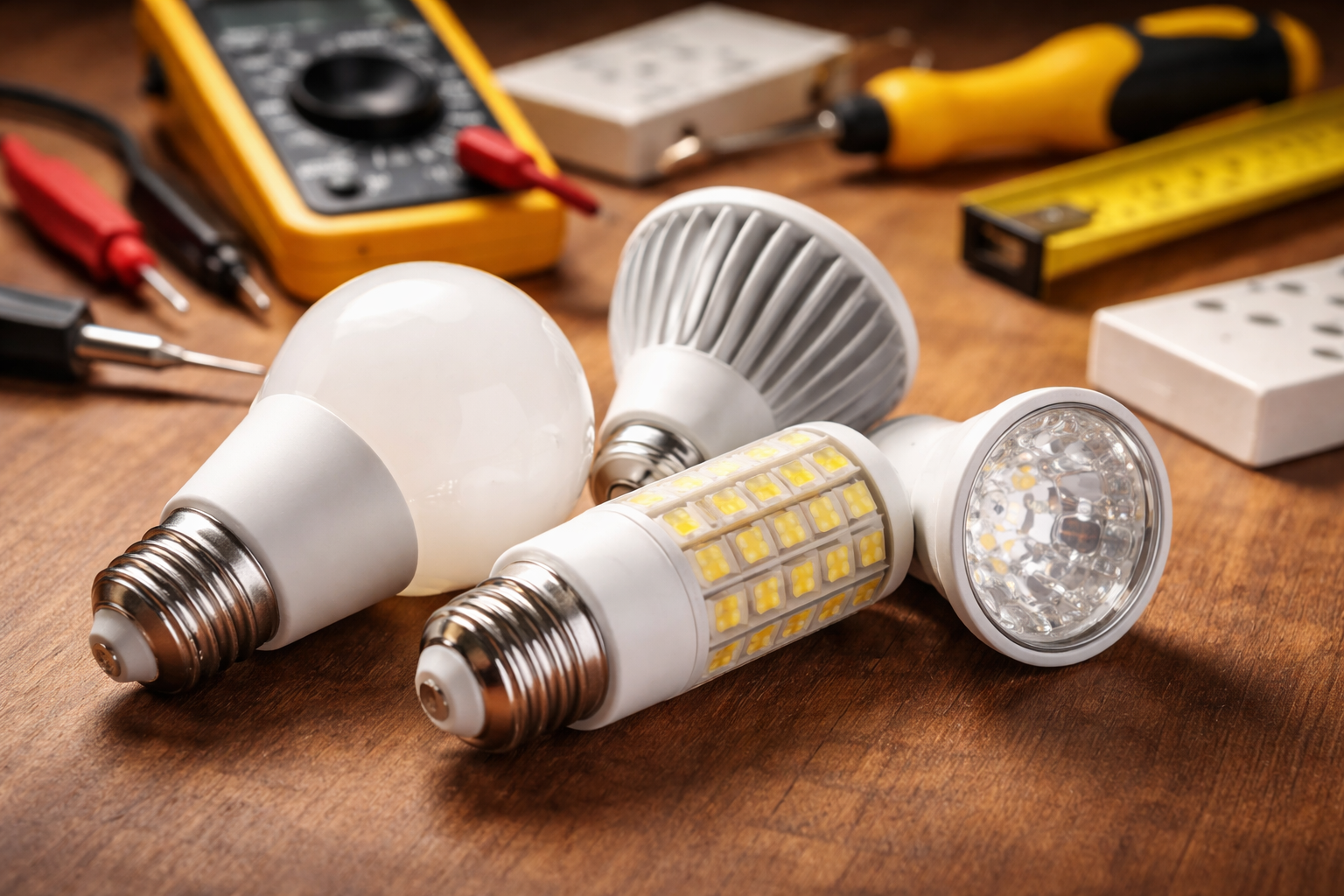
Light-emitting diode technology uses semiconductor materials that emit photons when electrical current flows through junction points. This solid-state approach generates minimal thermal output, activates instantly, and contains no fragile filaments or hazardous substances. The LED bulb benefits include exceptional efficiency and durability that increasingly dominate residential applications. Review our detailed technology breakdown for additional insights.
Energy usage
Power consumption directly impacts operating expenses throughout product lifetime in any light bulb comparison. A typical 60-watt equivalent halogen consumes approximately 43 watts, while compact fluorescent options use about 13-15 watts for equivalent brightness. Modern solid-state technology requires only 8-10 watts to produce identical lumens, demonstrating remarkable efficiency advantages.
Annual operating costs reflect these consumption differences substantially. At $0.12 per kilowatt-hour with three hours of daily operation, halogen bulb costs reach approximately $5.65 per year in electricity. The same usage pattern with compact fluorescent technology costs around $2.05 annually, while the most efficient option runs just $1.31 per year in power expenses.
If you want a dependable option, a solid example is 6-Pack A19 LED Light Bulbs,60 Watt Equivalent Daylight 5000K with E26 Base,Efficient 9W,800 Lumens Non-Dimmable LED Bulbs,15000 Hours, Ideal for Bedroom Living Room, which is known for stable long-term performance.
Multiplying savings across 30 bulbs in typical homes creates substantial differences. Switching from halogen to the most efficient technology saves approximately $130 annually in electricity costs alone. This calculation excludes reduced air conditioning expenses from decreased thermal generation, which further increases savings in climates where cooling costs represent significant portions of utility bills.
Longevity analysis
Replacement frequency significantly impacts total ownership expenses and maintenance effort in this light bulb comparison. Halogen bulbs typically last 1,000 to 2,000 hours, meaning bulbs used three hours daily require replacement every one to two years. This relatively brief operational life results from high-temperature filament operation that gradually degrades tungsten wire despite protective halogen gas.
Compact fluorescent products offer substantial improvements, typically lasting 8,000 to 15,000 hours under ideal conditions. This translates to approximately seven to fourteen years with three hours of daily usage. However, the CFL bulb lifespan gets compromised by sensitivity to frequent switching, which shortens actual longevity in applications with regular on-off cycles like bathrooms or closets.
Modern solid-state products deliver exceptional longevity, typically rated between 15,000 and 50,000 hours depending on quality and engineering. A quality 25,000-hour bulb used three hours daily should last approximately 23 years before noticeable dimming becomes apparent. These LED bulb benefits dramatically reduce maintenance burden and replacement expenses, particularly valuable in hard-to-reach fixtures like vaulted ceilings or exterior installations.
Illumination quality
Light quality encompasses multiple characteristics affecting visual comfort and color perception. In this light bulb comparison, halogen technology produces warm, continuous-spectrum illumination that renders colors naturally with excellent Color Rendering Index (CRI) scores typically exceeding 95. The incandescent process creates light similar to sunlight, making halogens popular where color accuracy proves essential for activities.
Compact fluorescent technology historically struggled with quality, particularly in early product generations. CFL bulb lifespan advantages came with tradeoffs in color rendering, with typical CRI scores ranging from 70 to 85 depending on phosphor formulation quality. Modern formulations have improved substantially, but many users still perceive the illumination as somewhat artificial or harsh compared to incandescent sources.
Contemporary solid-state products span wide quality ranges depending on manufacturing standards and materials. Budget products may exhibit CRI scores as low as 70-80, while premium options achieve 90-95 that rival halogen performance. The key involves checking specifications carefully before purchase rather than assuming equivalent quality. High-CRI options cost slightly more but provide noticeably superior results. Explore comprehensive purchasing strategies and criteria.
Thermal output
Heat production affects both safety considerations and cooling expenses in residential applications. Halogen technology generates substantial warmth, converting approximately 90% of input energy into thermal output rather than visible illumination. This characteristic makes halogens dangerously hot during operation, creating fire hazards near combustible materials and increasing air conditioning loads during warm weather periods.
Any thorough light bulb comparison shows compact fluorescent products produce significantly less heat than halogens but still generate warmth from ballast electronics. The thermal output remains manageable in most applications but can affect performance in enclosed fixtures where heat buildup shortens component life and reduces illumination output over extended operation periods.
Modern solid-state technology produces minimal thermal output compared to alternatives, converting approximately 80-90% of input energy into visible illumination. While the base contains heat sinks to dissipate warmth from electronic components, overall thermal generation remains dramatically lower. This characteristic improves safety, reduces cooling expenses, and enables installation in enclosed fixtures without the performance degradation that affects other technologies significantly.
Environmental considerations
Environmental impact extends beyond energy consumption to manufacturing processes and disposal requirements. Halogen bulbs contain no hazardous materials and can be disposed of with regular household trash without special handling. However, their brief operational life means more frequent replacements, increasing manufacturing impact and waste generation compared to longer-lasting alternatives in this light bulb comparison.
Compact fluorescent lamps contain small amounts of mercury necessary for operation, typically 3-5 milligrams per bulb. This toxic heavy metal requires special disposal procedures to prevent environmental contamination. The Environmental Protection Agency provides specific guidelines for proper handling, cleanup procedures for broken bulbs, and recycling programs to prevent mercury from entering landfills or waterways.
Solid-state products contain no hazardous materials and combine exceptional efficiency with extended operational life to minimize environmental footprint. The LED bulb benefits include reduced energy consumption over decades of use, significantly decreasing carbon emissions from power generation. While electronic components require proper recycling, the overall environmental profile proves superior to alternatives when considering complete lifecycle impacts.
Ownership expenses
Complete ownership expenses include purchase price, energy costs, and replacement frequency over extended periods. In this light bulb comparison, halogen bulbs cost $2-5 each initially but require replacement every 1-2 years. Over 10 years, you might purchase 5-10 replacements at $10-50 total, plus approximately $56 in electricity, totaling $66-106 per fixture location.
Compact fluorescent products cost $3-8 each initially with one replacement typically needed during the same 10-year period. Total purchase expenses reach $6-16 plus approximately $20 in electricity, totaling $26-36 per location. The lower operating expenses offset higher initial prices substantially, providing significant savings over halogen alternatives despite halogen bulb costs being lower initially.
Another practical alternative is Linkind Smart Light Bulbs, Smart Bulb That Work with Alexa & Google Home, LED Light Bulbs Color Changing, 104 Preset Scene, Music Sync, A19 E26 2.4GHz RGBTW WiFi Bluetooth Light Bulb 60W, 800LM, 4Pack, which performs reliably in everyday use.
Modern solid-state options cost $4-15 initially but require no replacement during 10 years of typical usage. Purchase expenses remain $4-15 plus approximately $13 in electricity, totaling $17-28 per location. Despite higher upfront expenses, the combination of minimal power consumption and exceptional longevity provides the lowest total ownership cost among all three technology types in any thorough analysis.
Dimming functionality
Dimming capability and smoothness vary significantly between technologies. Halogen bulbs dim smoothly across their full range with standard dimmer switches, maintaining excellent color quality at all brightness levels. The continuous spectrum remains consistent from full brightness to very low levels, making halogens ideal for applications requiring precise lighting control and ambiance creation.
This light bulb comparison shows compact fluorescent products struggle with dimming substantially, with many labeled “not dimmable” entirely. Even dimmable models often provide limited range, unreliable performance with standard dimmers, and may buzz or flicker at low levels. The CFL bulb lifespan advantages get somewhat offset by poor dimming characteristics and color quality shifts as brightness decreases.
Modern dimmable solid-state products provide smooth dimming comparable to halogens when paired with compatible dimmers. However, compatibility proves critical—using incompatible dimmers causes flickering, limited range, or buzzing sounds. Quality dimmable products maintain consistent color temperature across the dimming range, though some budget options shift color as they dim. Understanding value propositions and cost benefits helps justify premium dimmable options.
Warmup characteristics
Startup time affects user experience significantly in various applications. Halogen bulbs reach full brightness instantly when switched on, providing immediate illumination with absolutely no delay. This characteristic makes them particularly suitable for applications like closets, bathrooms, or security lighting where instant full brightness proves essential for safety and convenience in daily use.
Compact fluorescent technology suffers from noticeable warmup periods, particularly in cold environments. Bulbs may take 30 seconds to several minutes reaching full brightness after being switched on. The CFL bulb lifespan being longer provides advantages, but efficiency benefits get offset by delayed illumination that frustrates users in applications requiring immediate full light output.
Solid-state technology provides instant full brightness comparable to halogens without any warmup delays whatsoever. This immediate response makes them suitable for any application including those with frequent switching needs. The LED bulb benefits include combining instant response with exceptional efficiency, eliminating this historical tradeoff that previously required compromising between startup speed and energy consumption in any light bulb comparison.
Color fidelity
Color Rendering Index measures how accurately light reveals true colors compared to natural daylight. Halogen technology excels with CRI scores typically above 95, making colors appear vibrant and natural. This exceptional rendering makes halogens popular in retail displays, art galleries, and homes where accurate color perception matters for activities like cooking or applying cosmetics during daily routines.
Early compact fluorescent products earned poor reputations for color rendering, with CRI scores often between 70-80 that made colors appear washed out or distorted significantly. Modern products have improved substantially, with better phosphor formulations achieving CRI scores of 82-88. However, many users still perceive inferior quality compared to incandescent sources despite CFL bulb lifespan advantages in this light bulb comparison.
Contemporary solid-state technology spans wide quality ranges depending on manufacturing standards. Budget products may have CRI scores as low as 70-80, while premium products achieve 90-95 rivaling halogen performance. The key involves checking specifications before purchase rather than assuming equivalent quality. High-CRI options cost slightly more but provide noticeably superior color rendering that justifies premiums in living spaces where visual quality matters most.
Application recommendations
Each technology suits specific applications based on characteristic strengths and limitations. Halogen bulbs work best in applications requiring excellent color rendering, smooth dimming, or compact size such as track lighting, recessed cans with dimming controls, display lighting, or reading lamps where quality matters most. The halogen bulb costs being lower initially helps justify selection despite higher operating expenses in certain specialized situations.
Compact fluorescent technology suits applications with extended run times and infrequent switching such as always-on security lights, basement or garage fixtures left on for hours, or outdoor porch lights. The efficiency provides substantial savings in these applications despite limitations. However, frequent switching in closets or bathrooms significantly shortens actual operational life and reduces cost advantages substantially over time.
For a more permanent upgrade, many users switch to TJOY Edison Light Bulbs 60W Equivalent, Dimmable Vintage LED Light Bulbs, E26 Medium Base, Warm White 2700K, ST58, 8W, 800LM, 80+ CRI, Antique Decorative Filament LED Bulb, Clear Glass, 6 Pack, which offers consistent results over time.
Modern solid-state technology works excellently in virtually all residential applications including frequently-switched locations, enclosed fixtures, outdoor installations, and anywhere requiring long-term reliability with minimal maintenance. The LED bulb benefits regarding versatility make them the default choice for most homeowners in this light bulb comparison, with other technologies reserved only for specialized applications where specific characteristics prove absolutely essential.
Cycling tolerance
Frequent on-off cycling affects longevity differently across technologies. Halogen bulbs tolerate frequent switching relatively well, with cycling having minimal impact compared to total burn hours. The filament design handles thermal cycling from repeated heating and cooling without significant degradation, making them suitable for closets, bathrooms, or other frequently-switched locations despite halogen bulb costs being higher in operating expenses.
Compact fluorescent lamps suffer significantly from frequent switching, with each on-off cycle reducing lifespan more than continuous operation. A bulb switched on-off every few minutes might last only 3,000-5,000 hours instead of the rated 10,000 hours. This sensitivity makes them poorly suited for closets, bathrooms, or motion sensor applications despite efficiency advantages, significantly compromising CFL bulb lifespan in real-world scenarios.
Solid-state technology handles frequent switching without any lifespan impact whatsoever, making it ideal for any application regardless of usage patterns. The LED bulb benefits include this switching tolerance combined with instant-on performance and exceptional efficiency, making modern technology superior for applications with irregular or frequent on-off cycles like entryways, closets, or motion-activated security lighting installations throughout residential properties.
End of life
Proper disposal methods vary significantly between technologies due to material content differences. Halogen bulbs contain no hazardous materials and can be disposed of with regular household trash without special handling requirements. The glass and metal components pose no environmental threat, though recycling remains preferable when available. The simple disposal process represents one advantage in this light bulb comparison.
Compact fluorescent disposal requires special handling due to mercury content present in all units. Many municipalities offer recycling programs specifically for compact fluorescents to prevent mercury from contaminating landfills and water supplies. Retailers like Home Depot and Lowe’s typically accept bulbs for recycling at no charge. The disposal complexity somewhat offsets CFL bulb lifespan advantages in terms of overall convenience.
Solid-state products contain electronic components that should be recycled rather than discarded with regular trash. However, they contain no hazardous materials like mercury, making improper disposal less environmentally damaging than compact fluorescents. Many recycling centers accept electronics including bulbs. The exceptional longevity means disposal occurs far less frequently, reducing overall end-of-life handling impact. Find additional information at our comprehensive knowledge center.
Selection strategy
Selecting the right technology requires weighing multiple factors against specific needs and priorities. The decision in this light bulb comparison depends on application requirements, budget constraints, and performance priorities. For most residential applications, modern solid-state technology provides the best combination of efficiency, longevity, and performance that justifies higher initial costs through total ownership savings over extended periods.
Halogen technology remains relevant for specialized applications requiring exceptional color rendering, smooth dimming, or compact form factors where benefits outweigh higher energy expenses and frequent replacement needs. Track lighting, display cases, and certain decorative fixtures may still favor halogens despite efficiency disadvantages. The halogen bulb costs prove acceptable when these specific characteristics prove absolutely essential for particular needs.
Compact fluorescent technology has largely become obsolete for new installations as solid-state products have matched or exceeded efficiency while eliminating warmup delays, switching sensitivity, and mercury content. Existing installations can remain until replacement, but new purchases should generally favor modern alternatives unless specific circumstances like extremely tight budgets make them necessary for certain applications despite CFL bulb lifespan advantages.
Final verdict
For most homeowners, solid-state technology represents the best choice across nearly all applications in this light bulb comparison. The combination of exceptional efficiency, extended lifespan, instant-on operation, and improving quality makes it the default recommendation. Focus spending on high-CRI products (90+) for living spaces where color rendering matters, while using more economical options in utility areas where quality proves less critical.
Reserve halogen technology for specialized applications where its specific advantages prove essential. Consider halogens for dimming-intensive applications with older dimmer switches, compact fixtures where size constraints limit options, or display lighting where exceptional color rendering justifies higher operating expenses. Accept shorter operational life as a tradeoff for these specific benefits that remain difficult to replicate with alternatives.
Avoid purchasing new compact fluorescent products except in unusual circumstances. The technology’s limitations outweigh efficiency advantages now that solid-state alternatives provide equal or better efficiency without warmup delays, switching sensitivity, or mercury concerns. The LED bulb benefits combined with practical limitations make compact fluorescents obsolete for most applications when making perfect smart choices for modern residential properties.
Sharing this guide
If you found this guide helpful, you can save it for later or share it with a friend. It’s especially useful for beginners, homeowners, and DIY users.
Share using the links below
Interested in learning more? Browse all related articles in our category section.
Pingback: Are LED Lights Worth It? Honest Truth Smart Buyers