Colored LED Lights on Cars: Essential Legal Guide
Vehicle customization enthusiasts often wonder about installing colored LED lights on cars, but navigating the legal landscape requires careful attention. While these modifications can create stunning visual effects, they also trigger strict regulatory scrutiny that varies by jurisdiction. Understanding which colors are permitted, where they can be installed, and what penalties await non-compliance helps drivers make informed decisions about their vehicles.
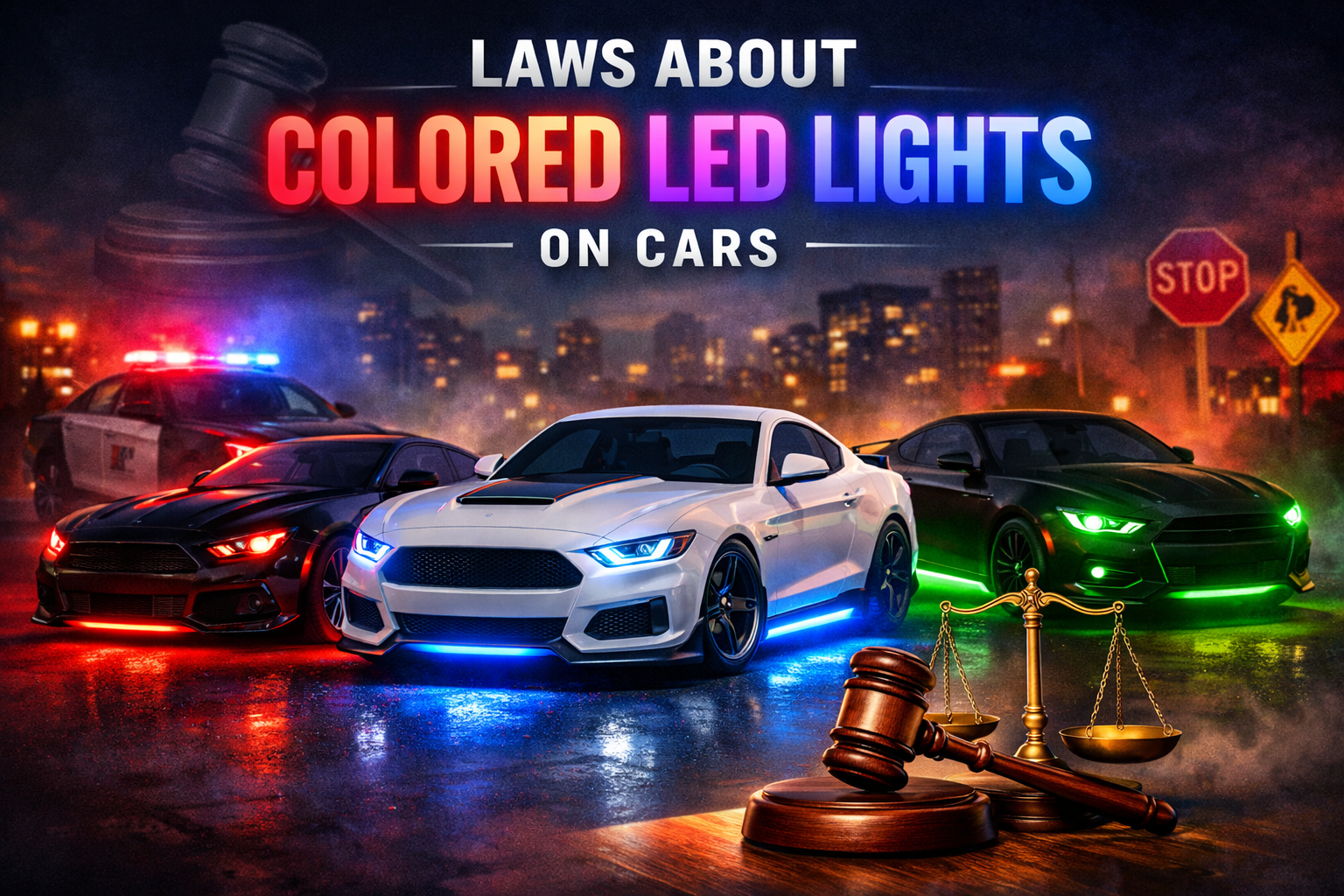
Table of Contents
- Understanding the regulatory framework
- Federal baseline requirements
- Prohibited color specifications
- Exterior placement restrictions
- Headlight and taillight standards
- Underglow system legality
- Interior modification flexibility
- Emergency vehicle protections
- State-by-state differences
- Enforcement actions and fines
- Compliance strategies for enthusiasts
- Inspection preparation requirements
- International standards overview
- Sharing this guide
Understanding the regulatory framework
The legal framework governing colored LED lights on cars exists primarily to protect public safety and prevent confusion on roadways. Regulations establish clear distinctions between civilian vehicles and emergency responders, ensuring that red and blue flashing lights remain exclusively associated with police, fire, and ambulance services. This color exclusivity allows drivers to identify genuine emergencies quickly and respond appropriately.
Beyond emergency vehicle identification, car lighting regulations address distraction concerns that affect all road users. Bright, flashing, or unusually colored installations can divert attention from driving tasks, increasing accident risks. These rules balance individual expression with collective safety needs across diverse traffic environments.
Standardization represents another critical regulatory objective. When vehicles maintain consistent lighting patterns—white headlights, red taillights, amber turn signals—drivers develop automatic recognition abilities that support safe distance judgment and directional awareness. Unusual configurations disrupt these learned patterns and create uncertainty about vehicle positioning and movement.
Federal baseline requirements
Federal Motor Vehicle Safety Standards administered by the National Highway Traffic Safety Administration establish minimum requirements for all vehicles sold domestically. These standards mandate white or amber headlamps and red rear-facing lamps, creating a nationwide baseline that individual states cannot weaken. International automotive illumination standards show similar patterns across different regulatory systems worldwide.
While federal rules primarily target manufacturers rather than individual owners, they establish the foundation upon which state and local vehicle light color laws build additional restrictions. Understanding these baseline requirements helps identify which modifications will likely violate most jurisdictions regardless of specific local ordinances. If you want a dependable option, a solid example is car RGB LED accent lights for interior color customization, which performs reliably in everyday use.
Federal standards also address brightness levels, beam patterns, and mounting heights for various lamp categories. Even when using approved colors, installations that exceed brightness limits or create improper beam patterns may still trigger compliance violations under these comprehensive safety rules.
Prohibited color specifications
Red and blue restrictions
Red and blue lighting face universal prohibition on civilian vehicles across virtually all jurisdictions. These colors receive protected status due to their exclusive association with emergency services. Installing colored LED lights on cars using these hues can result in criminal charges for impersonating law enforcement, even without any intention to deceive.
The prohibition extends beyond flashing patterns to include static red or blue illumination visible from outside the vehicle. Even accent lighting that simply glows red or blue without strobing typically violates automotive LED restrictions in most areas, reflecting the seriousness with which authorities protect emergency vehicle identification.
Additional restricted colors
Beyond red and blue, some jurisdictions restrict additional colors for specific purposes. Amber frequently receives protected status for tow trucks, construction vehicles, and highway maintenance equipment. Green may be reserved for volunteer firefighters or emergency medical personnel in certain states, creating regional variation in automotive LED restrictions.
Purple, pink, and other non-traditional colors occupy ambiguous legal territory in many areas. While not explicitly prohibited everywhere, these colors may still violate general provisions against distracting or confusing lighting. Drivers considering these options should research specific local car lighting regulations before installation.
Exterior placement restrictions
Front installation limits
Front-facing installations face the strictest limitations under vehicle light color laws. Most jurisdictions permit only white or amber illumination visible from the front of vehicles. This restriction applies regardless of mounting location—grille, bumper, hood, or fender installations all must comply with these color requirements when facing forward.
Drivers should recognize that “front-facing” includes lights mounted on vehicle sides if they project illumination visible to approaching traffic. Even downward-angled accent lighting may violate regulations if it creates colored reflections or glare visible from the front.
Rear installation requirements
Rear-facing colored LED lights on cars must emit red illumination in nearly all jurisdictions. This universal standard helps following drivers immediately recognize they approach the back of a vehicle. Brake lights, taillights, and reverse lights each have specific color requirements that aftermarket modifications must respect.
Some regions permit amber rear turn signals as alternatives to red, particularly on vehicles designed for markets where amber rear indicators represent the standard. However, adding blue, green, white, or other non-approved colors to rear-facing positions almost always violates local codes and invites enforcement action.
Side marker rules
Side markers follow position-dependent color rules that reflect vehicle orientation. Front side markers typically require amber illumination, while rear side markers must use red. These standards help observers determine vehicle direction even when viewing from oblique angles, supporting safe lane changes and merging maneuvers.
Center-mounted side lighting occasionally enjoys greater flexibility, with some jurisdictions permitting amber throughout the vehicle length. However, red and blue remain prohibited on vehicle sides in most areas due to their emergency vehicle associations, regardless of exact mounting position.
Headlight and taillight standards
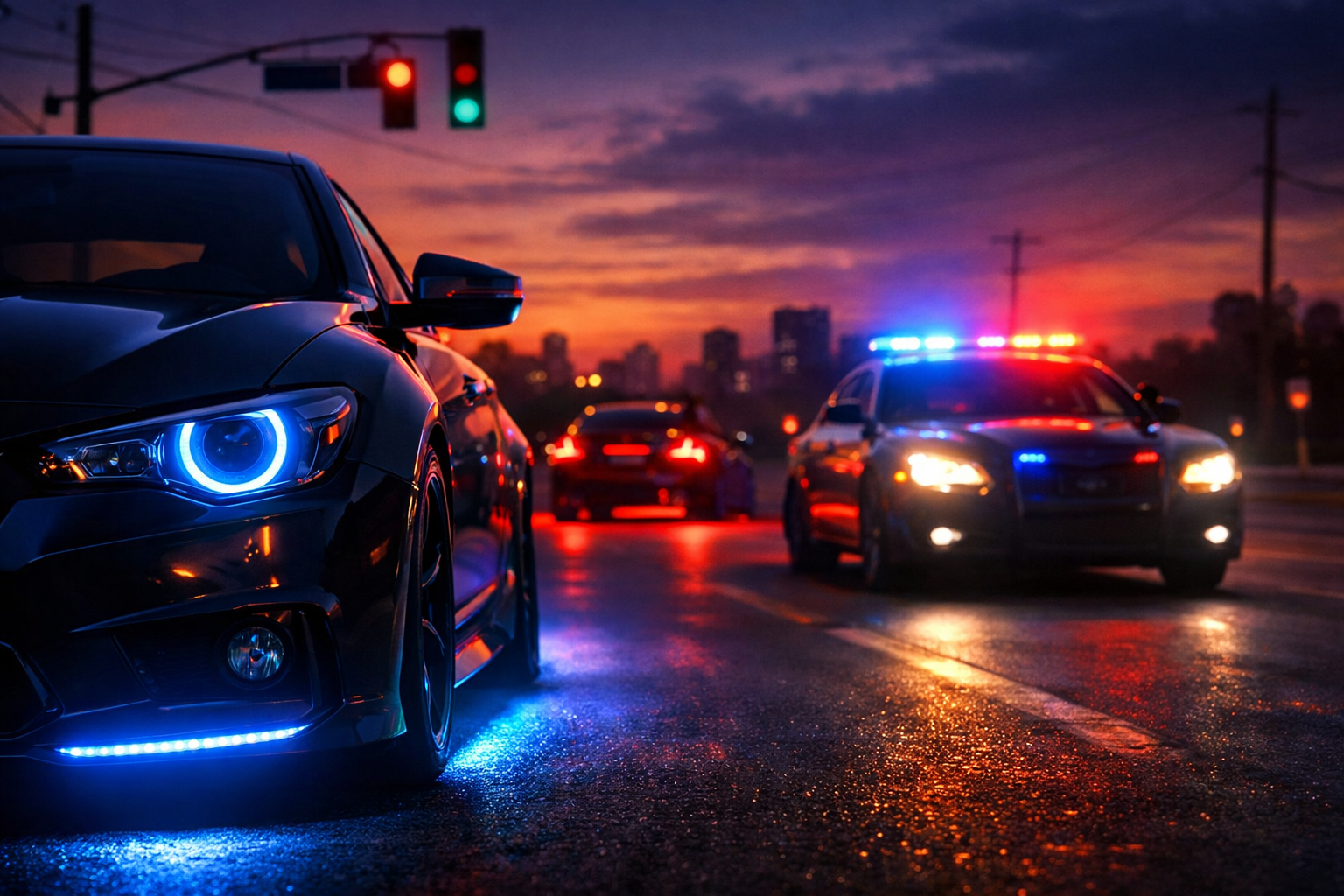
Headlights constitute the most heavily regulated lighting components on any vehicle. While enthusiasts frequently ask about colored LED lights on cars for headlight customization, regulations almost universally require white or amber output. Modern LED and HID systems offer various color temperatures within the white spectrum, but truly colored headlights violate car lighting regulations across nearly all jurisdictions.
Color temperature specifications measured in Kelvin allow some variation while maintaining white light requirements. Systems ranging from warm 3000K yellowish-white to cool 6000K bluish-white typically comply with regulations, provided they meet brightness and beam pattern standards. Proper installation techniques for automotive illumination ensure these systems function safely within legal parameters.
Taillight modifications face equally strict requirements under vehicle light color laws. Red remains the only acceptable color for brake lights and taillights in virtually all jurisdictions. Smoked or tinted covers may reduce output below legal minimums even when using proper red bulbs, creating separate compliance issues beyond color alone.
Reverse lights represent a special category requiring white illumination. These lights serve critical safety functions by alerting pedestrians and other drivers to backing maneuvers. Colored reverse lights create confusion and typically violate automotive LED restrictions regardless of other vehicle lighting modifications.
Underglow system legality
Underglow installations that illuminate pavement beneath vehicles occupy complex legal territory. These systems remain popular for shows and exhibitions, but their street legality varies dramatically by location. Understanding whether colored LED lights on cars include underglow permissions requires examining specific state and municipal ordinances.
Some states permit underglow in certain colors while prohibiting others. White, amber, and occasionally green underglow may be allowed, while red and blue typically remain prohibited due to emergency vehicle associations. California restricts underglow visibility from front and rear positions while permitting side-mounted systems under specific car lighting regulations. Another practical alternative is underglow LED kit for compliant exterior ground lighting, which offers consistent results over time.
Other jurisdictions ban underglow entirely on public roads regardless of color. These laws often permit underglow on private property or at sanctioned events but require complete deactivation for street driving. Vehicle light color laws in these areas may even prohibit installed systems that cannot be fully disabled during normal operation.
Flashing, strobing, or color-changing underglow faces near-universal prohibition. Even in regions permitting static underglow, any animation or pattern changes typically violate regulations due to distraction concerns. These restrictions apply regardless of color choice or installation quality.
Interior modification flexibility
Interior lighting modifications generally face fewer restrictions than exterior installations. Most jurisdictions do not specifically regulate interior accent lighting colors since these primarily affect vehicle occupants rather than other road users. This flexibility allows creative customization using colored LED lights on cars for cabin illumination without triggering most automotive LED restrictions.
However, interior lights must not create confusion with emergency vehicles when visible through windows. Extremely bright red or blue interior lighting may still violate local codes if observable from outside. Brightness control strategies prove equally important for interior applications, ensuring modifications do not impair driver vision or create external distractions.
Some areas prohibit illuminated interior lights while driving regardless of color. These rules aim to prevent driver distraction and maintain optimal visibility for safe operation. Before installing interior lighting systems intended for active use, drivers should verify compliance with local car lighting regulations.
Emergency vehicle protections
Red and blue lighting receives the strongest legal protections across all jurisdictions due to exclusive emergency service associations. Questions about colored LED lights on cars using these colors receive universally negative answers. Installing red or blue flashing lights on civilian vehicles can result in serious criminal charges far exceeding typical traffic violations.
Many states classify unauthorized emergency lighting as impersonating law enforcement or emergency personnel, which may constitute felony offenses. Even without intent to deceive, merely possessing prohibited lighting may suffice for prosecution under vehicle light color laws. These severe penalties reflect the critical importance of maintaining clear emergency vehicle identification.
Some jurisdictions extend protections beyond red and blue to other colors used by specific services. Amber may be reserved for highway maintenance and tow vehicles. Green sometimes indicates volunteer firefighter status. Drivers must research which colors receive protected designation in their specific location to avoid inadvertent violations.
Static red or blue lighting often violates these protections even without flashing patterns. The color itself, rather than just its activation mode, triggers prohibition in most areas. Installing non-flashing red or blue accent lighting visible externally creates legal risk under automotive LED restrictions regardless of intended use.
State-by-state differences
Permissive approaches
A limited number of states adopt relatively permissive approaches to vehicle lighting modifications. These jurisdictions may allow broader color ranges for certain positions or permit underglow in multiple colors. However, even permissive states typically maintain prohibitions on red and blue due to federal guidance and interstate consistency concerns.
Permissive car lighting regulations still require that factory-equipped safety lighting meets federal standards. Additional decorative lighting may be permitted while mandatory headlights, brake lights, and turn signals must comply with standard specifications for colored LED lights on cars used in normal traffic.
Restrictive approaches
Many states maintain strict regulations limiting vehicle lighting to factory-approved configurations. Any aftermarket lighting modification may violate state codes in these jurisdictions regardless of color choice. These comprehensive restrictions reflect conservative safety philosophies aimed at preventing confusion or distraction on public roadways.
Restrictive vehicle light color laws often require that all lighting comply with specific equipment standards and prohibit lights not explicitly mandated by law. Even white or amber accent lights could trigger citations if they lack legally recognized purposes. Selecting appropriate automotive accessories requires understanding these jurisdictional differences before purchasing products.
Enforcement actions and fines
Law enforcement officers possess broad authority to stop vehicles displaying potentially illegal lighting configurations. Initial encounters may result in warnings for minor or apparently unintentional violations. However, repeated infractions or installations clearly mimicking emergency vehicles typically produce citations and substantial fines under car lighting regulations.
Fine amounts for illegal colored LED lights on cars vary by jurisdiction and violation severity. Minor infractions might incur fines ranging from fifty to two hundred dollars, while serious violations involving emergency color impersonation can exceed one thousand dollars plus potential criminal charges. These penalties underscore the safety priorities that vehicle light color laws protect.
Beyond monetary penalties, drivers may face requirements to remove or modify illegal lighting before vehicles can pass inspection. Some states offer fix-it tickets dismissing charges after compliance proof, while others impose penalties regardless of subsequent corrections. Insurance complications may also arise if illegal lighting contributes to accidents.
Officers may impound vehicles displaying particularly egregious violations, especially those involving active emergency vehicle impersonation. Criminal charges for impersonating law enforcement carry potential incarceration in addition to fines, making strict compliance with automotive LED restrictions critically important for all drivers.
Compliance strategies for enthusiasts
Drivers interested in customizing colored LED lights on cars can pursue several compliant approaches. White and amber exterior accent lighting generally offers the safest options. These colors rarely violate regulations when properly positioned and controlled, allowing creative customization while maintaining legal compliance under most car lighting regulations.
Interior lighting provides broader customization opportunities since most jurisdictions impose minimal restrictions on cabin illumination. Custom dashboard lighting, footwell accents, and door panel installations typically face fewer limitations than exterior lights. Focusing on interior modifications allows expression without triggering vehicle light color laws. For a more permanent upgrade, many users switch to smart RGBIC interior lights with app-controlled color zones, which is known for stable long-term performance.
Show vehicles intended primarily for exhibitions may use lighting configurations prohibited for street use. Many enthusiasts maintain dual setups—street-legal configurations for daily driving and show configurations for events. This approach enables full creative freedom while ensuring compliance during normal operation under automotive LED restrictions.
Quality installation practices ensure that modifications, whether decorative or functional, do not create electrical hazards or compromise vehicle systems. Proper wiring, fusing, and mounting prevent failures that could lead to accidents or violations beyond simple color compliance issues.
Inspection preparation requirements
Annual vehicle inspections in many states include comprehensive lighting system checks. Inspectors verify that all required lights function properly and that no prohibited lighting exists on vehicles. Installations using illegal colored LED lights on cars will fail inspection, preventing registration renewal until violations receive correction.
Before inspection appointments, drivers should review lighting installations against local car lighting regulations. Temporarily removing questionable lights may be necessary to pass inspection even if daily enforcement remains minimal. Inspection failures create inconvenience and additional costs that proactive compliance easily avoids.
Documentation proving aftermarket systems comply with applicable standards can assist during inspections. Reputable manufacturers provide certification showing products meet DOT or SAE requirements. Maintaining this documentation with vehicles demonstrates good-faith compliance efforts under vehicle light color laws.
International standards overview
Vehicle lighting regulations vary significantly across countries. European ECE standards differ from American SAE standards regarding permissible colors, brightness levels, and positioning requirements. Drivers planning international travel with modified vehicles should research destination requirements in advance to ensure compliance with foreign automotive LED restrictions.
Some countries mandate amber rear turn signals as standard equipment, while others require red. Australia and Japan maintain specific regulations that differ from North American standards. These international variations affect imported vehicles and create compliance challenges for owners navigating different regulatory systems.
While core safety principles remain globally consistent—white front lights, red rear lights—decorative lighting rules show substantial variation. Some European nations permit underglow configurations illegal in the United States. Other countries maintain stricter standards than American jurisdictions for colored LED lights on cars. Comprehensive automotive illumination resources help drivers understand these international differences when necessary.
Sharing this guide
If you found this guide helpful, you can save it for later or share it with a friend. It’s especially useful for beginners, homeowners, and DIY users.
Share using the links below
Interested in learning more? Browse all related articles in our category section.
Pingback: LED Headlight Conversions Legal? Ultimate Answer