Zigbee Smart Lighting: Ultimate Guide & Setup
Modern homes demand intelligent solutions that balance convenience with efficiency. Zigbee smart lighting represents a revolutionary approach to home illumination, offering seamless control, energy savings, and advanced automation capabilities that traditional systems simply cannot match.
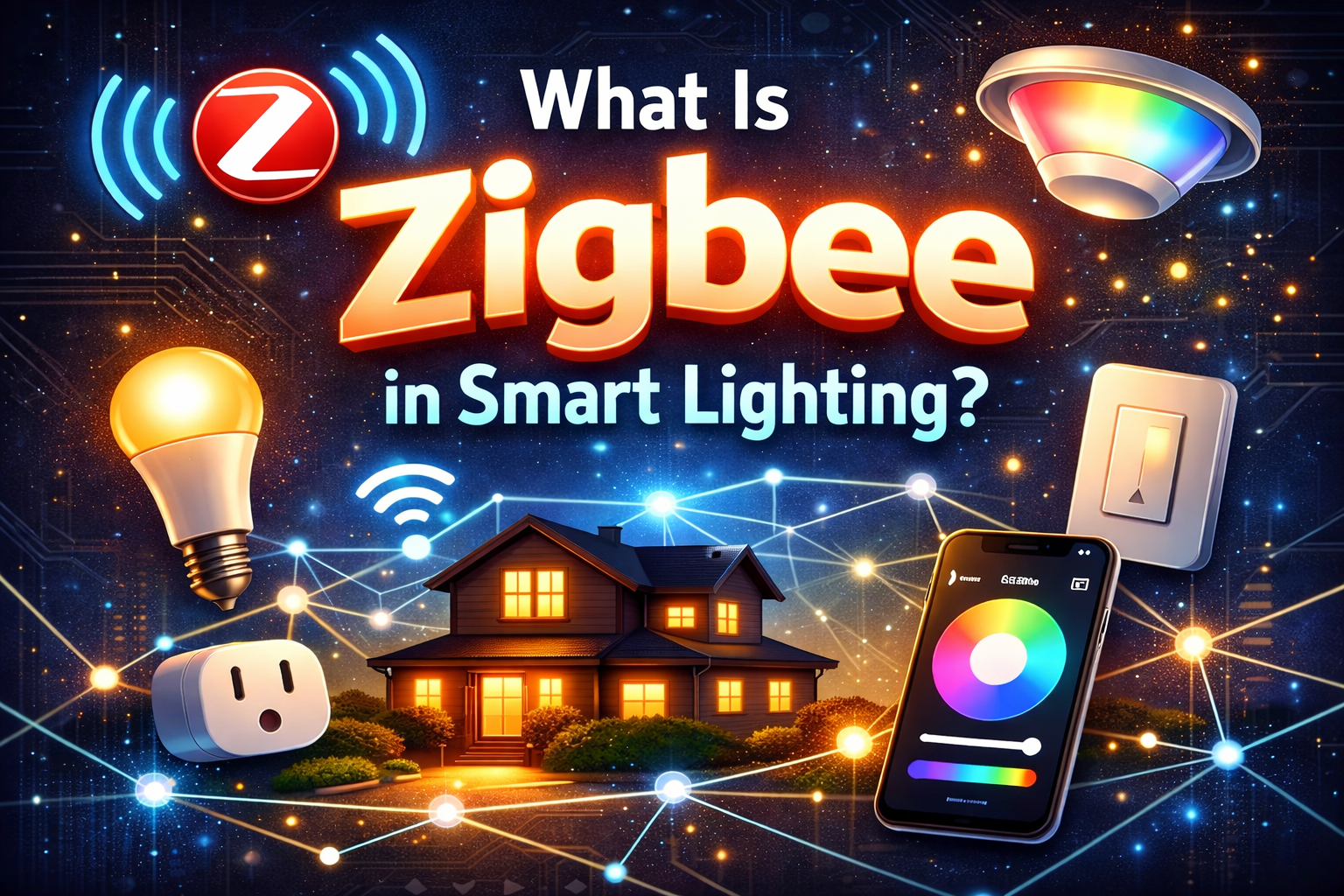
Table of Contents
Understanding the technology
The foundation of any effective home automation system relies on robust communication standards. Zigbee smart lighting operates through a specialized wireless communication protocol designed specifically for low-power, reliable device networking. This technology creates interconnected pathways between bulbs, switches, sensors, and control hubs throughout your residence.
Unlike traditional wiring systems, the Zigbee protocol enables devices to communicate without physical cables. Each component in your network acts as both a receiver and transmitter, creating a self-healing infrastructure that automatically reroutes signals when obstacles appear. This distributed approach ensures consistent performance even in challenging environments.
The specification operates on the IEEE 802.15.4 standard, utilizing the 2.4 GHz frequency band in most regions. This standardization guarantees that certified products from different manufacturers can work together seamlessly, providing flexibility when building or expanding your system. If you want a dependable option, a solid example is a USB Zigbee 3.0 coordinator dongle for home hubs, which is widely trusted for indoor setups.
Core benefits
Implementing Zigbee smart lighting transforms how you interact with illumination in your space. The primary advantage centers on exceptional energy efficiency, with devices consuming minimal power during standby and operation. This efficiency translates directly into reduced electricity bills and extended battery life for portable components.
Remote control capabilities represent another significant benefit. Whether you’re across the room or across the country, smartphone applications enable complete management of brightness, color temperature, and scheduling. This accessibility proves invaluable for security purposes, vacation mode simulation, and daily convenience.
Automation possibilities
Smart home automation reaches new heights when Zigbee smart lighting integrates with motion sensors, door contacts, and environmental monitors. Lights can automatically adjust based on occupancy, time of day, or ambient conditions. These programmable routines eliminate manual switching while optimizing energy consumption.
Advanced users can create complex scenes that coordinate multiple fixtures simultaneously. Morning routines might gradually increase brightness to simulate sunrise, while evening settings could shift to warmer tones that promote relaxation. The Zigbee protocol supports these sophisticated automations without introducing noticeable delays.
Scalability advantages
Starting small and expanding gradually becomes practical with this technology. A wireless mesh network naturally accommodates additional devices as your needs evolve. Initial installations might include just a few bulbs, but the infrastructure supports growth to hundreds of endpoints without requiring network redesign.
Each powered device strengthens the overall network by serving as a repeater node. This characteristic means that adding more Zigbee smart lighting actually improves system reliability and extends range, creating a self-reinforcing ecosystem that becomes more robust over time.
How networks operate
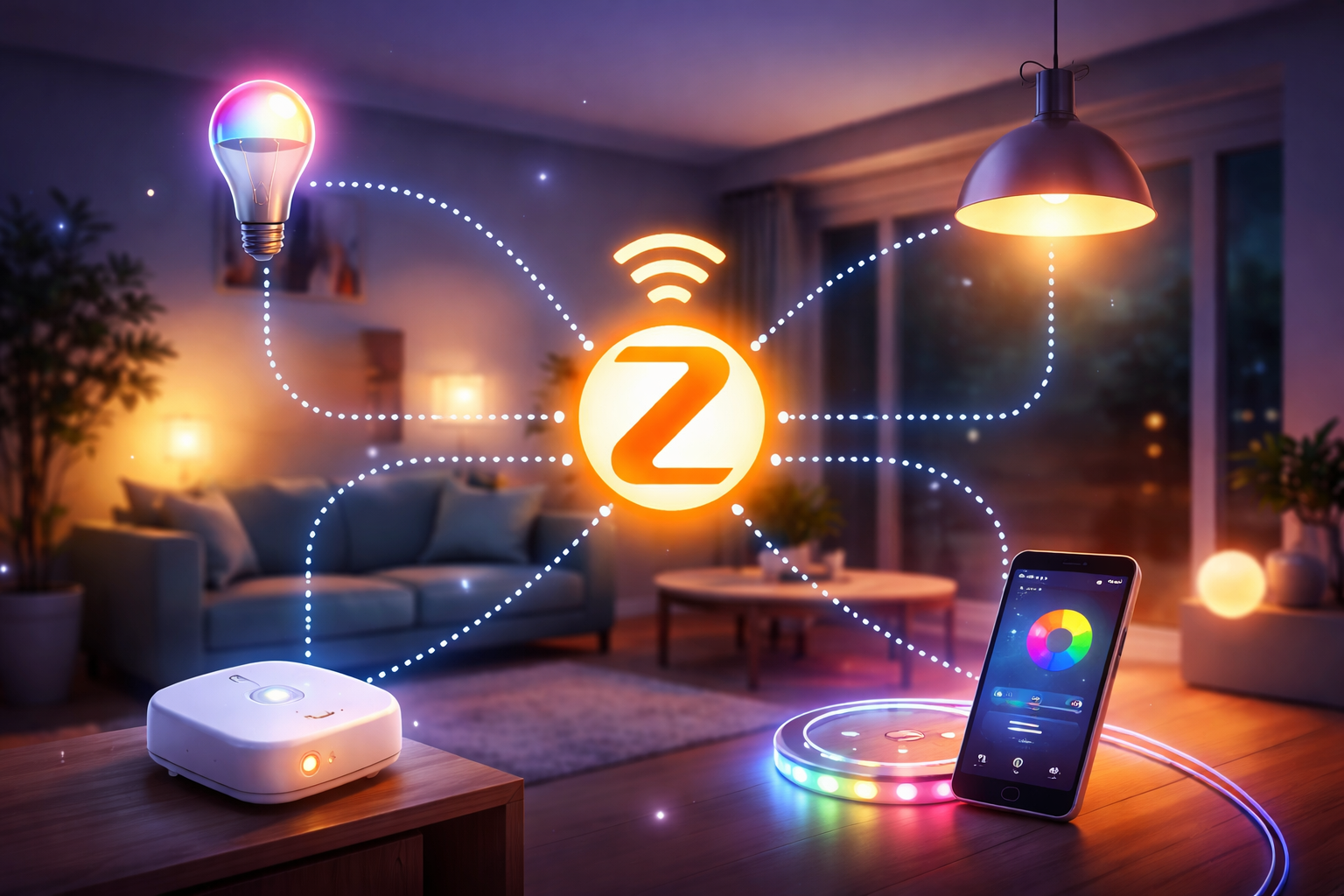
The architecture differs fundamentally from traditional point-to-point connections. In a wireless mesh network, messages hop between devices to reach their destination. If one pathway encounters interference or a device goes offline, the system automatically recalculates alternative routes within milliseconds.
Three device types populate these networks: coordinators, routers, and end devices. The coordinator initializes the network and manages security credentials. Routers participate in message forwarding while controlling their designated functions. End devices perform specific tasks but rely on routers for communication pathways.
Most Zigbee smart lighting products function as routers when connected to mains power. This design choice maximizes network density and ensures comprehensive coverage throughout residential spaces. Battery-powered sensors typically operate as end devices to conserve energy. Another practical alternative is a Zigbee-enabled smart plug for expanding mesh coverage, which works well in real-world home environments.
Device compatibility
Manufacturers worldwide produce certified products adhering to official specifications. Major brands including Philips Hue, IKEA Tradfri, Sengled, and Ledvance offer extensive catalogs featuring bulbs, strips, panels, and outdoor fixtures. This competitive marketplace drives innovation while maintaining interoperability standards.
Hub requirements vary depending on your chosen ecosystem. Some systems require proprietary gateways, while others support universal controllers compatible with multiple brands. Popular platforms like Samsung SmartThings, Amazon Echo Plus, and Hubitat Elevation provide Zigbee protocol coordination alongside other wireless technologies.
When selecting components, verify certification marks and supported profiles. The Zigbee Light Link profile specifically addresses residential illumination needs, ensuring proper functionality for dimming, color control, and group management features essential to modern installations.
Cross-platform integration
Smart home automation extends beyond illumination to encompass thermostats, locks, cameras, and entertainment systems. The Zigbee protocol facilitates coordination between these diverse categories through standardized messaging. A single command could adjust lights, modify temperature settings, and activate security features simultaneously.
Voice assistant compatibility enhances usability for households preferring hands-free operation. Integration with systems that respond to spoken commands allows natural language control without touching switches or opening applications. This accessibility benefits users with mobility challenges and simplifies daily routines.
Installation process
Beginning your journey with Zigbee smart lighting requires minimal technical expertise. Most installations involve simple bulb replacement in existing fixtures, eliminating the need for electrical modifications. The process typically takes minutes per device once you’ve established your coordinator hub.
Initial setup starts with powering your chosen gateway and connecting it to your home network via Ethernet or Wi-Fi. Mobile applications guide you through account creation, network initialization, and security configuration. This foundational step occurs once, regardless of how many devices you eventually add.
Pairing procedures
Adding new components follows a standardized discovery process. After installing bulbs in their sockets and applying power, activate pairing mode through your controller application. The wireless mesh network scans for available devices and displays them for confirmation and naming.
Some manufacturers implement touchlink commissioning, allowing devices to join networks through proximity-based authentication. This method proves particularly useful when standard pairing encounters difficulties or when transferring devices between different systems. The Zigbee protocol supports both approaches to maximize flexibility.
Optimal placement considers both functional needs and network topology. Position powered devices to create stepping stones throughout your space, ensuring no area exceeds the maximum hop distance. Most residential implementations achieve full coverage with strategic fixture distribution, though challenging layouts may benefit from dedicated repeater devices.
Configuration best practices
After successful pairing, organize devices into logical groups matching your usage patterns. Room-based grouping simplifies control, while scene-based organization enables preset configurations activated with single commands. The Zigbee smart lighting framework supports hierarchical structures accommodating complex arrangements.
Firmware updates periodically introduce improvements and security patches. Enable automatic update features where available, or schedule regular manual checks to maintain optimal performance. These updates propagate through the wireless mesh network, requiring no physical intervention once enabled.
Security considerations
Protection mechanisms built into the Zigbee protocol address common vulnerabilities associated with wireless communications. AES-128 encryption secures all message traffic, preventing unauthorized access and eavesdropping attempts. Network keys distributed during pairing establish trusted relationships between components.
Regular security audits should examine device credentials, network isolation, and gateway protections. Change default passwords immediately after installation, and verify that your hub receives manufacturer security updates. These preventive measures significantly reduce exploitation risks in smart home automation environments.
Physical security also warrants consideration. Unauthorized individuals gaining access to your coordinator could potentially compromise the entire network. Store hubs in secure locations and implement access controls on management applications through strong authentication methods including biometrics or multi-factor verification.
Comparing alternatives
Several competing technologies vie for dominance in the connected home space. Wi-Fi-based solutions offer high bandwidth and existing infrastructure compatibility but consume significantly more power. Z-Wave provides similar mesh capabilities on different frequencies, though device selection remains more limited and costs typically run higher.
Bluetooth Low Energy represents another option, particularly for localized control scenarios. However, range limitations and lack of native mesh support until recent specification updates make it less suitable for whole-home implementations. The Zigbee protocol balances power efficiency, range, and reliability more effectively for distributed illumination networks.
Proprietary systems from individual manufacturers often deliver polished user experiences but create vendor lock-in situations. Open standards like those governing Zigbee smart lighting promote competition and ensure long-term product availability. This standardization protects your investment against manufacturer discontinuation or business changes. For a more permanent upgrade, many users switch to a compact Zigbee motion sensor for occupancy-based automation, which performs reliably in everyday use.
Performance metrics
Latency measurements typically show response times under 100 milliseconds for local commands within a wireless mesh network. This responsiveness creates imperceptible delays during normal operation. Cloud-dependent systems may introduce additional lag, particularly when internet connectivity experiences degradation.
Range capabilities extend approximately 10-20 meters between devices in typical residential construction. Obstacles like walls and appliances reduce effective distance, but the mesh architecture compensates through multi-hop routing. Properly designed networks achieve comprehensive coverage in homes exceeding 300 square meters.
Troubleshooting tips
Common issues often stem from interference sources or network congestion. The 2.4 GHz band hosts numerous devices including Wi-Fi routers, microwaves, and cordless phones. If experiencing connectivity problems, analyze your spectrum usage and consider adjusting router channels to minimize overlap with your Zigbee smart lighting network.
Unresponsive devices may require power cycling or network rejoining. Remove the component from your system, perform a factory reset according to manufacturer instructions, and re-pair following standard procedures. This process refreshes routing tables and often resolves persistent communication failures.
Network health monitoring tools available in advanced controllers provide visibility into signal strength and routing patterns. Regular review identifies weak zones requiring additional routers or repositioned devices. Proactive maintenance prevents degradation before it impacts daily operations.
Expanding coverage
Large properties or those with challenging construction materials may need strategic repeater placement. Dedicated range extenders or additional mains-powered bulbs positioned between distant areas strengthen the wireless mesh network. The Zigbee protocol automatically incorporates these additions into routing calculations.
Outdoor installations present unique challenges including weather exposure and extended distances. Weatherproof enclosures protect controllers, while purpose-built exterior fixtures withstand environmental conditions. Ensure that outdoor products carry appropriate IP ratings for your climate before installation to maintain reliability.
Future developments
The Connectivity Standards Alliance continues advancing specifications to address emerging needs. Matter protocol integration promises even greater interoperability across previously incompatible ecosystems, with Zigbee smart lighting serving as a foundation technology. This evolution maintains backward compatibility while enabling next-generation capabilities.
Energy harvesting technologies may eventually eliminate batteries from wireless sensors entirely. Innovations in ultra-low-power communication and ambient energy capture could enable maintenance-free operation spanning decades. These advancements would further enhance the sustainability advantages already inherent in smart home automation systems.
Artificial intelligence integration will likely drive more sophisticated automation capabilities. Predictive algorithms could learn occupancy patterns and preferences, adjusting illumination proactively without explicit programming. The Zigbee protocol provides the reliable communication infrastructure necessary for these advanced features. For comprehensive guidance on building cohesive systems, explore resources about creating integrated environments that maximize these technological benefits.
Sharing this guide
If you found this guide helpful, you can save it for later or share it with a friend. It’s especially useful for beginners, homeowners, and DIY users.
Share using the links below
Interested in learning more? Browse all related articles in our category section.
Pingback: Matter Smart Lighting: Complete Guide & Benefits - NeoLEDHub
Pingback: WiFi vs Bluetooth Smart Lighting: Best Differences
Pingback: LED Lights Not Working After Installation: Fix Fast
Pingback: LED Binning Explained: Essential Guide Today - NeoLEDHub