Best Waterproof LED Strip Lights: Essential Guide
Choosing between waterproof and non-waterproof options can dramatically affect your lighting project’s success and longevity. Understanding the differences helps you select the right protection level for indoor, outdoor, and high-moisture environments.
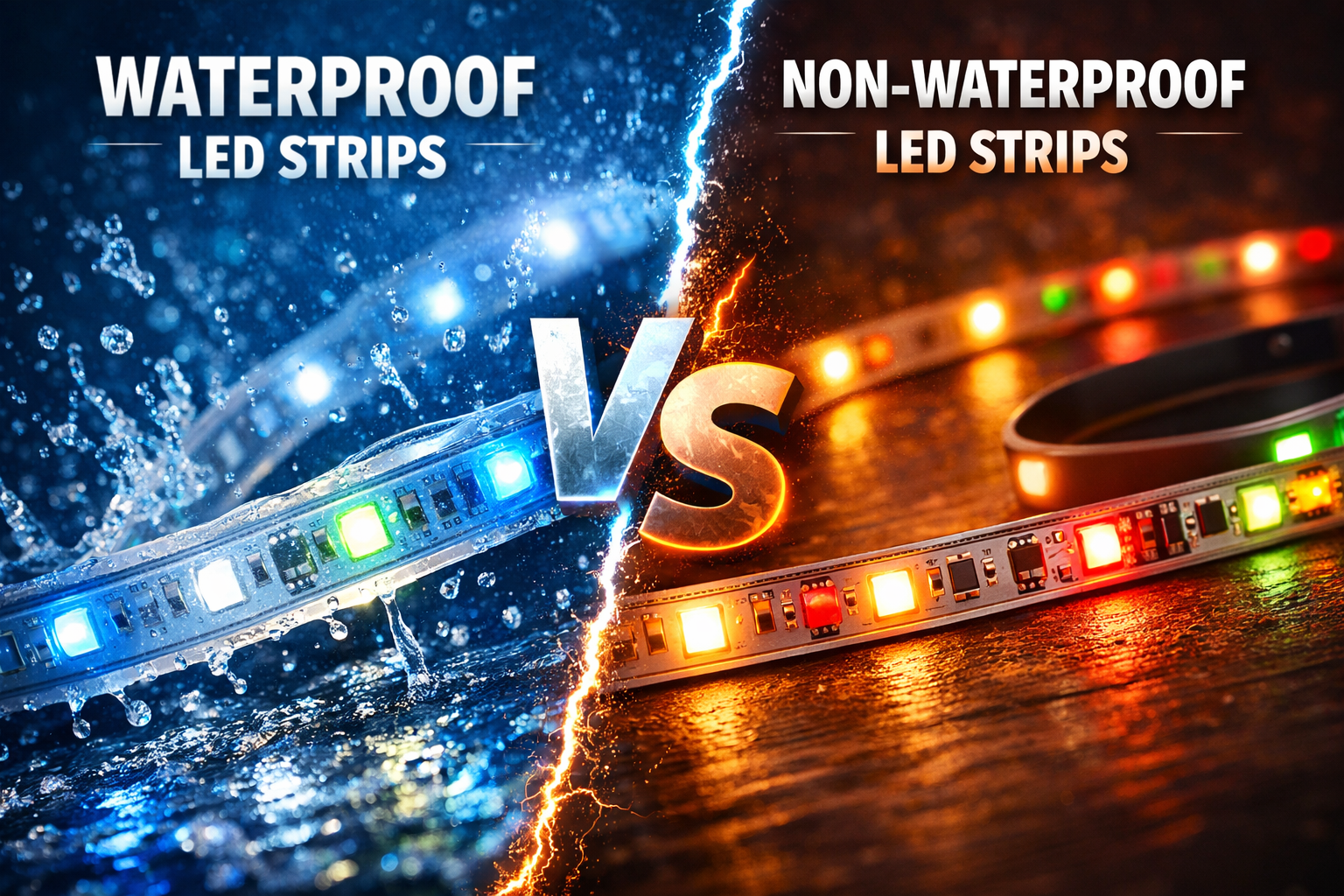
Table of Contents
Understanding Protection Levels
When selecting waterproof LED strip lights, you need to understand that protection exists on a spectrum rather than as a simple yes-or-no choice. Non-waterproof strips offer zero moisture resistance and work exclusively in completely dry environments. These bare circuit boards expose all electrical components directly to the surrounding air.
Water-resistant options provide moderate protection against light splashes and humidity but cannot withstand direct water contact. Full waterproof versions can survive complete submersion in water for extended periods. The level you need depends entirely on where you plan to install your strips and what environmental conditions they will face throughout their operational life.
Most residential projects fall somewhere in the middle of this protection spectrum. Kitchens require splash resistance, bathrooms need humidity protection, and outdoor installations demand comprehensive weatherproofing. Understanding these distinctions before purchasing saves money and prevents premature failure of your lighting system. If you want a dependable option, a solid example is a color-shifting waterproof strip with segmented LED control, which offers consistent results over time.
IP Rating System Explained
The IP rating for LED strips provides a standardized method for comparing protection levels across different manufacturers and product lines. This two-digit code tells you exactly what environmental challenges a particular strip can handle. The first digit addresses solid particle protection, while the second digit indicates liquid ingress protection.
Common ratings include IP20 for non-waterproof indoor strips, IP65 for splash-resistant applications, and IP67 or IP68 for full submersion scenarios. Each number increment represents a significant increase in protective capability. An IP65 rating means the strip can handle water jets from any direction, while IP67 can survive temporary submersion up to one meter deep.
Higher IP rating for LED strips typically correlates with thicker protective coatings and more robust sealing methods. This protection comes with tradeoffs in flexibility, heat dissipation, and cost. According to the official website of the United States government, these standards ensure consistent performance expectations across global markets.
Reading IP Codes Correctly
The first digit in an IP rating for LED strips ranges from 0 to 6, with higher numbers indicating better protection against dust and solid objects. A rating of 5 means dust-protected, while 6 indicates completely dust-tight construction. The second digit ranges from 0 to 8 for liquid protection, with 8 representing continuous submersion capability.
When you see waterproof LED strip lights marked as IP65, you know they resist dust ingress and can handle low-pressure water jets. This makes them suitable for covered outdoor areas but not for direct rain exposure or ground-level installations where standing water might accumulate.
Types of Protective Coatings
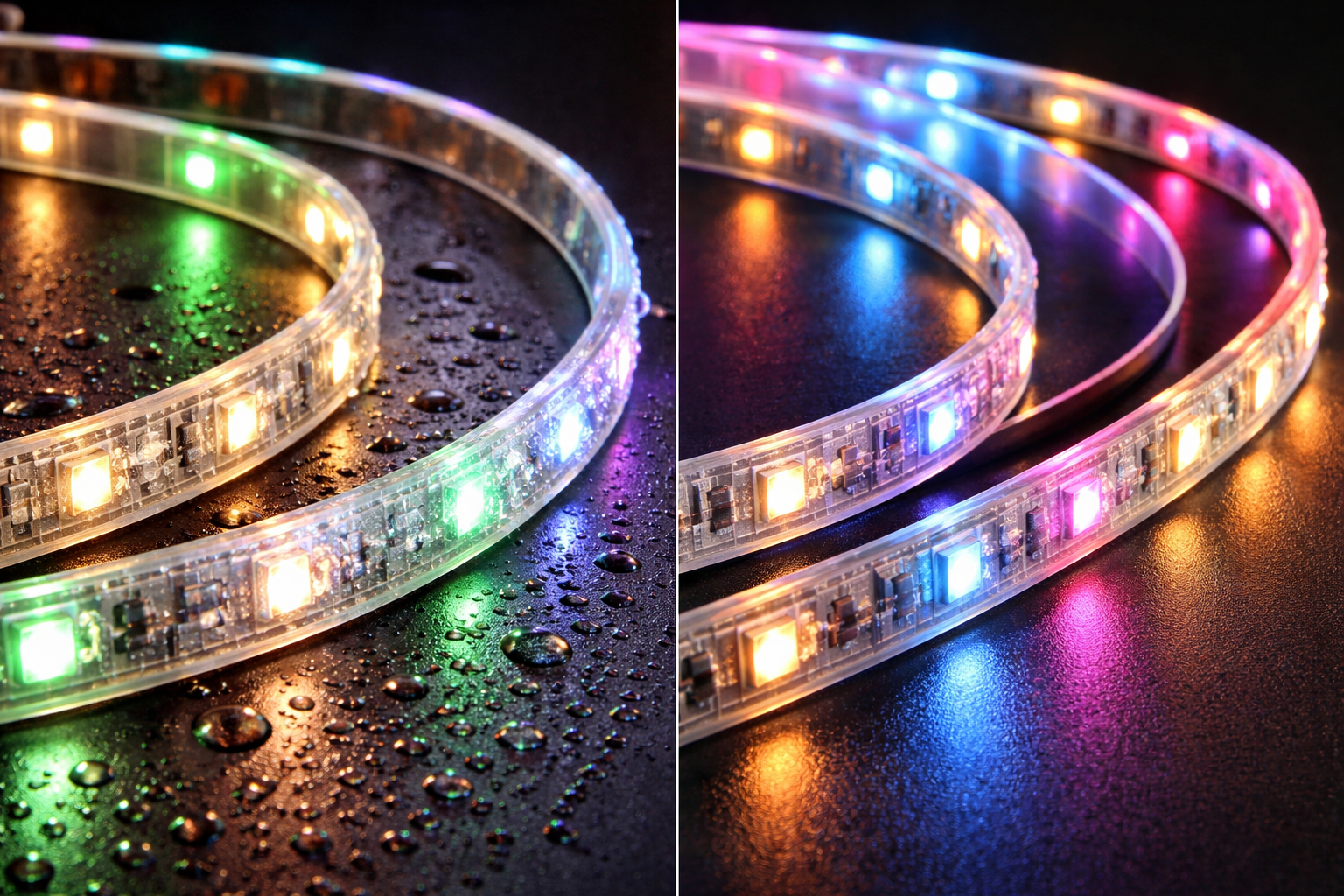
Silicone coating LED strips represent the most common waterproofing method for residential and commercial applications. This flexible material forms a continuous barrier over the entire strip surface, protecting individual LEDs and circuit traces from moisture while maintaining good heat dissipation properties. The coating typically measures between 1 to 3 millimeters thick.
Epoxy resin provides an alternative coating material that offers superior hardness and chemical resistance. However, epoxy-coated waterproof LED strip lights tend to be less flexible and more difficult to cut or modify after manufacturing. This rigidity can complicate installation in tight spaces or around corners.
Hollow silicone tubing represents another approach where the entire strip slides inside a protective sleeve. This method allows for easy replacement if damage occurs but may reduce adhesive backing effectiveness. Some manufacturers combine multiple protection methods, using both coating and tubing for maximum durability in harsh environments. Another practical alternative is a sealed waterproof power driver for outdoor LED runs, which reduces the risk of installation failure.
Coating Thickness Impact
Thicker silicone coating LED strips provide better protection but can reduce light output slightly due to the translucent material blocking some photons. Manufacturers balance these competing factors by optimizing coating thickness for specific IP rating for LED strips targets. A 2-millimeter coating typically achieves IP67 protection while maintaining excellent brightness.
Indoor Applications
Most interior spaces function perfectly well with non-waterproof strips rated IP20 or IP30. Living rooms, bedrooms, and office areas rarely encounter moisture levels that threaten exposed circuitry. These unprotected strips offer maximum brightness, superior heat dissipation, and lower costs compared to their protected counterparts.
Kitchen under-cabinet lighting represents a borderline case where waterproof LED strip lights might provide valuable insurance against cooking splashes and steam exposure. The minimal cost difference between IP20 and IP65 options makes upgrading to splash-resistant strips a sensible precaution in these food preparation environments.
Closets, pantries, and storage areas typically need only basic IP20 protection since these spaces remain consistently dry year-round. Investing in higher protection levels wastes money without providing meaningful benefits. Focus your budget on strips with better color rendering or higher lumen output instead.
Bathroom Requirements
Bathrooms demand at minimum IP65-rated waterproof LED strip lights due to steam, splashing, and high humidity levels. Strips installed near showers or bathtubs should use IP67 or IP68 ratings for reliable long-term operation. The moisture in these rooms can penetrate even small gaps in protective coatings over time.
Vanity lighting positioned away from direct water contact can sometimes use IP44 or IP54 ratings, though upgrading to IP65 provides better longevity. Consider that bathroom humidity affects the entire room, not just areas immediately adjacent to water sources. The IP rating for LED strips should account for this ambient moisture exposure.
Outdoor Installation Requirements
Outdoor LED strip installation demands IP65 as an absolute minimum, with IP67 or IP68 strongly recommended for ground-level or unsheltered locations. Rain, snow, and temperature fluctuations create challenging conditions that quickly destroy inadequately protected strips. Direct sunlight also degrades protective coatings over time through UV exposure.
Covered patios and protected eaves can sometimes function with IP65 waterproof LED strip lights if positioned where wind-driven rain cannot reach them. However, condensation forms even in covered areas during temperature changes, making higher protection levels worthwhile for peace of mind and extended operational lifespan.
Pool and fountain lighting requires IP68-rated strips specifically designed for continuous submersion. These applications also need low-voltage power supplies and proper grounding to meet electrical safety codes. Never attempt to use standard outdoor LED strip installation products in water features without verifying appropriate ratings and certifications.
Seasonal Considerations
Winter freeze-thaw cycles place enormous stress on outdoor LED strip installation projects. Water that penetrates protective coatings expands when freezing, cracking seals and destroying strips from within. Higher IP rating for LED strips provides better resistance to these cyclical stresses through superior sealing quality.
Summer heat combined with direct sunlight can degrade silicone coating LED strips more rapidly than expected. Look for products specifically rated for outdoor use with UV-resistant coatings. Some manufacturers apply protective films over standard silicone to extend weather resistance in harsh climates.
Moisture-Prone Areas
Basements, crawl spaces, and laundry rooms create unique challenges where humidity levels fluctuate dramatically throughout the year. These spaces benefit from waterproof LED strip lights rated IP54 or higher, even though they remain technically indoors. Concrete foundations often wick moisture that can condense on cooler surfaces.
Greenhouse and indoor garden installations expose strips to both high humidity and potential water spray during plant maintenance. IP65 provides adequate protection for most growing environments, while hydroponic setups near water reservoirs should use IP67 to prevent accidental damage during system maintenance.
Marine applications on boats require specialized waterproof LED strip lights with IP68 ratings and additional corrosion-resistant materials. Salt water accelerates degradation of standard materials, making marine-grade components essential for reliable performance. Verify that products carry appropriate marine certifications before installation on watercraft.
Cost Comparison
Non-waterproof IP20 strips typically cost 30 to 50 percent less than equivalent IP65 waterproof LED strip lights when comparing similar quality levels and LED density. This price difference reflects additional materials, manufacturing complexity, and testing requirements for protected versions. Budget-conscious projects can realize significant savings by using appropriate protection levels rather than over-specifying.
IP67 and IP68 options command premium pricing due to more extensive sealing processes and thicker protective coatings. Expect to pay 60 to 80 percent more compared to basic indoor strips. However, this investment prevents costly replacement projects when strips fail prematurely due to moisture damage in demanding environments.
Installation costs may also vary based on protection level, as waterproof LED strip lights with thicker coatings can be more difficult to cut, connect, and mount properly. Factor in potential labor increases when budgeting for projects using high-IP-rated products. Some installers charge additional fees for outdoor LED strip installation work due to weatherproofing requirements.
Installation Differences
Non-waterproof strips feature standard adhesive backing that bonds well to clean, dry surfaces. Their thin profile allows installation in narrow channels and tight spaces without difficulty. Cutting these strips at designated cut points requires only sharp scissors or wire cutters, making field modifications straightforward.
Installing waterproof LED strip lights demands additional attention to connection points and end caps. Each cut requires resealing with silicone coating LED strips material or heat-shrink tubing to maintain the IP rating for LED strips. Connectors must use waterproof versions with gaskets and locking mechanisms to prevent moisture intrusion at vulnerable junction points.
Mounting clips designed for waterproof versions need extra grip strength to support heavier coated strips securely. Standard clips may fail under the added weight of protective coatings and encapsulation materials. Use mounting hardware specifically rated for the weight of your chosen product to avoid sagging or detachment issues.
Sealing Connections Properly
Every connection point in an outdoor LED strip installation creates a potential failure point where moisture can enter the system. Apply generous amounts of clear silicone sealant around all connectors, splices, and power entry points. Allow proper curing time before exposing connections to weather conditions.
Heat-shrink tubing provides an alternative sealing method that offers cleaner appearance and reliable protection when applied correctly. Use marine-grade heat shrink with adhesive lining for best results in outdoor applications. Never skip end caps on cut strips, as open ends allow water to wick into the internal structure along circuit traces.
Maintenance Considerations
Non-waterproof strips require minimal maintenance beyond occasional dusting to prevent heat buildup on LED surfaces. The exposed design allows easy visual inspection of solder joints and component condition. Any issues become immediately apparent, enabling quick repairs before problems cascade into complete failures.
Waterproof LED strip lights need periodic inspection of seals and coatings for cracks, peeling, or degradation. Silicone coating LED strips can develop small tears over time that compromise protection. Catching these defects early through regular visual checks prevents water damage to underlying electronics and extends overall system lifespan.
Cleaning methods differ significantly between protected and unprotected versions. Bare strips tolerate only dry dusting or gentle compressed air cleaning. Protected strips can handle damp cloth wiping but should never face high-pressure washing or abrasive cleaning products that might damage protective coatings. Always disconnect power before performing any maintenance work.
Brightness Performance
Protective coatings on waterproof LED strip lights can reduce light output by 5 to 15 percent compared to bare strips using identical LEDs. The silicone or epoxy material absorbs and scatters some photons before they escape the strip surface. Thicker coatings create more pronounced dimming effects, though quality manufacturers optimize coating clarity to minimize losses.
Heat dissipation differences also affect brightness over time. Non-waterproof designs allow better airflow around LEDs, maintaining cooler operating temperatures that preserve lumen output. Coated versions trap more heat, potentially reducing brightness through thermal throttling in high-density installations or enclosed fixtures.
Color accuracy remains generally consistent across protection levels when comparing quality products. However, some silicone coating LED strips materials can introduce slight color shifts, particularly in white light applications. Test samples under actual operating conditions before committing to large quantities for color-critical projects requiring precise color temperature matching. For a more permanent upgrade, many users switch to a flexible neon-effect waterproof LED strip for outdoor edges, which is known for stable long-term performance.
Common Mistakes to Avoid
Using non-waterproof strips in bathrooms represents one of the most frequent errors in residential installations. Homeowners underestimate cumulative humidity exposure, leading to premature failures within months of installation. The initial cost savings disappear quickly when replacement becomes necessary, along with the labor expense of removal and reinstallation.
Over-specifying protection levels wastes money on unnecessary features that provide no benefit in dry environments. Installing IP68 waterproof LED strip lights in bedroom ceiling coves adds expense without improving performance or longevity. Match protection levels to actual environmental conditions rather than choosing maximum ratings indiscriminately.
Failing to properly seal cut ends and connections in outdoor LED strip installation projects creates vulnerabilities that negate the benefits of waterproof products. Water finds any available entry point, spreading along the strip and causing widespread damage. Invest time in proper sealing techniques to achieve the full protection potential of high-IP-rated products.
Power Supply Protection
Many installations focus exclusively on strip protection while overlooking power supply vulnerability. Outdoor projects require weatherproof power supplies rated for external use, regardless of strip IP rating for LED strips. Mounting indoor-rated transformers outside leads to rapid failure even when connected to fully waterproof strips.
Testing Waterproof Quality
Reputable manufacturers conduct rigorous testing to verify IP ratings meet international standards established by organizations like the International Organization for Standardization. These tests subject waterproof LED strip lights to specific water pressure, duration, and angle conditions defined for each rating level. Products passing these protocols earn certification marks proving compliance.
Field testing before full installation helps verify product quality and suitability for intended applications. Submerge a short test section in water while powered on to check for moisture penetration. Any flickering, dimming, or complete failure indicates inadequate protection that will cause problems in real-world use.
Inspect protective coatings carefully upon delivery, looking for thin spots, bubbles, or incomplete coverage that compromise protection. Quality control varies significantly between manufacturers, making visual verification worthwhile before investing installation labor. Return defective products immediately rather than discovering problems after mounting in difficult-to-access locations.
Sharing this guide
If you found this guide helpful, you can save it for later or share it with a friend. It’s especially useful for beginners, homeowners, and DIY users.
Share using the links below
Interested in learning more? Browse all related articles in our category section.
Pingback: How to Cut LED Strip Lights Safely & Correctly - NeoLEDHub
Pingback: Why LED Lights Change Color: Surprising Fix Revealed
Pingback: Why LED Lights Not Turning On? Quick Fix Guide - NeoLEDHub