How to Choose LED Strip Lights: Powerful Smart Guide
Understanding how to choose LED strip lights ensures you get the perfect lighting solution for your home, office, or outdoor space. With countless options available, selecting the right strips based on brightness, features, and durability will save you time and money while delivering professional results.
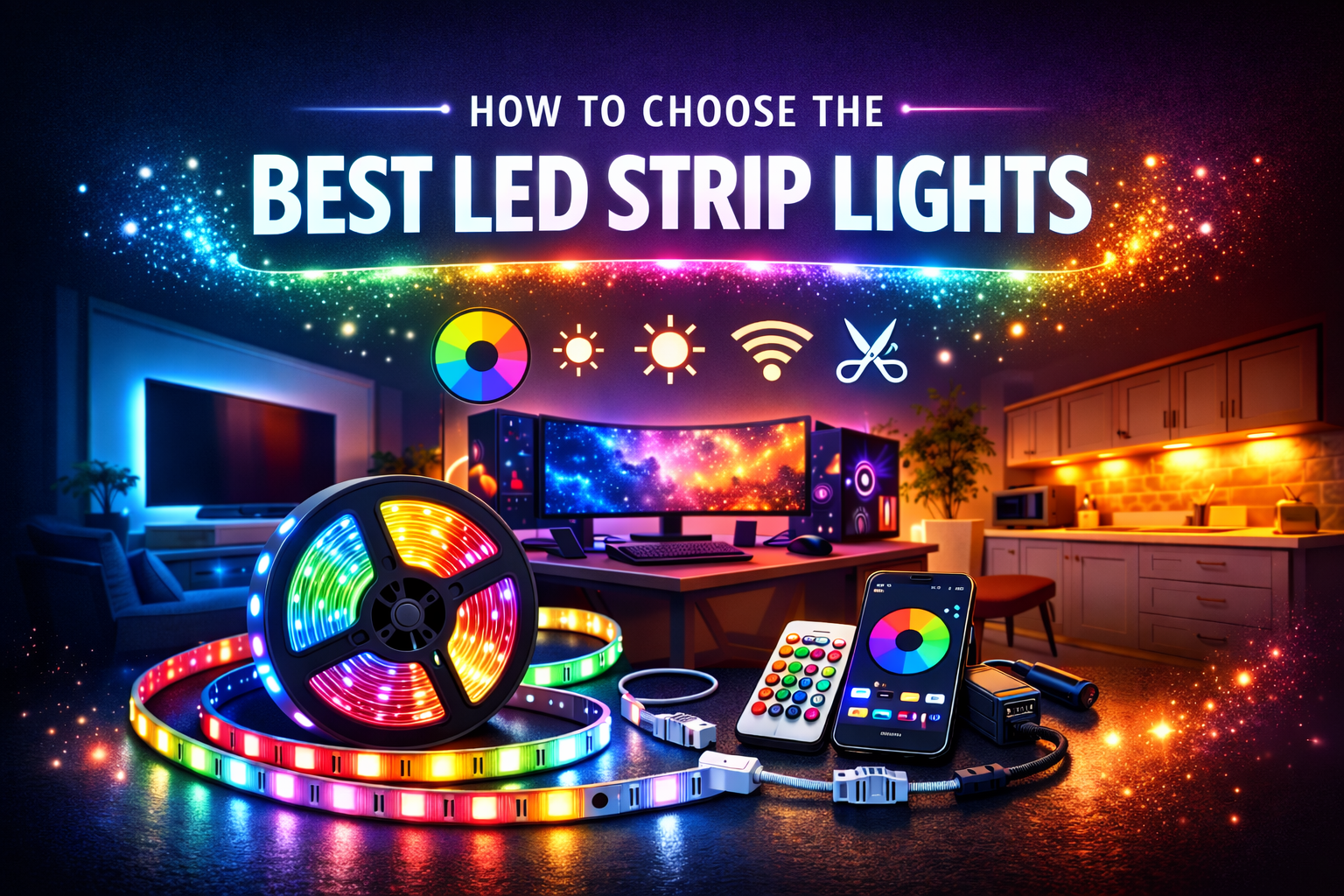
Table of Contents
Understanding the Basics
When you learn how to choose LED strip lights, the first step involves understanding what these flexible lighting solutions offer. These products consist of small light-emitting diodes mounted on a flexible circuit board, allowing them to bend around corners and fit into spaces where traditional bulbs cannot reach.
Modern strips operate on low-voltage systems, typically 12V or 24V, which makes them safer than mains-voltage lighting while still delivering impressive illumination. They consume significantly less energy than incandescent alternatives, reducing electricity costs and environmental impact.
The technology has advanced dramatically in recent years. Today’s options include color-changing capabilities, dimming functions, and smart home integration that transforms how people light their spaces. If you want a dependable option, a solid example is a smart LED kit with app and voice control, which works well in real-world home environments.
Brightness Requirements
Knowing how to choose LED strip lights means understanding LED strip light brightness measured in lumens per meter. Higher lumen ratings produce more intense light suitable for task areas, while lower ratings create ambient moods perfect for relaxation spaces.
The density of individual diodes affects overall LED strip light brightness significantly. Strips with 60 diodes per meter provide standard illumination levels, while 120 or 240 diodes per meter deliver brighter, more uniform light without visible dark spots between emitters.
For comprehensive guidance on matching LED strip light brightness to specific applications, check out this detailed resource on optimizing lumens for different room types and purposes. Proper brightness selection prevents under-lighting or overwhelming spaces with excessive illumination.
Task versus Ambient Lighting
Task lighting requires higher LED strip light brightness to ensure adequate visibility for activities like reading, cooking, or detailed work. Aim for strips producing at least 1000 lumens per meter when illuminating workspaces where precision and clarity are essential.
Ambient applications prioritize atmosphere over function. Lower brightness between 200 and 600 lumens per meter creates comfortable background lighting that enhances aesthetics without causing eye strain or harsh glare in living spaces.
Selecting Color Options
Part of knowing how to choose LED strip lights involves selecting between single-color and multi-color options. Single-color strips emit one fixed hue, typically warm white, cool white, or specific colors like red or blue, ideal for applications requiring consistent output.
RGB strips contain red, green, and blue diodes that mix to produce millions of color combinations. This versatility allows instant mood changes, creating different atmospheres for various occasions without installing multiple lighting systems.
RGBW variants add dedicated white diodes to RGB configurations, providing both color-changing capabilities and pure white light. This combination eliminates the slightly off-white appearance that mixing the three primary colors produces when attempting white illumination.
Temperature Considerations
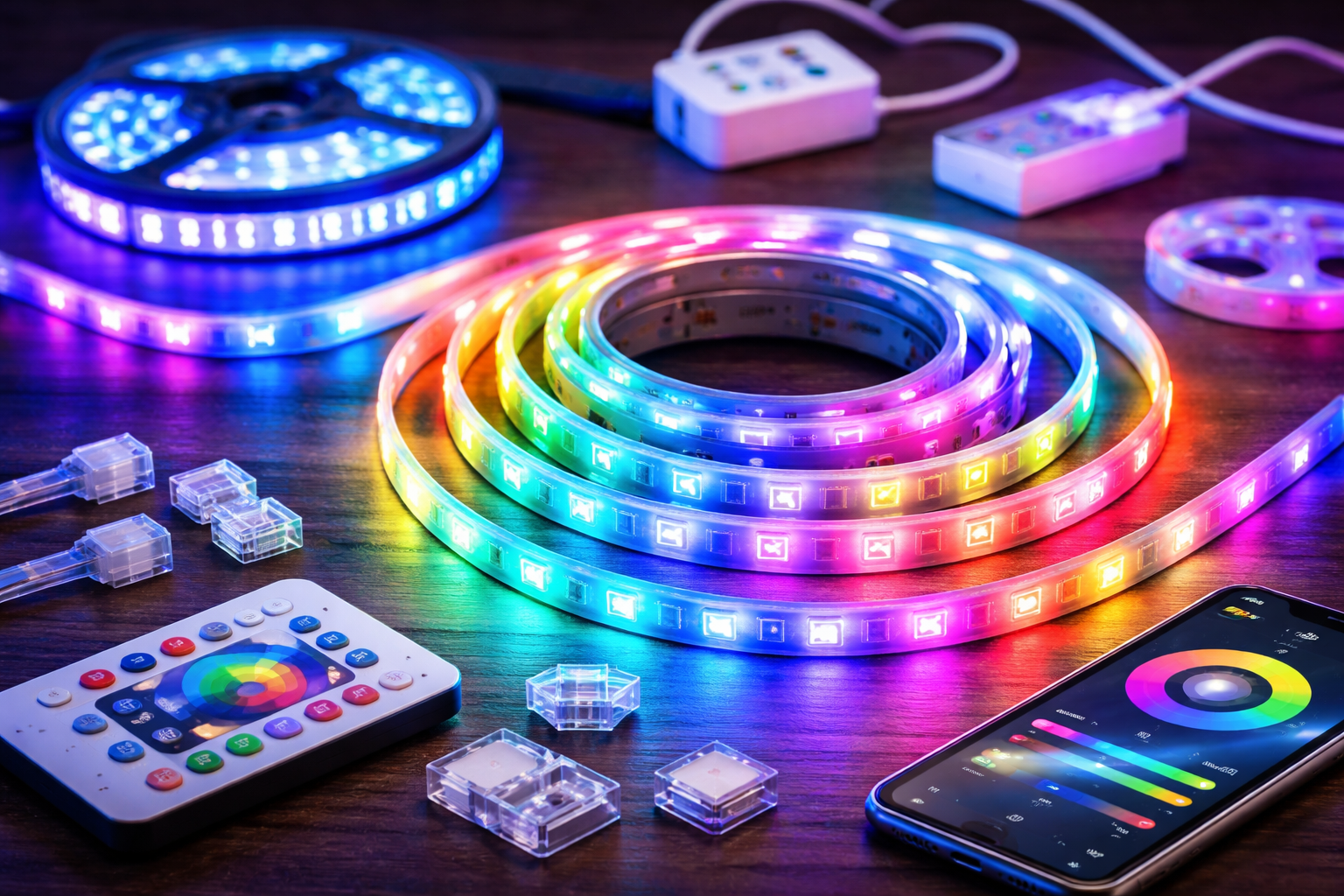
Understanding LED strip light color temperature, measured in Kelvin, significantly impacts how to choose LED strip lights for different rooms. Warm white options around 2700K to 3000K create cozy, relaxing environments suitable for bedrooms and living areas where comfort takes priority.
Cool white selections between 5000K and 6500K produce crisp, energizing illumination ideal for garages, workshops, or bathrooms where clarity and alertness matter most. The LED strip light color temperature directly affects mood and functionality.
Neutral white around 4000K offers balanced lighting for general-purpose applications. Tunable white strips allow adjustment across the entire LED strip light color temperature spectrum, providing flexibility to match natural daylight patterns or personal preferences.
Understanding Kelvin Ratings
Lower Kelvin values produce warmer, more yellow-toned light that promotes relaxation. Higher Kelvin values generate cooler, bluer light that enhances focus and concentration. Knowing this helps when learning how to choose LED strip lights.
Matching LED strip light color temperature to room function improves both comfort and productivity. Kitchens benefit from 4000K-5000K for accurate food preparation, while home theaters work best with 2700K-3000K for cinematic atmosphere.
Voltage and Power Needs
Calculating power consumption forms a critical part of how to choose LED strip lights correctly. Each strip specifies wattage per meter, which you multiply by total length to determine total power requirements. Adding 20% overhead capacity provides safety margin for voltage fluctuations.
Most residential installations use 12V systems for runs up to 5 meters. Longer installations benefit from 24V configurations that reduce current draw and minimize voltage drop, maintaining consistent brightness across extended distances.
Quality power supplies include overcurrent protection, short-circuit prevention, and thermal shutdown features. Choosing certified adapters from reputable manufacturers ensures safety compliance and protects your investment from electrical hazards.
Planning Your Installation
Mastering how to choose LED strip lights includes understanding LED strip installation tips that ensure long-lasting results. Most products include adhesive backing for simple mounting to clean, dry surfaces, working well for permanent placements where repositioning is unlikely.
Aluminum channels provide professional mounting solutions that improve heat dissipation, protect strips from physical damage, and create clean, finished appearances. These channels come with diffusers that eliminate individual diode visibility for seamless light distribution.
Following LED strip installation tips requires careful planning of wire routing, connector placement, and power supply location. Running wires through walls or ceilings may require professional assistance to comply with electrical codes and maintain safety standards. Another practical alternative is clip-on connectors that join segments without soldering, which reduces the risk of installation failure.
Surface Preparation
Proper surface preparation ranks among the most important LED strip installation tips for ensuring strong adhesion. Cleaning mounting surfaces thoroughly with isopropyl alcohol removes oils and dust that compromise adhesive effectiveness and cause strips to fall shortly after installation.
Allow cleaned surfaces to dry completely before applying strips. Temperature also affects adhesion; install at room temperature between 15°C and 25°C for optimal bonding. These LED strip installation tips prevent common failures.
Waterproof Protection
Determining how to choose LED strip lights for different environments requires understanding IP (Ingress Protection) ratings. Indoor installations typically use non-waterproof strips rated IP20, which offer no moisture protection but cost less and dissipate heat more efficiently.
Moisture-resistant options rated IP65 feature silicone coating that protects against splashes and light rain, suitable for bathrooms, kitchens, or covered outdoor areas. This protection prevents short circuits from incidental water exposure without full submersion capability.
Fully waterproof IP67 or IP68 strips withstand complete submersion, ideal for pools, fountains, or marine applications. Understanding protection ratings helps when learning how to choose LED strip lights for specific conditions.
For comprehensive information about selecting appropriate ratings for your application, explore this detailed guide on protection standards and their practical implications in various settings. Matching IP ratings to environmental conditions prevents premature failure.
Smart Control Features
Modern approaches to how to choose LED strip lights increasingly involve smart-enabled products that integrate with home automation systems through WiFi or Bluetooth connectivity. These systems allow voice control via assistants like Amazon Alexa or Google Assistant, enabling hands-free operation and convenient scheduling.
Mobile apps provide advanced control over color-changing strips, including custom color selection, dynamic effects like fading or strobing, and scene creation for different moods. Some apps sync lighting with music, creating immersive audio-visual experiences.
Automation features enable time-based control, turning lights on or off automatically according to daily routines. Sunrise simulation gradually increases brightness in mornings, while sunset modes dim lighting as bedtime approaches.
Checking Compatibility
Different smart platforms may not communicate with each other. Ensuring compatibility between strips, controllers, and existing smart home ecosystems prevents frustration from devices that cannot integrate properly when you learn how to choose LED strip lights.
According to the U.S. Department of Energy, selecting ENERGY STAR certified products ensures quality standards and performance benchmarks that many generic smart lighting products fail to meet consistently.
Length and Sizing
Knowing how to choose LED strip lights includes calculating proper length requirements. Standard reels typically contain 5 meters of continuous strip, though some manufacturers offer 10-meter or custom lengths. Planning your layout carefully minimizes waste and reduces connection points that could fail.
Maximum run lengths depend on voltage and strip specifications. Exceeding recommended lengths causes voltage drop, where sections farthest from the power supply appear dimmer than those near the connection point.
Parallel wiring techniques distribute power to multiple points along extended runs, maintaining consistent brightness throughout the installation. This method requires additional wiring but eliminates visible brightness variations.
Cutting and Connecting
Strips feature designated cut marks, typically every few centimeters, where scissors can safely trim them to desired lengths. Cutting elsewhere damages the circuit and renders affected sections non-functional, which matters when understanding how to choose LED strip lights.
Connecting multiple segments requires soldering skills or clip-on connectors. Soldered connections provide superior reliability for permanent installations, while connectors offer convenience for temporary setups or situations where easy disassembly matters. For a more permanent upgrade, many users switch to low-profile mounting clips that secure strips cleanly, which holds securely without damaging surfaces.
Quality Indicators
Learning how to choose LED strip lights involves recognizing quality indicators that separate premium products from inferior alternatives. High-quality strips use branded diodes from manufacturers like Samsung, Osram, or Epistar, ensuring consistent performance and longevity.
The quality of the circuit board itself matters significantly. Thicker copper traces handle current better and reduce heat buildup, extending lifespan. Double-layer PCBs offer superior durability compared to single-layer alternatives.
Certifications like CE, RoHS, and UL indicate products meet safety and environmental standards. Warranty coverage provides additional assurance; reputable manufacturers typically offer 2-5 year warranties on quality strips.
Avoiding Common Errors
Understanding how to choose LED strip lights means avoiding common mistakes that lead to disappointing results. Underestimating power requirements leads to dim output or complete system failure. Always calculate total wattage needs accurately and select power supplies with adequate capacity plus safety margin.
Ignoring heat dissipation causes premature failure in high-density strips. Aluminum channels or proper ventilation extends lifespan by preventing thermal degradation of components, a key LED strip installation tip.
Poor surface preparation results in strips falling shortly after installation. Following proper LED strip installation tips ensures adhesive bonds effectively to mounting surfaces for long-term security.
Preventing Voltage Drop
Long runs without intermediate power injection suffer from voltage drop, causing uneven brightness and color shifting. Injecting power every 5 meters on 12V systems or every 10 meters on 24V systems maintains uniform performance across the entire installation.
Using inadequate wire gauge between power supplies and strips increases resistance, worsening voltage drop problems. Following manufacturer recommendations for wire sizing prevents these issues effectively.
Budget Considerations
Practical advice on how to choose LED strip lights includes budget planning that balances quality with affordability. Basic single-color options start around $10-15 per 5-meter reel, providing economical solutions for simple applications where color-changing features are unnecessary.
Mid-range RGB strips typically cost $25-50 per reel, offering color versatility and decent quality. These products balance affordability with functionality for homeowners seeking flexible lighting without premium features.
Premium smart-enabled systems range from $60-150 or more, delivering advanced control, superior build quality, and extended warranties. Higher prices reflect better components, improved color accuracy, and comprehensive customer support.
Power supplies, controllers, mounting channels, and connectors add to initial strip costs. Budgeting for complete systems rather than just strips prevents surprise expenses during installation and ensures successful project completion.
Sharing this guide
If you found this guide helpful, you can save it for later or share it with a friend. It’s especially useful for beginners, homeowners, and DIY users.
Share using the links below
Interested in learning more? Browse all related articles in our category section.
Pingback: Monthly Savings Switching to LEDs: Smart Home Guide