Cheap vs Premium LED Bulbs: Performance vs Price
When shopping for lighting solutions, the debate between cheap vs premium LED bulbs dominates many purchasing decisions. Understanding what separates affordable options from high-end models helps consumers invest wisely in home or office illumination. This comprehensive guide explores build quality, brightness consistency, energy efficiency, and long-term value to help you choose the right bulb for your needs.
Table of Contents
Understanding price differences
The price gap between cheap vs premium LED bulbs often ranges from two dollars to twenty dollars per unit. Manufacturers achieve lower prices through simplified designs, mass production in high-volume facilities, and less stringent quality control processes. Budget LED lights typically use generic components sourced from multiple suppliers, while premium models employ proprietary technologies developed through years of research.
Premium brands invest heavily in certification testing, regulatory compliance, and customer support infrastructure. These operational costs get reflected in retail pricing but deliver tangible benefits over the product lifecycle. Understanding where your money goes helps determine whether the extra investment aligns with your lighting requirements and usage patterns. If you want a dependable option, a solid example is a multi-pack LED bulb set for whole-home use, which performs reliably in everyday use.
Construction materials
LED bulb quality starts with the physical components used in assembly. Premium manufacturers use aircraft-grade aluminum heatsinks that dissipate heat efficiently, while budget options often rely on plastic housings with minimal thermal transfer capability. The LED chips themselves differ dramatically in purity and manufacturing precision.
High-end bulbs incorporate phosphor coatings applied through vapor deposition techniques, ensuring uniform color temperature across the entire light surface. Cheaper alternatives apply phosphor using spray methods, resulting in uneven coverage and potential color inconsistencies. The base construction also varies, with premium models featuring reinforced sockets and corrosion-resistant contacts.
Housing durability
Plastic housings in budget LED lights may yellow or become brittle after prolonged heat exposure. Premium housings resist discoloration and maintain structural integrity throughout the rated lifespan. This durability affects not just aesthetics but also safety, as degraded plastics can compromise electrical insulation.
Light output consistency
When comparing cheap vs premium LED bulbs, lumen maintenance presents one of the most significant performance differences. Premium bulbs maintain at least ninety percent of initial brightness after ten thousand hours of operation. Budget alternatives may drop to seventy percent brightness within the same timeframe, creating noticeable dimming that affects visibility and ambiance.
The phenomenon called lumen depreciation occurs in all LEDs, but the rate varies based on chip quality and thermal management. Expensive LED bulbs use binning processes to select only chips meeting strict output specifications, while cheaper manufacturers accept wider tolerances. This selection process directly impacts how consistently your lighting performs over years of daily use.
Flicker rates
Invisible flicker causes eye strain and headaches during extended reading or computer work. Premium models incorporate flicker-free drivers that maintain stable current delivery, while budget options may flicker at frequencies between one hundred and two hundred hertz. Sensitive individuals notice these fluctuations as visual discomfort, making LED bulb quality particularly important in workspaces and study areas.
Color rendering index
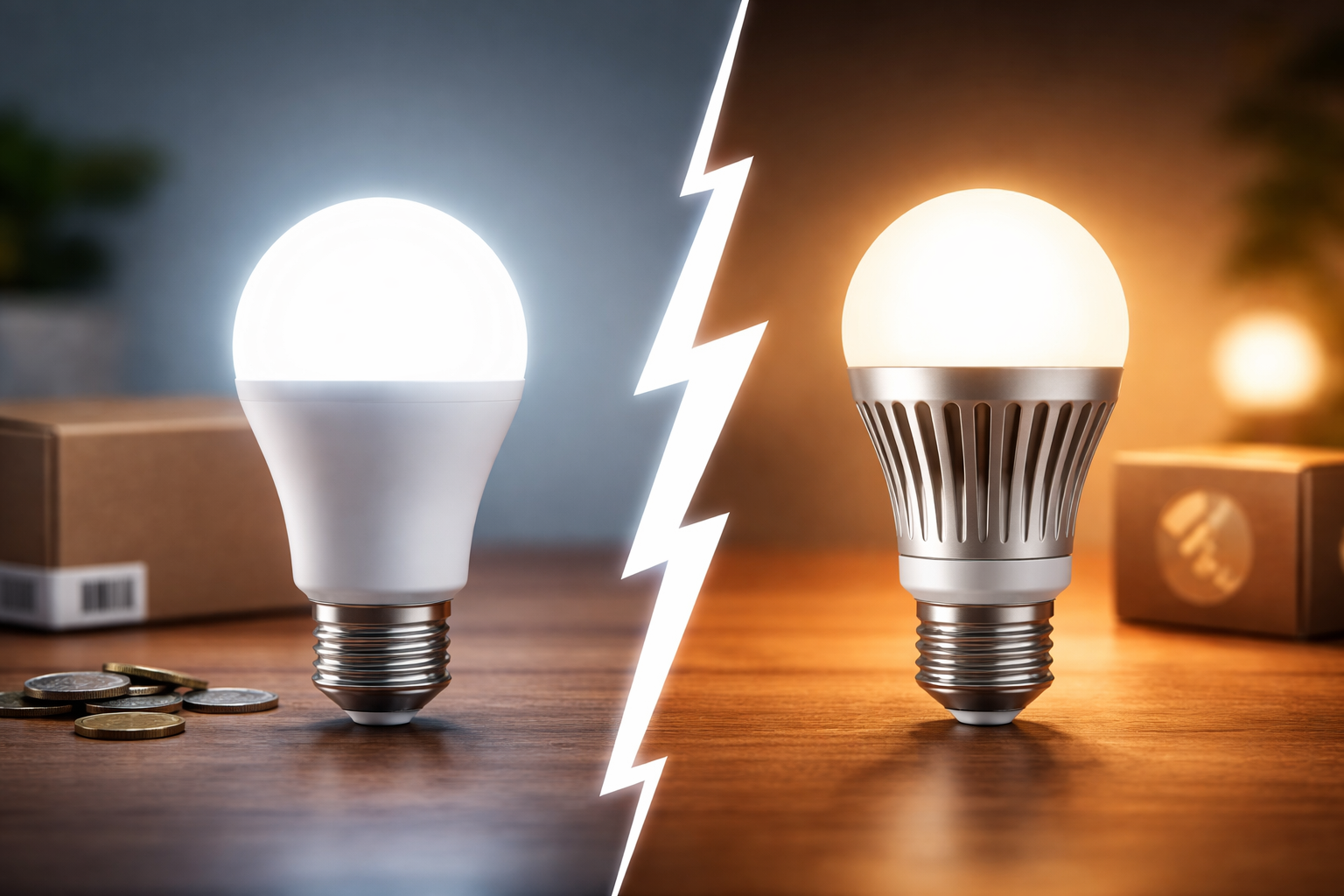
Color rendering index (CRI) measures how accurately artificial light reveals object colors compared to natural sunlight. The difference between cheap vs premium LED bulbs becomes immediately apparent when examining CRI ratings. Expensive LED bulbs typically achieve CRI values above ninety, rendering skin tones, artwork, and fabrics with exceptional accuracy.
Budget LED lights often score between seventy and eighty on the CRI scale, which suffices for hallways and storage areas but proves inadequate for makeup application, photo studios, or retail displays. The spectral power distribution in premium bulbs covers a broader wavelength range, capturing subtle color nuances that cheaper alternatives miss entirely.
Color temperature accuracy
Advertised color temperatures do not always match actual output. Premium manufacturers guarantee accuracy within one hundred Kelvin of the stated value, while budget options may vary by three hundred Kelvin or more. This inconsistency becomes problematic when replacing individual bulbs in multi-fixture installations, as mismatched temperatures create jarring visual discontinuity.
Thermal management
Heat represents the primary enemy of LED longevity. When evaluating cheap vs premium LED bulbs, examining heatsink design reveals critical performance predictors. Premium models feature engineered fin arrays that maximize surface area for convective cooling, maintaining junction temperatures below eighty degrees Celsius even in enclosed fixtures.
Budget LED lights often lack adequate thermal pathways, allowing chips to operate at temperatures exceeding one hundred degrees Celsius. Elevated temperatures accelerate chemical degradation within the semiconductor material, reducing lifespan and increasing failure rates. Proper thermal management explains why some bulbs last five years while others fail within eighteen months under identical conditions. Another practical alternative is a premium LED bulb with advanced thermal and driver protection, which is known for stable long-term performance.
According to research from the U.S. Department of Energy, operating temperature directly correlates with LED reliability, making thermal design a fundamental quality indicator.
Driver circuitry
The driver converts alternating current from your electrical system into the direct current required by LED chips. LED bulb quality depends heavily on driver sophistication and component selection. Premium drivers incorporate power factor correction, voltage regulation, and overcurrent protection, delivering stable performance across varying input conditions.
Cheap drivers use minimal components to meet basic functionality requirements, offering little protection against voltage spikes or brownouts. These simplified circuits contribute to premature failures and reduced lifespan. The difference between cheap vs premium LED bulbs often comes down to whether the driver can handle real-world electrical conditions in older homes with inconsistent power delivery.
Electromagnetic interference
Poorly designed drivers generate electromagnetic interference that disrupts radio reception, wireless networks, and audio equipment. Expensive LED bulbs include filtering components and shielding that prevent interference, while budget alternatives may cause audible buzzing in nearby speakers or static on AM radio frequencies. These issues rarely appear on specification sheets but significantly impact user experience.
Warranty coverage
Warranty terms provide insight into manufacturer confidence in their products. When comparing cheap vs premium LED bulbs, warranty length and coverage scope reveal expected reliability. Expensive LED bulbs commonly offer five to ten year warranties with straightforward replacement processes, while budget options provide one to two years with restrictive terms.
Premium manufacturers honor warranties efficiently because their low failure rates make generous coverage financially viable. Budget brands structure warranties to minimize claims, knowing higher failure rates would make comprehensive coverage unsustainable. Reading warranty fine print often uncovers limitations that effectively void protection under normal usage scenarios. For more information on expected performance over time, check out our guide on understanding how long different models typically last.
Energy consumption
LED bulb quality affects efficiency beyond the advertised wattage rating. Premium bulbs convert electrical energy into visible light at rates exceeding one hundred twenty lumens per watt, while budget alternatives may achieve only eighty lumens per watt. This efficiency gap translates to higher electricity costs over the bulb’s operational life.
Driver efficiency also contributes to overall energy consumption. Budget LED lights waste more energy as heat due to inefficient power conversion, requiring additional wattage to produce equivalent light output. In installations with dozens of bulbs operating continuously, these small differences compound into measurable utility bill increases.
Standby power draw
Some bulbs continue drawing power even when switched off, particularly models with smart features or poorly designed drivers. Expensive LED bulbs minimize standby consumption to negligible levels, while cheaper alternatives may consume several watts continuously. Across multiple fixtures, this phantom load adds unnecessary costs without providing any illumination benefit.
Longevity testing
Rated lifespan figures on packaging reflect laboratory testing under controlled conditions. The debate between cheap vs premium LED bulbs intensifies when examining testing methodologies. Premium manufacturers conduct accelerated lifetime testing at elevated temperatures and voltages, projecting real-world performance based on statistical models.
Budget LED lights may base lifespan claims on theoretical calculations rather than empirical testing, leading to optimistic ratings that do not reflect actual field performance. Independent testing organizations like ENERGY STAR verify premium bulb claims through rigorous evaluation protocols, providing consumer confidence in advertised specifications.
Dimming capabilities
Smooth dimming without flicker or buzzing separates premium offerings from budget alternatives. When assessing cheap vs premium LED bulbs for dimmer compatibility, driver design proves critical. Expensive LED bulbs work seamlessly with both leading-edge and trailing-edge dimmers, maintaining stable light output across the entire dimming range.
LED bulb quality becomes apparent when dimming below twenty percent, where budget bulbs often flicker, buzz, or shut off entirely. Premium models dim smoothly to one percent, enabling true mood lighting and energy savings. Incompatibility between cheap bulbs and existing dimmer switches often necessitates expensive dimmer replacements, eliminating initial cost savings. For a more permanent upgrade, many users switch to a high-CRI reveal LED bulb for accurate color rendering, which works well in real-world home environments.
Minimum load requirements
Many dimmers require minimum wattage loads to function correctly. Budget LED lights draw so little power that single-bulb installations fail to meet this threshold, causing erratic behavior. Premium bulbs include circuitry that presents appropriate electrical characteristics to dimmers, ensuring reliable operation even in low-load scenarios.
Environmental impact
Manufacturing processes and material sourcing affect the environmental footprint of lighting products. The comparison between cheap vs premium LED bulbs extends beyond performance to sustainability considerations. Expensive LED bulbs often utilize recyclable materials and conflict-free sourcing, while budget manufacturers prioritize cost reduction over environmental responsibility.
Longer lifespans inherently reduce waste, as premium bulbs require replacement less frequently. Budget LED lights that fail prematurely contribute disproportionately to landfill burden despite lower individual purchase prices. Packaging waste also varies, with premium brands using minimal, recyclable materials while budget options employ excessive plastic clamshells.
Cost per hour
Total cost of ownership provides better value assessment than purchase price alone. Calculating cost per hour of illumination reveals the true economic difference between cheap vs premium LED bulbs. A budget bulb costing three dollars but lasting five thousand hours delivers higher hourly costs than a premium bulb costing fifteen dollars but lasting thirty thousand hours.
Including electricity consumption in this calculation further favors efficient premium options. LED bulb quality determines both replacement frequency and energy costs, making the higher initial investment economically rational for fixtures used multiple hours daily. Infrequently used locations like closets or storage rooms represent scenarios where budget options make financial sense.
Replacement labor costs
Commercial installations and hard-to-reach residential fixtures incur significant labor costs for bulb replacement. Expensive LED bulbs reduce maintenance visits and associated expenses, while frequent failures of budget LED lights generate recurring service calls. Maintenance professionals consistently recommend premium bulbs for applications where accessibility challenges make frequent replacements impractical or costly.
Best use cases
Selecting between cheap vs premium LED bulbs requires matching product characteristics to application requirements. Budget LED lights suit temporary installations, rental properties, and seldom-used spaces where minimal runtime limits lifespan concerns. Seasonal decorations, workshop task lighting, and garage fixtures represent ideal budget bulb applications.
Expensive LED bulbs excel in living spaces, kitchens, bathrooms, and offices where color accuracy, dimming performance, and consistent output enhance quality of life. Track lighting, recessed cans, and decorative fixtures benefit from premium bulb characteristics. Homeowners concerned about visual comfort and safety particularly appreciate the superior performance of high-end options.
Outdoor applications present unique considerations, as weather exposure and temperature extremes test build quality. Premium weatherproof models withstand harsh conditions better than budget alternatives, justifying higher costs for landscape lighting and security fixtures. Making informed decisions about cheap vs premium LED bulbs ultimately depends on balancing upfront investment against long-term performance expectations and usage patterns.
Sharing this guide
If you found this guide helpful, you can save it for later or share it with a friend. It’s especially useful for beginners, homeowners, and DIY users.
Share using the links below
Interested in learning more? Browse all related articles in our category section.
Pingback: Buying LED Lights: Essential Guide Smart Beginners
Pingback: Warm Light vs Cool Light: Perfect Choice Explained
Pingback: Best LED Bulbs for Ceiling Fans: Expert Guide - NeoLEDHub