Warm Light vs Cool Light Explained
Understanding the warm light vs cool light distinction helps homeowners select appropriate color temperatures creating desired atmospheres while supporting specific activities throughout different rooms. This comprehensive guide examines kelvin ratings, psychological effects, practical applications, and selection criteria enabling informed lighting decisions that enhance both functionality and aesthetic appeal across diverse residential spaces requiring careful consideration of illumination characteristics affecting daily living experiences.
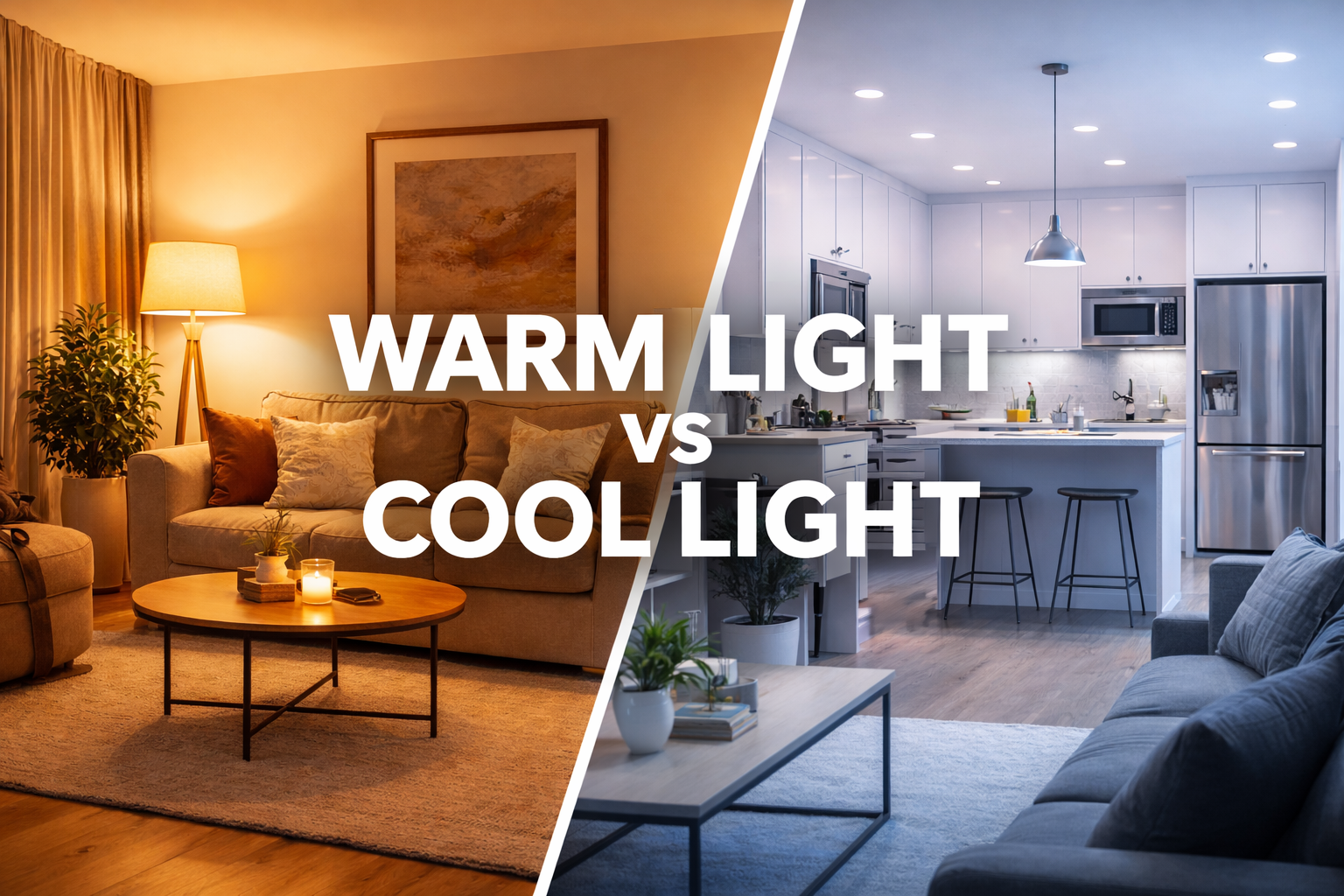
Table of Contents
Kelvin Scale
The warm light vs cool light distinction fundamentally relates to color temperature measured in kelvin (K) describing light’s spectral characteristics from warm orange-red tones through neutral white to cool blue-white hues. Lower kelvin values around 2700-3000K produce warm yellowish light resembling incandescent bulbs or candlelight. Higher values above 5000K create cool bluish-white light mimicking midday sunlight or overcast sky conditions throughout how LED lighting works.
This kelvin rating guide helps consumers understand numerical specifications translating abstract measurements into practical visual experiences. Residential lighting typically ranges 2700-5000K with most applications falling 2700-4000K balancing warmth and functionality. Commercial spaces often use cooler 4000-5000K temperatures supporting alertness and task performance. Understanding this color temperature selection spectrum enables appropriate choices matching specific room purposes and personal aesthetic preferences.
Standard kelvin categories include warm white (2700-3000K), soft white (3000-3500K), neutral white (3500-4000K), cool white (4000-4500K), and daylight (5000-6500K). These classifications provide convenient shorthand though actual appearance varies slightly between manufacturers. Comparing bulbs side-by-side in stores helps verify personal preferences beyond relying solely on numerical specifications throughout purchasing decisions requiring visual verification. Understanding quality differences connects to LED quality differences between brands.
If you want a deeper understanding of how lighting temperatures are measured and how the Kelvin scale works, read our complete guide on color temperature scale guide. It breaks down how different temperature ranges affect the appearance and atmosphere of lighting in real environments.
Measurement Origin
The kelvin scale derives from black body radiation physics describing how heated objects emit light at different wavelengths based on temperature. Lower temperatures produce reddish light while higher temperatures yield bluish-white emissions. This physical phenomenon provides scientific foundation for color temperature selection enabling objective measurement of subjective visual characteristics throughout technical specifications.
If you frequently deal with inconsistent lighting that shifts color or feels unstable over time, using a reliable solution like high-quality warm LED bulbs for stable lighting performance helps maintain consistent output and long-term reliability.
Psychological Effects
The psychological effects of lighting temperature extend beyond aesthetics into psychological and physiological impacts affecting mood, energy, and behavior. Warm lighting creates cozy, relaxing atmospheres promoting social interaction and unwinding. These lighting mood effects make warm temperatures ideal for evening use supporting natural circadian rhythms preparing bodies for sleep. Restaurants and homes leverage warm lighting creating intimate comfortable environments encouraging prolonged occupancy.
Cool lighting stimulates alertness and concentration through blue wavelengths affecting brain chemistry and hormone production. This activation makes cool temperatures suitable for workspaces, kitchens, and task-oriented areas requiring focus and energy. Morning exposure to cool light helps regulate circadian cycles improving daytime alertness and nighttime sleep quality throughout daily biological rhythms responding to environmental light signals.
Research demonstrates color temperature selection significantly affects perceived room temperature with warm lighting making spaces feel warmer and cool lighting creating cooler impressions. This psychological effect can influence thermostat settings and comfort perceptions throughout seasons. Warm lighting during winter enhances coziness while cool lighting during summer reinforces refreshing atmospheres supporting thermal comfort through visual cues affecting subjective temperature assessments. According to U.S. Department of Energy LED lighting efficiency guidance, proper selection enhances both efficiency and comfort.
Color Perception
Warm light enhances reds, oranges, and yellows while muting blues and greens. Cool light emphasizes blues and greens while subduing warm tones. These kelvin rating guide considerations affect interior design decisions with furniture, artwork, and finishes appearing different under varying color temperatures. Testing paint colors under intended lighting prevents disappointment from color shifts between store samples and installed applications.
Skin tones appear most flattering under warm lighting explaining widespread preference for warm temperatures in residential bathrooms and dressing areas. Cool lighting can create unflattering bluish casts making complexions appear sallow or tired. This lighting mood effects consideration proves particularly important in spaces where personal appearance assessment occurs regularly throughout daily grooming routines.
Living Rooms
Living rooms benefit from warm light vs cool light selections favoring warm 2700-3000K temperatures creating inviting, comfortable atmospheres supporting relaxation and socializing. These gathering spaces emphasize comfort over task performance making warm lighting natural choices. Evening use predominates in living rooms where warm light supports unwinding after work supporting natural transitions toward sleep preparation.
Layered lighting approaches combining ambient warm overhead lighting with adjustable task lamps provide flexibility accommodating varied activities. Reading requires adequate brightness achievable through focused task lighting rather than increased ambient intensity. This color temperature selection strategy maintains cozy atmospheres while ensuring functional illumination for specific activities throughout diverse living room uses requiring different lighting characteristics.
Dimmable warm lighting enables atmosphere adjustments matching occasions from bright family game nights to subdued movie watching. This flexibility proves valuable in multipurpose spaces accommodating varied activities throughout days and weeks. Smart bulbs offering color temperature adjustment provide ultimate control though warm-only solutions serve most residential living room needs adequately throughout typical usage patterns. Longevity considerations discussed in LED lifespan expectations affect long-term satisfaction.
Accent Lighting
Accent lighting highlighting artwork or architectural features in living rooms typically uses warm temperatures maintaining consistent kelvin rating guide principles throughout spaces. Contrasting cool accent lighting creates jarring visual discontinuity undermining cohesive design. Warm accent sources blend seamlessly with ambient lighting creating harmonious compositions supporting unified aesthetic experiences.
Picture lights, wall washers, and display lighting benefit from high-CRI warm sources ensuring accurate color rendering while maintaining comfortable atmospheric characteristics. This combination preserves both functional and emotional lighting objectives throughout residential applications balancing technical requirements with subjective preferences supporting comprehensive lighting mood effects throughout carefully designed spaces.
Bedrooms
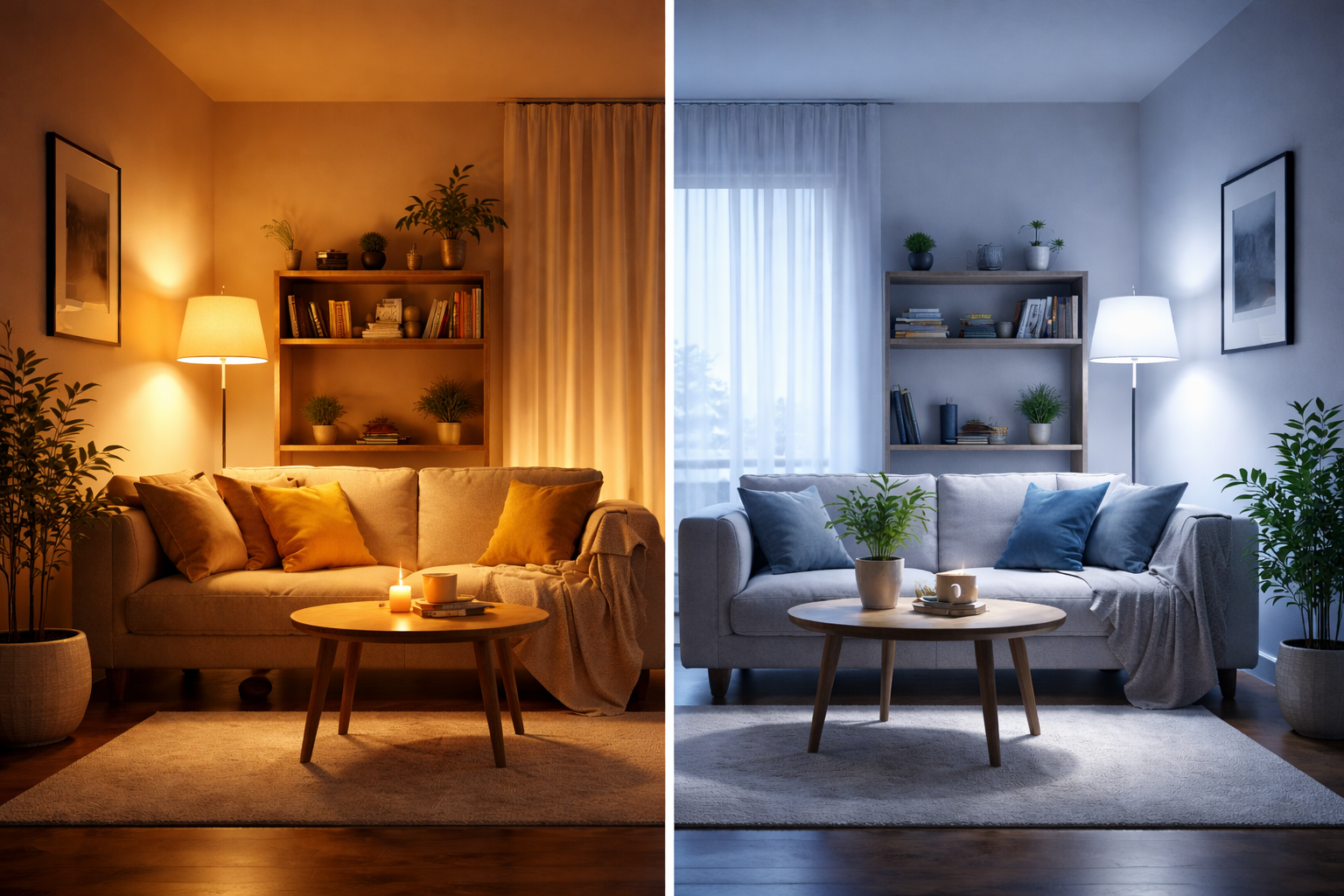
Bedrooms strongly favor warm light vs cool light applications using 2700-3000K temperatures supporting relaxation and sleep preparation. Cool lighting in bedrooms disrupts circadian rhythms through blue wavelength exposure signaling daytime to biological systems. This lighting mood effects interference reduces melatonin production delaying sleep onset and reducing sleep quality throughout nighttime rest periods requiring darkness cues.
Bedside reading lamps particularly benefit from warm color temperature selection creating comfortable pre-sleep reading conditions without alertness stimulation. Dimmable warm task lighting enables brightness reduction as bedtime approaches gradually transitioning toward darkness. This progressive dimming supports natural sleep onset compared to abrupt transitions from bright to dark creating physiological adaptation challenges throughout evening routines.
Master bedroom overhead lighting using warm temperatures maintains consistent kelvin rating guide adherence throughout private spaces prioritizing rest and intimacy. Cooler task lighting in closets or dressing areas proves acceptable as these zones serve functional purposes rather than relaxation. Separating these functional areas from main bedroom spaces prevents cool light contamination in primary rest areas throughout carefully designed layouts.
Children’s Rooms
Children’s bedrooms benefit from warm light vs cool light decisions favoring warm temperatures supporting healthy sleep development. Young children particularly sensitive to blue light exposure require warm evening lighting avoiding circadian disruption. Night lights using warm LED sources provide comfort without sleep interference throughout nighttime periods requiring minimal illumination.
Kitchens
Kitchens present more nuanced warm light vs cool light decisions with many designers recommending neutral to cool temperatures supporting food preparation tasks. Bright neutral 3500-4000K lighting provides adequate illumination for cooking without extreme warmth or coolness. This compromise balances task functionality with residential comfort maintaining pleasant atmospheres while ensuring adequate visibility for detailed choosing the right LED lighting.
Under-cabinet task lighting often uses cooler 4000-5000K temperatures illuminating countertops where food preparation occurs. This focused cool lighting supports detailed work without affecting ambient kitchen lighting maintaining warmer temperatures. Layered lighting mood effects approaches enable functional task lighting while preserving overall kitchen warmth throughout spaces serving both practical and social purposes during meal preparation and dining.
If your kitchen lighting feels too dim or inconsistent when preparing meals, switching to bright daylight LED bulbs for better task visibility can significantly improve clarity and reduce eye strain.
Home Offices
Home offices present clear warm light vs cool light preferences favoring cooler 4000-5000K temperatures promoting alertness, focus, and productivity. Cool lighting stimulates cognitive performance through blue wavelength exposure supporting extended concentration during demanding mental work. This color temperature selection mimics daylight supporting natural daytime alertness aligned with professional work schedules requiring sustained mental acuity.
Desk task lighting particularly benefits from cool temperatures providing adequate brightness for document review and detailed computer work. Overhead ambient lighting can use slightly warmer 3500-4000K neutral temperatures balancing productivity with comfort preventing overly clinical atmospheres. This layered approach accommodates task requirements while maintaining reasonable residential lighting mood effects throughout home-based workspaces.
Evening home office use creates circadian concerns with cool lighting potentially disrupting sleep if used late. Tunable white fixtures enabling color temperature adjustment from cool daytime to warm evening operation optimize biological rhythms. Alternatively, scheduling work completion before evening or using warm lighting during late sessions supports healthy sleep patterns throughout work-from-home lifestyles requiring careful kelvin rating guide consideration. Practical applications explored in bedroom lighting design tips provide additional context.
Dining Areas
Dining rooms strongly favor warm light vs cool light applications using 2700-3000K temperatures creating inviting, intimate atmospheres encouraging lingering conversation and social interaction. Warm lighting enhances food appearance making meals more appetizing while supporting relaxed dining experiences. These color temperature selection decisions transform functional eating spaces into gathering places fostering family connection and social bonding.
Chandelier lighting in dining areas benefits from warm sources creating focal points while providing ambient illumination. Dimmable fixtures enable brightness adjustment matching occasions from bright family dinners to romantic candlelit evenings. This flexibility proves valuable in spaces serving varied social functions throughout weeks requiring different lighting mood effects supporting diverse activities and atmospheres.
If you struggle with lighting that feels too harsh during dinners but too dim for everyday use, upgrading to smart LED bulbs with adjustable brightness and color helps balance both ambiance and functionality.
Mixed Temperatures
Mixing warm light vs cool light within single rooms requires careful kelvin rating guide consideration avoiding jarring visual discontinuity. Layered lighting using consistent color temperature throughout all sources maintains cohesive appearances. Mixing warm overhead with cool task lighting creates uncomfortable contrasts undermining design unity throughout spaces requiring harmonious illumination characteristics.
Open floor plans present particular challenges with color temperature selection requiring consistency across visible spaces. Warm living areas transitioning to cool kitchen lighting create abrupt visual boundaries emphasizing spatial divisions. Using neutral 3500K throughout open plans provides compromise balancing warmth and functionality avoiding stark transitions throughout flowing residential layouts integrating multiple functional zones.
Accent lighting using contrasting temperatures proves acceptable when clearly separated from ambient sources. Cool display lighting highlighting artwork doesn’t conflict with warm ambient lighting when positioning prevents direct comparison. This exception enables functional cool task lighting within predominantly warm spaces without creating visual discord throughout carefully designed lighting mood effects schemes. Additional technical information available at comprehensive LED knowledge center supporting informed decisions.
Sharing this guide
If you found this guide helpful, you can save it for later or share it with a friend. It’s especially useful for beginners, homeowners, and DIY users.
Share using the links below
Interested in learning more? Browse all related articles in our category section.
Pingback: Do Dimmer Switches Save Electricity? Real Truth Now
Pingback: Best LED Bulbs for Ceiling Fans: Expert Guide - NeoLEDHub
Pingback: LED Color Temperature: Warm vs Cool - NeoLEDHub