Car LED Lights: Complete Beginner’s Easy Guide
If you’ve been wondering about upgrading your vehicle’s lighting system, understanding car LED lights is the perfect starting point. These advanced lighting solutions have transformed automotive lighting with their efficiency, brightness, and longevity. This guide acts as a central resource for understanding car LED lights, including types, upgrades, legal considerations, and performance comparisons. Whether you’re a first-time buyer or ready to dive into a full headlight conversion, you’ll find everything you need here.
Table of Contents
Understanding the basics
When we talk about modern vehicle illumination, car LED lights represent a significant technological advancement over traditional systems. These semiconductor-based light sources convert electrical energy directly into visible light through a process called electroluminescence. Unlike conventional bulbs that rely on heating filaments, this technology produces illumination through electron movement within semiconductor materials.
The transformation in automotive lighting began when manufacturers recognized the potential of solid-state lighting for vehicles. Today, these systems are found in everything from high-end luxury vehicles to everyday commuter automobiles. The adoption rate continues to accelerate as drivers discover the practical benefits of switching to this modern technology. If you’re just getting started, browsing the full overview of car LED lights for vehicles is a great way to understand what products are available for your specific make and model.
Many beginners wonder whether upgrading to these systems makes sense for their particular situation. The answer depends on several factors including your driving habits, budget, and specific vehicle requirements. Understanding the fundamental characteristics of LED headlights and other automotive lighting components helps you make informed decisions about your vehicle’s illumination needs.
How the technology works
The operating principle behind car LED lights involves passing electrical current through a semiconductor chip. When electrons move through this material, they release energy in the form of photons, which we perceive as light. This process is remarkably efficient compared to traditional incandescent technology that wastes substantial energy as heat.
The semiconductor chip sits on a reflective base that directs the emitted light outward. A plastic lens covers the assembly, protecting the delicate components while helping to focus and distribute the beam pattern. Most automotive lighting systems incorporate additional heat management features, such as aluminum heat sinks, to maintain optimal operating temperatures and extend product lifespan.
Modern LED bulbs designed for vehicles include driver circuits that regulate voltage and current flow. These electronic components ensure stable operation despite fluctuations in your vehicle’s electrical system. The integration of these circuits within compact housings represents a significant engineering achievement in automotive lighting design — one that has made it practical to replace almost every bulb in a modern vehicle with an LED equivalent.
Different types available
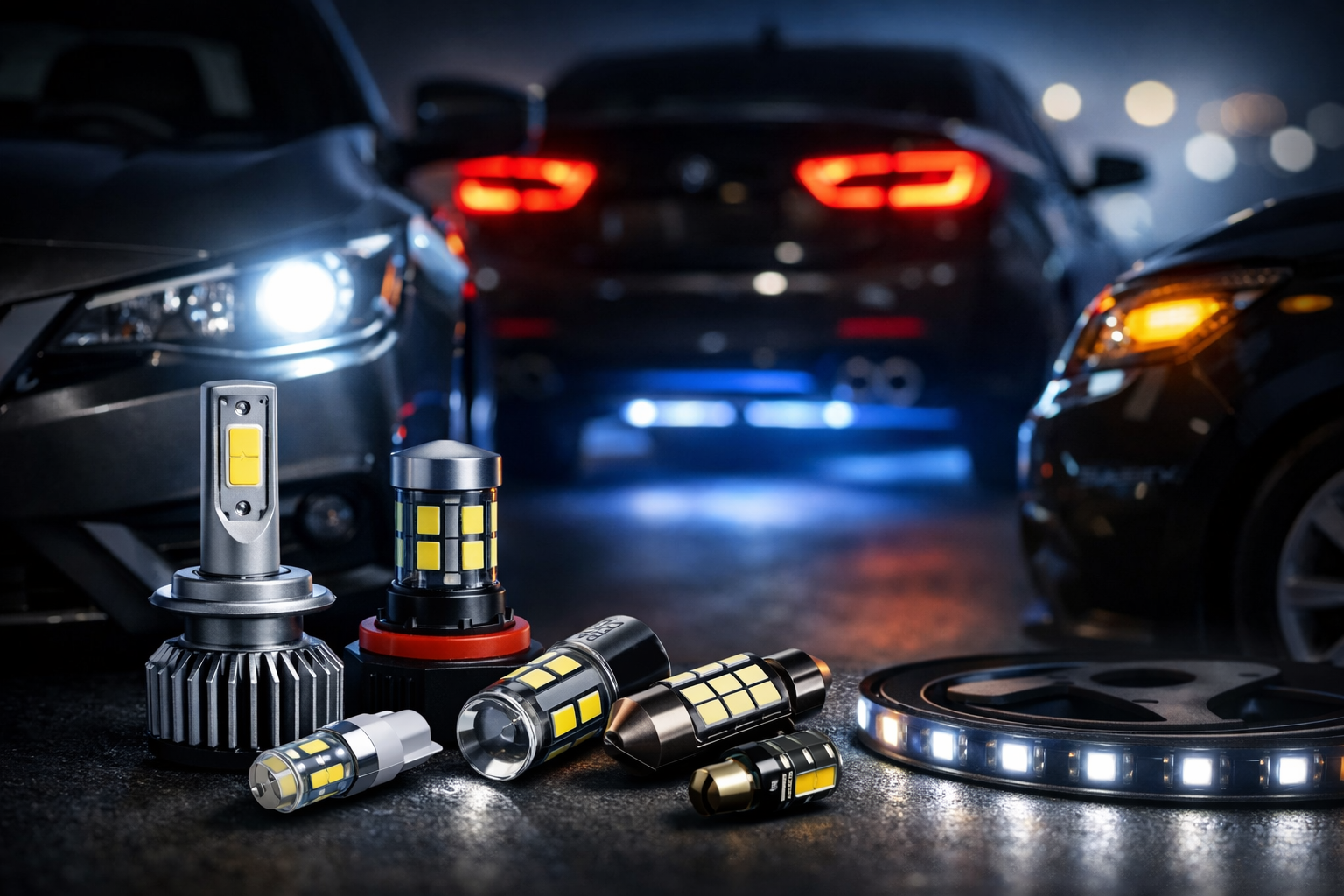
One of the most common questions beginners ask is: what exactly can I upgrade? The answer is nearly everything. From headlights and fog lights to interior dome lights and license plate bulbs, the range of types of car LED upgrades available today covers virtually every lighting position in modern vehicles. Here’s a breakdown of the most important categories.
Headlight systems
LED headlights represent the most prominent application of this technology in vehicles. These systems provide primary forward illumination for nighttime and low-visibility driving conditions. Manufacturers offer both factory-installed options and aftermarket retrofit kits that allow drivers to upgrade existing halogen systems. When shopping for LED headlights, look for kits that include built-in heat sinks, EMC drivers, and CANBUS compatibility to minimize installation issues.
High-beam and low-beam configurations use different arrangements of diodes to create appropriate beam patterns for various driving situations. Some advanced systems incorporate adaptive technology that adjusts beam direction based on steering input and vehicle speed, further improving safety in winding or urban environments. Understanding car LED headlight brightness — measured in lumens and lux — helps you choose the right output level without overdoing it for your housing type.
Interior applications
Beyond exterior applications, car LED lights have revolutionized interior cabin illumination. Dome lights, map lights, trunk lights, and dashboard indicators now commonly use this technology. The compact size of individual diodes allows designers to create slim, integrated lighting solutions that enhance both functionality and aesthetics. A solid example is a drop-in LED dome light kit for car cabins, which performs reliably in everyday use and is one of the easiest DIY upgrades available.
Interior automotive lighting benefits particularly from the instant-on capability and cool operation of these systems. Unlike traditional bulbs that require warm-up time, these lights reach full brightness immediately when activated. The reduced heat output also improves passenger comfort and reduces strain on vehicle cooling systems during warmer months.
Signal and accent lights
Turn signals, brake lights, and daytime running lights increasingly utilize LED bulbs for improved visibility and response time. The faster illumination of these systems — typically 200 milliseconds quicker than halogen — can give following drivers additional reaction time during emergency braking situations. Tail lights and reverse lights are also popular and easy LED upgrade targets, often requiring only a direct bulb swap. Accent and underglow lighting represents another popular application, though regulations regarding these installations vary significantly by state and jurisdiction.
Key advantages
The primary benefit of car LED lights lies in their exceptional energy efficiency. These systems typically consume 75% less power than comparable halogen alternatives while producing equivalent or superior light output. This efficiency translates to reduced strain on your vehicle’s alternator and electrical system, and in some cases can marginally improve fuel economy — particularly relevant for vehicles with many lighting positions running simultaneously.
Longevity represents another compelling advantage of automotive lighting technology. Quality LED headlights can last 25,000 to 50,000 hours of operation, far exceeding the typical 1,000-hour lifespan of halogen bulbs. This extended service life means fewer replacements, reduced maintenance costs, and less waste over the vehicle’s lifetime.
The superior brightness and color quality of these systems enhance driving safety through improved visibility. The whiter, more natural light output closely mimics daylight, reducing eye strain during extended night driving. Many drivers report feeling more confident and alert when operating vehicles equipped with these advanced illumination systems.
Durability stands out as a practical benefit for everyday driving conditions. The solid-state construction of LED bulbs makes them highly resistant to vibration and impact damage that commonly affects filament-based alternatives. This rugged design proves particularly valuable for vehicles driven on rough roads, in off-road conditions, or through the harsh winters common across much of the United States.
Comparison with traditional options
Halogen bulbs have served as the standard for automotive lighting for decades, offering adequate performance at low initial cost. However, car LED lights surpass halogen technology in nearly every performance metric. The heat generated by halogen filaments represents wasted energy, while semiconductor-based systems convert electrical input into visible light much more efficiently. For a detailed side-by-side breakdown, our guide on LED vs halogen headlights covers the key differences in brightness, lifespan, color output, and total ownership cost.
High-intensity discharge systems, commonly known as HID or xenon lights, occupy a middle ground between halogen and modern alternatives. While HID systems produce bright, white light, they require warm-up time and contain components such as ballasts and igniters that eventually degrade and require replacement. LED headlights offer comparable brightness without the warm-up period or added complexity. If you’re deciding between these two premium technologies, our in-depth look at LED vs HID headlights will help you determine which makes more sense for your vehicle and driving habits.
The total cost of ownership calculation favors newer technology despite higher upfront investment. When you factor in replacement frequency, energy consumption, and maintenance requirements, automotive lighting systems based on solid-state technology prove more economical over time. This economic advantage becomes more pronounced as component prices continue to decline across all product tiers.
Installation considerations
Installing car LED lights varies in complexity depending on your vehicle and the specific components being replaced. Some applications, such as interior dome lights or license plate illumination, involve simple plug-and-play replacements that any vehicle owner can accomplish with basic tools and about 10 minutes of effort. These straightforward installations require only removing the old bulb and inserting the new unit in the same socket. If you’re ready to start with the easier positions, our step-by-step instructions on how to replace car bulbs with LEDs walk you through the process from start to finish.
Headlight conversions typically require more consideration and potentially professional installation. Many vehicles need additional components such as decoder modules or load resistors to prevent error messages or flickering that occurs when the vehicle’s CANBUS system detects unusually low power draw. The physical fit of LED bulbs within existing housings also requires verification, as some designs may not accommodate the heat sink configurations of certain aftermarket products.
Proper beam alignment becomes crucial when upgrading to LED headlights to avoid blinding oncoming drivers. Even when using plug-compatible LED bulbs, the different light emission pattern compared to halogen sources may require headlight adjustment. Professional installers have the equipment to verify proper beam aim according to federal safety standards established by the NHTSA. This step is often overlooked by DIYers but is one of the most important for both safety and legal compliance.
Color temperature options
Understanding color temperature helps you select car LED lights that match your preferences and driving needs. Measured in Kelvin, color temperature describes the visual warmth or coolness of white light on a scale from warm amber tones to crisp blue-white. Most automotive lighting falls between 3,000K and 6,500K on this scale, giving drivers a meaningful range to choose from.
The 4,000K to 5,000K range produces a neutral white light that many U.S. drivers prefer for its natural appearance and excellent visibility in various road conditions. This temperature range closely approximates midday daylight, reducing eye strain and providing accurate color rendering of road signs, lane markings, and obstacles. It’s widely considered the sweet spot for daily driving use.
Higher color temperatures around 6,000K produce a crisp, bright white with a slight blue tint that some associate with modern, premium vehicles. However, extremely high temperatures exceeding 6,500K may reduce visibility in fog or rain while potentially appearing too blue for some regulatory standards. Selecting appropriate color temperature balances aesthetic preferences with practical visibility requirements — and in some states, certain color temperatures for forward-facing lights may also have legal implications.
Common applications
The versatility of car LED lights extends across numerous vehicle systems and applications. Forward lighting remains the most critical application, where LED headlights provide essential visibility for safe operation during darkness and adverse weather. Both projector-style and reflector-style housings can accommodate this technology with appropriate product selection — though projector housings tend to produce cleaner, more controlled beam patterns with LED retrofits.
Daytime running lights represent another common implementation where efficiency and longevity prove particularly valuable. Since these lights operate whenever the vehicle runs, the extended lifespan of LED bulbs reduces maintenance frequency substantially. The instant-on capability also makes them ideal for applications requiring rapid activation, such as brake lights and turn signals.
Fog lights and auxiliary driving lights increasingly utilize automotive lighting technology to provide focused illumination in specific situations. The precise beam control possible with properly designed systems allows manufacturers to create highly effective fog lights that illuminate the road surface without excessive glare in moisture-laden air. Dedicated LED fog light bulbs for low-visibility conditions offer consistent results over time and are a worthwhile upgrade for drivers in rainy or snowy climates.
Legal regulations
Regulations governing car LED lights vary by jurisdiction but generally focus on ensuring safe operation without creating hazards for other road users. In the United States, the Department of Transportation establishes federal standards for all vehicle lighting systems. Aftermarket modifications must comply with these regulations to remain street-legal, and non-compliance can result in failed inspections or traffic citations. Before purchasing any retrofit kit, it’s worth checking whether are LED headlights legal in your state and what specific requirements apply to your vehicle class.
Headlight regulations typically specify maximum brightness levels, proper beam patterns, and acceptable color temperatures for forward-facing lights. Installing LED headlights in housings not designed for them can create scattered or unfocused beams that blind oncoming drivers, violating safety regulations even if the bulb itself is DOT-approved. Using purpose-built LED housings or verified retrofit kits and having beams professionally aimed after installation helps ensure compliance with applicable standards.
Color restrictions for various lighting positions aim to maintain consistent visual signals for all drivers. For example, forward-facing lights must emit white or amber light in most jurisdictions, while red remains reserved for rear-facing applications. Decorative automotive lighting installations must respect these color limitations to avoid confusion or enforcement issues. If you drive in multiple states or plan to travel internationally, reviewing a comprehensive overview of car LED lighting laws by region will help you stay compliant wherever you go.
Maintenance tips
While car LED lights require minimal maintenance compared to traditional alternatives, following basic care practices maximizes their performance and lifespan. Keeping lenses clean ensures optimal light output and prevents premature degradation of housing materials. Regular cleaning with appropriate automotive cleaners removes road grime, insects, and other contaminants that can reduce effective output over time.
Inspecting electrical connections periodically helps identify potential issues before they cause system failure. Corrosion at connection points can increase resistance, leading to voltage drops that affect LED bulb performance and can cause flickering or premature failure. Applying dielectric grease to connections during installation provides long-term protection against moisture and corrosion — a particularly important step in regions that use road salt during winter months.
Monitoring for flickering or dimming indicates potential problems with driver circuits or power supply issues. While LED headlights rarely fail suddenly like halogen bulbs, gradual performance degradation may signal the need for replacement. Addressing symptoms early prevents being left without adequate illumination during critical driving situations, especially during long overnight trips or in areas with limited roadside assistance.
Troubleshooting issues
Common problems with car LED lights often stem from compatibility issues rather than component failure. Flickering immediately after installation typically indicates that your vehicle’s CANBUS system detects the lower power consumption as a bulb failure and triggers a warning. Installing decoder modules or load resistors usually resolves this issue by mimicking the electrical characteristics of traditional bulbs. Always check product listings for CANBUS compatibility before purchasing, especially for European vehicles and newer U.S. models.
Overheating represents another potential concern, particularly with poorly designed aftermarket LED bulbs lacking adequate thermal management. If automotive lighting systems shut off after operating briefly, insufficient cooling likely causes protective circuits to activate. Upgrading to quality products with proper heat sink design or improving airflow around the installation resolves most thermal issues. Look for bulbs with copper-based heat sinks rather than plastic ones when comparing options.
Radio interference occasionally occurs when LED headlights or other systems introduce electrical noise into vehicle wiring. This can affect AM radio reception or in rare cases interfere with tire pressure monitoring systems. Shielded wiring, ferrite cores, or inline capacitors can filter this interference effectively. Quality products from reputable manufacturers typically include appropriate EMC filtering to prevent electromagnetic compatibility problems out of the box.
Cost considerations
Initial investment in car LED lights exceeds that of halogen alternatives, with prices varying widely based on application and quality level. Basic interior LED bulbs might cost only slightly more than halogen equivalents, while complete headlight conversion kits can represent a more significant investment ranging from $30 to $150 or more depending on brand and features. However, the extended lifespan and reduced energy consumption offset these higher upfront costs over time — often within the first two to three years of ownership.
Professional installation adds to total cost but ensures proper function and compliance with safety regulations. For complex applications like LED headlights, professional service typically costs between one and three hours of shop labor. The investment in proper installation prevents potential problems such as incorrect beam aim or CANBUS errors, and ensures optimal performance of automotive lighting systems from day one.
Evaluating total cost of ownership requires considering replacement frequency, energy savings, and enhanced safety benefits. While a set of quality LED bulbs might cost five times more than halogen equivalents, lasting twenty-five times longer makes them more economical overall. For most drivers, car LED lights pay for themselves well before the first halogen replacement would have been due. The improved visibility and reduced accident risk add value that extends beyond simple financial calculation — particularly for drivers who regularly commute long distances after dark.
Future trends in automotive lighting
Advancing technology continues to expand capabilities and applications for car LED lights. Adaptive driving beam systems that automatically adjust illumination patterns based on traffic conditions and road geometry represent the cutting edge of automotive lighting. These intelligent systems — already available on several luxury brands sold in the U.S. — maximize visibility without compromising safety for other road users by selectively dimming portions of the beam around detected vehicles.
Integration with vehicle communication systems enables lighting to convey information beyond simple illumination. LED headlights could project warning symbols onto the road surface, display navigation cues, or eventually communicate with other vehicles through coded light signals. Such innovations leverage the rapid switching capability and precise control possible with semiconductor-based illumination — capabilities that traditional halogen and HID systems simply cannot match.
Continued improvements in efficiency and light output will further establish this technology as the automotive lighting standard. As manufacturing costs decline and performance increases, even entry-level vehicles will feature comprehensive LED bulb implementations across all lighting positions. The ongoing evolution ensures that car LED lights will remain at the forefront of vehicle safety and design innovation for the foreseeable future.
Want to go deeper on any of these topics? Our LED Knowledge Center is your central hub for everything related to automotive LED technology. It covers bulb compatibility by vehicle, step-by-step installation guides, brightness and color temperature explainers, head-to-head technology comparisons, and up-to-date legal references for U.S. drivers. Whether you’re troubleshooting a flickering bulb or researching your next headlight upgrade, it’s the most complete LED reference we offer — and it’s continuously updated as products and regulations evolve.
Interested in learning more? Browse all related articles in our category section.
Pingback: LED Car Lighting Upgrades: Essential Types Revealed
Pingback: LED Lights for Cars: Amazing Pros & Cons Revealed
Pingback: LED Car Lights Energy Savings: Ultimate Guide - NeoLEDHub
Pingback: LED Headlights vs HID: Ultimate Comparison Guide
Pingback: Replace Car Bulbs With LEDs: Complete Safe Guide
Pingback: CANBUS in Car LED Lighting: Essential Smart Guide
Pingback: Car LED Headlight Brightness: Essential Safety Guide
Pingback: Are LED Lights Safe for Cars? Full Safety Guide - NeoLEDHub
Pingback: LED Car Lights Legal? Complete 2026 Country Guide
Pingback: Colored LED Lights on Cars: Essential Legal Guide
Pingback: LED Headlight Conversions Legal? Final Answer - NeoLEDHub
Pingback: Are LED Underglow Lights Legal? - NeoLEDHub
Pingback: Best LED Interior Lights for Cars - NeoLEDHub