LED Basics: Essential Beginner’s Lighting Guide
Understanding LED basics empowers homeowners to make informed decisions about modern illumination upgrades. Learning essential LED lighting technology concepts helps newcomers navigate product selection, installation requirements, and performance expectations while maximizing energy savings and achieving superior lighting quality throughout their homes.
Table of Contents
What LEDs Are
Light Emitting Diodes represent a revolutionary advancement in illumination technology. These LED basics start with understanding that semiconductor devices convert electrical energy directly into light through electroluminescence, a process fundamentally different from traditional bulbs that waste energy heating metal filaments to produce illumination.
The fundamental distinction between LEDs and conventional lighting lies in their operating principles. Traditional incandescent bulbs convert approximately ninety percent of electrical input into heat rather than visible light. LED lighting technology reverses this ratio, transforming most energy into illumination while generating minimal waste heat during operation.
How Technology Works
Grasping LED basics requires understanding the underlying physics. When electricity flows through semiconductor material, electrons move across a junction and release energy as photons. The specific materials manufacturers use determine the color and wavelength of light produced, allowing creation of various color options for different applications.
White light production requires special techniques since individual diodes emit single colors naturally. Most white LEDs use blue diodes coated with phosphor materials that convert some blue wavelengths to yellow, creating balanced white spectrum output. understanding strip light mechanics reveals how multiple diodes work together in flexible lighting formats.
Color Temperature Fundamentals
Color temperature, measured in Kelvin units, describes the visual appearance of light sources. Mastering LED basics includes recognizing that lower values around 2700K produce warm yellowish light similar to incandescent bulbs, while higher values near 5000K create cool, bright white illumination. Selecting appropriate temperatures significantly affects room ambiance and functional performance.
Main Benefits
The LED bulb advantages extend far beyond simple energy conservation. Longevity ranks among the most compelling reasons for adoption, with quality products lasting 25,000 to 50,000 hours compared to merely 1,000 hours for incandescent alternatives. This extended lifespan dramatically reduces replacement frequency and maintenance costs over time.
Energy-efficient lighting through diode technology typically consumes seventy-five to eighty percent less electricity than traditional options. A 60-watt incandescent equivalent uses only 8-12 watts while producing comparable brightness levels. These savings accumulate substantially across entire homes or commercial facilities, reducing utility bills and environmental impact simultaneously.
Environmental Advantages
Comprehensive LED basics education includes environmental sustainability benefits. Reduced power consumption and longer operational life mean manufacturing fewer replacement bulbs, decreasing resource extraction and waste generation. Additionally, diodes contain no mercury or toxic materials found in compact fluorescent lamps, simplifying disposal and recycling processes significantly.
Types Available
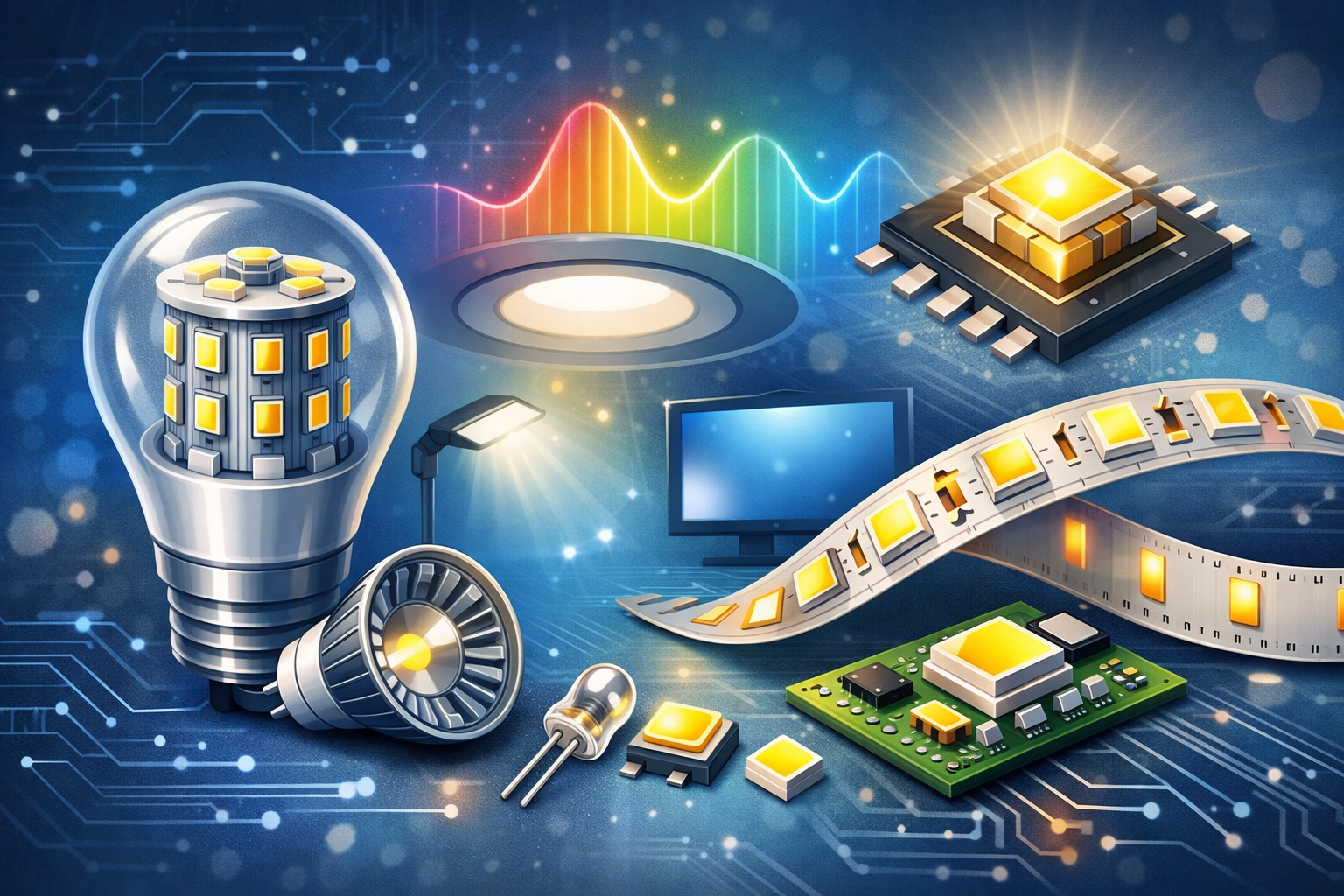
Multiple formats accommodate different applications and preferences in modern homes. Standard replacement bulbs with Edison screw bases fit existing fixtures directly, making upgrades simple and straightforward. These LED basics cover the main categories homeowners encounter when shopping for new lighting solutions and planning renovation projects.
Bulb Formats
A-shape bulbs replicate traditional incandescent appearance for general use in table lamps and ceiling fixtures throughout homes. Globe bulbs provide omnidirectional illumination ideal for vanity lighting and decorative applications. Reflector bulbs focus light directionally for recessed cans and track lighting installations where targeted illumination proves essential.
Candelabra bases fit smaller decorative fixtures and chandeliers in dining rooms and entryways. Important LED basics include understanding that these formats produce reduced heat output, protecting delicate fixture components and eliminating fire hazards associated with high-wattage incandescents in enclosed spaces.
Integrated Fixtures
Integrated fixtures incorporate non-replaceable arrays designed to last the fixture’s entire service life. These units optimize thermal management and optical performance since manufacturers engineer all components together holistically. LED lighting technology through integrated designs often delivers superior results compared to retrofit approaches using replacement bulbs.
Specialty Applications
Strip lights provide flexible linear illumination for under-cabinet, accent, and architectural applications throughout kitchens and living spaces. Smart bulbs with wireless connectivity enable remote control, dimming, and color changing through smartphone apps. Advanced LED basics acknowledge that specialty options expand creative possibilities beyond basic replacement scenarios for standard fixtures.
Choosing Right Products
Selecting appropriate products requires understanding key specifications and performance metrics. Lumens measure actual light output, replacing the traditional watt-based selection method consumers used for decades. A 60-watt incandescent produces approximately 800 lumens, so choosing bulbs with similar lumen ratings ensures comparable brightness regardless of actual wattage differences.
Color Rendering Index (CRI) indicates how accurately colors appear under the light source being evaluated. Higher CRI values above 80 provide better color fidelity important for tasks like cooking, makeup application, and artwork display. According to the Department of Energy, these factors significantly impact satisfaction with energy-efficient lighting installations.
Dimming Compatibility
Not all products work with existing dimmer switches designed for incandescent loads and resistive circuits. Essential LED basics emphasize verifying dimming compatibility before purchase to avoid frustration. Dimmable products cost slightly more but prevent flickering, buzzing, and limited dimming range issues that plague incompatible combinations.
Installation Fundamentals
Most installations involve simple direct replacement of existing bulbs in standard fixtures. Turn off power at the switch, allow hot bulbs to cool completely, then unscrew old bulbs and install new replacements. Core LED basics confirm that no special tools or electrical knowledge are typically required for basic replacement operations in residential settings.
Some fixtures may require minor modifications for optimal performance and longevity. Enclosed fixtures trap heat that shortens lifespan, so choosing rated products for enclosed use prevents premature failure. exploring internal mechanisms helps understand why thermal management matters for reliable operation.
Fixture Considerations
Recessed cans and enclosed fixtures require attention to heat dissipation characteristics. LED lighting technology generates less total heat than incandescents but concentrates thermal energy in smaller areas near electronic components. Ensuring adequate ventilation and using appropriately rated bulbs prevents thermal degradation that reduces light output and shortens service life expectations.
Common Questions
New users often wonder whether LED bulb advantages justify higher initial purchase costs compared to traditional alternatives. While products cost more upfront than incandescent options, energy savings and extended lifespan deliver positive financial returns within months. Fundamental LED basics help calculate that typical products pay for themselves in energy savings alone within the first year of operation.
Another frequent concern involves light quality and color appearance in living spaces. Early products suffered from harsh, bluish light that many consumers found unpleasant for residential use. Modern energy-efficient lighting offers warm color temperatures indistinguishable from traditional incandescent bulbs while maintaining all efficiency benefits and performance advantages.
Safety Concerns
Products operate at much lower temperatures than incandescent bulbs, reducing burn risks and fire hazards in residential installations. The solid-state construction makes them more resistant to breakage than fragile glass bulbs. These safety advantages make LED lighting technology particularly suitable for children’s rooms and high-traffic areas throughout homes.
Sharing this guide
If you found this guide helpful, you can save it for later or share it with a friend. It’s especially useful for beginners, homeowners, and DIY users.
Share using the links below
Interested in learning more? Browse all related articles in our category section.