Flexible LED Strip Lights: Ultimate Lighting Guide
Transforming your space with flexible LED strip lights offers endless creative possibilities for illumination and ambiance. These versatile lighting solutions have revolutionized interior design, providing homeowners and businesses with customizable options that blend functionality with aesthetic appeal.
Table of Contents
Understanding the Basics
When exploring lighting options for your project, flexible LED strip lights provide remarkable adaptability for virtually any installation scenario. These thin, bendable circuits contain multiple light-emitting diodes mounted on a flexible printed circuit board. The compact design allows them to conform to curved surfaces, corners, and irregular shapes that traditional fixtures cannot accommodate.
Most LED strip lighting products feature adhesive backing that simplifies installation on clean, dry surfaces. This peel-and-stick functionality makes them accessible for DIY enthusiasts while maintaining professional-grade results. The strips typically come in reels ranging from 16 to 32 feet, with designated cutting points every few inches.
Color Temperature Options
Choosing the right color temperature significantly impacts the mood and functionality of your illuminated space. Warm white options, measured around 2700K to 3000K, create cozy atmospheres suitable for bedrooms and living areas. Cool white variants at 5000K to 6500K deliver crisp, energizing illumination ideal for workspaces and task lighting.
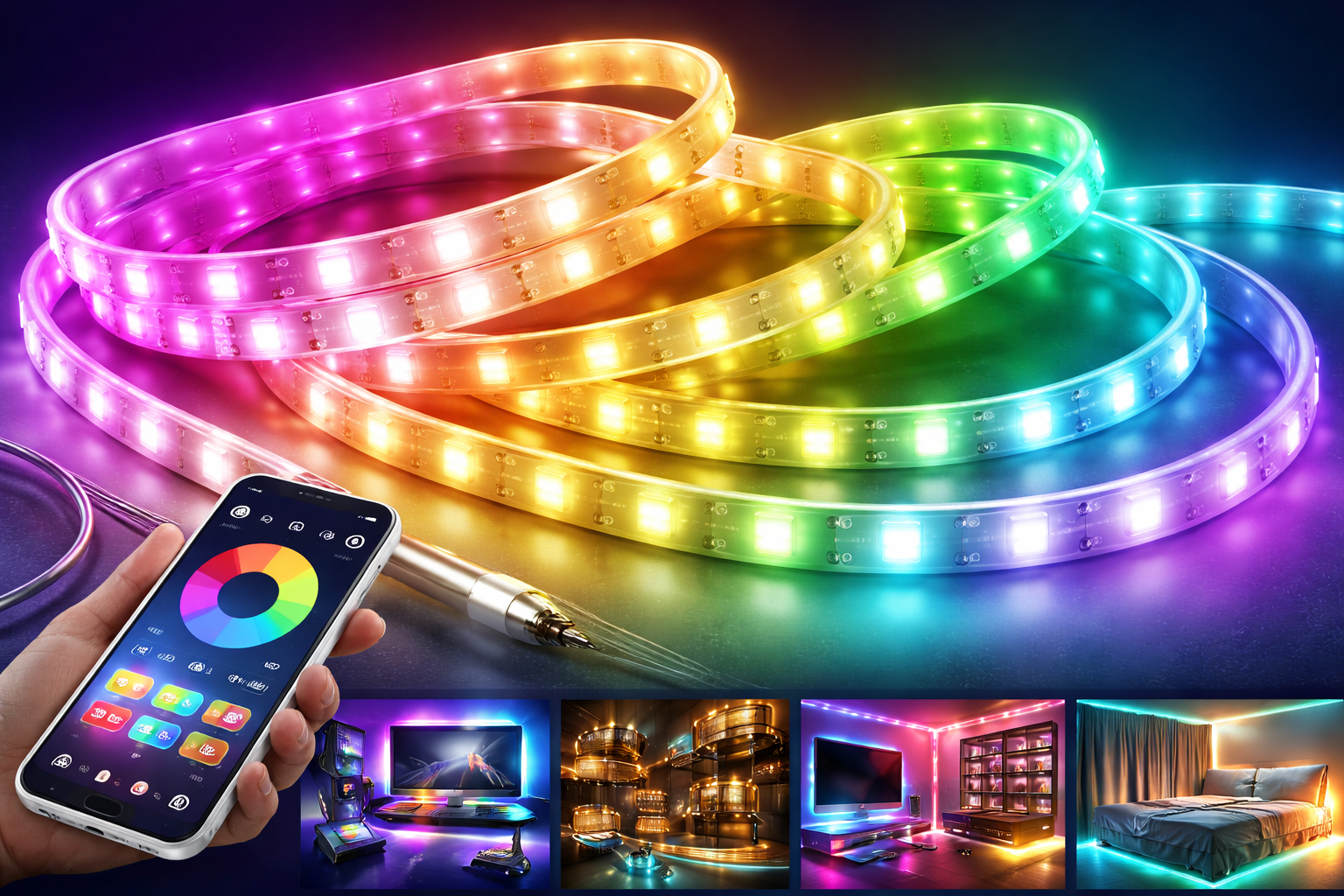
RGB LED strips offer dynamic color-changing capabilities, allowing users to cycle through millions of hues via remote control or smartphone applications. These multicolor systems excel in entertainment spaces, retail displays, and architectural accent applications where visual impact drives design decisions.
Tunable White Technology
Advanced tunable white systems combine warm and cool diodes within a single strip, enabling users to adjust color temperature throughout the day. This technology supports circadian lighting strategies that promote natural sleep-wake cycles and enhance wellbeing in residential and healthcare environments.
Installation Methods
Installing adhesive LED strips requires careful surface preparation to ensure long-lasting adhesion and reliable performance. Begin by thoroughly cleaning the mounting surface with isopropyl alcohol to remove dust, oils, and residues that compromise bonding strength. Allow the surface to dry completely before proceeding.
For permanent installations or challenging surfaces, consider using aluminum channels or extrusions specifically designed for LED strip lighting. These mounting tracks provide structural support, improve heat dissipation, and create polished, professional appearances. The channels also accommodate diffuser covers that eliminate individual diode hotspots for uniform light distribution.
When working with various strip configurations and density options, always test your layout before committing to permanent installation. This preview step prevents costly mistakes and ensures your flexible LED strip lights achieve the desired lighting effect.
Power Requirements
Properly sizing your power supply prevents performance issues and extends the lifespan of your LED strip lighting installation. Calculate total wattage by multiplying the per-foot consumption rating by your total strip length, then add 20% overhead for safe operation. Most residential applications utilize 12V or 24V DC power supplies.
Higher voltage systems offer advantages for longer runs, reducing voltage drop and maintaining consistent brightness throughout the installation. According to the U.S. Department of Energy, proper electrical design ensures optimal efficiency and safety compliance in lighting projects.
Voltage Drop Considerations
Voltage drop becomes problematic in runs exceeding 16 feet, causing dimming at the far end of your flexible LED strip lights. Mitigate this issue by implementing parallel wiring or injecting power at multiple points along the strip. Professional installers often use amplifiers to maintain signal strength in extensive RGB LED strips installations.
Cutting and Connecting
Every few inches along your adhesive LED strips, you’ll find designated cutting marks indicating safe severing points. Always cut precisely at these locations to avoid damaging the circuit. Use sharp scissors or wire cutters for clean edges that facilitate reliable connections.
Joining strip segments requires either solderless connectors or traditional soldering techniques. Solderless options provide quick, tool-free assembly suitable for temporary installations or frequent reconfigurations. Soldered connections deliver superior conductivity and mechanical strength for permanent applications.
Corner Connections
Navigating corners while maintaining continuous illumination presents unique challenges in LED strip lighting projects. Specialized corner connectors accommodate 90-degree and 45-degree turns without gaps. Alternatively, careful bending within the manufacturer’s minimum radius specifications allows flexible LED strip lights to follow curved paths naturally.
Residential Applications
Kitchen under-cabinet lighting represents one of the most popular residential uses for adhesive LED strips. The direct task illumination enhances food preparation safety while adding sophisticated visual appeal to cabinetry. Many homeowners appreciate the shadow-free coverage that eliminates dark spots on countertops.
Bedroom accent lighting creates relaxing environments conducive to rest and personal time. Installing RGB LED strips behind headboards or along tray ceilings provides customizable ambiance that adapts to different activities and moods. The low-voltage operation ensures safe integration near sleeping areas.
Stairway Safety
Illuminating staircases with LED strip lighting improves navigation safety during nighttime hours. Motion sensors can trigger automatic activation, providing hands-free operation that conserves energy. This application demonstrates how flexible LED strip lights combine practical functionality with architectural enhancement.
Commercial Uses
Retail environments leverage the visual impact of adhesive LED strips to highlight merchandise and create engaging shopping experiences. Product displays incorporating dynamic color-changing effects attract customer attention and reinforce brand identity. The flexibility enables creative installations impossible with conventional fixtures.
Restaurants and hospitality venues use LED strip lighting to establish distinctive atmospheres that enhance guest experiences. Cove lighting, bar backlighting, and architectural accents contribute to memorable environments that encourage repeat visits and positive reviews.
Waterproof Ratings
Understanding IP (Ingress Protection) ratings helps you select appropriate flexible LED strip lights for specific environmental conditions. Standard indoor strips carry IP20 ratings, suitable for dry locations without moisture exposure. IP65-rated products feature protective coatings that resist water splashes, making them appropriate for kitchens and bathrooms.
Outdoor applications demand IP67 or IP68 ratings that withstand submersion and continuous wet conditions. These fully waterproof RGB LED strips excel in landscape lighting, pool surrounds, and marine installations where moisture resistance determines longevity.
Dimming and Control
Modern LED strip lighting systems offer sophisticated control options ranging from simple inline dimmers to comprehensive smart home integration. PWM (Pulse Width Modulation) dimming provides flicker-free operation across the entire brightness range, maintaining color consistency at all levels.
Smart controllers compatible with voice assistants and mobile apps enable remote operation and automated scheduling. These systems allow users to create custom scenes, set timers, and adjust adhesive LED strips without physical interaction, enhancing convenience and efficiency.
For detailed information about optimizing illumination levels, explore brightness specifications and lumen output calculations that ensure your installation meets functional requirements.
Maintenance Tips
Maintaining your flexible LED strip lights requires minimal effort but yields significant longevity benefits. Periodically dust the strips using a soft, dry cloth to prevent debris accumulation that reduces light output. Avoid harsh chemicals or abrasive materials that might damage protective coatings on waterproof models.
Inspect electrical connections annually, tightening any loose terminals and checking for signs of corrosion or oxidation. These preventive measures ensure continued reliable operation and help identify potential issues before they cause system failures.
Common Mistakes
Undersizing power supplies represents a frequent error that compromises LED strip lighting performance. Always calculate total power requirements accurately and select drivers with appropriate capacity. Insufficient power causes dimming, flickering, and premature component failure.
Another common mistake involves installing RGB LED strips in locations with inadequate ventilation. While these products generate less heat than traditional lighting, proper airflow prevents thermal buildup that accelerates degradation. Maintaining recommended operating temperatures maximizes lifespan and maintains color accuracy.
Adhesion Failures
Poor surface preparation causes most adhesive LED strips installation failures. Painting over strips or applying them to dusty surfaces results in peeling and sagging. Investing time in proper cleaning and priming yields lasting results that maintain appearance and functionality.
Cost Considerations
Budgeting for flexible LED strip lights involves more than the strip cost alone. Factor in power supplies, controllers, mounting channels, connectors, and installation materials when estimating project expenses. Quality components justify higher initial investment through superior performance and extended service life.
Energy efficiency calculations demonstrate significant operational savings compared to traditional lighting technologies. Lower power consumption translates to reduced electricity bills and decreased environmental impact. Many utilities offer rebates for LED strip lighting upgrades, further improving return on investment.
Sharing this guide
If you found this guide helpful, you can save it for later or share it with a friend. It’s especially useful for beginners, homeowners, and DIY users.
Share using the links below
Interested in learning more? Browse all related articles in our category section.