Best LED Strip Lights for Bedrooms: Cozy Ideas & Tips
Many LED strip lights for bedroom setups look great online but feel harsh, messy, or cheap once they are installed. The best results usually come from hidden placement, smooth dimming, warm white tones, and soft reflected light rather than exposed strips or maximum brightness.
This guide explains how to choose bedroom LED strip lights that look cozy, where to place them around the bed, ceiling, shelves, or mirror, and when RGB scenes make sense. The goal is a clean bedroom setup that feels relaxing at night instead of bright, distracting, or temporary.
Quick Answer
The best LED strip lights for bedroom setups dim smoothly, create a warm or softly colored glow, mount cleanly, and spread light evenly without obvious hot spots. In most cozy bedrooms, hidden placement and reflected light matter more than maximum brightness or flashy effects.
- Smooth, low-end dimming for nighttime use
- Warm white or well-balanced RGB scenes
- Hidden placement so you see the glow instead of exposed diodes
- Reliable controls, scene memory, and solid adhesive
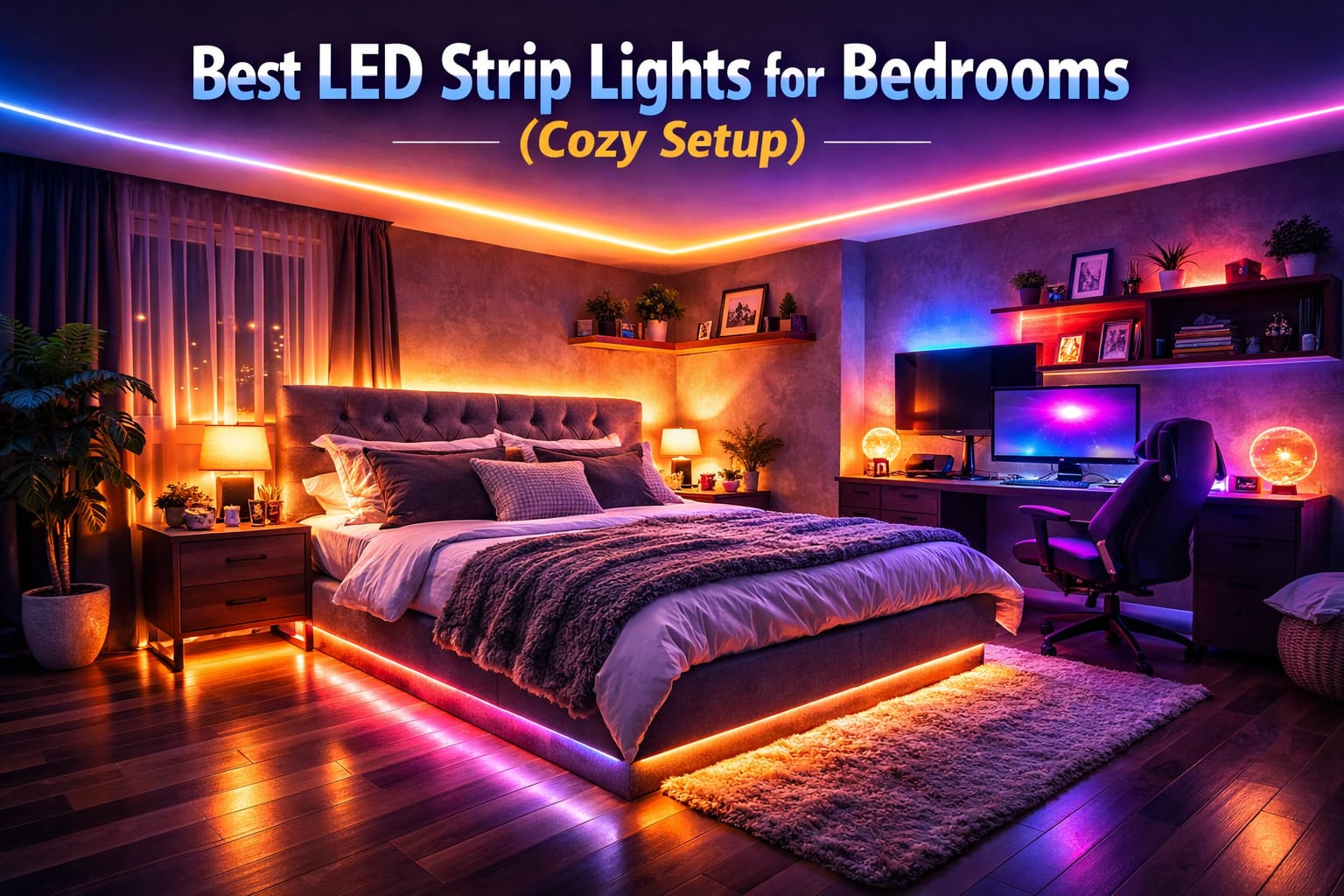
Table of Contents:
- Choosing the Right Vibe for a Cozy Room
- What Makes LED Strip Lights Good for a Bedroom?
- Best Bedroom LED Strip Light Ideas to Consider
- Where to Place LED Strip Lights in a Bedroom
- Warm White vs RGB LED Strip Lights for Bedroom Setups
- Best Brightness and Color Temperature for Bedroom LED Strips
- Smart Controls and Useful Routines
- Bedroom LED Strip Mistakes That Make the Room Look Harsh
- Create a Cozy Layered Look Beyond the Bed
- How to Choose with Confidence
- What Should You Choose?
- Key Takeaways
- Sharing This Guide
Choosing the Right Vibe for a Cozy Room
Harsh overhead lighting can make a bedroom feel clinical at exactly the time you want to unwind. If your room looks cold at night, throws glare onto screens, or makes wall colors feel flat, well-placed LED strips can help by building softer ambient light around the edges instead of blasting light from one central fixture.
Most people get the best results when they treat strip lighting as mood support rather than the room’s only light source. That usually means placing it where the glow bounces off walls, furniture, or the ceiling for better diffusion. If you want a refresher on basics like sizes, power options, and cut points, this starter guide to LED strip lighting is a useful place to begin.
Cozy can mean different things depending on how you use the room. Some people want a soft golden glow for winding down, while others want flexible color scenes for gaming, music, or weekends. That is why dimming range, color quality, and installation finish often matter more than flashy packaging.
What Makes LED Strip Lights Good for a Bedroom?
When comparing the best LED strip lights for bedroom use, start with the details you will notice every night. Smooth dimming, pleasant color, even light output, and reliable controls matter far more than gimmicky effects. A bedroom is less forgiving than a desk or hallway, so weak adhesive, patchy brightness, and a clunky app become obvious very quickly.
You also need to match the strip to the size and mood of the room. Larger bedrooms usually benefit from stronger output and cleaner diffusion so the light does not get lost in the corners. Smaller rooms often feel better with lower brightness and warmer scenes. For buyers sorting through specs, connectors, and cut points, this guide on how to choose the right strip lights helps narrow things down.
What to prioritize first:
- Low, smooth dimming for night use
- Warm white that still looks inviting at low brightness
- Even light with fewer visible LED dots or hotspots
- Reliable controls, scene memory, and high-quality adhesive
The right bedroom strip should make the room feel more intentional, not just more colorful. If the strip disappears into the design and only the glow is visible, even a simple setup can look cleaner, warmer, and more expensive.
Best Bedroom LED Strip Light Ideas to Consider
The best bedroom LED strip light ideas are usually the ones that hide the strip and let the glow bounce softly into the room. Instead of sticking LEDs across a random wall, use the room’s furniture lines, ceiling edges, and natural shadows to make the lighting look built in.
Clean bedroom setup ideas:
- Behind the headboard for a soft backlit wall glow
- Under the bed for a floating effect and subtle nighttime visibility
- Around the ceiling edge for a larger, more ambient room feel
- Behind shelves or mirrors for depth without exposed LED dots
- Near a desk or gaming corner if you want RGB scenes without lighting the whole room
These placements work because they make the light feel indirect. The strip supports the room instead of becoming the main thing you notice when you walk in.
Where to Place LED Strip Lights in a Bedroom
Placement changes everything. The best bedroom strip setups look more expensive when the LED dots are hidden and only the reflected glow is visible. Placing them under a floating bed, behind a headboard, along the back of shelves, or tucked into molding works well because the light spreads softly instead of shining straight into your eyes.
Many LED strip light bedroom ideas either look polished or end up looking temporary. A strip stuck randomly across a wall can look like dorm decor, while one that follows the lines of the furniture looks intentional. Before removing the adhesive backing, use painter’s tape to map out the route and make sure the power lead and controller will still be easy to reach.
Test the strip at night before sticking it down permanently. A placement that looks fine in daylight can create glare once the room is dark.
Warm White vs RGB LED Strip Lights for Bedroom Setups
A cozy bedroom rarely needs nonstop rainbow effects. In most rooms, strips that handle warm white well and offer color when you want to change the mood produce the best results. Soft amber, muted pink, deep blue, and low-saturation purple usually feel calmer than full-strength red or icy cyan.
If you prefer RGB LED strip lights in your bedroom, consider using zones instead of bathing the entire room in one bright color. A warm glow behind the bed and a cooler accent near shelves or a desk often looks much more refined. Good bedroom LED strip lighting makes that layered look easy without making the room feel visually noisy.
For the most relaxing bedroom, warm white should usually be the default scene. RGB is best as an option for weekends, gaming, music, or mood changes, not as the only lighting mode you rely on every night.
Best Brightness and Color Temperature for Bedroom LED Strips
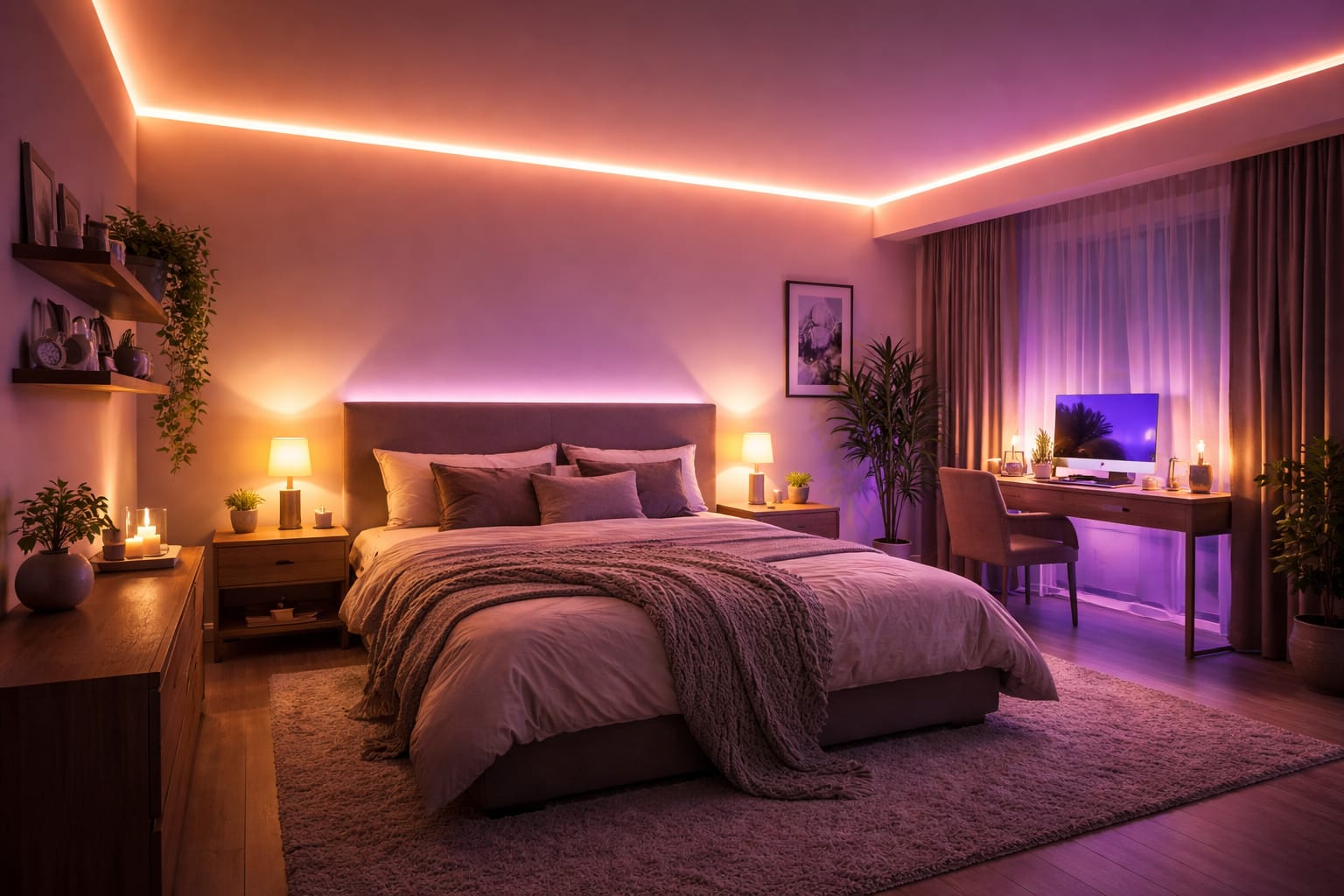
Brightness matters just as much as color. The best LED strip lights for bedroom setups dim low enough to feel restful at night, yet provide enough light to define the room’s edges. Too much brightness can make the space feel restless, while too little makes the strip look merely decorative and does little for the atmosphere.
For most bedrooms, warmer white tones create the most comfortable atmosphere. Tones in the 2700K to 3000K range usually flatter wood, bedding, and neutral paint better than cooler white tones. If you’re interested in a more technical analysis of output, spread, and perceived brightness, check out NeoLEDHub’s LED strip brightness guide, which explains why lumen numbers alone do not tell the whole story.
Reliable dimming is important here, too. Smooth control keeps the room comfortable; harsh jumps between brightness levels can make even a decent product feel cheap. This is one reason why higher-quality strips tend to appear calmer and more usable in real bedroom setups.
Smart Controls and Useful Routines
Reliable controls, scene memory, and strong adhesive matter because bedroom strip lights are usually used every night, not just for decoration. This combination is what transforms a novelty product into a setup that you will still enjoy after the first week.
Useful routines can make the bedroom feel easier to manage. A low warm scene before sleep, a soft wake-up scene in the morning, or a dim movie mode can be more valuable than dozens of dramatic effects you rarely use. The best smart controls should make the lighting feel effortless, not like another device you have to constantly adjust.
Voice control can help when the controller is behind furniture or when you want to change the light without getting out of bed. App control is useful for saving scenes, but simple physical access to power and dimming is still important if Wi-Fi, Bluetooth, or the app becomes unreliable.
Bedroom LED Strip Mistakes That Make the Room Look Harsh
The most common mistake is leaving the strip fully exposed. When individual LEDs face the room directly, the setup can look harsh, temporary, or cheaper than expected. A better approach is to hide the light source behind a headboard, shelf, ceiling edge, trim piece, or diffuser channel.
Avoid running LED strips directly across open walls, around random corners, or where the diodes point toward your eyes. These placements often make the bedroom look unfinished instead of cozy. What looks dramatic during installation can feel distracting once the room is dark.
If visible LED dots bother you, look for COB, diffused, or channel-mounted strip lighting. These options usually create a smoother line of light than basic exposed strips and can make a simple bedroom setup feel more polished.
Learn How to Avoid Visible Hotspots
Hotspots occur when individual diodes reflect directly into the room or bounce off glossy surfaces. The cleanest-looking setups hide the light source behind trim, shelves, headboards, or channels, making the light appear as a glow rather than a row of dots. This small detail can make an average strip look much more polished.
It also helps to avoid pointing the strip toward your pillow, TV, or mirror. Many bedroom ideas with LED strip lights improve immediately when the light is redirected onto walls, fabric, or the ceiling instead of being left fully exposed.
A strip that shines directly into your eyes can make a bedroom feel cheap and unrelaxing, even if the product itself is good. Conceal the light source whenever possible.
Create a Cozy Layered Look Beyond the Bed
A bedroom feels richer when the glow is not limited to one edge. The best LED strip lights for bedrooms can outline the ceiling, illuminate a dresser alcove, or create depth behind a mirror, making the room feel wrapped in light rather than lit by a single line. Layering also provides more options for changing the mood without increasing the brightness too much.
This is where RGB LED strip lights can look tasteful instead of flashy. A low-intensity color in one zone with warm white light elsewhere often looks much more inviting. For more layout ideas, product comparisons, and planning advice, explore the broader LED Knowledge Center for related setups.
Flexible control is key to long-term success. Your ideal setup in the winter may not be the same in the summer. A good strip provides enough range to adapt the room without starting over.
Clean Ceiling Edge Ideas
Running strips around the ceiling can make a bedroom feel larger and give it a relaxing, floating effect. This approach works best when the light shines upward or outward and the LEDs stay concealed. It is especially effective in rooms with neutral paint, textured walls, or simple, modern furniture.
Keep the brightness modest, especially in smaller rooms. The perimeter of the ceiling should feel like a soft halo, not a border of exposed light points. Many people end up using warm scenes most of the time for this reason, even if the strip supports full RGB control.
Headboard and Shelf Accents
Headboards and shelves are some of the easiest places to add depth without changing the whole room. A soft glow behind pillows, books, framed art, or décor can make a bedroom feel more polished, even if the space itself is simple. These placements also naturally hide the strip, which makes the light look smoother.
Some bedrooms still feel visually light in one corner even after the strip is installed. In that case, increasing the brightness of the strip is not always the best solution. A corner ambient floor lamp can work well as a second layer, especially in reading nooks or empty corners where the strip alone does not add enough visual weight.
This pairing often makes color setups feel more complete without becoming overpowering. It is usually a smarter move than asking one strip to do every job in the room.
How to Choose with Confidence
The best LED strip lights for bedroom setups are not necessarily the brightest or most colorful. The better choice is usually the one that fits your room size, dims smoothly, mounts cleanly, and provides tones you will enjoy night after night. A cozy setup depends more on balance than spectacle.
Look for strips that support warm scenes, remember your settings, and fit naturally into your routine. A good setup should feel effortless, not like something you constantly have to manage. To learn more about LED efficiency and long-term value, check out the U.S. Department of Energy’s LED lighting guidance and the ENERGY STAR overview of LED lighting basics.
Once you determine your preferred placement, brightness range, and control style, it becomes much easier to find the right strip. Start with the mood you want, design around how you actually use the room, and let the lighting support the space instead of competing for attention.
What Should You Choose?
For most bedrooms, the best choice is a strip that produces beautiful warm white light, dims smoothly, and disappears once installed. RGB is worth considering if you plan to use scenes and routines, but cozy bedrooms usually benefit more from subtle control than dramatic effects.
- Choose warm white first if relaxation is your main goal.
- Pick RGB or RGBIC if you also want flexible mood scenes.
- Use hidden headboard, ceiling edge, shelf, or under-bed placement for a cleaner look.
- Buy for dimming quality, controls, adhesive, and finish instead of raw brightness.
Key Takeaways
The best LED strip lights for bedroom setups are the ones that create a calm and soft ambiance every night. Smooth dimming, warm tones, even light distribution, and clean placement usually matter more than extra effects or maximum brightness.
To achieve the most convincing cozy result, hide the light source, let the glow bounce off surfaces, and choose controls that fit your routine. A bedroom strip should complement the room, not dominate it.
Once you know the desired mood and where the strip will go, buying becomes much easier. Prioritize comfort, finish, and usability, and the right setup will continue to look good long after installation.
Sharing This Guide
If you found this guide helpful, save it or share it with someone planning a bedroom lighting upgrade.
Interested in learning more? Browse all related articles in our category section.