Best Light Bulbs for Dining Rooms: 2700K, CRI & Dimming
For most dining rooms, the best light bulbs are warm white 2700K to 3000K LED bulbs that are dimmable and ideally 90+ CRI. Choose 2700K for a cozy dinner feel, 3000K for open-plan dining spaces, and frosted bulbs if your chandelier or pendant creates glare.
The goal is not simply maximum brightness. A good dining room bulb should make the table, food, skin tones, wood finishes, and fixture look warm, balanced, and intentional without feeling harsh, flat, or overly yellow.
Quick Answer
For most dining rooms, choose 2700K to 3000K warm white LED bulbs that are dimmable, preferably 90+ CRI, and frosted if the bulb is exposed or creates glare.
- 2700K for cozy dinners, wood tones, and softer evening light
- 3000K for open-plan dining rooms or mixed-use spaces
- 90+ CRI to make food, décor, and finishes look richer
- Frosted bulbs for exposed fixtures, glass shades, and glare control
- Dimmable LEDs for meals, hosting, cleanup, and everyday flexibility
If your dining room feels too harsh at night, start with a warm, dimmable 2700K LED bulb for dining rooms before changing the entire fixture.
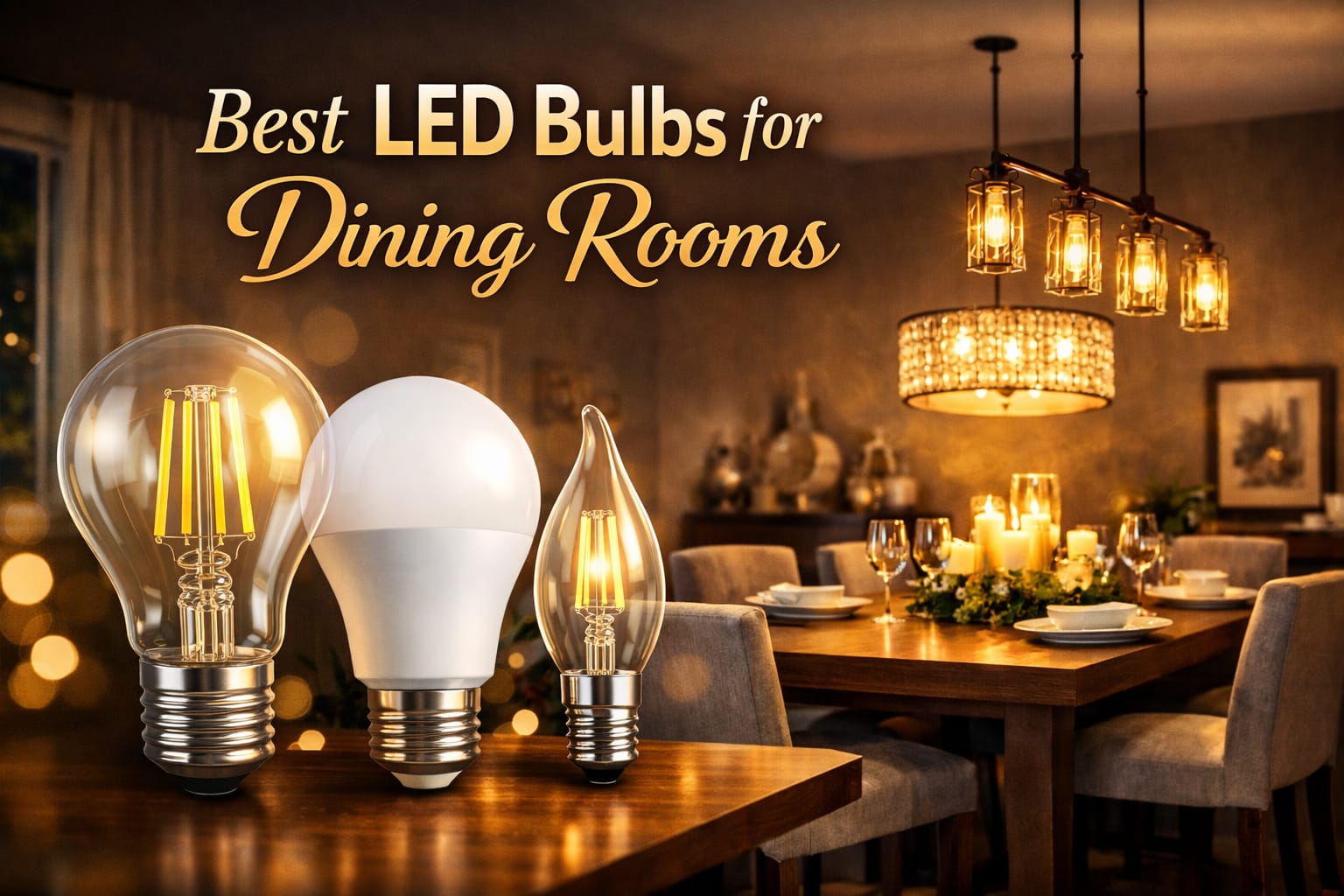
Table of Contents:
- 2700K vs 3000K: Best Color Temperature for Dining Rooms
- How Many Lumens Do Dining Room Bulbs Need?
- Best Bulb Shape, Finish, and Glare Control
- Why 90+ CRI Matters for Food and Décor
- Dimming, Compatibility, and Layered Lighting
- Final Buying Checklist
- What Should You Choose?
- FAQ
- Key Takeaways
- Sharing This Guide
2700K vs 3000K: Best Color Temperature for Dining Rooms
The best dining room lighting color temperature is usually between 2700K and 3000K. This range keeps the room warm enough for meals while still giving the table enough clarity to look clean, comfortable, and inviting.
2700K is the cozier choice. It works especially well in dedicated dining rooms, traditional chandeliers, wood-heavy spaces, and evening dinner settings where you want a softer glow. 3000K still feels warm, but it looks slightly cleaner and often works better when the dining area connects to a kitchen, island, living room, or multipurpose space.
If you are choosing between the two, use this rule: pick 2700K if you want the room to feel relaxed and intimate, and pick 3000K if the dining area needs to feel warm but still bright enough for homework, reading, cleanup, or open-plan living.
If your priority is a softer, more traditional dining glow, this guide to the best soft white LED bulbs can help you compare options that fit the same warm, cozy direction.
If you want more context before choosing, this color temperature guide explains where each Kelvin range works best and why cooler bulbs can sometimes make dining rooms feel too clinical.
How Many Lumens Do Dining Room Bulbs Need?
The best bulbs for dining table lighting depend on the total light output from the fixture, not just the brightness of one bulb. A four-light chandelier with moderate bulbs often looks better than one or two very bright bulbs because the light spreads more evenly across the table.
For a small dining table, lower total lumens can be enough, especially if the pendant or chandelier hangs close to the table. For a longer table, a tall ceiling, a shaded fixture, or an open-plan dining zone, you may need more total output or an extra layer of light around the room.
The safest approach is to avoid buying the brightest bulb available by default. Too much brightness above a dining table can make the room feel more like a task area than a comfortable place to eat. Instead, choose a warm bulb with enough output for the table and use dimming to adjust the mood.
Use matching bulbs throughout the fixture. Even small differences in color temperature, brightness, shape, or finish are quickly noticeable above a dining table.
If you are working with a larger fixture plan, this lighting layout planning guide can help you decide whether the issue is bulb choice, fixture placement, or the amount of light in the room.
Best Bulb Shape, Finish, and Glare Control
Dining room light bulbs are part of the décor when they sit inside chandeliers, pendants, glass shades, or exposed-bulb fixtures. That means the best choice is not only about watts, lumens, or color temperature. The bulb also has to look right when the fixture is on and off.
Candle bulbs usually suit traditional chandeliers and classic multi-arm fixtures. Globe bulbs often look cleaner in modern pendants or statement fixtures. Standard A19 bulbs work best when they are partly hidden by a shade or diffuser. If the bulb is visible, its shape becomes part of the dining room design, not just the light source.
If you are comparing bulb labels, bases, watt-equivalent claims, beam spread, or driver quality, it helps to understand what LED bulbs are before deciding which shape or finish fits your dining room fixture best.
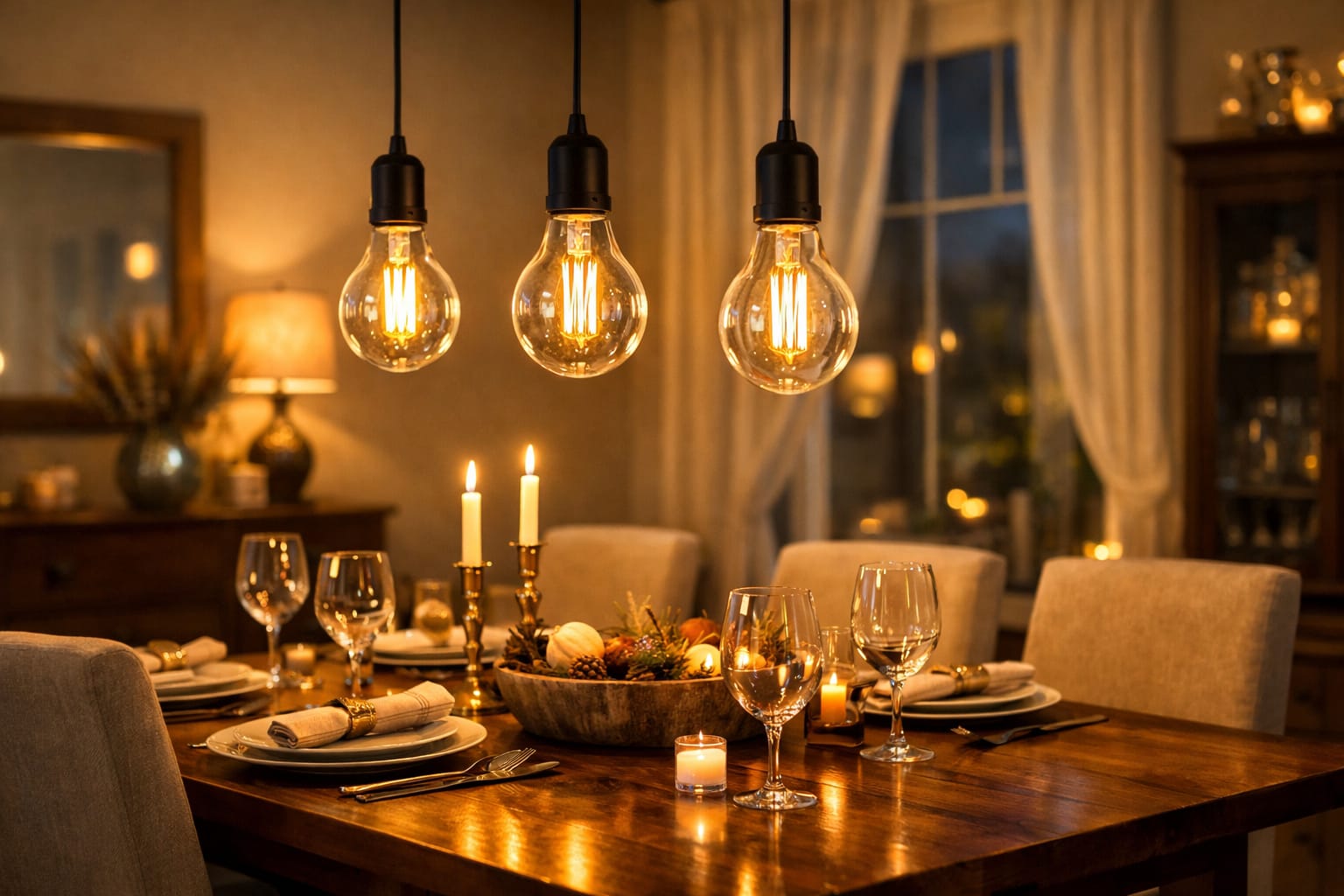
Finish matters just as much. Frosted bulbs create a softer visible glow and are usually better when the bulb sits near eye level. Clear bulbs can look decorative, especially in open fixtures, but they can also make diode patterns, brightness, and glare more noticeable.
Low-hanging clear bulbs can create harsh glare, especially in open chandeliers, glass pendants, and fixtures where people can see the bulb directly from the table.
If the room feels uncomfortable because the bulb is visible while seated at the table, this glare reduction guide explains how fixture height, diffusion, bulb finish, and light direction affect eye-level comfort.
If glare is the main problem, a frosted dimmable LED bulb for exposed dining fixtures is often a better fix than simply lowering brightness. It softens the visible light source while still giving you control over the mood.
When comparing bulb styles, pay attention to watt-equivalent claims, beam spread, shape, and driver quality, because those details can change how the same fixture feels once the bulbs are installed.
Why 90+ CRI Matters for Food and Décor
CRI is one of the most important specifications for dining room light bulbs because it affects how food, wood finishes, fabrics, wall colors, table settings, and skin tones look under artificial light. A bulb can be warm and bright but still make the table look dull if color rendering is poor.
As a rule, aim for 90+ CRI when possible. This helps the room feel more natural and flattering, especially during meals or when guests are seated around the table. Lower-CRI bulbs are not always unusable, but in dining spaces they are more likely to make food look washed out and décor look less rich.
If your dining room already has the right warmth and brightness but still looks lifeless, upgrading to a 90+ CRI LED bulb for better-looking food and décor is one of the most targeted improvements you can make.
You will notice the difference most when the table is set, wood finishes are visible, and the room is being used in the evening rather than judged by the bulb packaging alone.
Dimming, Compatibility, and Layered Lighting
A dining room rarely needs the same brightness all day. Morning use, homework, cleanup, casual meals, and evening hosting all call for slightly different light levels. That is why dimming is one of the most useful features to look for when choosing dining room light bulbs.
Choose bulbs that are clearly labeled as dimmable, then make sure the wall dimmer is compatible with LED loads. Good dimming should feel smooth and natural, not jumpy, buzzy, uneven, or flickery. If the bulb dims poorly, the dining room can still feel uncomfortable even if the color temperature is right.
Layered lighting also helps. A dining chandelier does not have to do everything alone. A sideboard lamp, buffet lamp, wall sconce, or subtle accent light can soften the edges of the room and make the table light feel more intentional.
For broader guidance on LED quality, efficiency, and compatibility, the U.S. Department of Energy’s LED lighting guidance and the ENERGY STAR guide to LED basics are useful references.
Final Buying Checklist
Before buying dining room light bulbs, check the base type, bulb shape, finish, total lumens, color temperature, CRI, and dimming compatibility. Then look at the fixture itself: is the bulb hidden, partly visible, fully exposed, low over the table, or inside a shade?
In most homes, the best combination is a warm white LED bulb in the 2700K to 3000K range, with 90+ CRI, smooth dimming, and a finish that suits the fixture. If people can see the bulb directly while seated, a frosted finish is usually safer than a clear one.
If you are thinking about the fixture itself beyond bulbs, the guide to the best LED lights for dining rooms is the next best read. For broader comparisons and room-by-room help, browse the LED Knowledge Center.
What Should You Choose?
Choose the bulb based on the problem you are trying to solve, not only the label on the box.
- Dedicated dining room: choose 2700K warm white dimmable bulbs.
- Open-plan dining area: choose 3000K bulbs so the dining zone blends better with nearby kitchen or living room lighting.
- Food and décor look dull: prioritize 90+ CRI before increasing brightness.
- Exposed chandelier or glass pendant: choose frosted bulbs to reduce glare.
- Room feels too bright at dinner: use dimmable bulbs with an LED-compatible dimmer.
- Fixture looks uneven: replace mixed bulbs with matching bulbs from the same model and color temperature.
FAQ
What Color Light Is Best for a Dining Room?
Warm white light is usually best for a dining room. Choose 2700K for a cozy, evening-focused space or 3000K if the dining area connects to a kitchen, living room, or multipurpose area.
Is 2700K or 3000K Better for Dining Rooms?
2700K is better for a softer and more intimate dining room. 3000K is better if you want the room to feel warm but slightly cleaner, especially in open-plan homes or spaces used for more than eating.
Should Dining Room Bulbs Be Clear or Frosted?
Frosted bulbs are usually better when the bulb is exposed or close to eye level because they reduce glare. Clear bulbs can look decorative, but they work best when the fixture design keeps the brightness comfortable.
Are LED Bulbs Good for Dining Rooms?
Yes. LED bulbs are a good choice for dining rooms when you choose the right warmth, CRI, brightness, dimming compatibility, and bulb shape. The wrong LED can feel harsh, but the right one can make the room warmer, more flexible, and easier to use every day.
Key Takeaways
The best light bulbs for dining room fixtures are usually warm white, dimmable, high-CRI LED bulbs in the 2700K to 3000K range.
Choose 2700K for cozy dinners, 3000K for open-plan spaces, 90+ CRI for better-looking food and finishes, and frosted bulbs if glare is a problem.
Once the bulb’s warmth, brightness, CRI, dimming, shape, and finish match the fixture, the dining room will feel more polished, comfortable, and easier to adjust for everyday meals or guests.
Sharing This Guide
Share this guide if you found it helpful. Save it or share it with someone trying to choose warmer, more comfortable dining room light bulbs.
Interested in learning more? Browse all related articles in our category section.