Energy Saving Tips for Bedrooms: Essential Guide

Implementing effective energy saving tips for bedrooms reduces electricity consumption while maintaining comfort throughout spaces where people spend one-third of their lives. This comprehensive guide examines lighting optimization, temperature control, phantom load elimination, window treatments, and behavioral adjustments creating measurable utility bill reductions without sacrificing sleep quality or convenience throughout residential spaces requiring careful energy management supporting both financial savings and environmental responsibility goals.

Energy-saving tips for bedrooms with LED lighting, eco thermostat, and smart power strip for lower electricity use
Strategic equipment selection and placement enables substantial consumption reduction throughout private rest areas

LED Lighting

Converting to LED bulbs represents the most impactful energy saving tips for bedrooms addressing lighting consumption. LEDs consume 75-85% less electricity than incandescent bulbs while lasting 25 times longer. A typical bedroom with three lamps using 60-watt incandescent bulbs operating 3 hours daily consumes 197 kWh annually costing $29.55 at $0.15/kWh. LED equivalents consuming 8 watts reduce annual consumption to 26 kWh costing $3.94, saving $25.61 annually supporting bedroom electricity reduction throughout lighting applications.

Bedside reading lamps particularly benefit from LED conversion combining efficiency with instant brightness without warm-up periods. Dimmable LEDs enable brightness adjustment matching activities from bright reading to subdued ambient lighting before sleep. This flexibility supports circadian rhythms through appropriate evening light levels promoting natural sleep onset throughout energy saving tips for bedrooms implementations requiring both efficiency and functional performance.

Warm white 2700-3000K LEDs create comfortable bedroom atmospheres matching traditional incandescent color temperatures. Cool white LEDs prove inappropriate for bedrooms potentially disrupting sleep through blue wavelength exposure. Selecting appropriate color temperature ensures satisfaction with LED conversion supporting consistent usage throughout sleep space efficiency implementations requiring both energy reduction and comfort maintenance. Understanding technical specifications explored in efficiency guides informs optimal selection.

Motion Sensors

Closet lighting benefits from motion sensors implementing energy saving tips for bedrooms through automatic control. Sensors activate lights upon door opening then deactivate after preset timeouts eliminating forgotten closet lights. These automated bedroom electricity reduction strategies prevent waste from lights operating unnecessarily throughout spaces receiving brief intermittent access requiring no sustained illumination supporting efficiency without inconvenience throughout accessory spaces.

If you want a dependable option, a solid example is Smart Plug with Energy Monitoring, which is widely trusted for indoor setups.

Smart Power Strips

Smart power strips eliminate phantom loads representing crucial energy saving tips for bedrooms addressing standby power consumption. TVs, game consoles, cable boxes, and chargers draw power continuously even when turned off. A typical bedroom with TV (5W standby), cable box (15W), game console (10W), and miscellaneous chargers (10W) wastes 40W continuously consuming 350 kWh annually costing $52.50. Smart power strips completely cut power during non-use periods throughout bedroom electricity reduction implementations.

Master-controlled power strips automatically disconnect peripheral devices when master devices shut off. Switching off TVs automatically disconnects cable boxes, streaming devices, and sound systems. This coordinated control ensures complete power elimination without managing multiple devices individually throughout energy saving tips for bedrooms requiring convenient automation supporting consistent usage patterns preventing standby waste throughout nightly sleep space efficiency routines.

Timer-enabled power strips schedule device availability matching usage patterns. Bedroom entertainment systems operating only evenings benefit from automatic evening activation and late-night deactivation preventing continuous operation during absences. These scheduled controls optimize bedroom electricity reduction through automated management requiring no behavioral changes supporting sustained savings throughout thermostat adjustment strategies coordinating multiple efficiency interventions. According to U.S. Department of Energy LED lighting efficiency guidance, reducing standby consumption significantly impacts overall usage.

Energy Monitoring

Energy monitoring power strips track consumption revealing which devices waste most electricity informing targeted energy saving tips for bedrooms interventions. Identifying high-consumption devices enables prioritized replacement or usage reduction maximizing sleep space efficiency improvements. Historical tracking validates savings demonstrating tangible results from implemented bedroom electricity reduction strategies supporting continued conservation efforts throughout ongoing optimization processes.

Real-time monitoring enables behavioral adjustments through consumption awareness. Observing immediate power draw changes when activating devices educates occupants about relative device consumption supporting informed usage decisions. This transparency promotes conscious energy management throughout daily routines requiring no technical expertise supporting accessible thermostat adjustment strategies coordinated with broader efficiency efforts.

Temperature Control

Thermostat adjustment strategies represent high-impact energy saving tips for bedrooms affecting heating and cooling consumption. Setting temperatures 7-10°F lower during eight-hour winter sleep periods saves approximately 10% on heating costs. Cooler 60-67°F bedroom temperatures promote better sleep quality while reducing energy consumption creating dual benefits supporting both health and bedroom electricity reduction throughout sleep space efficiency implementations requiring strategic temperature management.

Programmable thermostats automate temperature setbacks eliminating reliance on manual adjustment. Evening temperature reduction before bedtime and morning restoration before waking creates comfortable transitions while maximizing savings during extended sleep periods. These automated thermostat adjustment strategies ensure consistent implementation supporting reliable energy saving tips for bedrooms applications throughout seasons requiring varied temperature control throughout annual cycles.

Zoned heating and cooling systems enable bedroom-specific temperature control independent of common areas. Lowering bedroom temperatures while maintaining comfort elsewhere concentrates savings in spaces with extended low-occupancy periods. These targeted thermostat adjustment strategies optimize whole-home efficiency through strategic room-level control supporting maximum bedroom electricity reduction without compromising comfort in actively-used spaces throughout typical residential usage patterns. Coordination with other room strategies creates comprehensive approaches.

Smart Thermostats

Smart thermostats enhance energy saving tips for bedrooms through learning algorithms adapting to occupancy patterns automatically optimizing temperature schedules. Geofencing detects when occupants leave or approach homes adjusting temperatures proactively. This intelligent automation maximizes sleep space efficiency while maintaining comfort supporting optimal bedroom electricity reduction without manual intervention throughout evolving usage patterns requiring adaptive control systems.

Remote control capabilities enable temperature adjustment from smartphones preventing unnecessary heating or cooling during unexpected absences. Energy reporting features demonstrate consumption patterns and savings validating thermostat adjustment strategies effectiveness. These data-driven insights support continuous improvement throughout energy management requiring measurable feedback confirming conservation efforts deliver projected results throughout ongoing implementations.

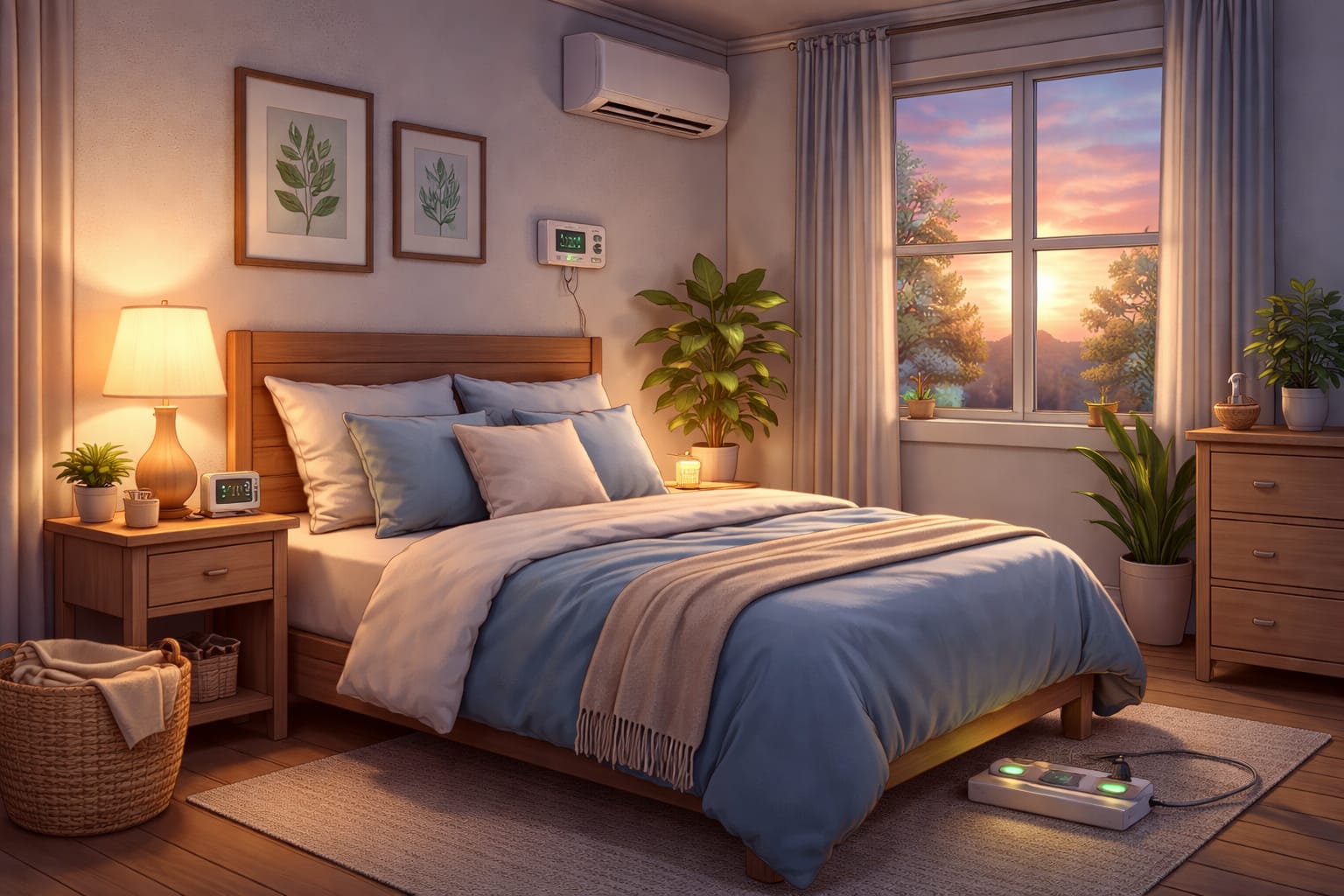
Energy-efficient bedroom lighting setup with LED lamp, smart thermostat, and cozy modern interior designed for reduced electricity consumption
Integrated systems coordinate multiple efficiency measures creating cumulative benefits exceeding individual interventions

Window Treatments

Insulating window treatments constitute important energy saving tips for bedrooms reducing heat loss during winter and heat gain during summer. Cellular shades with honeycomb structures trap air creating insulation barriers. Thermal curtains with insulated linings block heat transfer through windows. These treatments reduce window heat loss by 25-50% decreasing heating and cooling loads throughout bedroom electricity reduction strategies addressing thermal envelope weaknesses throughout sleep space efficiency implementations.

Closing window treatments during extreme temperatures maximizes insulation value. Winter evening closure retains indoor heat overnight. Summer daytime closure blocks solar heat gain keeping bedrooms cooler reducing air conditioning requirements. These simple behavioral thermostat adjustment strategies complement passive insulation benefits creating compound savings throughout energy saving tips for bedrooms requiring coordinated approaches addressing multiple heat transfer pathways throughout thermal management.

Window film applications provide permanent insulation improvements reflecting infrared radiation while admitting visible light. Low-E films reduce heat transfer year-round supporting both heating and cooling efficiency. These passive solutions require no behavioral changes maintaining continuous bedroom electricity reduction benefits throughout seasons. Professional installation ensures optimal performance though DIY applications prove feasible for budget-conscious sleep space efficiency implementations requiring cost-effective interventions. Reference ENERGY STAR guide to LED lighting basics for comprehensive efficiency information.

Draft Prevention

Weatherstripping around windows and doors prevents drafts implementing energy saving tips for bedrooms addressing air infiltration. Draft snakes blocking door gaps reduce cold air intrusion during winter. These inexpensive interventions provide immediate bedroom electricity reduction benefits through reduced heating requirements maintaining comfortable temperatures. Simple inspection identifying air leaks enables targeted weatherstripping supporting cost-effective thermostat adjustment strategies minimizing thermal losses throughout residential structures.

Caulking gaps around window frames and electrical outlets prevents air infiltration through building envelope penetrations. These permanent improvements maintain effectiveness indefinitely requiring no ongoing maintenance. Professional energy audits identify specific leak locations though careful observation reveals obvious gaps requiring attention throughout sleep space efficiency implementations prioritizing high-impact interventions delivering maximum returns.

Ceiling Fans

Ceiling fans enable thermostat adjustment strategies representing effective energy saving tips for bedrooms through air circulation reducing perceived temperature. Summer operation creates cooling breezes allowing thermostat increases of 4-6°F while maintaining comfort. A ceiling fan consuming 30-50 watts costs far less than equivalent air conditioning supporting substantial bedroom electricity reduction through mechanical cooling supplementation throughout warm seasons requiring temperature control throughout sleep space efficiency management.

Winter operation in reverse mode circulates warm air trapped near ceilings distributing heat throughout rooms. This destratification improves heating efficiency allowing thermostat reductions while maintaining comfort. Understanding proper seasonal fan direction optimizes energy saving tips for bedrooms ensuring beneficial operation throughout annual cycles. Summer counterclockwise rotation creates downward airflow while winter clockwise rotation pushes warm air down from ceilings throughout appropriate thermostat adjustment strategies.

Energy-efficient DC motor fans consume 70% less electricity than conventional AC motor units. ENERGY STAR certified fans meet strict efficiency standards ensuring maximum bedroom electricity reduction benefits. While costing more initially, efficient fans recover premiums through operational savings over decades-long lifespans. These long-term investments support sustained sleep space efficiency throughout extended operational periods requiring durable reliable equipment supporting consistent performance. Professional installations explored in workspace guides ensure proper operation.

Smart Controls

Smart ceiling fan controls enable scheduled operation implementing energy saving tips for bedrooms through automated management. Evening activation provides comfort during sleep while morning deactivation prevents unnecessary operation during absences. Remote control via smartphones enables convenient adjustment without wall switches. These convenience features promote consistent usage supporting reliable thermostat adjustment strategies throughout bedroom electricity reduction requiring minimal manual intervention throughout automated sleep space efficiency implementations.

Occupancy sensor integration automatically activates fans upon bedroom entry deactivating after departure. This intelligent control ensures operation only during occupancy preventing waste from forgotten fans operating continuously. Temperature-triggered activation based on room temperature readings provides dynamic response to thermal conditions optimizing energy saving tips for bedrooms through adaptive control responding to actual needs throughout varied conditions requiring responsive management.

Electronics Management

Minimizing bedroom electronics supports energy saving tips for bedrooms while promoting better sleep quality. TVs, computers, and gaming devices consume substantial electricity during operation and standby. Relocating entertainment electronics to common areas concentrates usage in shared spaces reducing bedroom electricity reduction requirements. This behavioral thermostat adjustment strategies simplifies bedroom energy management while supporting healthier sleep environments free from electronic distractions throughout rest periods.

Essential bedroom electronics benefit from energy-efficient model selection. ENERGY STAR certified TVs consume 25% less than conventional models. Laptops consume far less than desktop computers providing energy-conscious alternatives for bedroom computing needs. Understanding relative device consumption informs purchasing decisions supporting sleep space efficiency objectives throughout equipment selection requiring efficiency considerations alongside functional requirements throughout technology investments.

Completely powering down devices rather than using sleep modes maximizes energy saving tips for bedrooms eliminating standby consumption. Sleep modes maintain partial power draw supporting quick restart at convenience cost. Dedicated power buttons or smart plugs enable complete shutdowns balancing convenience with bedroom electricity reduction throughout usage requiring conscious trade-offs between immediate convenience and sustained efficiency supporting long-term conservation throughout daily routines.

Alarm Clocks

Traditional plug-in alarm clocks consume 2-3 watts continuously representing modest but continuous bedroom electricity reduction opportunities. Battery-powered or smartphone alarms eliminate this constant draw supporting energy saving tips for bedrooms through complete power elimination. These minor savings compound across multiple bedrooms and years demonstrating how small changes aggregate into meaningful thermostat adjustment strategies throughout comprehensive sleep space efficiency requiring attention to all consumption sources.

LED display brightness affects consumption with dimmer settings reducing power draw. Disabling unnecessary features like radio or USB ports when unused minimizes baseline consumption. These optimization strategies extract maximum efficiency from necessary bedroom electronics supporting comprehensive energy saving tips for bedrooms addressing all consumption sources throughout complete efficiency implementations requiring thorough attention to detail.

Charging Habits

Smartphone and device charging represents common energy saving tips for bedrooms addressing vampire loads from idle chargers. Chargers left plugged in without devices consume 0.25-0.5 watts continuously wasting 2-4 kWh annually per charger costing $0.30-0.60. Multiple bedroom chargers compound this waste. Unplugging chargers when not actively charging devices eliminates this phantom load supporting bedroom electricity reduction through simple behavioral thermostat adjustment strategies requiring minimal effort throughout daily routines.

USB power strips with switches enable convenient simultaneous disconnection of multiple chargers. Switching off power strips before sleep deactivates all charging ports eliminating standby consumption. This centralized control simplifies energy saving tips for bedrooms through convenient management reducing reliance on consistent unplugging discipline throughout sleep space efficiency implementations requiring practical solutions supporting sustained compliance throughout ongoing usage.

Smart chargers automatically stop power delivery when devices reach full charge eliminating trickle charging waste. These intelligent devices optimize charging efficiency while preventing overcharging protecting battery health. Dual benefits of energy conservation and device protection justify premium smart charger investments throughout bedroom electricity reduction strategies prioritizing both efficiency and equipment longevity throughout thermostat adjustment strategies coordinating multiple conservation interventions. Additional resources available at comprehensive knowledge centers provide detailed guidance.

Charging Locations

Consolidating device charging in common areas rather than individual bedrooms simplifies energy saving tips for bedrooms through centralized management. Kitchen or hallway charging stations concentrate consumption in monitored locations reducing bedroom electricity reduction requirements. This spatial organization supports better sleep hygiene removing electronic distractions from sleep environments while simplifying sleep space efficiency through reduced bedroom electrical loads requiring management.

Dedicated charging times rather than overnight charging reduces total energy consumption. Charging devices for 2-3 hours suffices for most smartphones versus leaving chargers active 8+ hours overnight. This time-limited approach represents practical thermostat adjustment strategies minimizing unnecessary consumption through conscious scheduling supporting energy saving tips for bedrooms requiring behavioral modifications throughout charging routines.

Natural Ventilation

Opening windows during mild weather implements energy saving tips for bedrooms eliminating air conditioning through natural ventilation. Evening and morning hours provide cool outdoor air during summer reducing mechanical cooling requirements. Cross-ventilation through strategically opened windows creates airflow removing indoor heat. These passive cooling strategies enable substantial bedroom electricity reduction during shoulder seasons when outdoor temperatures permit natural temperature control throughout sleep space efficiency requiring no mechanical intervention.

Window screens enable secure nighttime ventilation maintaining safety while admitting fresh air. Adjustable openings control airflow intensity matching comfort preferences. Understanding local climate patterns identifies optimal natural ventilation opportunities throughout annual cycles. These thermostat adjustment strategies extend comfortable periods without mechanical cooling supporting maximum energy saving tips for bedrooms through passive environmental control throughout favorable weather conditions.

Security concerns may limit ground-floor window opening during sleep hours. Upper-floor bedrooms or windows with security bars enable safer nighttime ventilation. Balancing security and ventilation requires situation-specific assessment. Alternative cooling strategies like ceiling fans provide backup approaches when window opening proves impractical throughout bedroom electricity reduction requiring adaptable solutions matching specific residential circumstances throughout varied security contexts.

Whole House Fans

Whole-house attic fans enable aggressive natural ventilation implementing energy saving tips for bedrooms through forced air exchange. Evening operation exhausts hot indoor air through attics while drawing cool outdoor air through open windows. These powerful systems exchange complete house air volumes within minutes dramatically reducing indoor temperatures. Operating costs of $10-20 monthly prove far less than equivalent air conditioning supporting substantial sleep space efficiency throughout suitable climates requiring effective ventilation.

Installation costs of $1,000-3,000 recover through cooling savings within 2-5 years depending on climate and usage patterns. Dry climates with significant day-night temperature swings benefit most from whole-house fans. These permanent improvements provide decades of bedroom electricity reduction benefits supporting long-term thermostat adjustment strategies through infrastructure investments requiring upfront capital supporting sustained operational savings throughout extended periods.

Insulation Improvements

Adequate insulation represents fundamental energy saving tips for bedrooms reducing heating and cooling requirements through enhanced thermal envelope performance. Attic insulation proves particularly impactful with upgrading to R-38 or R-49 reducing heat loss 25-40%. Wall insulation improvements through injection foam or blown-in cellulose enhance thermal resistance. These permanent upgrades deliver continuous bedroom electricity reduction benefits throughout all seasons requiring no behavioral changes supporting passive thermostat adjustment strategies throughout building envelopes.

Exterior wall insulation improvements prove more expensive though deliver substantial energy saving tips for bedrooms benefits in poorly-insulated older homes. Professional energy audits identify specific deficiencies guiding targeted improvements. Thermal imaging cameras reveal heat loss patterns enabling data-driven insulation investments. These diagnostic tools ensure improvements address actual weaknesses supporting cost-effective sleep space efficiency enhancements throughout strategic bedroom electricity reduction implementations.

Insulation payback periods vary by climate, current insulation levels, and energy costs. Cold climates with expensive heating fuel achieve faster payback than mild climates with moderate energy costs. Utility rebates and tax credits reduce effective costs accelerating returns. Understanding local incentive programs maximizes financial benefits from energy saving tips for bedrooms requiring capital investments throughout thermostat adjustment strategies addressing fundamental thermal performance throughout residential structures.

Air Sealing

Air sealing complements insulation implementing energy saving tips for bedrooms through infiltration reduction. Sealing attic penetrations around plumbing, electrical, and HVAC prevents conditioned air loss. Basement rim joists represent significant leak sources requiring targeted sealing. These hidden air pathways waste substantial energy despite adequate insulation. Comprehensive air sealing ensures insulation performs optimally supporting maximum bedroom electricity reduction throughout complete thermal envelope addressing all heat loss mechanisms throughout sleep space efficiency implementations.

Blower door tests quantify air leakage identifying specific problem areas. Professional air sealing addresses systemic issues beyond obvious gaps achieving substantial thermostat adjustment strategies benefits through comprehensive infiltration control. DIY efforts targeting visible gaps provide partial benefits though professional services deliver complete solutions supporting maximum energy saving tips for bedrooms through thorough systematic approaches throughout challenging residential sealing projects.

Behavioral Changes

Consistent behavioral practices maximize energy saving tips for bedrooms through sustained conscious actions. Turning off lights when leaving rooms prevents waste from lights operating in unoccupied spaces. Closing doors isolates bedrooms from conditioned common areas reducing thermal loads during unoccupied periods. These simple habits compound into meaningful bedroom electricity reduction through consistent discipline throughout daily routines requiring conscious attention supporting sleep space efficiency throughout ongoing usage.

Using appropriate bedding adjusts comfort without mechanical temperature control. Heavier blankets during winter enable lower thermostat settings while maintaining warmth. Light breathable bedding during summer reduces cooling requirements. These passive comfort strategies support aggressive thermostat adjustment strategies through personal adaptation minimizing reliance on energy-intensive mechanical systems throughout seasons requiring temperature management throughout sleep periods.

Regular equipment maintenance ensures optimal efficiency supporting energy saving tips for bedrooms through proper operation. Cleaning HVAC filters monthly maintains airflow efficiency. Vacuuming refrigerator coils in bedroom mini-fridges improves heat exchange. These routine maintenance tasks preserve equipment efficiency preventing degradation undermining bedroom electricity reduction efforts throughout aging equipment requiring ongoing attention supporting sustained sleep space efficiency throughout operational lifespans.

Family Coordination

Household-wide commitment to energy saving tips for bedrooms ensures consistent implementation across all occupants. Educating children about conservation rationale motivates participation. Establishing household energy policies creates shared expectations. These collaborative approaches prevent individual carelessness undermining collective thermostat adjustment strategies supporting comprehensive bedroom electricity reduction requiring coordinated efforts throughout multi-occupant households needing unified approaches.

Friendly competition tracking bedroom consumption encourages conservation through gamification. Comparing monthly electricity usage between family members creates accountability. Rewards for conservation achievements reinforce positive behaviors. These motivational approaches sustain engagement with sleep space efficiency supporting long-term habit formation throughout energy saving tips for bedrooms requiring sustained behavioral modifications throughout ongoing residential operations.

Seasonal Strategies

Seasonal energy saving tips for bedrooms adapt strategies to changing weather conditions optimizing year-round efficiency. Winter focuses on heat retention through insulation, weatherstripping, and strategic window treatment use. Summer emphasizes passive cooling through ventilation, shading, and ceiling fan operation. These seasonal thermostat adjustment strategies recognize varying thermal management requirements throughout annual cycles requiring adaptable approaches throughout bedroom electricity reduction supporting optimal sleep space efficiency throughout changing conditions.

Shoulder seasons provide opportunities for complete HVAC shutdown relying exclusively on natural ventilation and passive temperature control. Spring and fall mild weather enables maximum energy saving tips for bedrooms through mechanical system elimination. Opening windows during these periods provides comfortable temperatures without energy consumption. Understanding local climate patterns identifies optimal zero-energy periods throughout annual cycles supporting maximum bedroom electricity reduction throughout favorable weather windows.

Holiday periods with overnight guests require temporary thermostat adjustment strategies modifications accommodating additional occupants. Balancing hospitality and efficiency requires communication about household conservation practices. Explaining energy saving tips for bedrooms rationale helps guests participate appropriately. These social dimensions affect actual savings demonstrating how conservation success depends on coordinated household behaviors throughout residential energy management requiring comprehensive approaches throughout sleep space efficiency implementations.

Preparation Routines

Seasonal preparation routines optimize energy saving tips for bedrooms through timely equipment adjustments. Fall weatherstripping inspections ensure winter readiness. Spring HVAC maintenance prepares cooling systems for summer demands. These proactive maintenance cycles prevent inefficiency from neglected equipment supporting consistent bedroom electricity reduction throughout seasons requiring proper preparation ensuring optimal thermostat adjustment strategies performance throughout annual operational cycles requiring systematic attention.

Rotating seasonal bedding and window treatments matches thermal requirements to current conditions. Heavy winter curtains replaced by light summer sheers adapt insulation to seasonal needs. These routine adjustments optimize sleep space efficiency through appropriate thermal control matching environmental conditions. Systematic seasonal transitions ensure energy saving tips for bedrooms remain effective throughout changing weather requiring conscious adaptation throughout annual cycles.

Sharing this guide

If you found this guide helpful, you can save it for later or share it with a friend. It’s especially useful for beginners, homeowners, and DIY users.

Share using the links below

Interested in learning more? Browse all related articles in our category section.

1 thought on “Energy Saving Tips for Bedrooms: Essential Guide”

  1. Pingback: LED Strip Lights Energy Consumption: Real Facts - NeoLEDHub

Leave a Comment

Your email address will not be published. Required fields are marked *

Scroll to Top