LED Lights for Cars: Pros, Cons, and What to Expect
LED lights have become a popular upgrade for drivers seeking better nighttime visibility, lower power usage, and a modern appearance. In the right vehicle, they can be a smart, long-term improvement rather than just a cosmetic change.
This guide breaks down the pros and cons of LED lights, including brightness, lifespan, installation, legal concerns, and cost. Read on to decide if an LED upgrade makes sense for your car and driving habits.
Quick Answer
LED lights can be worth it if you want stronger visibility, longer-lasting bulbs, and a cleaner, more modern look. The main downsides are the higher upfront cost, occasional compatibility issues, and the need to verify legality and beam quality before installation.
- LED lights usually produce brighter, whiter light than halogen bulbs.
- They draw less power and often last much longer.
- However, not every vehicle housing works well with every LED bulb.
- Cheap kits can cause glare, poor beam focus, or electronic issues.
- It’s important to check fitment, cooling, and local rules before buying.
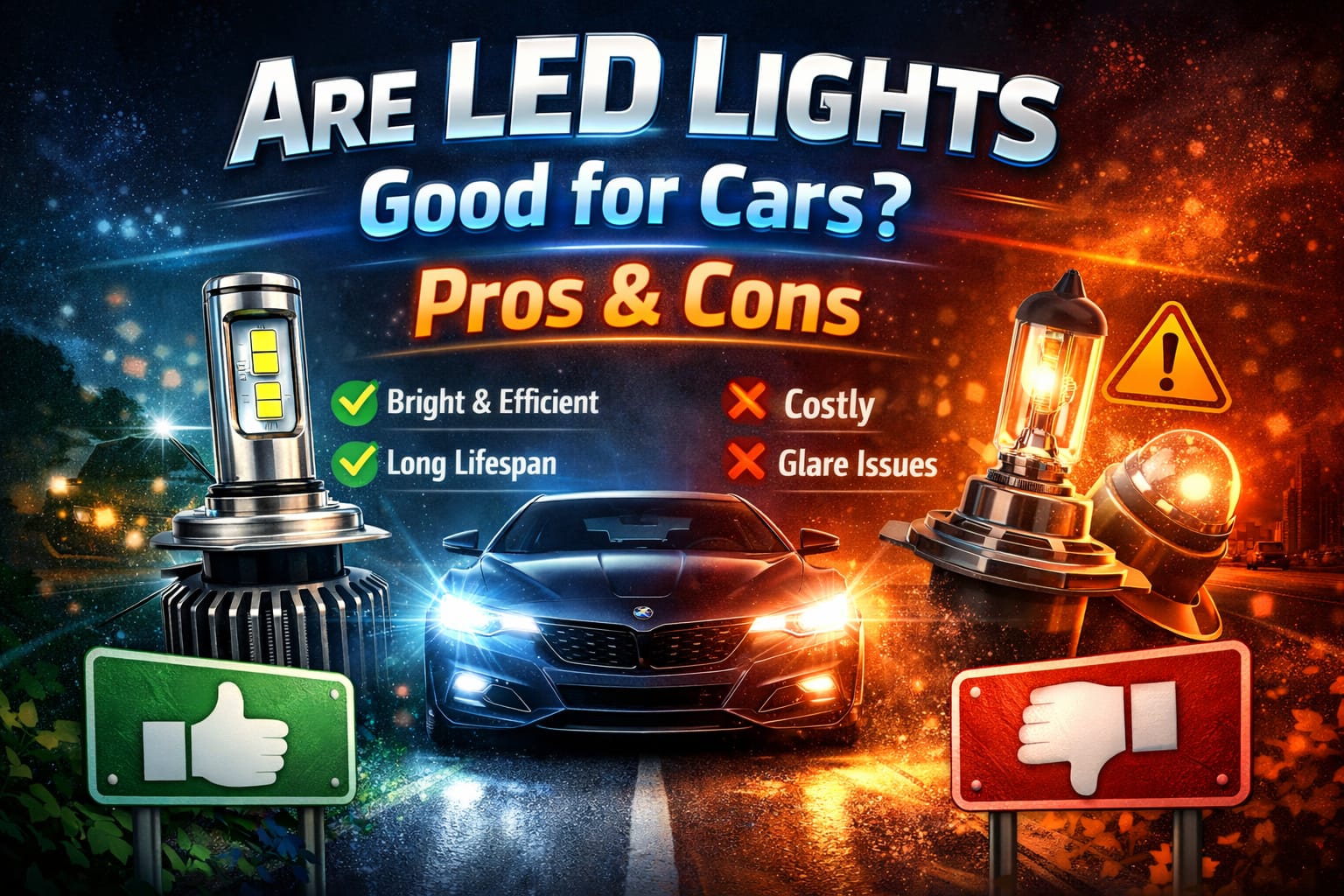
Table of Contents:
- Quick Answer
- Understanding the technology
- Better nighttime visibility
- Lower power consumption
- Longer bulb life
- Cost considerations
- Setup requirements and complexity
- Regulatory and safety standards
- Heat management and cooling
- Visual styling impact
- Challenges and limitations
- What Should You Choose?
- Key Takeaways
- Sharing this guide
Understanding the Technology
LED lights for cars work very differently from older incandescent or halogen bulbs. Rather than heating a filament until it glows, LEDs create light through electroluminescence. In this process, electrons moving through semiconductor materials release photons. If you want a simpler breakdown of the older technology that many drivers are replacing, our “LED vs. Incandescent” guide explains the basics in plain language.
This solid-state design eliminates one of the weakest parts of traditional bulbs—the fragile filament. Without this delicate internal component, LED systems are generally much more resistant to vibration, shock, and rough road conditions, which often shorten the lifespan of conventional bulbs.
Modern automotive LEDs rely on driver circuits that regulate current and manage heat. These components control your vehicle’s electrical supply, allowing the LEDs to operate properly. Better products stand out in this regard because they are built to handle voltage fluctuations, heat, and long-term daily use more reliably.
Better nighttime visibility
One of the main reasons drivers switch to LED car lights is for better nighttime visibility. Many LED bulbs deliver far more usable light than standard halogen bulbs, making the road ahead look clearer and reducing eye strain during nighttime drives.
That extra light can give you a little more time to react. Spotting road signs, lane markings, pedestrians, or animals earlier can make a real difference, especially on poorly lit roads. This is often the most noticeable benefit for drivers who spend a lot of time on highways or rural routes.
However, brightness alone is not the whole story. A good LED setup also needs a controlled beam pattern. When the bulb and housing are well-matched, the light reaches where it’s needed without creating excessive glare for oncoming traffic. This balance makes a quality upgrade feel safer rather than just brighter.
Most LED headlights produce a cooler white light, typically ranging from 5,000 to 6,500 Kelvin. Compared with the yellowish look of halogen bulbs, the whiter light can improve contrast and make road markings easier to read in many conditions.
The best LED headlight upgrade isn’t necessarily the brightest bulb in the box. A clean beam pattern and proper aim matter more than chasing the highest lumen claim.
Lower power consumption
LED car lights usually use much less power than halogen bulbs while still producing strong illumination. While many halogen headlights draw around 55 to 65 watts per bulb, LED replacements often use closer to 20 to 30 watts and provide comparable or better real-world performance.
The reduced electrical demand lessens the load on the vehicle’s charging system. While the fuel savings are usually small in gas-powered cars, the reduced draw still improves overall efficiency. In electric vehicles, however, every watt matters more, so reducing lighting power usage can provide a more significant advantage.
For larger commercial fleets, these savings can add up quickly. When dozens of vehicles run lighting systems for long hours, improved efficiency is easier to measure in terms of operating costs. If you’re interested in learning more about the energy savings of car LED lights, the energy savings guide breaks down how the numbers can vary by vehicle type and usage.
Longer bulb life
A long lifespan is another strong argument in favor of LED lights for cars. A quality LED bulb can last thousands of hours longer than a typical halogen bulb, meaning fewer replacements, less maintenance, and less frustration over time.
For many drivers, the bulbs may last through much of the vehicle’s ownership period. Rather than replacing failed bulbs periodically, you install them once and forget about them. This advantage is often clear even with a smaller upgrade, such as an LED license plate light, because it tends to outlast several rounds of basic factory-style bulbs.
Durability also matters in real driving conditions. Since LEDs do not rely on fragile filaments, they are better suited for rough roads, potholes, and constant vibration. This makes them especially appealing to drivers who travel on uneven pavement, gravel roads, or high-mileage daily routes.
Cost Considerations
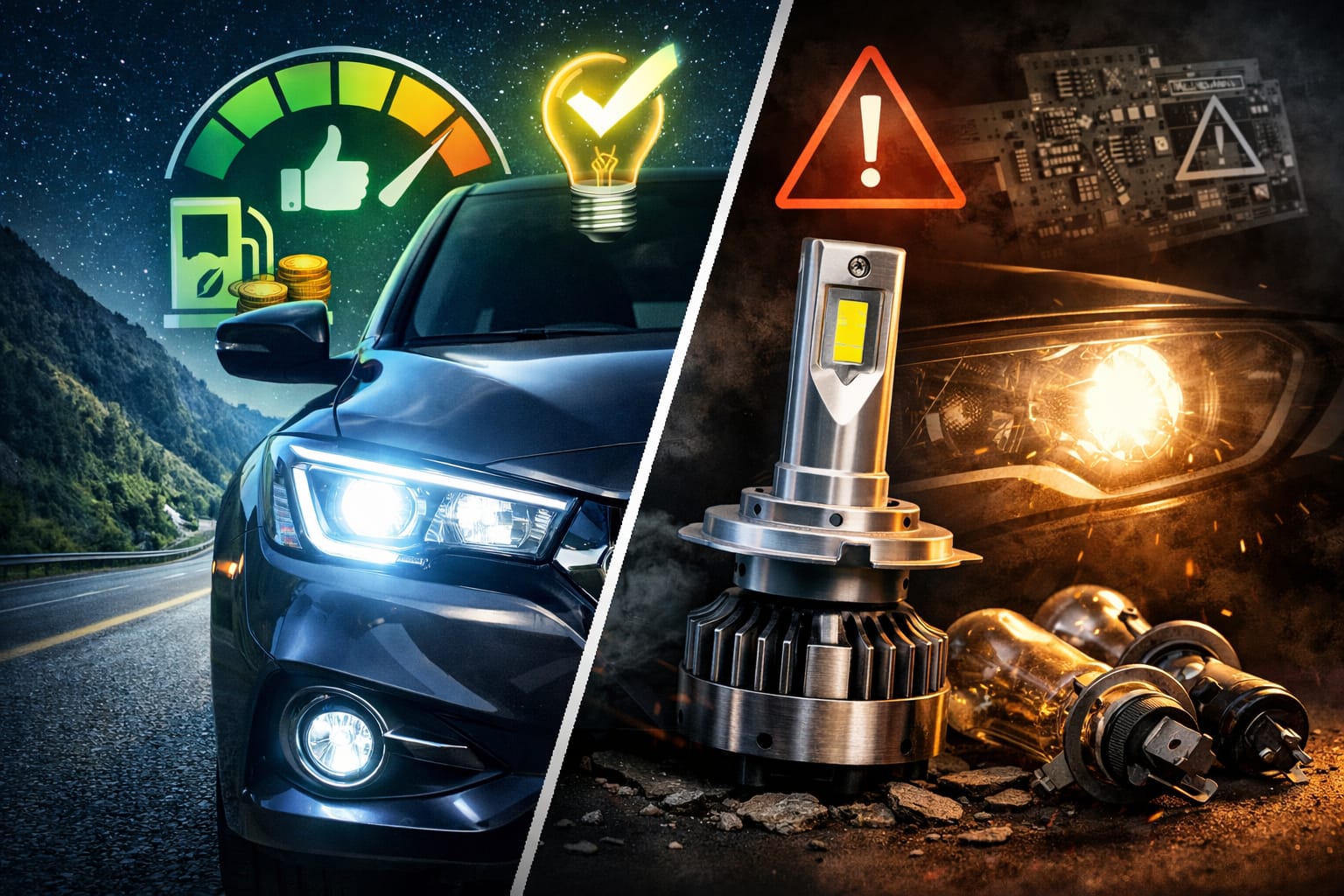
The most obvious downside of LED lights for cars is the upfront price. A decent pair of LED bulbs usually costs much more than basic halogen replacements, and premium kits can be expensive.
Nevertheless, the long-term cost can appear much more reasonable. If you would otherwise need to replace standard bulbs several times over a few years, the cost difference becomes smaller.
For drivers who keep their vehicles for a long time, the higher purchase price is often easier to justify when you consider bulb life and convenience.
There is also the benefit of improved visibility to consider. While this benefit is harder to quantify, many drivers see it as part of the upgrade’s real value. When an LED system helps you see more clearly on dark roads, the price becomes easier to justify.
If you are comparing your options, our detailed comparison of different headlight technologies explains where the extra cost goes and when it makes sense to pay for it.
Setup requirements and complexity
Installing LED lights can be simple or frustrating, depending on the vehicle and bulb design. Some cars accept plug-and-play replacements with very little effort, especially when there is enough space behind the housing and the electrical system is not overly sensitive.
Other vehicles require additional parts or patience. You may need CAN bus decoders, load resistors, or additional space for cooling hardware. In tighter engine bays, even a bulb that technically fits can be difficult to position correctly. If you want a broader overview before buying, the beginner’s guide to car LED lights covers the main steps, compatibility checks, and common upgrade types.
While professional installation can solve some of these issues, it adds to the total cost. Many drivers can still realistically install the lights themselves as long as they verify fitment first and take beam alignment seriously after installing the bulbs.
Regulatory and safety standards
Legality is one of the most overlooked aspects of an LED upgrade. Factory-installed LED systems on new vehicles are designed to meet applicable standards. However, aftermarket LED lights for cars can fall into a gray area, depending on the bulb and housing, as well as where you drive.
Some regions allow certain retrofit setups, while others have stricter regulations regarding what is permitted on public roads. Just because a bulb physically fits your car does not mean it is compliant. Before buying, review whether LED lights are legal and safe for your specific setup. This will help you understand issues like beam control, approved applications, and inspection risks.
Even when a retrofit is technically allowed, poor alignment can create serious glare. This can annoy other drivers, reduce safety, and expose you to fines or failed inspections. Properly aiming products with good optical design matters just as much as the bulb itself.
A very bright LED bulb in the wrong housing may perform worse than a weaker bulb in the right housing. Always check the beam pattern and road legality, not just the brightness.
Heat management and cooling
Although LED lights for cars run cooler than older bulb types at the light source, they still generate heat in their chips and driver electronics. This heat must be dissipated, which is why cooling design is such an important aspect of a reliable LED bulb.
Better products use heat sinks, small fans, or braided cooling elements to control temperature. When the cooling system works well, the bulb can maintain its output and last much longer. When it does not, performance can drop, and the bulb may fail sooner than expected.
There is also a practical winter trade-off. Since LEDs do not emit as much heat through the front lens as halogen bulbs, they may be less effective at melting snow or ice on the housing in very cold weather. This may not matter to every driver, but it is worth keeping in mind in snowy regions.
Visual styling impact
Not every driver upgrades purely for function. Many people choose LED lights for their cars because they make a vehicle look newer, sharper, and more premium. The crisp white light is closely associated with modern factory lighting, so an older car can look more up to date with the right setup.
This styling benefit can extend beyond just the headlights. Drivers often upgrade interior lights, license plate lights, fog lights, and accent lighting to create a consistent look throughout the vehicle. For cabin ambiance, a popular option is an interior ambient LED kit with audio-reactive color sync because it adds personality without affecting the main driving lights.
Color temperature also plays a role here. Some drivers prefer a neutral white look, while others prefer a cooler tone that feels more high-tech. As long as the lighting remains practical and appropriate for the road, this is one of the easiest ways to make a car look more modern.
Challenges and limitations
Despite their many advantages, LED lights are not necessarily the right upgrade for every driver. The most obvious drawback is the higher purchase cost, especially if your current bulbs work fine and you don’t drive much at night.
Quality also varies greatly. The aftermarket is full of products that promise high lumen output, a long lifespan, and easy installation, but not all of them deliver. Weak beam focus, noisy fans, unreliable drivers, and exaggerated claims are still common in cheaper kits.
Compatibility can be another headache. Some vehicles are sensitive to bulb changes and may trigger warning messages, flicker, or a poor fit. Checking the bulb size, housing design, and electronic requirements before buying can save you time and money. If you’re looking for a simple place to start, consider an LED brake light upgrade kit. It’s one of the easier rear-light upgrades because it fits many standard housings and adds a faster, more noticeable stop signal.
A less common issue is radio interference. Poorly designed driver circuits can create electrical noise that affects AM reception or other electronics. This is another reason to avoid ultra-cheap kits and focus on higher-quality products with a solid reputation.
What should you choose?
LED lights make the most sense for cars when you want better visibility, a longer lifespan, and a more modern look. They are worth the extra cost for the right product. They are less appealing when budget is the priority or if your vehicle is sensitive to aftermarket bulb changes.
- Choose LEDs if you do a lot of nighttime driving or want to upgrade your visibility.
- Choose quality kits over cheap, high-lumen listings with vague specs.
- Stick with halogen bulbs if cost is your main concern and your current setup is adequate.
- Double-check the legality, fitment, and housing compatibility before ordering.
- Start with one lighting position, such as the headlights or interior bulbs, before upgrading everything.
Key Takeaways
LED lights for cars offer real advantages in terms of visibility, efficiency, durability, and modern styling. They can be an excellent upgrade, but only if you take bulb quality, housing compatibility, and beam control seriously.
The smartest approach is to look beyond simple brightness claims. First, check fitment, cooling design, electrical compatibility, and road legality, then choose a product that suits how and where you drive.
When done properly, an LED upgrade can make nighttime driving feel safer and make your vehicle look more modern. If done poorly, however, it can create glare, cause frustration, and waste your money, so research matters.
Share this guide!
If you found this guide helpful, save it for later or share it with someone who is comparing lighting upgrades for their car.
Share using the links below:
Interested in learning more? Browse all related articles in our category section.