Car LED Lights Explained: Types, Upgrades, and Legal Basics
If you have been thinking about upgrading your vehicle’s lighting, learning the basics of car LED lights is the best place to start. Modern LED systems have transformed automotive lighting, offering greater efficiency, a longer lifespan, and a brighter, cleaner output than many older bulb types. This makes them appealing, whether you want a small interior upgrade or a serious headlight improvement.
This guide serves as a comprehensive beginner’s resource, covering what car LED lights are, how they work, their applications, and important considerations before purchasing. If you are still exploring the topic, the full overview of car LED lights is also useful for comparing options by upgrade type and vehicle needs.
Quick Answer
Car LED lights are semiconductor-based lighting upgrades for vehicles used for headlights, fog lights, brake lights, interior bulbs, and more. They typically last longer, use less power, and emit a purer light than halogen bulbs. However, achieving the best results depends on selecting the correct bulb type, color temperature, beam pattern, and legal fit for your vehicle.
- They are available for headlights, interior lights, signals, reverse lights, and more.
- They are usually more efficient and longer-lasting than halogen bulbs.
- Proper compatibility with housings, sockets, and CANBUS systems is necessary.
- Color temperature and beam quality are as important as brightness.
- Legality depends on position, housing, and local rules.
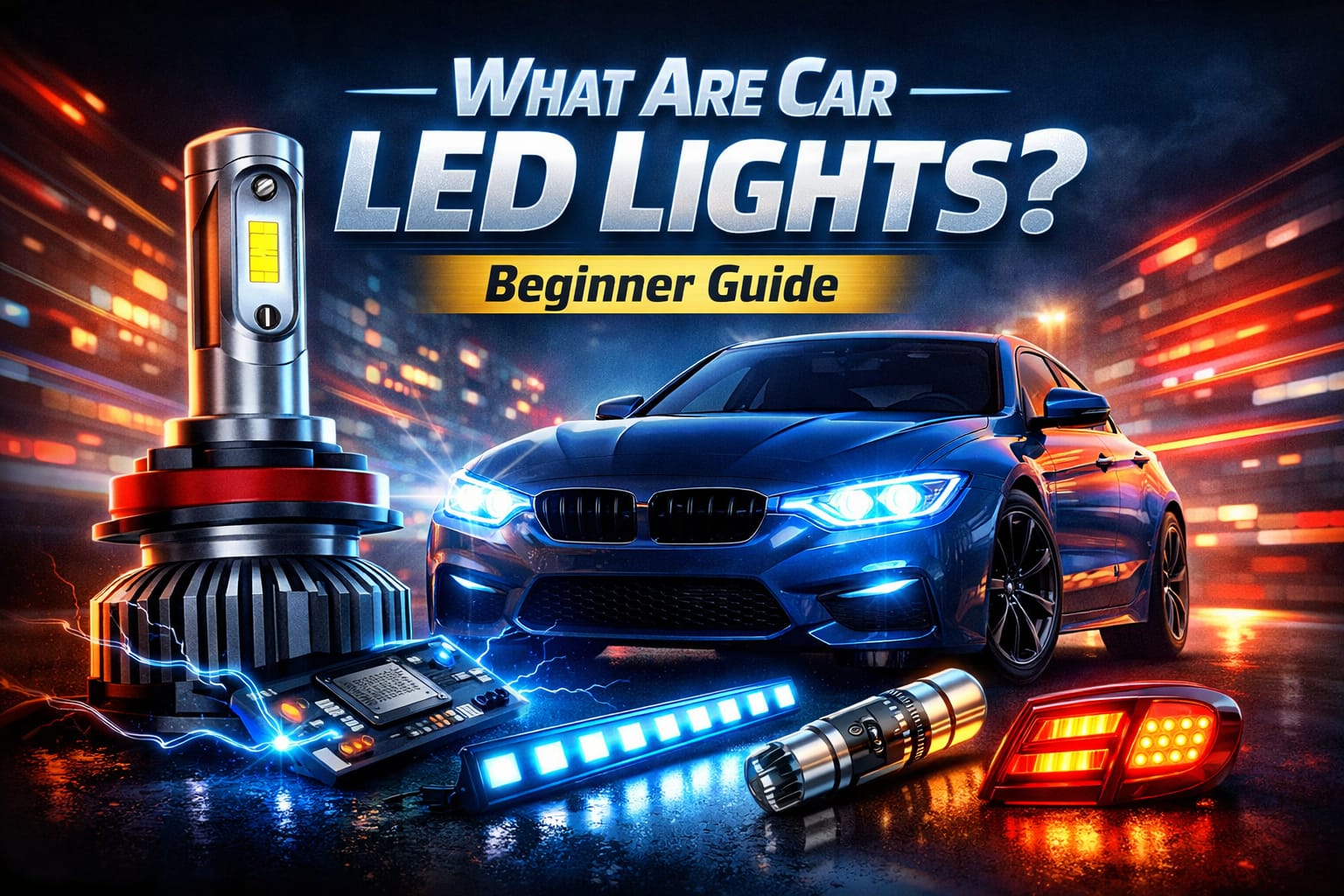
What Are Car LED Lights?
Car LED lights are automotive bulbs or lighting assemblies that use light-emitting diodes (LEDs) instead of traditional filaments or gas-based systems. Simply put, they produce light through semiconductor technology rather than by heating a wire until it glows. This fundamental difference makes LED lighting more efficient and gives it the long lifespan that attracts so many drivers.
Many beginners are surprised by how many parts of a vehicle can be upgraded. LED lighting is not limited to headlights. They are also commonly used for interior dome lights, map lights, trunk lights, reverse lights, brake lights, turn signals, license plate bulbs, fog lights, and daytime running lights. In many vehicles, nearly every bulb has an LED equivalent.
However, not every upgrade is equally simple. Some positions allow for true plug-and-play swaps, while others depend heavily on housing design, electrical compatibility, and local regulations. Headlight upgrades, in particular, require more attention than interior bulb replacements because controlling the beam and minimizing glare is just as important as brightness.
For most drivers, the value of car LED lights comes down to three things: better efficiency, durability, and light output. Once you understand how the technology works and which positions make the most sense to upgrade first, it becomes much easier to choose products that will actually improve your vehicle instead of causing problems.
How Car LED Lights Work
Car LED lights work by sending an electrical current through a semiconductor chip. As electrons move through the material, they release energy in the form of photons, which we see as light. This process is much more efficient than halogen lighting, which wastes much of its energy as heat when trying to make a filament glow.
A complete automotive LED bulb includes more than just the diode. It also contains a driver circuit to regulate current, a base that fits the correct socket, and a heat management system, which is often an aluminum heat sink or a cooling design built into the bulb body. These additional components are essential because stable power and controlled heat are crucial for long-term reliability.
This is why not all LED bulbs perform the same way. Two products may appear similar in listings but behave very differently in actual use. Better bulbs tend to manage heat more effectively, regulate voltage more cleanly, and produce a beam pattern that works more naturally with the housing. This is most important for headlights, as a poorly designed bulb can cause glare, uneven illumination, and poor road visibility, even if it appears bright from the front.
In practical terms, the best car LED lights are not just the brightest ones. They balance light output, thermal design, fitment, and electrical stability to work with your vehicle rather than against it.
Types of Car LED Lights and Common Upgrades
One of the easiest ways to understand automotive LED lighting is to categorize it by upgrade position. Headlights are usually the most talked about because they have the biggest effect on nighttime driving. However, they are only one part of the picture. A broader look at car LED upgrades shows how many lighting positions can be modernized, depending on your goals.
Headlights and fog lights are the most performance-focused upgrades. Drivers choose them for stronger visibility, a cleaner white beam, and a more modern front-end appearance. If you are shopping in this category, it helps to understand car LED headlight brightness before comparing bulbs by lumens alone because a usable beam pattern is just as important as the numbers on the box.
Interior upgrades are usually easier and less risky. Dome lights, map lights, trunk lights, and license plate bulbs are common early swaps because they are often simple to install and provide an immediate visual improvement. These positions also benefit from instant-on performance and low heat, making LED lighting especially practical in small, enclosed spaces inside the vehicle.
Popular upgrade targets include signal, brake, reverse, and accent lighting. A faster response time in brake lights and turn signals can provide a small yet meaningful safety benefit, and reverse lights and daytime running lights often become much clearer. Some drivers explore underglow or decorative accent lighting, but this area requires caution because appearance, legality, and visibility rules can vary greatly by state and region.
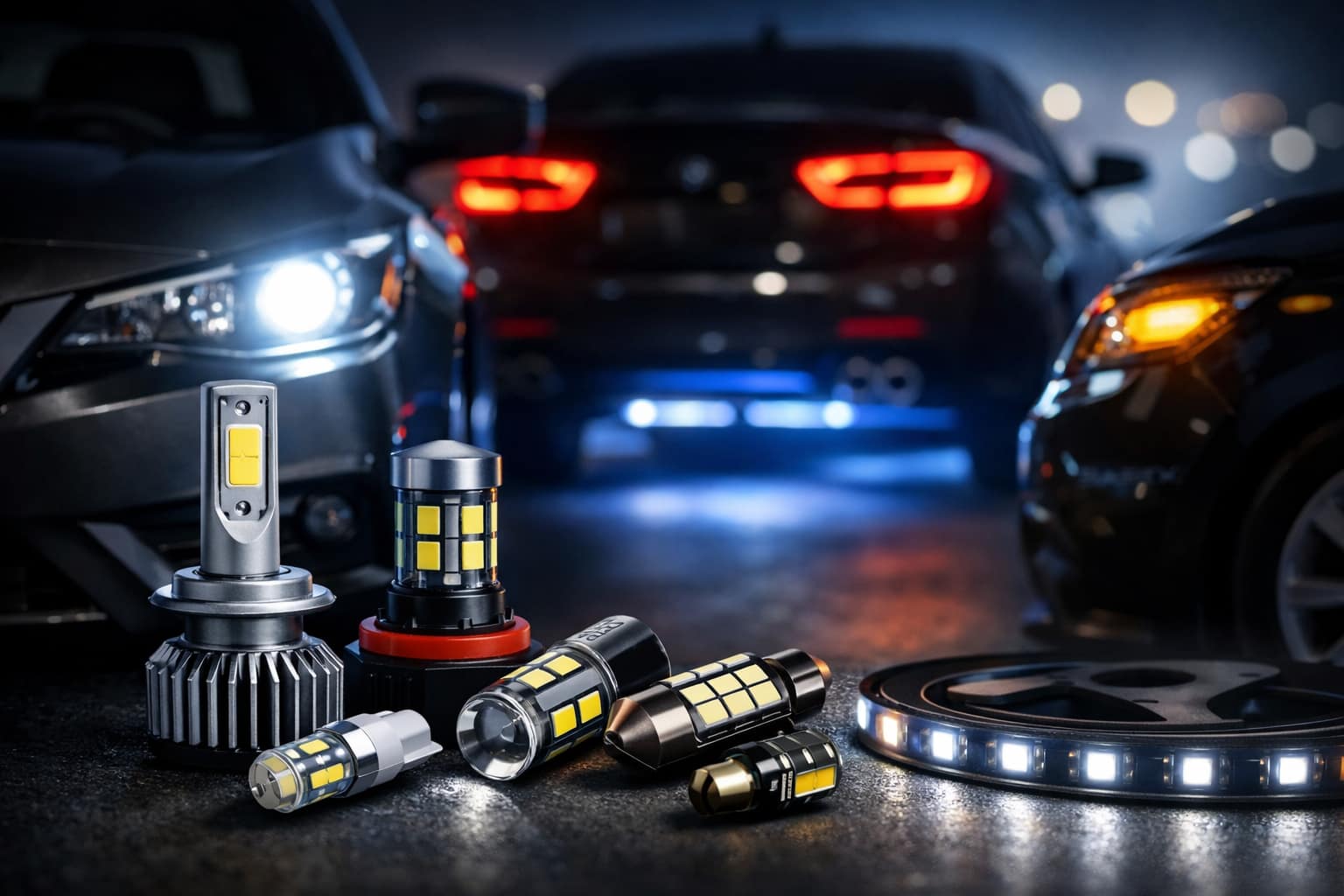
Why Drivers Upgrade to Car LED Lights
The main reason drivers upgrade to car LED lights is that they offer a better overall balance of performance and practicality than older bulb types. LED lights use less power, last much longer, and typically produce a cleaner, whiter light that feels more modern than standard halogen output. This combination makes them appealing even before considering style or customization.
Compared with halogen bulbs, LED lighting is more efficient in almost every measurable way. Halogens are inexpensive and straightforward, but they waste a lot of energy as heat and have a much shorter lifespan. For a detailed comparison, check out our guide to LED vs. halogen headlights, which explains how the two technologies stack up in terms of brightness, color, longevity, and long-term cost.
LED lighting also competes directly with HID systems in the premium upgrade category. While HID headlights can deliver strong output, they require warm-up time and include more supporting hardware. LED systems usually reach full brightness instantly and are easier to live with during daily driving. If you are considering that comparison, our LED vs. HID headlights guide is the better side-by-side reference.
Cost is another area where LEDs typically make more sense in the long run. While the initial cost is often higher than halogen, especially for quality headlight kits, the service life is much longer, and replacement frequency is much lower. Many drivers find the best upgrade value comes from targeting the positions they use most and where the benefits are easiest to notice rather than replacing everything at once.
There is also a comfort and confidence factor that numbers alone do not fully capture. Better visibility, quicker signal response, and a more natural-looking beam can make night driving feel less tiring and more controlled, especially for those who drive frequently on dark roads or in poor weather conditions.
How to Choose and Install Car LED Lights Correctly
The first step in choosing the right car LED lights is identifying the position you are upgrading. Interior bulbs, license plate lights, and trunk lights are usually easier because the fit is simpler, and the beam pattern is less critical. Headlights and fog lights require more care because the housing design, bulb geometry, cooling clearance, and beam aim all affect performance. If you want an easier starting point, our guide on replacing car bulbs with LEDs is a good place to begin.
Color temperature matters more than many beginners expect. A color temperature of around 4,000K to 5,000K usually provides the most natural balance for daily driving, offering good visibility and a clean white look. Around 6,000K looks sharper and cooler. However, going too far into the blue-white spectrum can reduce visibility in the rain or fog. It may also create legal concerns in some places. For most drivers, neutral to cool white is the safest, most practical range.
The difficulty of installation depends heavily on the vehicle and the bulb position. While some swaps are truly plug-and-play, others require extra clearance for heat sinks, decoder modules, or resistors to ensure compatibility with the vehicle’s electronics. Newer vehicles and European models especially require CANBUS-friendly products. That’s why carefully checking fitment before buying is one of the easiest ways to avoid wasting money and becoming frustrated.
Many DIY upgrades get headlight alignment wrong. Even if the bulb fits and turns on, the beam may not be aimed correctly. A poorly aimed LED headlight can reduce your visibility and create glare for oncoming traffic. For more complex conversions, professional installation is often worth it, especially when proper aim and compliance are important.
In short, the best installation isn’t always the brightest or most aggressive one. The best installation matches your housing, works with your vehicle electronics, and delivers a controlled beam that improves your car’s performance at night.
Legal, Compatibility, and Common Problem Areas
Legal questions are one of the biggest reasons drivers hesitate before upgrading. In the United States, lighting regulations focus on beam pattern, color, brightness, and safe operation rather than just whether a bulb is labeled as “LED.” A bulb may fit physically and still produce an illegal or unsafe result if the housing was not designed to properly control the light. That is why it helps to research whether LED headlights are legal before buying a retrofit kit.
Regional variation matters, too. Forward-facing color rules, inspection standards, underglow restrictions, and retrofit rules can differ depending on where you live or drive. If you want a broader overview before making changes, the guide to car LED lighting laws is the best place to start. For official U.S. safety references, the NHTSA is the main federal authority.
Compatibility issues are just as common as legal ones. For example, flickering often occurs because the vehicle detects the lower power draw of an LED bulb as a failure. Overheating may result from poor thermal design or tight housings with weak airflow. Radio interference occurs when low-quality driver circuits introduce electrical noise into the system. In many cases, the problem isn’t that LED lighting is bad. Rather, it is that the wrong product was chosen for the vehicle.
Do not treat every headlight bulb swap as a simple cosmetic upgrade. Even if a bulb fits physically, it can still cause glare, poor road coverage, dashboard errors, or legal problems if the housing and electronics are not compatible.
Although maintenance is usually light, it still matters. Keep lenses clean, inspect connections for corrosion, and pay attention to signs like flicker, dimming, or unexpected shutdowns. LEDs rarely fail suddenly like halogens do, so performance changes often occur gradually. Catching those signs early can save you a lot of trouble later on.
Finally, be wary of future marketing hype. Automotive LED lighting will continue to improve, especially with smarter beam control and more integrated factory systems. However, the basics will always be the most important: legal fitment, proper beam aim, stable electronics, and products designed for your specific housing.
Want to learn more about any of these topics? Our LED Knowledge Center is the central hub for compatibility guides, installation assistance, brightness explanations, comparison articles, and up-to-date reference content on LED lighting.
Key Takeaways
Car LED lights are efficient and durable automotive lighting upgrades that can improve visibility, response time, and overall lighting quality in many areas of a vehicle.
The best upgrade depends on where the bulb is used, how well it matches the housing and electronics, and if the beam pattern remains safe and legal for road use.
For most drivers, it is best to start with the easiest upgrades, carefully check compatibility, and view headlight conversions as performance and safety decisions rather than just styling changes.
Share this guide with someone who is comparing car lighting upgrades, researching LED headlight kits, or planning their first automotive LED swap.
Facebook | X (Twitter) | WhatsApp | LinkedIn