The Best LED Car Lighting Upgrades: What’s worth buying?
Upgrading to LED car lighting can improve visibility, modernize your vehicle, and provide practical benefits inside and out. The right setup depends on your priorities: better road performance, a cleaner interior, added utility, or a customized style.
This guide walks you through the most useful upgrade options, explains where each one makes sense, tells you what to check before buying, and shows you how to choose parts that fit your vehicle without causing legal or installation issues.
Quick Answer
The best LED car lighting upgrades are the ones that match how you use your vehicle. Headlights and fog lights improve visibility the most, interior ambient kits enhance comfort and style, and accent or underbody systems are ideal for appearance-focused builds.
- If you want a real functional upgrade, choose headlights first.
- Pick interior ambient lighting for a cleaner, more modern cabin feel.
- Use underglow, wheel well lights, and accent strips mainly for style.
- Before ordering anything, check fitment, wiring needs, and local laws.
- Purchase weatherproof exterior kits and quality connectors for long-term reliability.
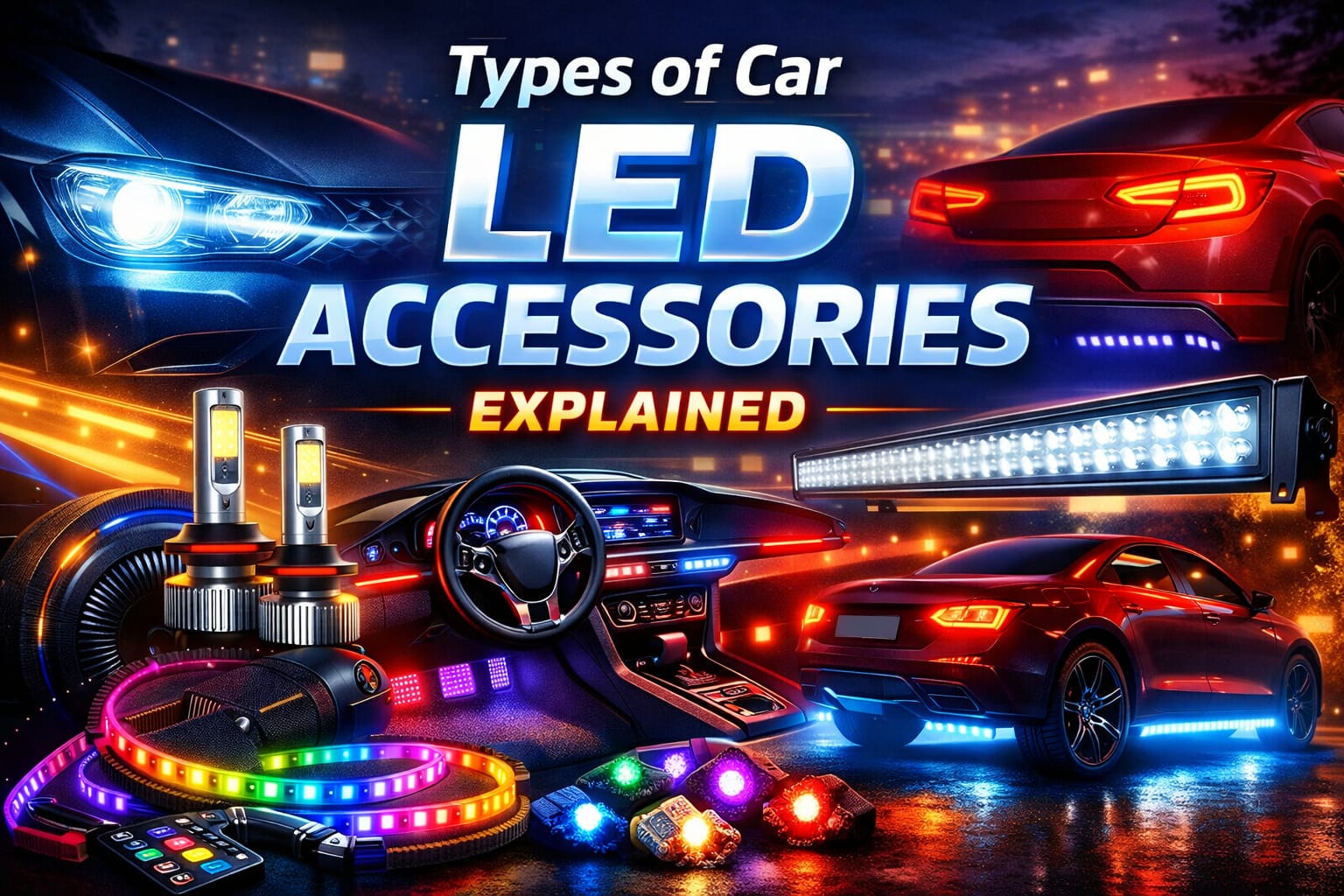
Table of Contents:
- Quick Answer
- Exterior LED Upgrades
- LED Headlights
- Interior ambient lighting
- Underbody Glow Systems
- Accent strips and light bars
- Fog light upgrades
- Tail light upgrades
- Dashboard lighting
- Door handle lighting
- Wheel well lighting
- Installation Considerations
- Legal compliance
- Maintenance Tips
- What should you choose?
- Key Takeaways
- Share this guide
Exterior LED Upgrades
Upgrading the outside of your vehicle can be subtle or dramatic, depending on the parts you choose. Popular options include grille lighting, mirror puddle lights, illuminated license plate frames, rock lights, and exterior accent strips that highlight body lines or provide additional visibility at night.
While some exterior upgrades are mostly for appearance, others genuinely improve convenience and visibility around the vehicle. For example, rock lights can improve off-road visibility and nighttime maneuvering, and puddle lights can make entering the vehicle easier in dimly lit parking areas.
If you are just getting started and want a broader overview of the topic, the beginner’s guide to car LED lights explains the main types and key terms and shows you how to match upgrades to your vehicle.
LED headlights
For most drivers, they are the most useful upgrade on this list. They use less power than halogen bulbs, produce a cleaner white light, and can improve visibility of the road, signs, and lane edges at night. If you are comparing options, our LED vs. halogen headlight comparison breaks down the differences in performance, lifespan, and value.
Most quality LED headlight kits include built-in heat management, typically via a fan or heat sink. This is important because excess heat can shorten the lifespan of the headlights, reduce output stability, and create fitment issues in tighter housings. If you want a simpler upgrade for daily driving, a plug-and-play LED headlight bulb set can be a practical choice.
Brighter does not always mean better. A poor beam pattern or incorrect bulb fitment can create glare for other drivers while leaving you with worse usable visibility.
Color temperature choices
LED headlights are usually sold with color temperatures ranging from about 5000K to 6500K. This range provides a crisp, white look that feels modern and often makes road markings easier to see at night. If you want a clearer understanding of how Kelvin values affect appearance and usability, our color temperature guide breaks it down in simple terms.
Some drivers still prefer a warmer, yellow light of around 3,000 Kelvin for driving in foggy conditions because it is easier on the eyes in rain, mist, or snow. The best choice depends on your climate, housing type, and whether you are upgrading your headlights or fog lights.
Why does beam pattern matter?
A good beam pattern transforms an LED headlight upgrade into a significant improvement. The LED chips must be positioned correctly so that the housing directs the light properly instead of scattering it in every direction.
Vehicles with projector housings often handle LED conversions better than vehicles with reflector housings, but fitment still varies by bulb design. One of the easiest ways to avoid glare, dark spots, or a disappointing result is to check compatibility before you buy.
Interior ambient lighting
Interior LED lighting is an easy way to make a vehicle feel newer and more personalized. Common upgrades include footwell lights, door panel strips, dashboard accents, and multi-zone ambient kits that allow you to adjust the color and brightness to suit your mood.
Many modern kits use app control or a small wireless remote, and some add music-sync features for a more animated look. A multizone RGB ambient lighting kit is a good choice if you want a single package that covers multiple cabin areas with consistent color and simple control.
Complete kits are usually the easiest option for first-time buyers because they include controllers, wiring, and mounting accessories that are designed to work together. They also help maintain a uniform interior appearance instead of mixing parts with different brightness levels or color tones.
RGB vs. single-color lighting
Single-color interior lighting is usually cheaper and easier to set up. It often looks cleaner in daily use. It suits drivers who prefer a subtle upgrade to a constantly changing effect.
RGB systems offer much more flexibility. You can switch between colors, save scenes, and match your cabin lighting to music, the seasons, or the rest of your build. Although they cost more, they also allow for greater customization of the interior’s overall feel, which is why they are a popular choice for LED car lighting upgrades.
Underbody glow systems
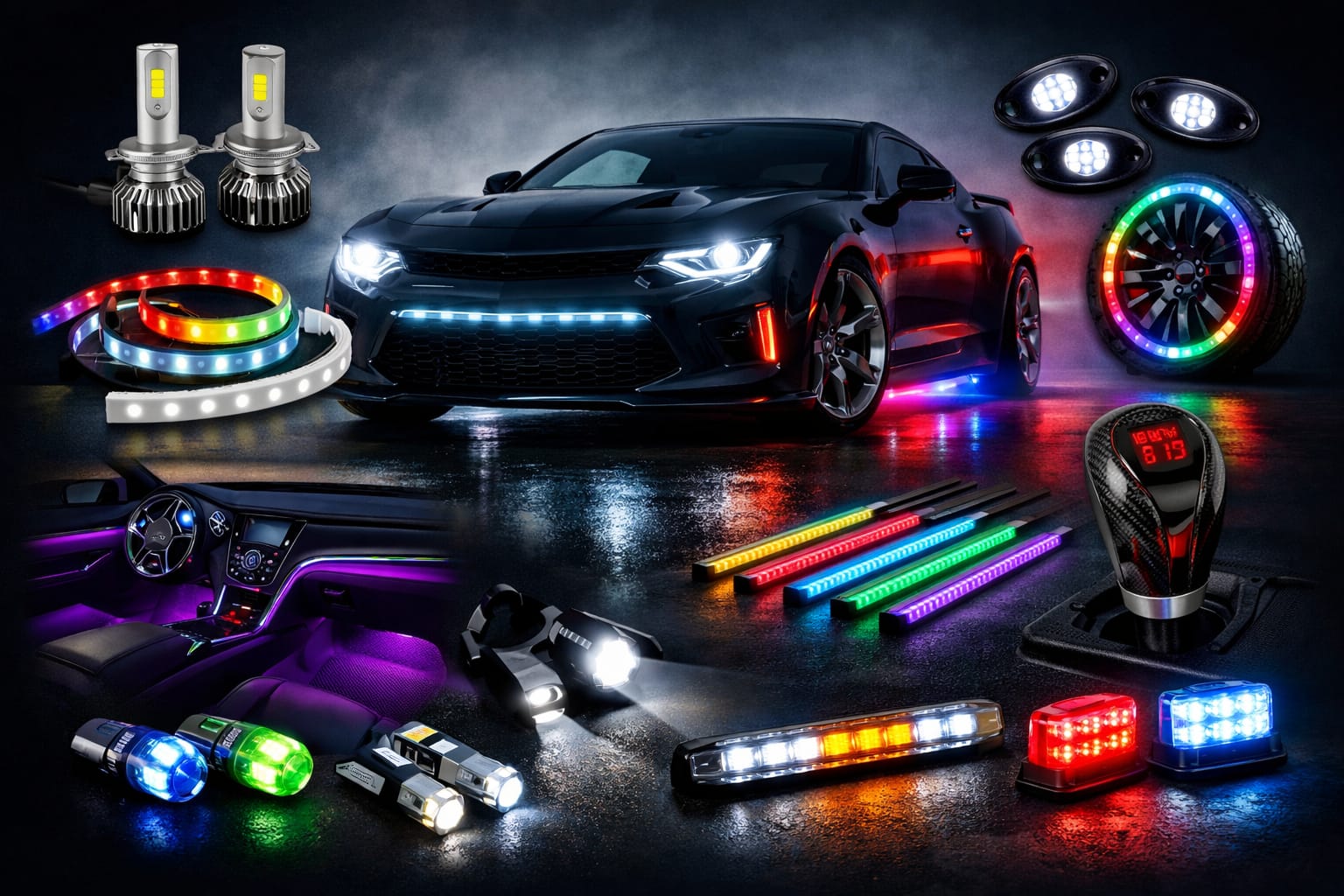
Underbody lighting creates the classic floating glow effect beneath the vehicle. These kits usually use several tubes or strip sections mounted along the sides and ends of the undercarriage. Often, they have RGB color control for a stronger show-car look.
Because the underbody area is constantly exposed to water, road salt, gravel, and temperature changes, the quality of the build matters a lot. Look for sealed housings, sturdy brackets, and at least an IP67 rating if you want the system to withstand real driving conditions.
Installation usually requires more planning than buyers expect because the wiring must be carefully routed and protected. Before buying anything, check our guide on the legality of LED underglow lights so you know what is allowed in your region.
Accent strips and light bars
Flexible LED strips are useful for lighting curves, trim pieces, and tight spaces. They work well for grilles, footwells, trunk areas, dashboard edges, and some exterior accents where a rigid housing would be difficult to install neatly.
Light bars are a different type of upgrade. They focus more on auxiliary illumination and are especially popular for trucks, SUVs, and off-road builds. Although roof and bumper mounts can provide a lot of usable output, they also require more attention to mounting, wiring, and local regulations.
For exterior strip applications requiring greater durability, a waterproof underglow LED strip system offers more reliable weather resistance than a basic indoor strip.
Sizing and Beam Considerations
Smaller light bars, typically ranging from 12 to 24 inches, are usually best suited for compact vehicles or as secondary lighting. Larger bars are better suited to trucks and SUVs, especially when wider or longer-range illumination is desired on dark trails or work sites.
Beam pattern is just as important as size. Spot beams throw light farther, flood beams spread it wider, and combo patterns try to balance both. The best option depends on whether you need distance, side coverage, or a mix of the two.
Fog light upgrades
LED fog light upgrades can improve visibility in poor conditions when designed and aimed correctly. Many drivers prefer yellow or selective yellow fog lights because they feel easier to use in rain, snow, or mist than a very cool white beam.
Compared with older halogen setups, LED fog lights typically use less power and generate less heat. This reduces strain on the electrical system and helps protect housings from excess heat buildup over time.
According to the National Highway Traffic Safety Administration, proper positioning and aiming are key to safe operation. Any fog light upgrade should maintain the proper mounting position and controlled beam output rather than focusing solely on brightness.
Tail light upgrades
LED tail lights are one of the best upgrades for appearance and safety. They reach full brightness faster than incandescent bulbs, which gives drivers behind you more time to react when you brake.
Sequential turn signals are a popular add-on because they look modern and make direction changes easier to notice. Complete LED tail light assemblies can simplify installation since they replace the entire assembly, rather than requiring you to swap individual bulbs and hope for an even appearance.
For many drivers, a full assembly is the cleanest solution because it provides better visual consistency and a factory-like finish. It can also reduce the trial and error that sometimes accompanies partial bulb upgrades.
Brake light intensity
A strong LED brake light setup is easier to see in daylight, bad weather, and heavy traffic. This increased visibility is one of the main reasons why LED rear lighting upgrades are worth the cost, even if you are not going for a custom look.
Some rear lighting kits also include brief flash or pulse features when you first apply the brakes. These features can draw more attention than a steady light, but their legality varies, so check before installation.
Dashboard lighting
Upgrading dashboard lighting can be as simple as replacing a few bulbs in the gauge cluster or as involved as reworking multiple trim and display areas. Even a basic LED swap can make an older instrument panel look cleaner and more modern.
Matching the dashboard color to the rest of the interior helps it feel more intentional. Blue, amber, and red are common choices, but brightness control is just as important as color because overly bright dash lighting can be distracting at night.
Trim accents and subtle overlays can refresh a dated interior without making too aggressive of a change to the vehicle. This kind of upgrade works best when the lighting looks integrated rather than added later.
Door handle lighting
Illuminated door handles add a premium touch and make the vehicle easier to use in dark parking lots or driveways. Depending on the model, these systems fit beneath, behind, or as part of the handle.
Some systems turn on automatically when the key fob is nearby, improving convenience and helping you find the handle faster. It is a small upgrade, but it can make the vehicle feel noticeably more refined.
Due to limited space in this area, compact, purpose-built modules are typically a better choice than adapting larger, generic lighting parts. A clean fit is just as important as brightness here.
Wheel well lighting
While mostly a styling upgrade, wheel well lighting can create a striking look when paired with underglow or rock lights. These kits mount inside the fender area and direct light downward around the wheels, highlighting the tires and suspension.
Four-zone kits allow you to control each corner more precisely, and RGB versions make it easier to match the rest of your build. If you want a coordinated, custom look, this is one of the best ways to tie exterior lighting elements together.
Mounting position is critical because these lights sit close to moving suspension parts, dirt, and water. A secure installation ensures the system will continue to function properly after real road use, not just look good on day one.
Installation considerations
Before buying any LED car lighting upgrade, consider the power source, wire routing, mounting points, and where the controller will sit, if the kit includes one. Good planning usually has a greater impact on the final result than simply buying the brightest option.
Fuse taps are a common solution for switched power that turns off with the ignition. Direct battery connections can be appropriate for certain applications, but they require proper fusing and cleaner power management to prevent battery drainage.
More complex setups with multiple lighting zones or app-controlled systems often require professional installation. This is especially true if you are working around airbags, tight body panels, or factory wiring that you do not want to disturb.
Buy a little more wiring protection than you think you need. Split loom, heat shrink, and weatherproof connectors usually cost far less than replacing a failed exterior lighting kit.
Wiring Best Practices
Use wire that matches the system’s current draw and avoid cheap connectors that loosen easily. Proper electrical connections help prevent flickering, voltage drops, and premature component failure.
For exterior applications, use weatherproof connectors and properly sealed joints. Moisture can quickly ruin an otherwise decent LED setup, especially underneath a vehicle or inside wheel wells.
Legal compliance
Lighting laws vary more than many buyers expect, so legality should be considered from the beginning. Rules often cover color, brightness, placement, flashing behavior, and whether a certain light can be used while the vehicle is in motion.
In many places, red and blue lights visible from the front are restricted because they can be confused with emergency vehicles. Underglow and certain animated lighting effects may also be limited to display use while the vehicle is parked rather than for normal road driving.
Headlight conversions are one of the most important areas to check. If you plan to convert your headlights, our guide on LED headlight conversion legality explains what to look out for and why compliant beam performance matters as much as brightness.
Maintenance tips
LED systems are generally low-maintenance, but they still benefit from occasional checks. A quick visual inspection can reveal loose mounts, damaged wiring, trapped moisture, or dim sections before a minor problem escalates into the need for a full replacement.
Keeping lenses and covers clean helps maintain light output, especially for exterior parts exposed to road grime. Use cleaners that are safe for automotive plastics to avoid hazing or damaging the surface over time.
It is also worth periodically checking connections for corrosion or movement, particularly in underbody, wheel well, and bumper-mounted systems. Applying a small amount of dielectric grease can provide useful protection in high-moisture areas.
Troubleshooting common issues
Flickering typically indicates a weak connection, unstable voltage, or an issue with the controller. The fastest way to narrow down the problem is often to check the power source, ground points, and connectors. For a more detailed breakdown, see our guide on LED light flickering.
If an RGB system starts displaying incorrect colors or inconsistent lighting across zones, the controller or a section of the strip may be malfunctioning. Resetting the controller may resolve software-related issues, but persistent color problems typically indicate the need for a part replacement. To learn more about LED fundamentals, check out the LED Knowledge Center.
What should you choose?
Start with the upgrade that solves your biggest problem first. Functional lighting usually offers the best value, while styling upgrades are more sensible once the basics are covered.
- Choose LED headlights or fog lights if visibility is your top priority.
- If you want the cabin to feel newer and more personalized, choose interior ambient lighting.
- If you want a strong mix of style and rear visibility, choose tail light upgrades.
- For a show-focused exterior build, choose underglow, wheel well lights, or accent strips.
- Choose complete kits over mixed parts for easier installation and a more consistent finish.
Key Takeaways
The best LED car lighting upgrades match your goals, not just look impressive in photos. Headlights, fog lights, taillights, interior ambient lighting kits, and exterior accent lighting systems all serve different purposes. Knowing whether you want better visibility, more convenience, or a customized look is the first step in choosing well.
Pay close attention to fitment, wiring quality, weather resistance, and legal restrictions before buying. A smaller, well-installed upgrade usually delivers better results than a larger kit with poor mounting, weak connectors, or the wrong beam pattern.
Building your setup in sensible stages allows you to make your vehicle safer, more practical, and much more enjoyable with LED upgrades. Start with the area that matters most to you, perfect it, and then build from there.
Share this guide!
If you found it helpful, save it for later or send it to someone planning a car lighting upgrade. It is especially useful for beginners who want to understand the main options before buying parts.
Share using the links below.
Interested in learning more? Browse all related articles in our category section.