Best LED Bulbs for Dining Rooms (Warm & Cozy)
A dining room should feel welcoming the second the lights come on. The right bulb can make wood tones look richer, table settings feel more polished, and everyday dinners feel noticeably more comfortable without turning the room too yellow, too flat, or too bright.
Choosing well means balancing warmth, brightness, color accuracy, dimming performance, and fixture style. When those pieces work together, your dining space feels calmer for weeknight meals and more refined when guests come over.
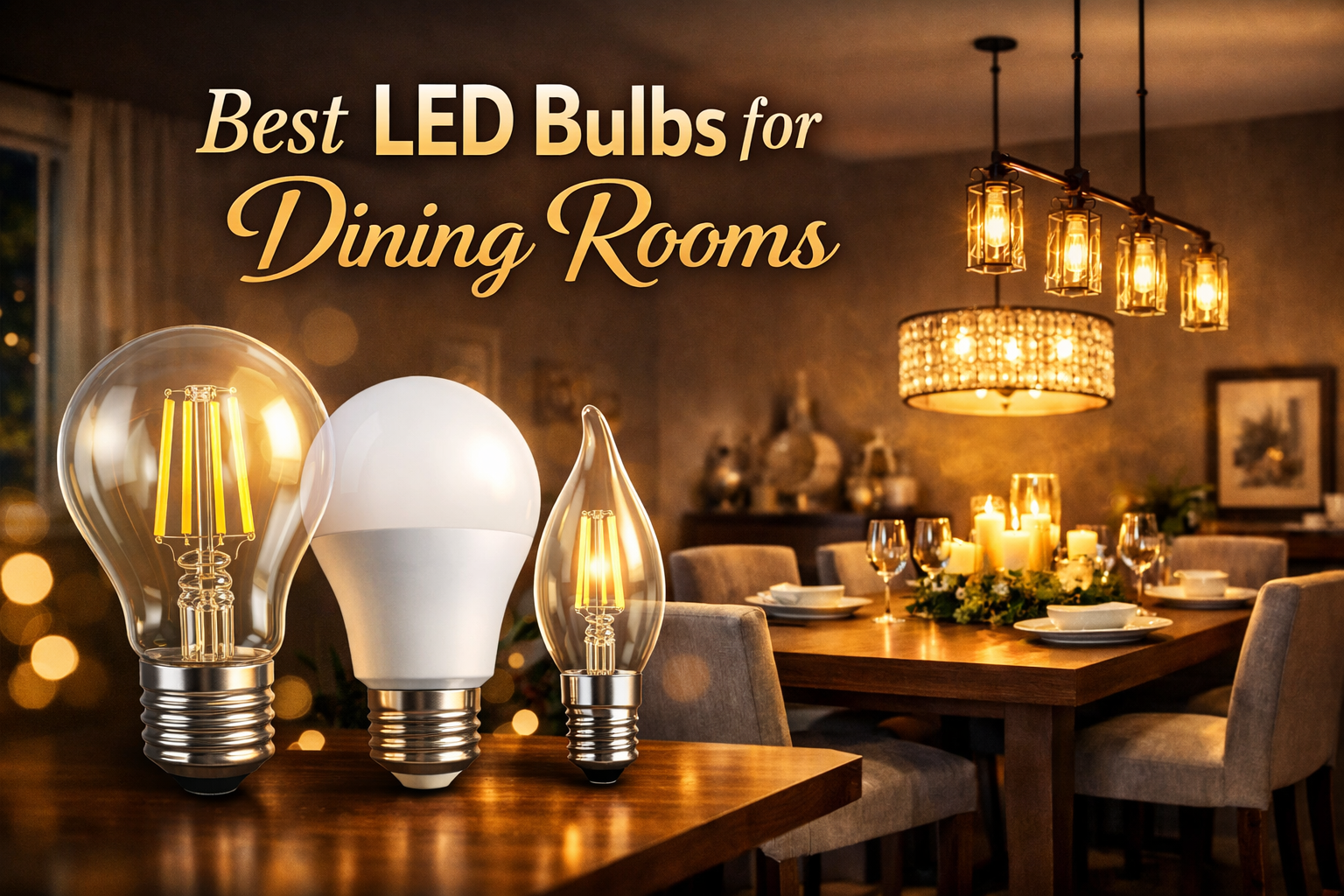
Table of Contents
- Choosing bulb shape and finish
- How the best led bulbs for dining rooms affect mood
- Why 2700K to 3000K feels inviting
- When neutral white still works
- Brightness by table size and ceiling height
- Open-plan dining zones
- Why CRI matters for food and decor
- Common mistakes that flatten the room
- Mixing bulbs in one fixture
- Dimming and layered lighting
- Avoiding glare at eye level
- Matching bulbs to fixture styles
- Final buying checklist
- Sharing this guide
Choosing bulb shape and finish
Harsh overhead light can make dinner feel tiring fast. That is why people looking for the best led bulbs for dining rooms often realize the problem is not only brightness, but the wrong shape, the wrong glass finish, and a bulb that throws light in an awkward direction over the table.
For chandeliers, sconces, and pendants, bulb shape affects both appearance and performance. Candle bulbs feel elegant in classic fixtures, globe bulbs look balanced in modern pendants, and standard A19 bulbs work well when the socket is hidden by a shade. Pay attention to beam spread and whether the bulb uses frosted glass or clear glass, because that changes how soft the room feels once the fixture is on.
If you want a solid technical baseline before buying, it helps to review how modern LED lamps work. That background makes it easier to compare watt-equivalent claims, heat control, and lifespan when you narrow down the best led bulbs for dining rooms for your fixture style.
Many buyers also spend time comparing decorative accent ideas before they have solved the basics. For dining rooms, the priority is always the main fixture first. Get the bulb shape, finish, and beam spread right for your chandelier or pendant, and accent lighting becomes a small optional layer rather than a distraction from an uncomfortable setup.
How the best led bulbs for dining rooms affect mood
Mood is where small bulb differences become obvious. The best led bulbs for dining rooms make people look healthier, soften the table surface, and create a sense of depth that feels polished rather than clinical. When the bulb is too cool, plates can look gray and the room loses that relaxed restaurant-like character most homeowners want.
Most dining spaces feel better with warm white output than with stark daylight tones. If your walls are neutral, your furniture has wood or matte finishes, or you entertain often, the best led bulbs for dining rooms usually sit in a range that enhances warmth without making whites look muddy.
Why 2700K to 3000K feels inviting
2700K is the cozy favorite for many dining rooms because it gives wood, textiles, and skin tones a softer look. 3000K stays warm too, but it feels slightly cleaner and works well if your room connects to a kitchen with brighter task lighting. In both cases, the best led bulbs for dining rooms should support conversation and comfort instead of making the space feel overlit.
When shoppers compare options, a useful step is reading a deeper color temperature breakdown. It becomes much easier to judge whether the best led bulbs for dining rooms should lean extra warm for ambiance or slightly cleaner for a more versatile everyday setup.
If a dining room feels flat late in the evening, that is often a warmth issue rather than a brightness issue. In early-stage upgrades, people dealing with flicker and wanting to avoid visual fatigue often struggle with unstable light output, which is why a soft warm LED bulb can stabilize brightness and make the fixture feel calmer and more inviting during meals. That makes it an easy upgrade.
When neutral white still works
Neutral white can still make sense if your dining room doubles as a workspace, if artwork on the walls needs more clarity, or if the fixture has very opaque shades that already mute the output. In those cases, the best led bulbs for dining rooms may edge closer to 3000K rather than 2700K so the room stays comfortable without looking sleepy.
That balance matters even more in modern homes where dining, kitchen, and living functions blend together. If you are coordinating nearby spaces too, comparing your plan with living-room bulb recommendations can help you keep transitions smooth instead of letting one area look noticeably colder than the next.
Brightness by table size and ceiling height
Brightness decisions should start with the table, not the package. A compact four-seat room may feel perfect with modest output, while a long table under a multi-light fixture needs more total light to keep every place setting visible. The best led bulbs for dining rooms work when overall output matches room volume instead of forcing you to rely on one overpowered bulb choice.
Look at total lumens, the number of bulbs in the fixture, and how low the pendant or chandelier hangs over the table. Lower fixtures can use gentler bulbs because the light lands closer to the eating surface, while high ceilings often need more total output or a layered plan with wall lights or buffet lamps.
Open-plan dining zones
Open-plan homes create a different challenge because the dining zone competes with kitchen downlights, island pendants, and daylight from multiple directions. The best led bulbs for dining rooms in these layouts need enough presence to define the table area without turning the fixture into a bright hotspot floating in the middle of the room.
This is also where online inspiration can mislead people. Dramatic color-effect setups may look eye-catching on social media, but those scenes usually prioritize visual impact over meal comfort. In a dining room, the better move is steady, flattering overhead light first, then subtle accents only if the base lighting already works.
Why CRI matters for food and decor
Color rendering is one of the easiest specs to overlook and one of the fastest to notice once dinner is on the table. The best led bulbs for dining rooms should have strong CRI performance so red sauces, vegetables, wood tones, and fabric textures all look more believable under artificial light.
As a rule, aim for 90+ CRI when possible. Lower-quality bulbs may still be efficient, but they often make food appear dull and decorative finishes feel slightly lifeless. That difference matters if your dining room is one of the main entertaining spaces in the home or if you care about photography, hosting, or holiday table styling.
When meals look washed out and surface finishes seem less rich than they should, inconsistent brightness is often part of the issue. A high CRI LED bulb can improve comfort by keeping colors stable and natural so the whole setup feels more balanced under evening light. That is a smart fit for most homes.
Common mistakes that flatten the room
Many disappointing upgrades come from buying the brightest thing available and hoping dimming will solve everything later. The best led bulbs for dining rooms are not just bright enough; they are matched to fixture style, room size, and the kind of atmosphere you want at normal dinner time rather than maximum output.
Another common mistake is chasing visual drama before solving the fundamentals. Flattering overhead illumination, proper diffusion, and comfortable brightness around plates and glassware should always come first. Once those are right, any additional accent layer you add will actually look intentional instead of compensating for a base that does not work.
Good planning also matters. Before you replace every bulb, reviewing a practical lighting layout planning guide helps you decide whether the room needs a bulb swap, fixture repositioning, a dimmer, or a small supporting lamp on a sideboard.
Mixing bulbs in one fixture
Mixing brands, color temperatures, or bulb shapes inside the same chandelier creates visual noise instantly. One socket may look warmer, another cooler, and a third brighter, which produces harsh contrast even when the fixture itself is beautiful. The best led bulbs for dining rooms should be bought as a matched set whenever possible.
This is especially noticeable in exposed-bulb fixtures, linear chandeliers, and globe clusters where every lamp is visible from the table. Consistency makes the room feel intentional, while mismatched bulbs make the installation look temporary and unfinished.
Dimming and layered lighting
A dining room rarely needs the same light level all day. Breakfast, homework, cleaning, and a late dinner all ask for something different, so the best led bulbs for dining rooms become much more useful when they are paired with a compatible dimmer and supported by secondary lighting around the edges of the room.
Look for bulbs clearly labeled dimmable, and make sure your wall dimmer is designed for LED loads. Smooth dimming helps the room feel calmer and more expensive because it lets you dial back brightness without shifting to an odd color tone or introducing distracting stepping.
For broader performance expectations, both the U.S. Department of Energy LED lighting efficiency guidance and the ENERGY STAR guide to LED lighting basics explain why compatibility, lifespan, and quality control matter as much as simple watt-equivalent marketing.
Avoiding glare at eye level
Glare is one of the quickest ways to ruin a dining setup, especially with clear glass pendants or fixtures hung slightly too low. The best led bulbs for dining rooms should not force people to stare into point-source light every time they look up from the table, pass a dish, or speak to someone across from them.
If that is already happening, the fix is often simple: choose softer-output bulbs, switch from clear to frosted glass, or use a dimmable lamp that can reduce brightness for evening meals. A frosted dimmable LED bulb can reduce glare and help the room shift from task mode to relaxed hosting mode more easily. That flexibility pays off at dinner time.
Matching bulbs to fixture styles
Fixture style changes what “best” means. The best led bulbs for dining rooms in shaded drum pendants are often different from the bulbs that work in open metal chandeliers, minimalist globes, or vintage-inspired candle fixtures. The bulb should support the fixture instead of visually fighting it.
In more traditional rooms, candle shapes or warm frosted bulbs usually feel right. In sleek contemporary spaces, larger globe lamps can look cleaner and more architectural. For exposed fixtures, consider how visible the diode pattern is, whether the bulb has a smooth diffuser, and whether the shape still looks balanced when the light is off.
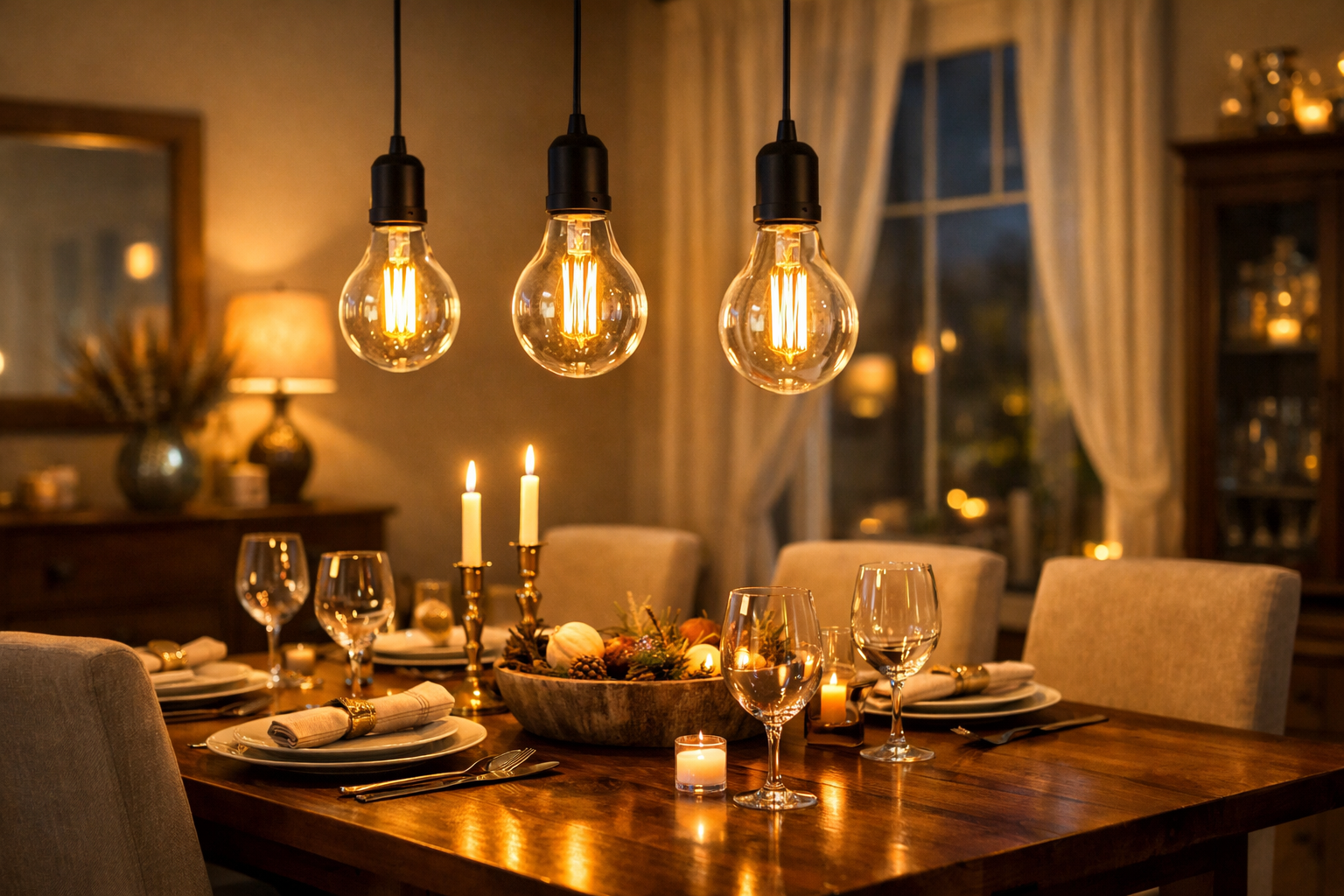
Decorative chandeliers often need smaller bulbs for proportion, while pendant clusters may look best with repeated globe shapes. If your fixture exposes the lamp fully, an exposed filament style can add character, but only if the output remains soft enough for comfortable dining and not just visual drama.
Final buying checklist
Before you buy, confirm bulb base type, shape, total lumens, color temperature, CRI, dimming compatibility, and how visible the bulb will be inside the fixture. The best led bulbs for dining rooms usually succeed because all of those details line up, not because one spec on the box looks impressive on its own.
It also helps to think about how the room is actually used. A family dining space may need a little more flexibility and easier visibility, while a formal room can lean warmer and lower for a stronger dinner mood. Once you know that priority, the best led bulbs for dining rooms become much easier to identify without overbuying.
For more comparisons, specs, and practical breakdowns across different fixture types and room goals, browse the LED Knowledge Center. It is a helpful next stop if you want to compare the best led bulbs for dining rooms with other room-by-room lighting choices before making a final purchase.
Sharing this guide
If you found this guide helpful, save it or share it with someone who’s still using old bulbs.
Interested in learning more? Browse all related articles in our category section.