Lighting Placement Mistakes: Avoid Critical Errors
Even quality fixtures fail to deliver desired results when installed incorrectly. Common lighting placement mistakes undermine functionality, create visual discomfort, and waste energy through inefficient coverage patterns. Understanding proper positioning principles prevents these critical errors that plague residential and commercial installations, ensuring spaces achieve both aesthetic goals and practical requirements through thoughtful fixture arrangement strategies.
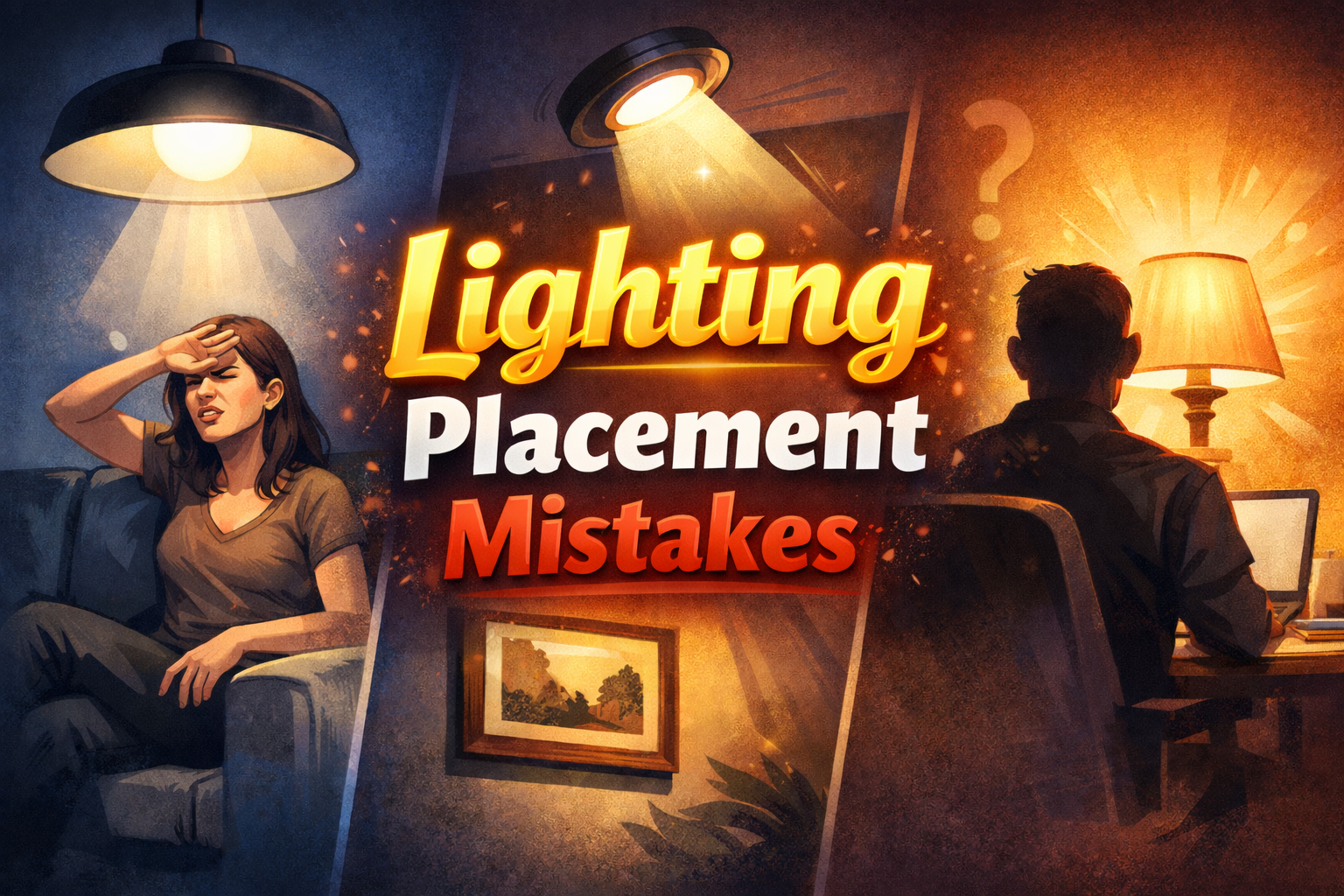
Table of Contents
Recessed Spacing Errors
Improper spacing between recessed downlights ranks among the most prevalent lighting placement mistakes in new construction and renovation projects. Installing fixtures too far apart creates dark spots between coverage areas, while excessive proximity generates overlapping pools that waste energy without improving illumination quality. The standard spacing formula recommends positioning cans approximately half their ceiling height apart, meaning 8-foot ceilings require 4-foot spacing intervals for optimal coverage uniformity.
Perimeter fixtures demand special attention to avoid fixture positioning errors that leave walls in shadow. Recessed lights should mount 18-24 inches from walls rather than flush against them, allowing proper light distribution across vertical surfaces. This offset prevents the dark band that appears when downlights sit too close to walls, creating uneven illumination patterns that make rooms feel smaller and less inviting despite adequate total lumen output from installed fixtures.
Ceiling height variations complicate spacing calculations in vaulted or cathedral ceiling areas. Higher mounting positions require wider spacing to maintain consistent floor-level illumination, while sloped ceilings benefit from asymmetric arrangements that account for changing fixture-to-floor distances. According to U.S. Department of Energy LED lighting efficiency guidance, proper spacing maximizes energy efficiency by ensuring each fixture contributes meaningfully to overall coverage without redundant overlap.
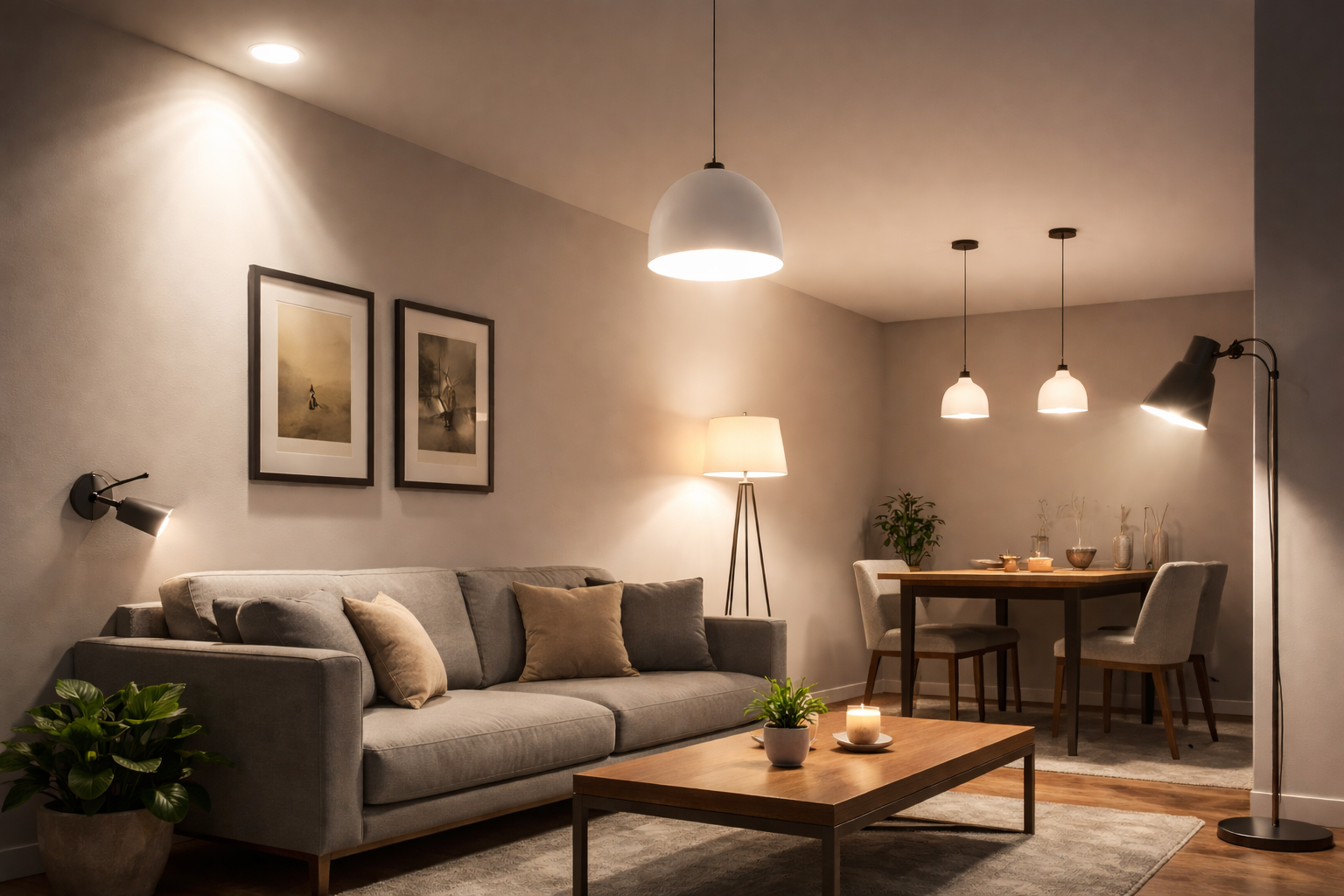
For comprehensive understanding of how different illumination types work together, detailed layer analysis explains ambient, task, and accent categories that inform proper positioning strategies throughout residential installations.
Overhead Fixture Height
Dining Table Pendants
Pendant fixtures over dining tables require precise height adjustment preventing common lighting placement mistakes that obstruct sight lines or provide inadequate illumination. The bottom of pendant shades should hang 30-36 inches above table surfaces, balancing task lighting requirements with visual access across tables during meals and conversations. Lower mounting creates glare directly in diners’ eyes, while excessive height diminishes light intensity reaching place settings and centerpieces below.
Multiple pendants over extended tables require consistent spacing and height alignment for visual harmony. Three pendants spanning a 72-inch table should space 24-30 inches apart, with identical hanging heights preventing the lopsided appearance that results from fixture positioning errors during installation. If you want a dependable option, a solid example is adjustable brightness recessed downlight with slim profile, which is known for stable long-term performance.
Kitchen Island Clearance
Kitchen island pendants demand slightly higher mounting than dining applications due to standing work activities. Positioning fixture bottoms 30-36 inches above counter surfaces maintains adequate headroom while users prepare food or serve meals. Improper light installation at lower heights creates hazards where taller individuals risk head contact during normal movement, while excessive height reduces effective task illumination on work surfaces below where food preparation occurs.
Bar height islands require additional clearance accounting for elevated seating positions. Stools raising seated individuals 30 inches off the floor necessitate pendant heights matching bar surface levels rather than standard counter heights. This room lighting problems solution prevents fixtures from interfering with sight lines between seated guests and standing hosts across multi-level island configurations increasingly common in open-plan layouts.
Task Light Positioning
Task fixtures suffer from lighting placement mistakes when users position sources behind their bodies, casting shadows onto work surfaces. Desk lamps belong slightly behind and to the non-dominant hand side, directing light onto keyboards and papers without shadows from hands or arms obscuring visibility. Right-handed users benefit from left-rear placement, while left-handed individuals reverse this arrangement for optimal shadow control during writing or detailed tasks requiring precision.
Reading chairs require flexible task lighting accommodating various postures and materials. Adjustable floor lamps with articulating arms enable readers to position light sources optimally for books, tablets, or magazines without fixed mounting that assumes consistent reading positions. The ENERGY STAR guide to LED lighting basics recommends fixtures offering 400-600 lumens focused on reading materials for comfortable extended sessions without eye strain from insufficient illumination intensity or excessive glare.
Computer workstations demand careful positioning avoiding monitor glare from fixture positioning errors. Task lights should illuminate keyboards and documents while remaining outside direct reflection zones on screens. Positioning sources to either side rather than directly above or behind monitors prevents distracting reflections, though monitor height and tilt adjustments may require repositioning fixtures after initial installation to eliminate persistent glare issues affecting productivity.
Bathroom Vanity Issues
Single Overhead Mistake
Relying solely on overhead vanity lighting creates the single most common improper light installation error in bathroom design. Ceiling fixtures directly above mirrors cast harsh shadows under eyes, nose, and chin, making grooming tasks like shaving or makeup application difficult and inaccurate. These downward shadows distort facial features, preventing users from achieving results that translate properly to natural lighting conditions encountered outside bathroom environments where different illumination angles reveal grooming imperfections invisible under overhead-only schemes.
Professional makeup artists and photographers understand cross-lighting principles that eliminate these lighting placement mistakes. Fixtures mounted on either side of mirrors at face height (approximately 60-66 inches from floor) provide shadow-free illumination revealing facial features accurately. Wall sconces spaced 36-40 inches apart flanking mirrors deliver even coverage across faces without the dark shadows overhead sources create, enabling precise grooming and makeup application matching results to real-world lighting conditions users encounter daily.
Mirror Bar Height
Horizontal light bars above mirrors avoid overhead fixture positioning errors but require proper height mounting for effective illumination. Installing bars 75-80 inches from the floor positions light slightly above most users’ heads, creating downward angles that minimize shadows while providing adequate brightness on faces below. Mounting too low creates glare directly in users’ eyes, while excessive height produces shadows similar to ceiling fixtures, defeating the purpose of specialized vanity lighting designed specifically for grooming applications.
Kitchen Counter Problems
Under-cabinet lighting suffers from room lighting problems when strips mount too far back beneath upper cabinets. Positioning LED strips against cabinet backs creates backlighting that illuminates backsplashes instead of counter work surfaces where food preparation occurs. Proper installation places strips toward cabinet front edges, directing light downward onto counters while minimizing shadows cast by users standing at work areas during meal preparation activities requiring clear visibility.
Cabinet depth influences optimal strip placement within the front-third to front-half zone of cabinet undersides. Shallow 12-inch cabinets position strips 3-4 inches from front edges, while deeper 15-inch cabinets mount strips 5-6 inches back. This proportional approach prevents the lighting placement mistakes that occur when using fixed measurements ignoring cabinet dimensions, ensuring consistent downward illumination angles regardless of specific cabinetry configurations throughout kitchens. For installation guidance, comprehensive connection instructions covers wiring and mounting techniques for permanent strip installations.
Strip brightness and spacing require coordination avoiding both under-illumination and excessive intensity that causes glare on reflective countertop materials. Granite, quartz, and polished marble surfaces reflect light strongly, requiring moderate output strips (200-300 lumens per foot) preventing hotspots. Matte surfaces like butcher block or concrete tolerate higher outputs (300-450 lumens per foot) without creating uncomfortable glare conditions during extended food preparation sessions.
Bedroom Reading Errors
Bedside reading lights frequently suffer from fixture positioning errors placing sources too far from reading materials. Table lamps on nightstands 18-24 inches from bed edges force readers to lean forward uncomfortably reaching adequate illumination zones. Positioning lamps within 12-15 inches of pillow edges enables natural reading postures without straining to bring books into effective light coverage areas during extended reading sessions.
Wall-mounted swing-arm sconces eliminate these lighting placement mistakes by bringing light sources directly over reading positions. Mounting sconces 40-48 inches above mattress tops positions adjustable heads optimally for directing light onto pages while keeping bulbs outside direct sight lines. Articulating arms enable readers to fine-tune positions nightly, accommodating different reading materials and postures without permanent fixture adjustments requiring professional electrical modifications after initial installations.
Shared beds require individual reading lights preventing one partner’s activities from disturbing the other’s sleep. Independent controls and shielded designs directing light away from non-reading partners prove essential in master bedrooms where sleep schedules differ. Selecting fixtures with narrow beam spreads and opaque shades minimizes light spill, though proper improper light installation height and angle adjustments remain necessary ensuring reading partners receive adequate illumination without disrupting sleeping partners nearby in shared spaces.
Living Room Glare
Television Viewing Zones
Recessed downlights positioned directly in front of television screens create room lighting problems through reflections on displays. Fixtures should offset at least 3-4 feet from screen centers, preventing direct reflection zones while maintaining ambient illumination for safe navigation during darkened viewing sessions. This strategic positioning eliminates distracting glare without plunging rooms into complete darkness that causes eye strain during extended viewing by forcing pupils to constantly adjust between bright screens and dark surroundings.
Bias lighting behind televisions reduces apparent contrast between bright screens and dark walls, minimizing eye fatigue during movie watching or gaming. LED strips mounted on display backs cast gentle illumination onto walls without creating lighting placement mistakes through excessive brightness competing with screen content. Moderate output (50-100 lumens per foot) proves sufficient for this ambient fill application supporting comfortable extended viewing without distracting from on-screen action.
Seating Area Shadows
Floor lamp placement behind seating furniture creates shadows on faces during conversations, representing common fixture positioning errors in living room arrangements. Positioning lamps to the sides of sofas and chairs rather than directly behind prevents backlighting that silhouettes occupants. Side placement provides adequate reading light for individual seats while maintaining flattering illumination during social gatherings where facial visibility enhances interpersonal communication and connection between guests.
Outdoor Security Failures
Motion-activated security lights suffer from improper light installation when sensors aim at streets or sidewalks where passing pedestrians and vehicles trigger constant false activations. Directing motion sensors toward property-specific zones like doorways, driveways, and walkways reduces nuisance triggering while maintaining security coverage. Adjustable sensor heads enable fine-tuning detection zones after installation, compensating for trees, bushes, or other environmental factors affecting motion detection reliability throughout changing seasons.
Mounting height influences both coverage area and effectiveness in deterring intruders. Installing security fixtures 8-10 feet above ground provides optimal detection range while positioning lights above easy tampering reach. Lower mounting creates lighting placement mistakes through limited coverage and vulnerability to disabling, while excessive height reduces illumination intensity on ground-level areas where intruders actually operate during security breach attempts requiring immediate detection. For efficiency considerations in outdoor applications, detailed savings analysis examines long-term operational costs across various fixture types.
Overlapping coverage from multiple fixtures eliminates dark zones that sophisticated intruders exploit when planning entries. Strategic positioning ensures no approach path remains unlit, though excessive fixture density wastes energy without improving security. Two to three well-placed fixtures typically suffice for average residential properties, with exact quantities depending on lot size, vegetation, and architectural features creating potential blind spots requiring supplemental illumination.
Accent Light Distance
Artwork Illumination
Picture lights mounted too close to artwork create room lighting problems through hotspots at canvas centers with dimmer edges. Proper distance positioning places fixture centers 6-12 inches above frame tops, depending on artwork height and desired coverage uniformity. Larger pieces require greater distances preventing the concentrated center illumination that results from fixture positioning errors, while smaller works tolerate closer mounting maintaining adequate brightness without excessive intensity gradients across displayed surfaces.
Track lighting aimed at wall art requires similar distance considerations preventing the lighting placement mistakes that occur when heads mount too close to targets. Positioning track 2-3 feet from walls enables proper beam spread across artwork without excessive spill onto adjacent surfaces. Adjustable heads angle approximately 30 degrees from vertical, creating optimal illumination angles that minimize glare on glass-covered pieces while emphasizing texture and brushwork in oil paintings and textured media.
Architectural Features
Uplights highlighting columns, fireplaces, or textured walls require careful spacing avoiding improper light installation that produces uneven emphasis. Positioning fixtures 12-18 inches from target surfaces creates smooth grazing effects emphasizing texture without harsh shadows. Closer placement concentrates illumination excessively, while greater distances reduce contrast necessary for revealing dimensional details in stone, brick, or architectural relief work throughout accent-worthy interior features deserving strategic emphasis.
Switch Placement
Light switches positioned on wrong sides of doorways create lighting placement mistakes forcing users to navigate dark rooms before reaching controls. Switches belong on the latch side of doors where users naturally reach upon entry, enabling immediate activation without fumbling through darkness. This fundamental principle applies to all entries including closets, bathrooms, and bedrooms where delayed illumination creates safety hazards from unseen obstacles or tripping risks during nighttime navigation.
Multi-entry rooms require three-way switching preventing the fixture positioning errors that occur when controls exist only at single locations. Hallways, stairways, and large living spaces benefit from switches at all entrance points, enabling users to control lighting from any access location without traversing dark spaces. While adding complexity and cost during initial installation, three-way configurations eliminate daily frustrations and safety concerns justifying modest additional investment in residential applications.
Switch height standardization at 48 inches from floor ensures consistent operation across all household members. Lower mounting creates room lighting problems for taller individuals bending awkwardly, while higher placement challenges shorter users and wheelchair occupants. ADA compliance recommends maximum 48-inch heights for accessibility, making this dimension appropriate for universal design implementations serving diverse user populations throughout residential and commercial properties.
Dimmer Compatibility
Installing incompatible dimmers with LED fixtures creates lighting placement mistakes manifesting through flickering, buzzing, or limited dimming range. LED-specific dimmers regulate current differently than legacy incandescent dimmers, preventing the electrical noise and instability affecting many LED installations using outdated controls. Upgrading to LED-compatible dimmers eliminates these improper light installation symptoms while enabling smooth dimming throughout the full brightness range without dead zones or flickering plaguing mismatched combinations.
Minimum load requirements affect dimmer performance when controlling too few fixtures. Many dimmers require 25-40 watts minimum load for stable operation, creating problems in single-bulb applications where 9-watt LEDs fall below these thresholds. Load resistors or bypass devices correct this fixture positioning errors by simulating additional load, enabling proper dimmer function without installing unnecessary extra fixtures purely to meet minimum wattage requirements for stable operation.
Mixed bulb types on shared circuits create compatibility challenges preventing smooth dimming across all fixtures. Combining dimmable and non-dimmable LEDs, or mixing LEDs with incandescent bulbs, produces uneven dimming behavior and potential damage to non-dimmable units. Standardizing bulb types throughout dimmed circuits eliminates these room lighting problems, ensuring consistent performance and protecting fixtures from electrical stress caused by incompatible mixing on shared control circuits. For further educational resources, comprehensive knowledge base covers diverse topics supporting successful installation projects.
Avoiding these critical lighting placement mistakes ensures installations deliver intended performance supporting comfortable, functional, and visually appealing spaces throughout residential and commercial properties. Careful planning prevents expensive corrections after construction completion.
Sharing this guide
If you found this guide helpful, you can save it for later or share it with a friend. It’s especially useful for beginners, homeowners, and DIY users.
Share using the links below
Interested in learning more? Browse all related articles in our category section.
Pingback: Lighting Layout Planning: Complete Step-by-Step - NeoLEDHub