LED Lights Tripping Breaker: Critical Fix Guide
When your LED lights tripping breaker becomes a recurring issue, it signals underlying electrical problems that demand immediate attention. This comprehensive guide explores the root causes, safety risks, and practical solutions to restore reliable lighting without compromising your home’s electrical system.
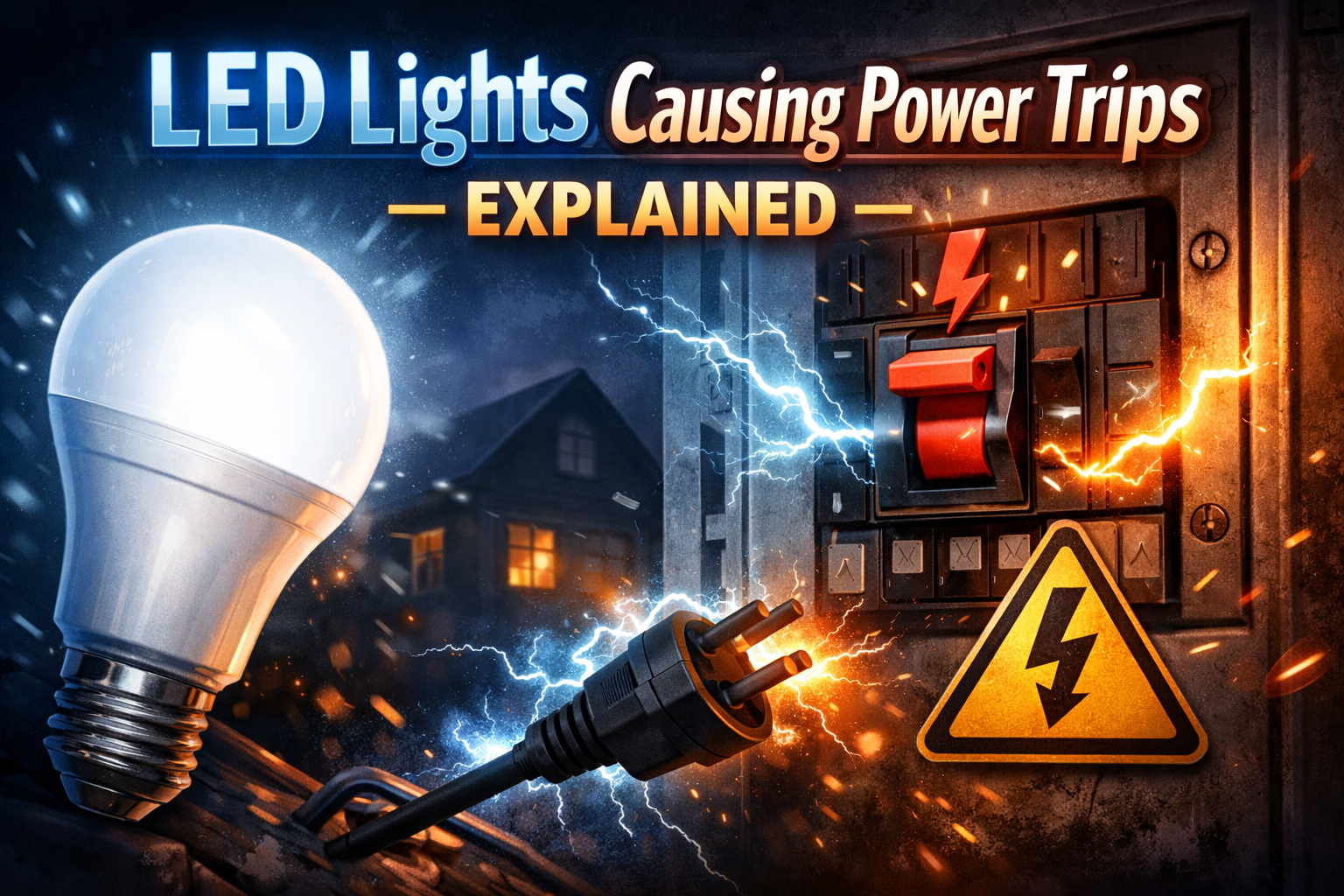
Table of Contents
- Understanding Circuit Protection Systems
- Why Modern Lighting Triggers Protection
- Compatibility Issues Explained
- Overload Situations and Solutions
- Dimmer Switch Conflicts
- Power Supply Quality Matters
- Inrush Current Phenomenon
- Wiring Age and Condition
- Diagnostic Procedures
- Practical Solutions
- Prevention Strategies
- When to Call an Electrician
- Sharing this guide
Understanding Circuit Protection Systems
Circuit breakers serve as essential safety devices designed to prevent electrical fires and equipment damage. When current flow exceeds the rated capacity, the breaker automatically disconnects power to protect your home’s wiring infrastructure. These protective mechanisms respond to two primary conditions: sustained overcurrent situations and sudden short circuits.
Standard residential breakers typically operate at 15 or 20 amperes, with thermal-magnetic mechanisms that detect excessive heat buildup. The thermal component responds to gradual overloads, while the magnetic element triggers instantly during short circuits. Understanding this dual protection helps diagnose why LED lights tripping breaker occurs under specific circumstances.
Modern circuit protection has evolved significantly, incorporating arc-fault circuit interrupters (AFCI) and ground-fault circuit interrupters (GFCI) for enhanced safety. These advanced breakers detect dangerous electrical arcing and ground faults, sometimes reacting to characteristics present in poorly designed lighting systems. If you want a dependable option, a solid example is a clamp-on ammeter for measuring live circuit current safely, which offers consistent results over time.
Why Modern Lighting Triggers Protection
The circuit breaker tripping phenomenon with modern fixtures stems from fundamental differences between traditional and contemporary lighting technologies. Unlike incandescent bulbs that present simple resistive loads, modern fixtures incorporate electronic drivers and switching power supplies that create complex electrical signatures.
Driver circuits convert alternating current to the direct current required by semiconductor chips, generating harmonic distortion and high-frequency noise in the process. These electrical characteristics can trigger sensitive protection devices, especially in systems with AFCI breakers designed to detect arcing faults.
Additionally, the instantaneous power draw when switching on multiple fixtures simultaneously creates transient current spikes. While individual units consume minimal steady-state power, the collective startup demand may exceed breaker ratings momentarily, causing nuisance tripping without actual overload conditions.
Compatibility Issues Explained
Driver Quality Variations
The quality of internal driver components directly influences whether LED bulb compatibility issues manifest as circuit breaker tripping events. Premium manufacturers incorporate proper filtering capacitors and smoothing circuits that minimize electrical noise, while budget products often omit these protective elements to reduce costs.
Inferior drivers generate significant electromagnetic interference (EMI) that propagates through household wiring. This interference creates waveform distortions detectable by modern protection devices, particularly those with electronic trip units sensitive to non-sinusoidal current patterns.
When experiencing persistent issues, examine product specifications for compliance certifications. Units bearing UL, ETL, or Energy Star marks undergo rigorous testing for electrical compatibility, whereas uncertified imports frequently cause LED bulb compatibility problems with standard residential wiring systems.
Fixture Mismatch Considerations
Retrofitting older fixtures with modern bulbs sometimes creates incompatibility scenarios leading to protection device activation. Enclosed fixtures designed for heat-dissipating incandescent lamps may trap heat around electronic components, causing driver failures that manifest as short circuits triggering immediate breaker response.
Recessed housings without adequate ventilation accelerate thermal degradation, particularly when exceeding manufacturer-recommended wattage equivalents. Although the actual power consumption remains low, the confined environment compromises driver longevity and increases fault probability over time, eventually resulting in circuit breaker tripping scenarios. If your installation involves older fixtures experiencing thermal stress, proper ventilation becomes essential.
Overload Situations and Solutions
Despite consuming substantially less power than traditional alternatives, accumulating numerous fixtures on a single circuit can still create electrical panel overload conditions. A typical 15-amp circuit supports approximately 1,800 watts before reaching capacity, though operating continuously at maximum capacity reduces component lifespan.
Calculate total connected load by summing all devices sharing the affected circuit, including outlets, appliances, and lighting. When approaching 80% of rated capacity (1,440 watts for 15-amp circuits), redistribute loads across available circuits or upgrade to higher-rated breakers with appropriately sized wiring.
Remember that while individual units draw minimal current, the cumulative effect of dozens of bulbs plus other connected devices generates substantial demand. This aggregated consumption explains why adding seemingly insignificant lighting triggers electrical panel overload warnings through repeated breaker activation. Another practical alternative is a socket-style GFCI outlet tester for quick fault detection, which performs reliably in everyday use.
Dimmer Switch Conflicts
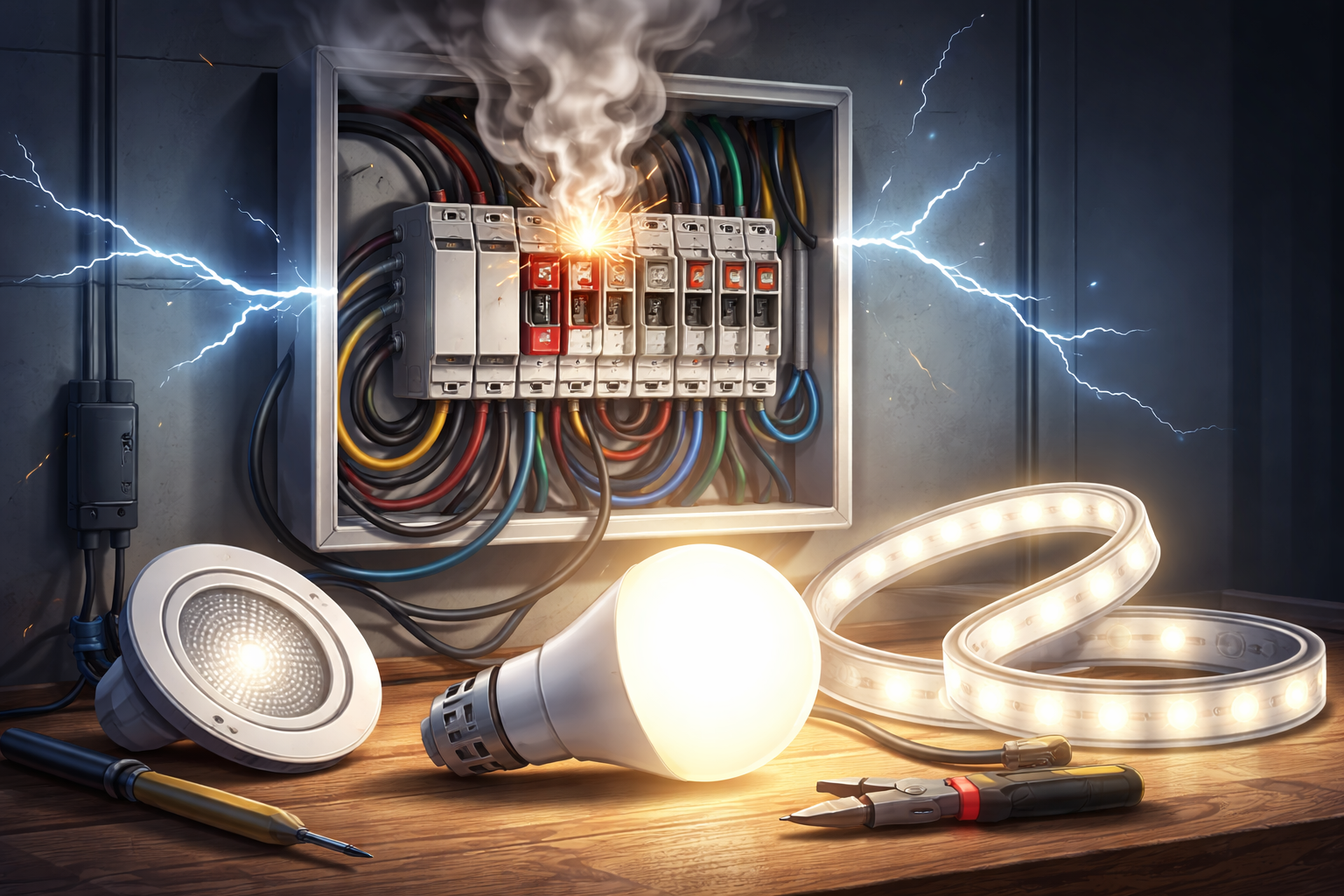
Traditional incandescent dimmers employ phase-cutting technology incompatible with many modern bulbs, creating conditions where LED lights tripping breaker becomes inevitable. These legacy controls interrupt alternating current waveforms in ways that confuse electronic drivers, causing erratic behavior and potential component failure.
The incompatibility manifests as flickering, buzzing, or complete failure to illuminate, with worst-case scenarios producing short circuits that immediately trigger protection devices. Dimmer-related issues often intensify at specific brightness levels where driver circuits struggle to maintain stable operation despite varying input voltage.
Replacing standard dimmers with units specifically rated for electronic loads eliminates most compatibility problems. Modern controls incorporate advanced circuitry that communicates properly with drivers, providing smooth dimming performance without generating electrical stress that leads to circuit breaker tripping events. Systems exhibiting intermittent flickering behavior often benefit from control upgrades.
Power Supply Quality Matters
Voltage Fluctuation Impact
Unstable incoming power creates challenging operating conditions for sensitive electronic components. Driver circuits designed for nominal 120-volt operation experience stress when supply voltage varies beyond acceptable tolerances, potentially drawing excessive current that triggers protection mechanisms.
Utility companies maintain voltage within ±5% of nominal specifications, but local distribution issues sometimes cause wider fluctuations. High-quality drivers incorporate regulation circuits that compensate for these variations, while inferior designs allow unstable operation that increases LED bulb compatibility risks with existing electrical infrastructure.
Harmonic Distortion Effects
Non-linear loads introduce harmonic frequencies that distort the normally sinusoidal alternating current waveform. Multiple electronic devices operating simultaneously compound this distortion, creating cumulative effects that stress circuit components and may cause LED lights tripping breaker through elevated neutral conductor currents.
Triplen harmonics (third, ninth, fifteenth) prove particularly problematic because they add arithmetically in neutral conductors rather than canceling. This phenomenon explains why breakers trip despite total load remaining below rated capacity, as neutral conductor overheating triggers thermal protection elements.
Inrush Current Phenomenon
The momentary surge when energizing driver circuits creates inrush current substantially exceeding steady-state values. Input capacitors charge instantaneously upon switch closure, demanding brief but intense current pulses that standard breakers tolerate individually but may reject when numerous fixtures activate simultaneously.
This transient behavior explains why switching on large arrays triggers circuit breaker tripping despite adequate capacity for continuous operation. The instantaneous demand briefly exceeds magnetic trip thresholds, causing protection activation even though sustained current remains well within safe limits.
Manufacturers address inrush concerns through soft-start circuits that limit charging current, but budget products frequently omit this refinement. Installations with many fixtures benefit from sequential energization rather than simultaneous activation, allowing capacitor charging to complete before additional loads connect.
Wiring Age and Condition
Deteriorating electrical infrastructure contributes significantly to protection device sensitivity. Aging wire insulation develops cracks and degradation that increase leakage current, while corroded connections create high-resistance points generating localized heating detectable by thermal breaker elements.
Homes constructed before 1970 often contain aluminum branch circuit wiring requiring special attention. Aluminum expands and contracts more than copper under thermal cycling, loosening connections over time and creating intermittent high-resistance faults that manifest as electrical panel overload symptoms during normal operation.
Inspect visible wiring for signs of deterioration including discolored insulation, burn marks near connections, or unusual warmth when circuits carry load. These indicators suggest infrastructure problems requiring professional remediation before reliable operation resumes, regardless of lighting technology employed. Understanding residual current paths helps diagnose wiring degradation.
Diagnostic Procedures
Systematic Testing Approach
Effective troubleshooting requires methodical isolation to identify specific failure modes. Begin by disconnecting all devices from the affected circuit, then reset the breaker. If it remains stable with no connected load, the problem lies with connected equipment rather than wiring infrastructure.
Reconnect fixtures individually, testing each before adding the next. This sequential process identifies problematic units causing LED lights tripping breaker through fault conditions or incompatibility. Mark defective components for replacement or further investigation regarding LED bulb compatibility with existing installation parameters.
Measurement Techniques
Quantitative assessment provides objective data supporting diagnostic conclusions. Clamp-on ammeters measure actual current draw, confirming whether loads approach breaker ratings or remain within acceptable ranges. Compare measured values against nameplate specifications to detect abnormal operation indicating driver malfunction.
Thermal imaging cameras reveal overheated connections and components invisible to naked eye inspection. Hot spots indicate excessive resistance or inadequate conductor sizing, both contributing to circuit breaker tripping through elevated temperatures triggering thermal protection mechanisms.
Practical Solutions
Addressing root causes requires targeted interventions based on accurate diagnosis. For electrical panel overload situations, redistribute connected devices across multiple circuits or upgrade service capacity if overall demand exceeds available supply. Consult licensed electricians for panel modifications ensuring code compliance and safety.
Replace incompatible components causing LED bulb compatibility failures with certified products meeting appropriate standards. Verify dimmer ratings match connected loads, upgrading to electronic-compatible controls where necessary. These targeted replacements eliminate specific failure modes without requiring complete system redesign.
Install dedicated circuits for high-density lighting installations, isolating these loads from general-purpose receptacles. This separation prevents cumulative effects while providing adequate capacity for all connected devices without approaching circuit limits that trigger protection activation.
Consider power quality improvement devices for installations experiencing persistent issues despite proper loading and compatible components. Line filters suppress harmonic distortion and electrical noise, creating cleaner operating environments that reduce stress on sensitive electronics and minimize nuisance tripping scenarios. For a more permanent upgrade, many users switch to a trailing-edge dimmer switch rated for LED electronic loads, which works well in real-world home environments.
Prevention Strategies
Proactive measures significantly reduce the likelihood of encountering circuit breaker tripping problems with modern installations. Specify quality components from reputable manufacturers offering comprehensive warranties and proper certifications. The modest price premium pays dividends through reliable operation and extended service life.
Plan electrical layouts accounting for realistic load projections rather than theoretical minimum requirements. Allow generous capacity margins ensuring circuits operate well below maximum ratings, reducing component stress and extending infrastructure longevity while accommodating future expansion needs.
Maintain detailed documentation of circuit assignments and connected loads. This organized approach facilitates troubleshooting when issues arise and prevents accidental overloading during modifications or additions to existing installations, keeping electrical panel overload risks minimal.
According to the National Electrical Code (NFPA 70), proper installation practices and regular maintenance significantly reduce electrical safety hazards. Following these guidelines ensures LED lights tripping breaker becomes a rare occurrence rather than chronic problem.
When to Call an Electrician
Certain situations demand professional expertise exceeding typical homeowner capabilities. Persistent circuit breaker tripping despite component replacement and load redistribution suggests underlying infrastructure problems requiring licensed electrician assessment and remediation.
Any indication of overheating including discolored outlets, burning odors, or warm switch plates warrants immediate professional evaluation. These symptoms indicate dangerous conditions potentially leading to electrical fires if left unaddressed, making prompt expert intervention essential for occupant safety.
Panel upgrades, circuit additions, or service capacity increases require permitted electrical work performed by qualified professionals. These modifications involve safety-critical infrastructure demanding proper installation, testing, and inspection to ensure code compliance and reliable long-term operation. For comprehensive information on various electrical topics, explore resources available in our knowledge database.
Intermittent faults proving difficult to diagnose benefit from professional testing equipment and experience. Electricians possess specialized tools and training enabling accurate fault location and appropriate corrective measures, resolving complex issues efficiently and safely.
Sharing this guide
If you found this guide helpful, you can save it for later or share it with a friend. It’s especially useful for beginners, homeowners, and DIY users.
Share using the links below
Interested in learning more? Browse all related articles in our category section.
Pingback: Why LED Lights Change Color: Surprising Fix Revealed
Pingback: Lighting Layout Planning: Complete Step-by-Step - NeoLEDHub