SMD LED Strip Lights: Complete Guide & Smart Benefits
When you explore modern illumination options, SMD LED strip lights emerge as one of the most versatile and widely adopted technologies available today. These innovative products use surface mount device manufacturing to create compact, efficient lighting that adapts to countless residential and commercial applications. Understanding how these strips function helps you select the right solution for your specific needs.
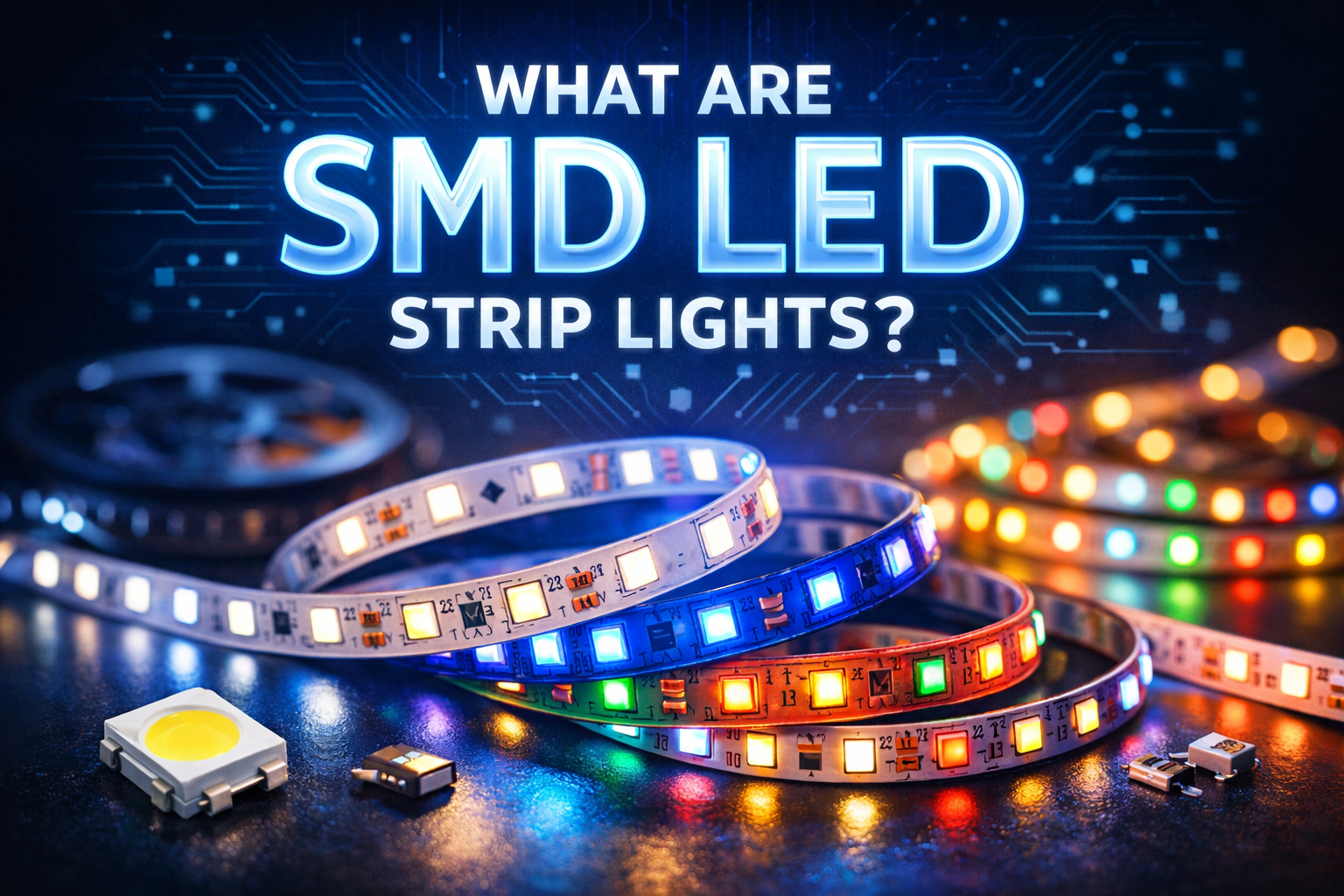
Table of Contents
Understanding the technology
The term SMD LED strip lights refers to products that incorporate surface mount device components soldered directly onto flexible printed circuit boards. This manufacturing approach differs significantly from older through-hole mounting methods where component leads passed through drilled holes. The surface mounting technique enables smaller, more compact designs that maximize efficiency and minimize material waste.
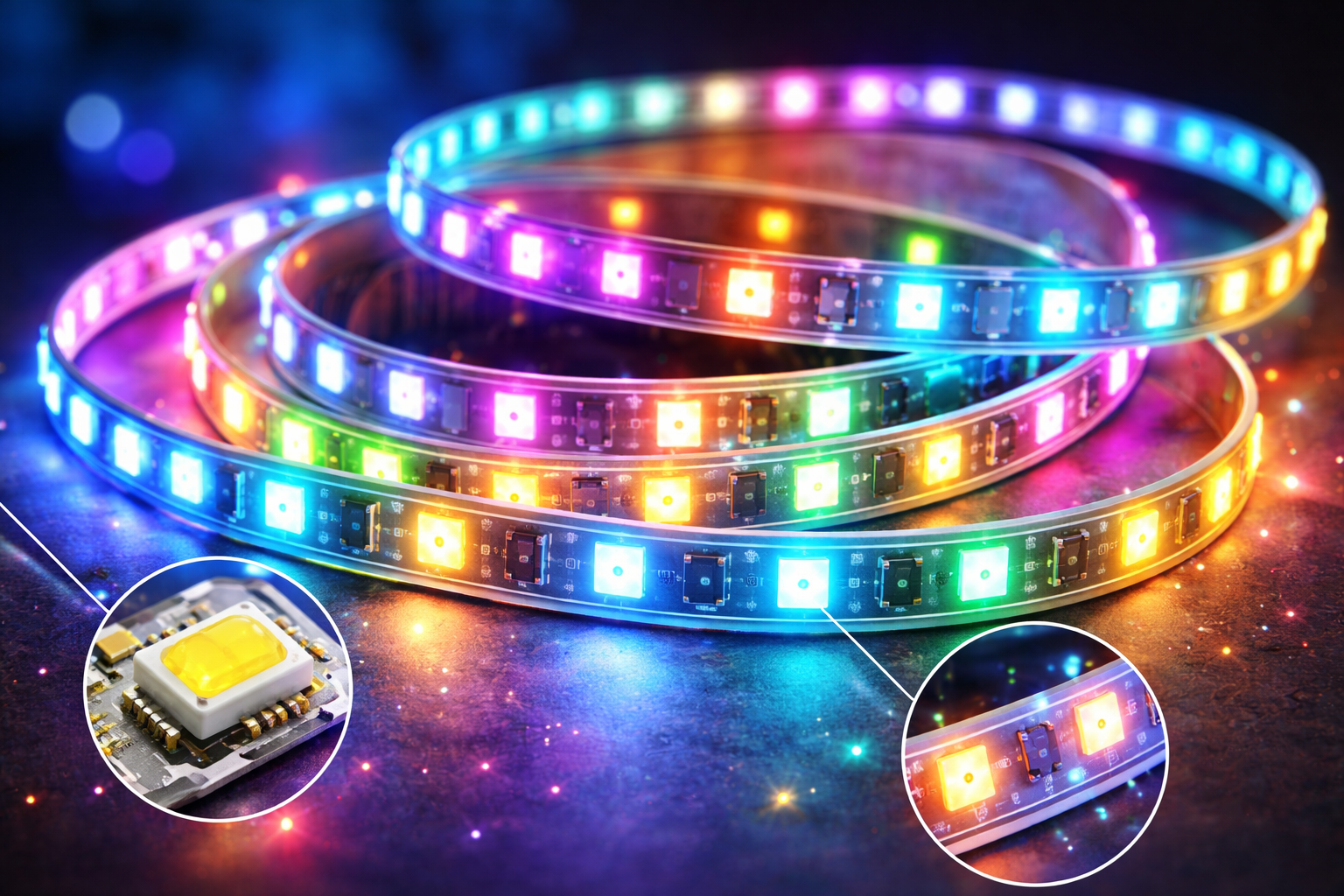
Each LED package contains one or more semiconductor chips encapsulated in a protective housing with integrated phosphor coating and optical lens. The housing attaches flush against the circuit board surface, creating a low-profile assembly that bends easily around corners and curves. This flexibility makes the technology ideal for applications where rigid lighting fixtures cannot accommodate the required installation geometry.
Modern strips typically feature chip densities ranging from 30 to 120 LEDs per meter, with higher densities producing brighter, more uniform light output. The spacing between individual packages creates the characteristic dotted appearance visible when viewing strips directly. This differs from continuous technologies but provides excellent value and performance for most standard applications.
How manufacturing works
Assembly process
Production of SMD LED strip lights begins with precision placement of components onto flexible copper circuit boards. Automated pick-and-place machines position thousands of LED packages per hour with microscopic accuracy. Solder paste applied to contact pads melts during reflow heating, creating permanent electrical and mechanical bonds between components and circuit traces.
Quality control processes verify proper component alignment and solder joint integrity before protective coatings are applied. Many manufacturers add conformal coating that shields circuitry from moisture and contaminants while maintaining the strip’s ability to flex without cracking. This coating extends operational life in challenging environments where temperature and humidity fluctuate.
Quality standards
Reputable manufacturers adhere to international standards governing LED performance, electrical safety, and electromagnetic compatibility. Testing protocols measure color consistency, luminous efficacy, and thermal behavior under various operating conditions. Products passing these evaluations earn certifications that indicate compliance with regional safety requirements and performance benchmarks.
For users seeking enhanced control capabilities, individually controllable pixel options build upon standard surface mount device foundations by adding integrated circuit controllers to each LED segment. These advanced versions enable dynamic color-changing effects not possible with basic single-color or RGB variants.
Key advantages
The primary benefit of SMD LED strip lights involves their exceptional versatility across diverse installation scenarios. The thin, flexible form factor adapts to curved surfaces, tight spaces, and complex architectural features that traditional rigid fixtures cannot accommodate. This adaptability explains why the technology dominates the flexible lighting solutions market for both professional and DIY applications.
Energy efficiency represents another compelling advantage, with quality products converting 80 to 90 percent of electrical input into visible light rather than waste heat. This efficiency dramatically reduces operating costs compared to incandescent or halogen alternatives while minimizing cooling requirements in temperature-sensitive environments. The long operational lifespan further enhances cost-effectiveness by reducing replacement frequency.
Installation simplicity appeals to both professional contractors and homeowners tackling DIY projects. Most strips feature adhesive backing that bonds directly to clean, dry surfaces without requiring specialized tools or skills. Standard low-voltage power supplies eliminate shock hazards associated with line-voltage lighting, improving safety during installation and subsequent maintenance activities. If you want a dependable option, a solid example is a full-color RGB 5050 strip with controller included, which is widely trusted for indoor setups.
The wide selection of available configurations ensures compatibility with virtually any project requirement. Buyers can choose from various chip sizes, densities, color temperatures, and waterproofing levels to match specific performance criteria. This extensive customization potential makes LED chip technology suitable for everything from subtle accent lighting to high-output task illumination.
Common chip sizes
Understanding chip size designations helps buyers select appropriate products for their intended applications. The nomenclature uses millimeter dimensions to describe package dimensions, with common sizes including 3528, 5050, and 2835. The first two digits indicate length while the second two specify width, so a 5050 package measures 5.0mm by 5.0mm.
Smaller 3528 chips produce moderate light output suitable for accent lighting and decorative applications where brightness requirements remain modest. These compact packages enable high-density layouts that create relatively smooth light distribution despite individual point sources. Their lower power consumption makes them ideal for battery-powered applications and installations with limited power availability.
The popular 5050 size contains three individual LED chips within a single package, tripling potential brightness compared to single-chip variants. This configuration proves particularly effective for RGB color-mixing applications where red, green, and blue chips combine to produce millions of color combinations. The larger thermal footprint also improves heat dissipation, enhancing reliability under continuous operation.
Newer 2835 packages optimize efficiency by incorporating advanced chip designs and improved phosphor formulations. Despite their smaller size compared to 5050 variants, these chips often produce equivalent brightness while consuming less power. Many modern SMD LED strip lights specify 2835 packages because they deliver superior lumens-per-watt performance that reduces operating costs. Another practical alternative is a high-efficiency 2835 white strip for ambient lighting, which offers consistent results over time.
Color options
Single color variants
Single-color strips produce consistent illumination in one fixed color temperature or hue. White variants range from warm 2700K to cool 6500K, accommodating different aesthetic preferences and functional requirements. Colored options include red, green, blue, amber, and pink for decorative applications where specific hues enhance design themes or create distinctive atmospheres.
Warm white temperatures create cozy, inviting environments suitable for living spaces and hospitality venues. Cool white produces crisp, energizing illumination preferred in offices, workshops, and retail environments. Neutral white balances between extremes, offering versatility for areas requiring accurate color rendering without strong warm or cool bias.
Multi-color capabilities
RGB variants combine red, green, and blue chips that mix to produce virtually any visible color. Controllers adjust relative brightness of each color channel, enabling dynamic color-changing effects and preset patterns. These flexible lighting solutions prove popular for entertainment venues, architectural features, and residential accent lighting where mood adjustment enhances user experience.
Advanced RGBW configurations add dedicated white chips alongside RGB components, improving color rendering and enabling pure white illumination impossible with RGB mixing alone. This hybrid approach combines color-changing versatility with high-quality white light for applications requiring both capabilities. Some systems even incorporate warm and cool white chips for tunable white functionality.
Brightness levels
Light output from SMD LED strip lights varies considerably based on chip type, density, and drive current. Entry-level products produce 200 to 400 lumens per meter, sufficient for subtle accent lighting and low-visibility applications. Mid-range options deliver 600 to 1000 lumens per meter for general ambient lighting and moderate task illumination requirements.
High-output variants exceed 1500 lumens per meter, approaching brightness levels previously requiring traditional fluorescent or halogen fixtures. These intense strips serve demanding applications like retail display lighting, professional workspaces, and outdoor area illumination. The increased power density necessitates enhanced thermal management through aluminum channels or heat sinks that prevent excessive temperature buildup.
According to research from the U.S. Department of Energy, selecting appropriate brightness levels based on application requirements optimizes both energy consumption and visual comfort. Overlighting wastes electricity and creates glare, while insufficient illumination compromises functionality and safety in task-oriented spaces.
Installation basics
Successful installation of SMD LED strip lights requires proper surface preparation and careful planning. Clean mounting surfaces with isopropyl alcohol to remove dust, grease, and residues that compromise adhesive bonding. Allow cleaned surfaces to dry completely before applying strips to ensure maximum adhesion strength and long-term reliability.
Most products feature designated cutting points marked every few inches along the strip length. Cutting between these marks breaks the electrical circuit and renders the separated section non-functional. Always verify cut point locations before making modifications, and use sharp scissors or cutting tools to create clean edges that facilitate proper connector attachment.
Mounting channels serve multiple purposes beyond aesthetic enhancement. Aluminum profiles improve heat dissipation, protect strips from physical damage, and provide mounting surfaces for diffuser covers that soften light output. Channel systems also simplify alignment and create professional-looking installations that integrate seamlessly with architectural details. For a more permanent upgrade, many users switch to an aluminum channel diffuser for clean recessed strip mounting, which reduces the risk of installation failure.
Electrical connections require attention to polarity, with positive and negative terminals clearly marked on both strips and power supplies. Reversing polarity prevents illumination and may damage components in some configurations. Soldering provides the most reliable connection method, though solderless connectors offer convenience for users lacking soldering skills or equipment.
Power considerations
Understanding power requirements ensures proper component selection and prevents performance issues. Calculate total wattage by multiplying the per-meter power consumption by total strip length, then add 20 percent safety margin. This margin accounts for power supply efficiency losses and provides headroom that prevents operation at maximum capacity, which accelerates component aging.
Most strips operate on 12V or 24V direct current systems, with 24V variants offering advantages for longer runs. Higher voltage reduces current flow for equivalent power levels, minimizing voltage drop over distance and allowing thinner gauge wiring. This characteristic proves particularly valuable in large installations where wire costs and voltage drop present significant challenges.
Power injection becomes necessary when strip length exceeds manufacturer recommendations for single-point power connection. This technique involves connecting additional power feeds at intermediate points along the run, maintaining consistent voltage throughout the entire installation. Proper injection placement prevents dimming at distant sections while avoiding excessive current through individual circuit segments.
Waterproofing ratings
IP (Ingress Protection) ratings communicate environmental protection levels using standardized two-digit codes. The first digit indicates solid particle protection while the second specifies moisture resistance. Understanding these ratings helps buyers select appropriate products for specific installation environments, whether indoor, outdoor, or underwater applications.
IP20-rated strips lack protective coating and suit dry indoor locations where moisture exposure remains minimal. These basic configurations cost less and offer easier heat dissipation but require protection from liquids and condensation. They perform well in living rooms, bedrooms, and climate-controlled commercial spaces where environmental conditions remain stable.
IP65 variants feature silicone coating that seals components against water jets and dust ingress, making them suitable for bathrooms, kitchens, and covered outdoor areas. The protective layer adds minimal thickness while dramatically improving environmental resistance. These flexible lighting solutions balance protection with heat dissipation requirements that affect longevity and performance consistency.
Fully waterproof IP67 and IP68 ratings enable submersion applications like pool lighting, fountain features, and marine installations. Complete encapsulation in silicone tube protects against sustained immersion but reduces heat dissipation efficiency. This tradeoff requires careful consideration of maximum power levels to prevent thermal damage in continuous-operation scenarios.
Best use cases
Residential applications
Home installations benefit from the adaptability of surface mount device technology across numerous locations. Under-cabinet kitchen lighting eliminates shadows on countertops while consuming minimal electricity. Bedroom cove lighting creates ambient illumination that adjusts mood without harsh overhead glare. Stairway step lighting improves safety during nighttime navigation while adding architectural interest.
Entertainment centers and display shelving gain visual impact through strategic accent lighting that highlights collectibles and media equipment. The low-profile design hides easily behind bezels and molding, creating seemingly sourceless illumination that draws attention to displayed items rather than the fixtures themselves. Dimming capabilities enable intensity adjustment for different viewing situations and time of day.
Commercial uses
Retail environments use SMD LED strip lights extensively for product highlighting, display case illumination, and architectural accenting. The excellent color rendering reveals merchandise accurately, influencing purchase decisions through attractive presentation. Energy efficiency reduces operating costs in facilities requiring extended operating hours, improving profitability through reduced utility expenses.
Hospitality venues including hotels, restaurants, and bars leverage LED chip technology for creating distinctive atmospheres that differentiate brands and enhance guest experiences. RGB color-changing capabilities enable theme coordination, special event customization, and dynamic effects that static lighting cannot achieve. The minimal maintenance requirements reduce operational disruptions in facilities operating continuously.
Comparing alternatives
When evaluating different technologies, understanding relative strengths helps identify optimal solutions for specific applications. Traditional strips using surface mount device manufacturing provide excellent value and performance for most standard projects. The visible individual LED points create characteristic appearance that some users prefer for its discrete, structured aesthetic.
For projects requiring completely uniform, dot-free illumination, continuous chip arrangements eliminate visible individual light sources through dense chip-on-board construction. This premium technology costs more but delivers seamless appearance ideal for high-end residential and commercial installations where visual refinement justifies additional investment.
Neon-style flexible tubes mimic traditional glass neon appearance while offering LED efficiency and safety advantages. These products suit signage applications and decorative installations where the tubular form factor enhances design intent. However, they typically provide less flexibility and fewer customization options compared to standard flat strips.
Troubleshooting tips
Common issues with SMD LED strip lights often trace to incorrect power supply selection or poor electrical connections. If strips fail to illuminate, verify power supply output voltage matches strip requirements and check polarity at all connection points. Multimeter testing confirms proper voltage delivery and identifies breaks in electrical continuity that prevent operation.
Dimming at the far end of long runs indicates voltage drop exceeding acceptable limits. Solutions include using higher voltage strips, implementing power injection at intermediate points, or reducing total run length. Upgrading to heavier gauge wire also helps maintain voltage along extended distances, though this approach adds material costs.
Flickering suggests loose connections, inadequate power supply capacity, or incompatible dimming equipment. Tightening all connections eliminates intermittent contact that causes flashing. Replacing undersized power supplies with properly rated units ensures consistent current delivery. Switching to compatible dimmers designed specifically for LED loads resolves control-related flickering issues.
Color inconsistencies in RGB installations often result from unbalanced color channel outputs or failed individual color chips. Testing each color channel separately identifies problematic sections requiring replacement. Quality control variations between production batches can also cause color matching difficulties when extending existing installations with new material.
Maintenance and care
Proper maintenance extends the operational life of SMD LED strip lights and maintains consistent performance over years of service. Regular cleaning with soft, dry cloths removes dust accumulation that reduces light output and contributes to thermal buildup. Avoid harsh chemicals and abrasive materials that damage protective coatings or scratch lens surfaces.
Periodic inspection identifies loose connections, damaged sections, and environmental factors threatening reliability. Tightening electrical connections prevents arcing and oxidation that degrade performance. Replacing damaged sections before complete failure maintains aesthetic consistency and prevents cascading issues that affect adjacent sections.
Thermal management remains critical throughout the product lifespan. Ensuring adequate ventilation around installations prevents excessive heat accumulation that accelerates lumen depreciation and shortens operational life. Aluminum mounting channels dissipate heat effectively, particularly important for high-output configurations operating continuously in demanding applications.
Sharing this guide
If you found this guide helpful, you can save it for later or share it with a friend. It’s especially useful for beginners, homeowners, and DIY users.
Share using the links below
Interested in learning more? Browse all related articles in our category section.