RGB vs RGBIC LED Strips: Ultimate Smart Guide
Choosing between RGB vs RGBIC LED strips can transform your lighting experience. Understanding the differences between these technologies helps you select the right option for your home, office, or creative project.
Table of Contents
- Understanding the basics
- How traditional lighting works
- Addressable technology explained
- Color capabilities comparison
- Control differences
- Installation requirements
- Price considerations
- Best use cases
- Power consumption
- Compatibility with smart systems
- Durability and lifespan
- Making your decision
- Sharing this guide
Understanding the basics
When exploring lighting options, many people encounter RGB vs RGBIC LED strips without fully grasping what sets them apart. Both technologies use red, green, and blue diodes to create colors, but the way they manage those colors differs significantly.
Traditional options display one uniform color across the entire strip at any given moment. This means if you select purple, every section shows the same shade of purple simultaneously. The entire length behaves as a single lighting unit with no variation possible along its length.
Advanced models feature addressable LED technology that allows each section to display different colors independently. You could have red on one end, blue in the middle, and green on the other end, all at the same time. This capability opens up entirely new creative possibilities.
How traditional lighting works
A single color LED strip operates through a simple circuit where all diodes receive the same electrical signal. The controller sends one command that affects every light simultaneously. This design keeps manufacturing costs lower and simplifies the control system.
These strips contain groups of red, green, and blue diodes arranged in repeating patterns. By adjusting the intensity of each color channel, the system creates different hues. However, since all sections receive identical instructions, the output remains uniform throughout.
The controller for this technology typically offers basic functions like color selection, brightness adjustment, and preset modes. Popular modes include fade, flash, and strobe effects that change the entire strip as one cohesive unit. If you want a dependable option, a solid example is a standard RGB LED strip kit for basic color accent lighting, which works well in real-world home environments.
Wiring configuration
Standard installations require four wires: one for power and three for color channels. The simplicity of this wiring makes installation straightforward for beginners. Each color channel carries voltage that determines how bright that particular color appears across all diodes.
Common applications
This technology works well for accent lighting, under-cabinet illumination, and basic mood lighting. When you need consistent color across a space, the single color LED strip performs reliably. Many users appreciate the simplicity and affordability for straightforward projects.
Popular installations include bedroom perimeter lighting, TV backlighting, and simple decorative accents. For these applications, having one unified color often creates the desired ambiance without needing complex patterns. Explore more about different lighting types and their specific features to understand which option suits your needs.
Addressable technology explained
Addressable LED technology revolutionizes how we think about flexible lighting. Each pixel or segment contains its own tiny integrated circuit that receives and processes individual commands. This architecture enables independent color control across different zones.
The controller communicates with each segment separately, sending specific instructions about which color to display and at what brightness. This happens rapidly enough that the human eye perceives smooth animations and transitions. The result is a dynamic lighting canvas capable of displaying multiple colors simultaneously.
Advanced systems incorporate chips like WS2812B or SK6812 that manage individual pixels. These chips decode digital signals and translate them into the precise color output for that specific location. The technology allows for virtually unlimited creative expression.
IC chip integration
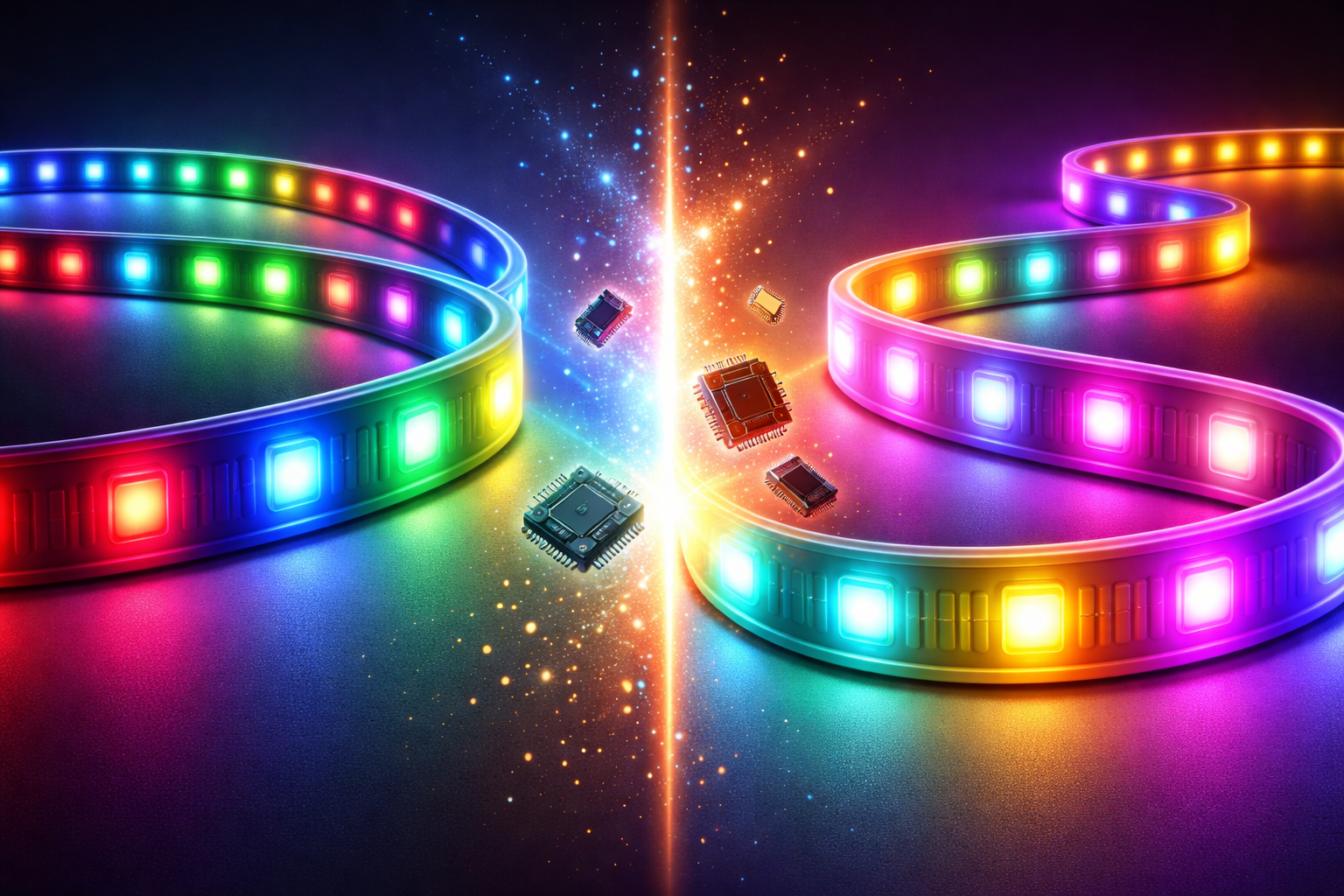
Each controllable segment contains an integrated circuit that stores temporary color data. When the controller sends a signal, it travels through the strip sequentially. The first chip reads its instruction, then passes the remaining data to the next chip, creating a chain of communication.
This daisy-chain architecture means the strips require only three wires: power, ground, and data. The data wire carries all the color information in a digital format. This design simplifies wiring while enabling far more sophisticated control.
Segment density options
Manufacturers offer different densities measured in controllable segments per meter. Common options include 30, 60, or 144 segments per meter. Higher density provides smoother gradients and more detailed patterns, though it increases cost and power requirements. Selecting the appropriate density depends on your viewing distance and desired effects.
Color capabilities comparison
Both technologies access the full spectrum of colors through red, green, and blue mixing. The difference lies not in which colors they can produce, but in how those colors distribute across the strip length. Understanding RGB vs RGBIC LED strips means recognizing this fundamental distinction.
Basic models change the entire strip to whatever color you select. Want orange? The whole strip turns orange. Want blue? Everything becomes blue. This uniformity creates clean, consistent ambient lighting but limits creative expression.
Advanced models allow you to paint with light. You can create rainbow gradients, flowing animations, and complex patterns. One section might pulse red while another fades through the spectrum. This independent color control enables effects impossible with traditional technology. Another practical alternative is an RGBIC addressable strip for independent multi-zone color control, which is known for stable long-term performance.
Gradient effects
Addressable LED technology excels at creating smooth color transitions. You can program a sunset effect that gradually shifts from yellow through orange to deep red across the strip length. These gradients add depth and visual interest to any space.
Systems with independent color control enable flowing animations that travel along the strip. Imagine a blue wave that ripples from one end to the other, or colors that chase each other in sequence. These dynamic patterns captivate viewers and elevate any environment.
Control differences
Controller complexity varies significantly between these technologies. A single color LED strip requires a basic controller with limited functionality. Most controllers for this type offer infrared remote control with preset color buttons and simple effect modes.
Advanced systems demand sophisticated controllers capable of managing hundreds or thousands of individual segments. Many use smartphone apps that provide granular control over every aspect of the lighting. You can design custom patterns, adjust timing, and save multiple presets.
According to the U.S. Department of Energy, proper control systems optimize energy efficiency and extend the lifespan of any lighting installation. The investment in quality controllers pays dividends through improved performance and reliability.
App integration features
Modern addressable LED technology typically includes comprehensive mobile applications. These apps let you create scenes, schedule lighting changes, and sync effects to music. Some even incorporate voice control compatibility with popular smart home platforms.
The apps for basic systems offer simpler interfaces with limited customization. While adequate for basic color selection, they lack the depth needed for complex programming. Users seeking advanced features find these controllers restrictive.
Installation requirements
Installing either technology follows similar basic principles, though addressable LED technology introduces additional considerations. Both require clean, dry surfaces and proper power supply sizing. The main differences emerge in wiring complexity and controller placement.
For standard installations, you connect the power supply to the controller, then run wires to the strip. The four-wire system uses clearly marked connections that prevent installation errors. Most people complete basic installations within an hour.
Systems with independent color control use three-wire connections but require attention to data signal integrity. Long runs may need signal amplifiers to maintain reliable communication. Understanding the technical fundamentals of LED operation helps troubleshoot any issues that arise during installation.
Power injection needs
Long strips of any type may require power injection at multiple points. This practice maintains consistent brightness throughout the length. Advanced models particularly benefit from strategic power injection due to their higher per-segment power draw. Planning injection points during installation prevents voltage drop issues.
Mounting considerations
Both technologies come with adhesive backing for easy mounting. Proper surface preparation ensures lasting adhesion. Clean the mounting surface with isopropyl alcohol and allow it to dry completely. For permanent installations, consider using mounting channels that protect the strip and improve heat dissipation.
Price considerations
Budget plays a crucial role when comparing RGB vs RGBIC LED strips. A single color LED strip typically costs one-third to one-half the price of addressable alternatives. For basic projects with tight budgets, this price difference significantly impacts the buying decision.
The higher cost of addressable LED technology reflects the sophisticated components required. Each controllable segment needs its own integrated circuit, increasing manufacturing complexity. Controllers for these systems also cost more due to their advanced capabilities.
Consider the total project cost including the strip, controller, power supply, and any accessories. Basic setups might require only a hundred dollars, while advanced installations can exceed several hundred dollars. Your budget should align with your performance expectations.
Long-term value assessment
While addressable LED technology costs more initially, it delivers greater versatility and longevity. The ability to create diverse effects means one installation serves multiple purposes. This flexibility may eliminate the need for future upgrades or additional lighting purchases.
Basic systems offer excellent value for simple applications. If your needs remain straightforward, spending extra for features you will not use makes little sense. Matching the technology to your actual requirements optimizes your investment.
Best use cases
Selecting between RGB vs RGBIC LED strips depends heavily on your intended application. Each technology excels in different scenarios. Understanding these use cases guides you toward the right choice for your specific situation.
Traditional options work perfectly for accent lighting where consistent color enhances a space. Under-cabinet kitchen lighting, closet illumination, and basic bedroom ambiance all benefit from the simplicity and reliability of uniform color output. These applications rarely require complex patterns.
Advanced systems shine in entertainment spaces, gaming setups, and creative installations. The independent color control enables synchronized lighting that responds to music, games, or video content. Content creators and streamers particularly appreciate the professional aesthetic these systems provide. For a more permanent upgrade, many users switch to a smart RGBIC strip with app and Alexa voice control, which performs reliably in everyday use.
Commercial applications
Retail environments increasingly adopt addressable LED technology for eye-catching displays. The ability to program dynamic sequences attracts customer attention and reinforces brand identity. Restaurants and bars use these systems to create immersive atmospheres that change throughout the day.
A single color LED strip serves commercial spaces needing consistent, professional lighting without elaborate effects. Office accent lighting, corridor illumination, and basic signage often use this technology. The lower cost and reduced maintenance make it economical for large-scale installations.
Power consumption analysis
Energy efficiency matters for both environmental and economic reasons. Both technologies draw similar power when displaying white light at full brightness. The difference emerges in how power consumption scales with color complexity and the number of active segments.
Basic systems consume consistent power regardless of which color displays. The three color channels divide the total current, but the overall draw remains relatively stable. This predictable consumption simplifies power supply selection.
Advanced models with addressable LED technology vary their power draw based on the displayed pattern. A solid color consumes less power than a complex rainbow effect illuminating all segments. This variable consumption requires oversized power supplies to handle peak demand while allowing efficient operation during simpler displays.
Calculating power requirements
Multiply the watts per meter by your total strip length to determine power needs. Add 20 percent overhead for safety margin. A typical single color LED strip consumes 7-15 watts per meter, while systems with independent color control often draw 15-20 watts per meter at full brightness.
Smart home compatibility
Integration with existing smart home ecosystems enhances convenience and functionality. Many modern controllers support popular platforms like Amazon Alexa, Google Assistant, and Apple HomeKit. This compatibility allows voice control and automation routines.
Basic controllers offer limited smart home integration. Some connect via WiFi bridges, but functionality typically remains restricted to simple commands like on/off and basic color selection. The simpler architecture limits deeper integration possibilities.
Controllers for addressable LED technology frequently include native smart home support. You can create scenes that adjust lighting based on time of day, trigger effects based on events, and incorporate lighting into complex automation sequences. This integration transforms simple lighting into an intelligent responsive system.
Protocol support options
Look for controllers supporting standard protocols like Zigbee or Z-Wave for maximum compatibility. These protocols enable reliable communication with your smart home hub. WiFi-based controllers offer easier initial setup but may experience connectivity issues in crowded network environments.
Durability and expected lifespan
Quality construction determines how long either technology lasts. Both types typically rate for 30,000 to 50,000 hours of operation. This translates to many years of daily use when operated within specifications. Proper installation and adequate cooling extend lifespan significantly.
The additional integrated circuits in addressable LED technology introduce more potential failure points. However, quality manufacturers implement robust designs that maintain reliability. Individual segment failure typically affects only that specific section, not the entire strip.
Environmental factors impact longevity regardless of technology type. Excessive heat, moisture exposure, and physical stress all reduce lifespan. Using weatherproof strips for outdoor applications and maintaining reasonable operating temperatures ensures maximum durability.
Maintenance recommendations
Keep strips clean by gently wiping with a dry cloth. Avoid harsh chemicals that might damage the protective coating. Inspect connections periodically to ensure they remain secure. Addressing minor issues early prevents more significant problems later.
Making your final decision
Choosing between RGB vs RGBIC LED strips ultimately depends on your specific requirements and budget. Evaluate what you actually need rather than what seems impressive. This practical approach ensures satisfaction with your purchase.
If consistent ambient lighting meets your needs and budget constraints matter, a single color LED strip delivers excellent value. The straightforward operation and lower cost make it ideal for simple applications. You will appreciate the reliability and ease of use.
When dynamic effects, complex patterns, and maximum creative freedom matter most, addressable LED technology justifies the higher investment. The independent color control opens possibilities simply impossible with basic systems. This technology particularly suits enthusiasts, content creators, and those seeking distinctive lighting experiences.
Consider future needs when making your decision. Will your requirements grow over time? Investing in more capable technology now prevents the need for complete replacement later. However, avoid overbuying features you genuinely will not use.
Test both technologies if possible before committing to a large installation. Many retailers offer small starter kits that let you experience the difference firsthand. This hands-on evaluation provides insights no amount of research can match.
Sharing this guide
If you found this guide helpful, you can save it for later or share it with a friend. It’s especially useful for beginners, homeowners, and DIY users.
Share using the links below
Interested in learning more? Browse all related articles in our category section.
Pingback: Beginner Guide to Lighting Design: Perfect Basics
Pingback: Lighting for Windowless Rooms: Essential Solutions